Brain Metastases Treatment China: Gamma Knife and CyberKnife Radiosurgery
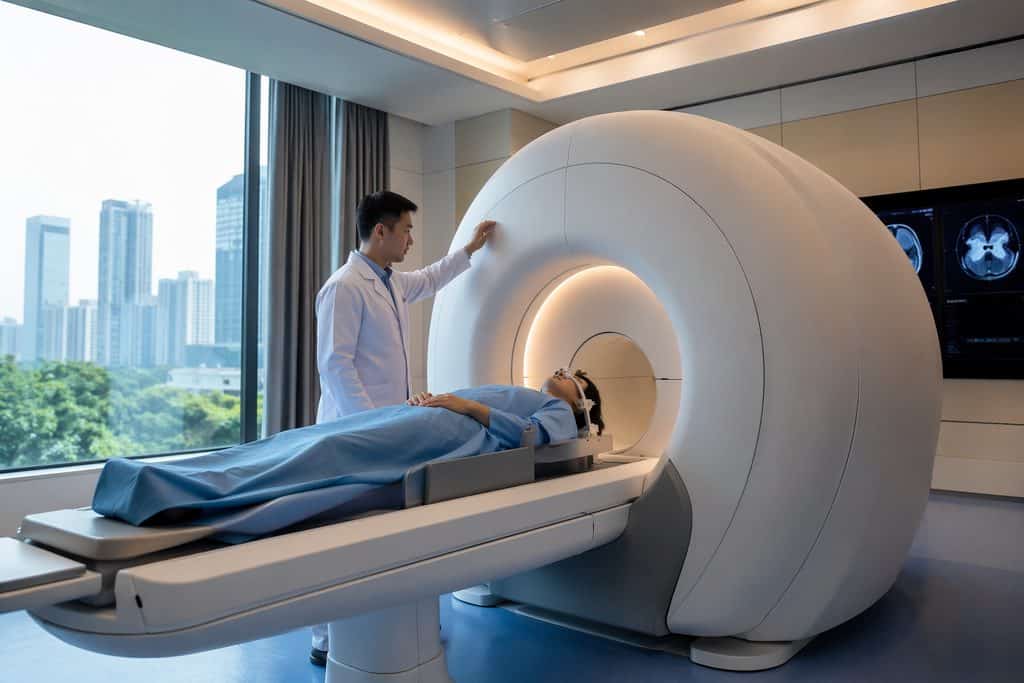
When 42-year-old Michael first heard the diagnosis, he had no idea where to start looking for treatment. Lung cancer. And it had already spread. His oncologist in London mentioned brain metastases — a term that lands like a physical blow. The NHS pathway offered whole-brain radiation. But Michael wanted something more precise. Something that would not require weeks of recovery or risk his cognitive function. He started searching online at 2 a.m., typing phrases into Google: “Gamma knife brain metastases cost China.” That search led him to a different possibility.
Brain metastases are the most common intracranial tumors in adults. They affect approximately 10% to 30% of adult cancer patients, a figure drawn from epidemiological studies published in the *Journal of Clinical Oncology*. In the United States alone, an estimated 200,000 new cases are diagnosed each year. For many, the default local option involves whole-brain radiotherapy. But that approach comes with well-documented cognitive side effects. Memory loss. Confusion. A flattening of what makes a person themselves.
Stereotactic radiosurgery changed the landscape. Gamma Knife and CyberKnife are not knives at all. They are systems that deliver highly focused radiation beams to tumors while sparing surrounding healthy brain tissue. China has invested heavily in this technology. The country now houses some of the highest-volume radiosurgery centers on the planet. And the cost? It is a fraction of what patients face in North America or Western Europe.
Key Takeaways
- China’s top hospitals charge between $6,000 and $15,000 for Gamma Knife treatment, compared to $40,000–$70,000 in the United States.
- High patient volume at major Chinese centers directly correlates with precise, efficient treatment delivery — some machines treat over 1,000 patients annually.
- Navigating visa requirements, language barriers, and hospital registration without local support remains the single biggest challenge for international patients.
- You cannot simply book a Gamma Knife session online. Treatment requires an in-person consultation, imaging review, and a treatment plan approved by a local specialist.
The Problem: A Diagnosis That Demands Precision, Not Just Speed
Brain metastases do not give you months to deliberate. The median survival for untreated patients hovers around one to two months. With treatment, that extends significantly — often to 6–12 months or longer, depending on the primary cancer control. But the type of treatment matters enormously. Whole-brain radiation therapy, or WBRT, has been the standard for decades. It is widely available. It is also blunt. Studies, including the landmark QUARTZ trial, have shown that for patients with multiple metastases, WBRT can cause measurable declines in quality of life and cognitive function without always extending survival.
Stereotactic radiosurgery — the category that includes Gamma Knife and CyberKnife — offers a different path. It targets individual lesions with sub-millimeter accuracy. The patient wears a head frame (for Gamma Knife) or a custom mask (for CyberKnife). The system delivers a high dose of radiation in a single session or a few fractions. Healthy brain tissue gets minimal exposure. Recovery is measured in days, not weeks. But in many Western healthcare systems, access to this technology is bottlenecked. Wait times stretch. Insurance approvals stall. And the out-of-pocket price for uninsured or underinsured patients can be catastrophic. That is when a search for “gamma knife brain metastases cost China” begins.
Who We Are
We are not a hospital. We do not provide medical treatment or clinical diagnoses. We are your logistical architects — we bridge the gap between you and China’s top-tier medical expertise. Our team connects international patients with the right hospital, the right specialist, and the right treatment pathway. We handle the practical barriers that make seeking care abroad feel impossible: visa paperwork, hospital registration, language interpretation, and appointment coordination. You focus on your health. We handle everything else.
Why China’s Radiosurgery Programs Deliver Results
The Volume Advantage: When Experience Shapes Outcomes
There is a quiet truth in radiosurgery. The more cases a center treats, the better the outcomes tend to be. China’s top neurosurgery hospitals operate at a scale that is hard to match elsewhere. A single Gamma Knife unit at a major Shanghai or Beijing hospital might treat 800 to over 1,000 patients per year. In comparison, many Western centers treat 100 to 200 patients annually on the same device. This is not a critique of Western medicine. It is simple math. High volume means refined protocols. It means the medical physics team has seen every tumor geometry imaginable. It means the neurosurgeon planning the dose has an intuitive grasp of what works. A 2016 study in *The Lancet Oncology* examining radiosurgery for brain metastases found that institutional case volume was independently associated with improved overall survival. That data matters when you are choosing where to place your trust.
Technology Without the Wait: Gamma Knife and CyberKnife Availability
China houses multiple Gamma Knife units — including the latest Leksell Gamma Knife Icon models — across its major cities. The Icon model allows for frameless treatment, meaning patients who need fractionated sessions can avoid the stereotactic head frame. That is a comfort consideration that actually matters. CyberKnife systems, manufactured by Accuray, are also widely deployed. The difference between the two technologies is worth understanding. Gamma Knife is purpose-built for intracranial targets. It uses 192 or more cobalt-60 sources focused on a single isocenter. It is the gold standard for small to medium brain metastases, especially when they are located near critical structures like the brainstem or optic nerves. CyberKnife, in contrast, uses a linear accelerator mounted on a robotic arm. It tracks tumor movement in real time. That makes it suitable for targets that might shift slightly — though inside the skull, movement is minimal. Both systems work. The choice depends on tumor size, number, and location.
What shocks most patients is the scheduling difference. In the UK or Canada, a wait of 4 to 8 weeks for Gamma Knife is common. In parts of the US, insurance pre-authorization alone can take two weeks. At a major Chinese center, once you are registered and your imaging is reviewed, treatment often begins within days. That speed matters when every week counts.
Cost Structure: Why “Cheaper” Does Not Mean Worse
Let us address the elephant in the room directly. A gamma knife brain metastases cost China typically ranges from $6,000 to $15,000 USD. That is the all-in treatment fee for a single session, depending on the hospital tier and the number of lesions treated. A CyberKnife radiosurgery price Shanghai might fall in a similar band, though fractionated treatments (spread over 3–5 sessions) can push the total toward $18,000–$22,000. These numbers include the treatment planning, the physics team’s work, and the procedure itself. Compare that to the United States, where a single Gamma Knife session routinely bills at $40,000 to $70,000 before insurance negotiation. Even insured patients with high deductibles can face $10,000 to $20,000 in out-of-pocket costs.
Why the difference? It is not because Chinese hospitals cut corners. It is structural. Labor costs for highly skilled technicians, nurses, and support staff are lower. Hospital administrative overhead is leaner. And the sheer patient volume allows fixed equipment costs to be amortized across more cases. The quality of the technology is identical — the same Leksell and Accuray devices used at Mayo Clinic or Charité are installed in Shanghai, Beijing, and Guangzhou. The clinical protocols are often modeled on international guidelines from the American Society for Radiation Oncology (ASTRO) and the European Society for Radiotherapy and Oncology (ESTRO). Lower cost here reflects economic reality, not clinical compromise.
What You Need to Know Before Going Alone
We believe in being direct. Coming to China for radiosurgery is not like booking a hotel. There are real barriers. If you try to handle everything yourself, you will hit walls. Here are the most common ones:
- Visa Requirements Are Specific: Medical treatment in China requires an S2 visa, which is a short-term private visit visa annotated for medical purposes. You cannot enter on a tourist visa (L) and receive hospital treatment legally. The hospital’s international department must provide an invitation letter and treatment confirmation. Without that document, the Chinese embassy or consulate will not issue the S2. Your accompanying family member also needs an S2. The M visa is for commercial business — it has nothing to do with medical treatment and will be rejected if presented for this purpose.
- You Cannot Book Treatment Remotely: This is the hardest truth for most international patients to accept. Chinese public hospitals do not allow you to schedule a Gamma Knife session from overseas. You must first attend an in-person consultation. A neurosurgeon or radiation oncologist must review your MRI scans, assess your clinical history, and determine whether you are a candidate. Only then can a treatment slot be reserved. The hospital’s international VIP channel can expedite this process — but it cannot skip the face-to-face step entirely.
- Language Is a Clinical Barrier, Not Just an Inconvenience: Top Chinese neurosurgeons often read and write English. But the hospital ecosystem — registration desks, payment counters, MRI scheduling, nursing stations — operates in Mandarin. Consent forms are in Chinese. Discharge instructions are in Chinese. Miscommunication about medication or post-treatment symptoms can have serious consequences. A bilingual medical companion is not a luxury. It is a safety requirement.
- Payment Is Upfront: Public hospitals in China require prepayment before treatment. You deposit funds at admission, and the hospital deducts costs as services are rendered. International insurance is rarely accepted for direct billing at public institutions. You pay first, then seek reimbursement from your insurer. Private international hospitals like United Family or Jiahui do offer direct insurance billing, but they may not have Gamma Knife or CyberKnife on-site — these technologies are concentrated in large public university hospitals.
How We Help You Navigate This
These barriers exist for structural reasons. They are not designed to exclude international patients — the system simply was not built with them in mind. That is where we step in.
We start with your medical records. You send us your latest MRI, your pathology report, your oncologist’s summary. Our team translates these documents into clinical Chinese and submits them to the international departments of hospitals that match your case. We identify centers with high radiosurgery volumes and the specific technology — Gamma Knife or CyberKnife — that suits your tumor profile. We do not guess. We match based on real departmental data and patient volume, not marketing brochures.
Once a hospital confirms they will accept your case, we secure the invitation letter for your S2 visa. We guide you through the consular application process step by step. When you land, our bilingual medical companion meets you at the airport. They accompany you to every appointment — the initial neurosurgery consultation, the repeat MRI if needed, the treatment planning session, the procedure itself. They translate in real time. They ensure your consent form is explained in a language you understand. They handle the payment deposits, the pharmacy runs, the discharge paperwork. After treatment, we remain available for follow-up coordination. If your local oncologist needs the treatment records in English, we arrange certified translations.
We also handle the practical details that wear patients down. Hotel recommendations near the hospital. Local SIM cards. Dietary requirements during recovery. These things seem small until you are dealing with them while recovering from a brain procedure. Our job is to make sure you never have to.
Frequently Asked Questions
Gamma Knife achieves local tumor control rates of approximately 80% to 90% at one year for suitable lesions, according to multiple published series. This means the treated metastasis stops growing or shrinks in the vast majority of cases. Effectiveness depends heavily on tumor size (typically under 3–4 cm in diameter), number of lesions, and the status of the primary cancer. It does not cure the underlying systemic disease. But it can prevent neurological death and preserve quality of life — which is often the primary goal. A radiation oncologist must evaluate your specific imaging to determine if you are a candidate.
Yes, when performed at an accredited center with experienced teams. CyberKnife has been used for intracranial targets for over two decades. Its real-time tracking capability adds a safety margin for patients who cannot tolerate a rigid head frame — though for most brain metastases, there is minimal target motion. The safety profile is comparable to Gamma Knife, with a low risk of radiation necrosis (typically under 5% in experienced hands). The key variable is not the machine brand. It is the team using it. China’s top neurosurgery hospitals have physics and clinical teams that perform these procedures daily. That repetition builds safety. But no procedure is risk-free. Bleeding, swelling, and radiation injury are rare but possible complications that must be discussed with your treating physician.
Several Chinese hospitals rank among the country’s top centers for neurosurgery and radiation oncology. Huashan Hospital affiliated with Fudan University in Shanghai operates one of the world’s busiest Gamma Knife centers. Beijing Tiantan Hospital, affiliated with Capital Medical University, is a national leader in neurosurgery volume and complexity. Both institutions are ranked among China’s top 10 for neurosurgery in the Fudan University hospital rankings. The “best” hospital for you depends on your specific tumor characteristics, the technology required, and your logistical preferences. We help match patients to the right center — not the most famous one, but the one best suited to the case. Explore our specialty hospital directory for more details on neurosurgery and oncology rankings.
No reputable hospital in China sells a pre-packaged Gamma Knife treatment online. You cannot click “book now” and arrive for a procedure. The clinical pathway requires an in-person consultation first. What you can do — and what we facilitate — is pre-arrange the consultation, secure the visa invitation, and coordinate the hospital’s international department so that your case is reviewed before you travel. This dramatically shortens the on-the-ground timeline. But the final decision to treat, and the treatment plan itself, must be made by a Chinese-licensed neurosurgeon after they examine you. Any service promising a guaranteed treatment slot without prior consultation is one you should avoid.
Stereotactic radiosurgery is non-invasive — there is no incision, no anesthesia beyond local numbing for frame placement. Acute complications during the procedure are extremely rare. The more realistic concern is delayed side effects: radiation necrosis, edema, or transient worsening of neurological symptoms days to weeks later. Chinese hospitals managing international patients through their VIP or international departments have protocols for urgent follow-up. Most will provide a direct contact number for the treating team. We remain your point of coordination — if you experience concerning symptoms after returning home, we can facilitate communication with your Chinese physician and arrange for imaging review. That said, we strongly recommend establishing a local neurologist or oncologist who can manage any post-treatment issues on the ground. Radiosurgery treats the metastases. Your ongoing cancer care needs a local home base.
Your Next Step
Brain metastases force hard decisions under time pressure. The default path — whole-brain radiation close to home — is not your only option. China’s Gamma Knife and CyberKnife programs offer precision treatment at a cost that makes the geography worth considering. The technology is identical to what you would find at top Western centers. The clinical volume is often higher. And the price, for many families, is the difference between receiving treatment and being priced out of it entirely.
But this path only works if you have someone on the ground who knows the system. The barriers are real, but they are navigable with the right support. If you are considering radiosurgery in China, start with a conversation. We review your case, explain what is possible, and give you an honest assessment — no pressure, no false promises. Visit our patient coordination page to learn how we help. From your first inquiry to your follow-up scan back home, we make sure you never navigate this alone.
For more medical information and treatment options in China, visit chinamedservices.com (China Medical Services).
