Brain Tumor Surgery China Revision: Shanghai Huashan Hospital Second Operation Guide
Key Takeaways
- Shanghai Huashan Hospital performs over 17,000 neurosurgical procedures annually, making it one of the highest-volume neurosurgery centers globally — volume that directly correlates with better revision outcomes.
- A brain tumor revision surgery in China costs approximately $18,000–$35,000 USD, often 70–80% less than equivalent procedures in the United States, where bills routinely exceed $100,000.
- Language barriers and hospital navigation are real obstacles. Without a bilingual coordinator, accessing Huashan’s top neurosurgery team as an international patient is extremely difficult through standard public channels.
- Second brain tumor operations carry higher risks than primary surgeries. You need to understand what success rates actually mean in the context of revision neurosurgery before making any decision.
The Problem: When a Brain Tumor Returns and Your Options Feel Limited
According to a 2023 study published in the Journal of Neuro-Oncology, approximately 20–40% of patients who undergo primary brain tumor resection will eventually require a second operation due to recurrence or residual tumor growth. That is a sobering statistic. If you are reading this, you or someone you care about may already be facing that reality. The first surgery was hard enough. Now you are being told you need another one. And the surgeon who operated the first time may be hesitant. Some neurosurgeons decline revision cases outright. Scar tissue, altered anatomy, and the simple fact that the tumor came back make reoperation significantly more complex than the initial procedure.
You might be looking at a quote from a US hospital that is frankly terrifying. Six figures. Maybe more. Or you have been told the wait time for a specialized neurosurgeon in the UK or Canada stretches beyond what feels safe with a growing mass in your brain. That fear is real. The clock ticks differently when you know something is inside your skull that should not be there. So patients start searching. They look for alternatives. They type phrases like “brain tumor surgery cost China” into Google at 2 a.m., hoping to find a path forward that does not bankrupt their family or force them to accept a timeline that feels like a gamble with their life.
That search leads here. And the question is not simply whether China can do it. The question is whether Shanghai Huashan Hospital can handle a revision neurosurgery case safely, at a price you can afford, with a system that does not leave you stranded in a foreign country unable to communicate with your own surgical team.
Who We Are
We are China Medical Services. We are not a hospital. We do not employ surgeons, we do not provide medical treatment, and we will never offer you a clinical diagnosis. What we do is build the bridge. Our team connects international patients with China’s top-tier hospitals — hospitals drawn from a rigorously vetted database of 340+ institutions ranked among the top 5% of China’s 35,000+ hospitals by Fudan University‘s hospital rankings and JCI accreditation standards. We handle the logistics that make seeking care abroad feel impossible: hospital matching, appointment coordination, bilingual medical companion services, visa guidance, and recovery planning. We are your logistical architects. When you search for the brain tumor surgery cost China and wonder who can actually help you navigate the system behind that number, that is where we come in.
Why Shanghai Huashan Hospital for Revision Neurosurgery
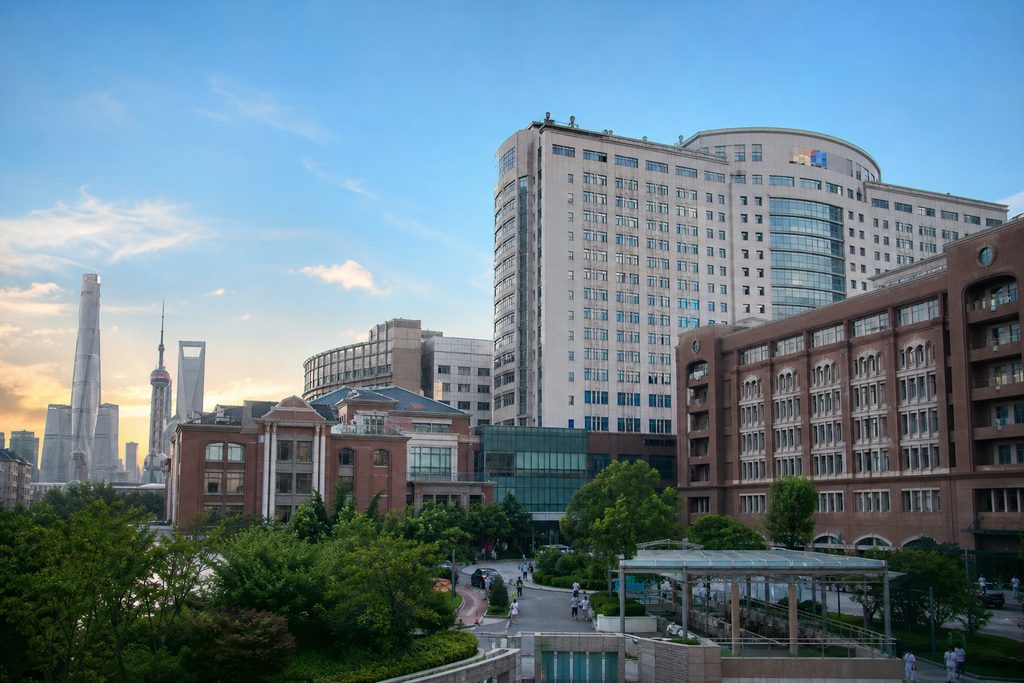
Huashan Hospital, affiliated with Fudan University, is not simply a well-known name. In neurosurgery, it is arguably the most important name in China. The hospital’s Department of Neurosurgery was established in 1952 and has grown into a center that handles over 17,000 neurosurgical cases each year. To put that in perspective, many reputable neurosurgery departments in the United States manage 2,000–4,000 cases annually. The volume gap is not marginal. It is structural. And for revision surgery, volume matters enormously.
Clinical Volume Drives Revision Expertise
A 2022 systematic review in Neurosurgery examined the relationship between hospital volume and patient outcomes for complex cranial procedures. The findings were clear: high-volume centers demonstrated statistically significant reductions in 30-day mortality and major complications. Why? Because neurosurgeons who see rare and complex presentations daily develop pattern recognition that no textbook can replicate. At Huashan, a senior neurosurgeon may encounter more challenging revision cases in a single month than a competent surgeon at a mid-sized Western hospital sees in a year. That is not a critique of Western neurosurgery. It is a reflection of China’s population scale and the referral patterns that concentrate the hardest cases at a few elite centers. Huashan is one of those centers. When you ask what is the success rate of brain tumor revision surgery, the honest answer depends heavily on the surgeon’s specific experience with reoperation cases — and Huashan’s caseload provides that experience at a level few institutions worldwide can match.
Technology Deployed at Scale
Walk into Huashan’s neurosurgery wing and you will see intraoperative MRI suites, advanced neuronavigation systems, and awake craniotomy protocols that enable real-time brain mapping during tumor resection. These are not experimental technologies. They are standard operating procedure for complex cases. Intraoperative MRI allows surgeons to scan the brain during surgery and verify that tumor margins are clean before closing. For a revision case where scar tissue obscures normal anatomical landmarks, this capability can mean the difference between a complete resection and leaving residual tumor behind. The hospital also employs intraoperative neurophysiological monitoring as a routine safeguard. This protects critical functions — speech, motor control, sensory processing — while the surgeon works near eloquent brain regions. None of this is unique to China in terms of equipment. What differs is the frequency of use. When a hospital runs these technologies on thousands of cases annually, the surgical teams develop workflows that are fast, precise, and deeply familiar. Familiarity reduces errors.
Cost Structure Without Quality Compromise
Let us address the question most patients ask first: brain tumor surgery cost China. For a complex revision craniotomy at Huashan Hospital’s International Medical Center, you should expect a range of $18,000 to $35,000 USD. This includes the surgeon’s fee, anesthesia, operating room charges, intraoperative monitoring, a private recovery room, and standard post-operative care. It does not include pre-operative imaging if you need new scans, extended ICU stays beyond the typical recovery window, or treatment for unexpected complications — those are variable and billed separately.
Compare this to the United States, where a revision craniotomy for tumor recurrence often runs $80,000 to $150,000, and can exceed $200,000 if complications arise or if the hospital is in a major metropolitan area. Even in countries like Germany or Singapore, costs frequently land between $50,000 and $80,000. The structural reasons for China’s lower costs are straightforward: lower physician labor costs, hospital operational efficiencies at scale, and a healthcare system that does not carry the same administrative overhead burden as the US insurance-driven model. These savings do not reflect lower surgical quality. The surgeons at Huashan train internationally, publish in peer-reviewed journals, and operate with the same equipment you would find at a top-tier Western neurosurgery center. The difference is the economics of the system around them.
For those specifically searching Huashan Hospital neurosurgery revision price, the International Medical Center quotes are transparent. You will receive an itemized estimate before committing. The final figure depends on tumor location, size, proximity to critical brain structures, and your overall health status. No reputable coordinator will give you a fixed price without reviewing your medical records and imaging first. Anyone who does is guessing, and you should not make decisions based on guesses.
What You Need to Know Before Pursuing Revision Surgery in China
Honesty matters here. Coming to China for brain surgery is not like booking a flight and showing up. The system has real barriers. If you try to navigate them alone without Chinese language ability and local knowledge, you will likely fail. Not because the care is inaccessible, but because the administrative layer between you and the operating room is thick.
- Visa Requirements Are Specific: You cannot enter China on a tourist visa for surgery. Medical treatment requires an S2 visa, specifically annotated for medical purposes. Your accompanying family members also need S2 visas. The hospital must provide an official invitation letter confirming your treatment plan. Without that letter, the visa application stalls. This is not a formality you can bypass with a phone call. It requires a formal relationship with the admitting hospital.
- Public Registration Channels Will Not Work for You: Huashan’s standard outpatient clinics see thousands of patients daily. Appointments are booked through a Chinese-language app or in-person queuing systems. You cannot pre-book a specific senior neurosurgeon through public channels from overseas. The surgeons you want — the ones with deep revision experience — primarily see patients through the hospital’s International Medical Center or VIP pathways. Those channels require a coordinator who speaks the language and understands the internal referral process. Attempting to book independently through public registration will leave you frustrated and without a confirmed surgical date.
- Payment Is Upfront and Insurance Reimbursement Is Retroactive: Chinese public hospitals, including Huashan, require payment before treatment. You will pay the estimated surgical costs upon admission. If you have international health insurance, you will need to seek reimbursement from your insurer after discharge. The hospital will provide detailed invoices and medical documentation in English to support your claim. But they will not bill your insurer directly. This means you need the cash or credit available upfront. For a $25,000 surgery, that is a real consideration. Some patients secure medical loans or use family resources, knowing reimbursement will follow. But the cash flow must exist at the time of admission.
How We Help You Navigate This
These barriers are not accidents. They are structural features of a system designed to serve a domestic population of 1.4 billion people. International patients were never the primary design consideration. That does not make the system hostile. It makes it opaque. Our job is to make it transparent.
When you contact us, the first thing we do is listen. We need your medical records, imaging (MRI with contrast, preferably within the last three months), surgical history, and pathology reports from your first operation. Our team translates these documents into clinical Chinese and submits them to the neurosurgery department at Huashan’s International Medical Center. We do not diagnose. We do not offer opinions on whether surgery is appropriate. We facilitate the conversation between you and the surgeons who will make that determination.
Once the department reviews your case and confirms they are willing to accept it, we coordinate the invitation letter for your S2 visa application. We schedule your pre-operative consultations, imaging if needed, and the surgical date. When you arrive in Shanghai, a bilingual medical companion meets you at the airport. This person handles the practical realities: registration paperwork, payment processing, translating conversations with your surgical team, and guiding you through pre-operative preparations. During your hospital stay, they are your voice when you need to ask questions about medication, recovery milestones, or discharge instructions. After discharge, we help coordinate follow-up imaging and consultations before you fly home.
We coordinate directly with Huashan’s official International Medical Center. We do not promise access to a specific named surgeon — no ethical coordinator can guarantee that, because surgeon availability depends on schedules and case appropriateness. What we promise is that your case will be reviewed by the appropriate senior neurosurgeon with revision experience, and that if we cannot secure a confirmed surgical date, our coordination fee is refunded in full. That is the standard we hold ourselves to.
Is a Second Brain Surgery Safe? Understanding the Real Risks
When patients search for the best hospital for brain tumor reoperation Shanghai, they are looking for a center where revision cases are not exceptions but core competencies. Huashan fits that description. Its neurosurgery department is consistently ranked among China’s top three in the Fudan University specialty reputation rankings. The annual surgical volume exceeds 17,000 cases, which means the department sees a high absolute number of revision craniotomies. The hospital operates intraoperative MRI, advanced neuronavigation, and awake craniotomy protocols as standard tools. These factors combine to create an environment where complex reoperations are handled by teams that perform them frequently — and frequency drives better outcomes.
This is the question everyone thinks and not everyone asks aloud. Huashan’s neurosurgery department has a dedicated neurosurgical ICU staffed by neurointensivists who manage post-operative complications. The hospital can handle intraoperative crises — bleeding, swelling, unexpected neurological changes — with the full resources of a major academic medical center. That said, you are far from home. If a prolonged ICU stay becomes necessary, your costs will increase beyond the initial estimate. If you need extended rehabilitation, that will need to be arranged. We help patients plan for these contingencies by discussing realistic recovery timelines before travel and by maintaining communication with your family throughout your stay. We do not control outcomes. We do ensure you are not alone in navigating them.
Yes. We facilitate written second opinions from Huashan neurosurgeons based on your submitted imaging and records. The cost ranges from $300 to $500 USD. This gives you an expert assessment of whether your case is suitable for revision surgery, what approach the surgeon would recommend, and what the expected risks and recovery trajectory look like. If you later proceed with surgery through our coordination service, that second opinion fee is credited in full toward your coordination costs. This means you are not paying extra to get informed — you are making a deposit on your eventual care if you choose to move forward.
Your Next Step
Facing a second brain surgery is not something anyone plans for. The recurrence was not in your plans. The cost of care at home was not in your budget. The search for alternatives was not how you wanted to spend your time. But here you are. And the path forward exists. Shanghai Huashan Hospital offers revision neurosurgery at a level of expertise that rivals the world’s best centers, at a cost that makes treatment accessible without financial ruin.
If you want to understand whether your specific case is suitable for treatment at Huashan, start with a conversation. No commitment. No pressure. Just an honest discussion about your situation, your imaging, and what the next steps would look like. You can learn more about how we support international patients throughout the treatment journey on our patient coordination page. For a broader look at China’s top-ranked neurosurgery centers, visit our specialty hospital directory. When you are ready to talk, we are here.
Frequently Asked Questions
Yes. We work with JCI-accredited and major Grade 3A tertiary hospitals that follow international safety standards comparable to top hospitals in the US and Europe. Surgical teams perform high volumes of procedures — often more than their Western counterparts — which studies show leads to better outcomes.
Costs vary by procedure and hospital, but international patients typically save 40-80% compared to US prices — even when factoring in travel and accommodation. A consultation with our team will give you an exact, all-inclusive quote with no hidden fees.
Send us your existing medical reports. The relevant specialty reviews them and gives you a written opinion, including treatment direction and options, before you commit to any travel. From there you can add a video consultation with the doctor, or have us attend an appointment on your behalf.
For more medical information and treatment options in China, visit chinamedservices.com (China Medical Services).
