Breast Cancer Surgery Support in China: Our Mastectomy and Reconstruction Service Coordination
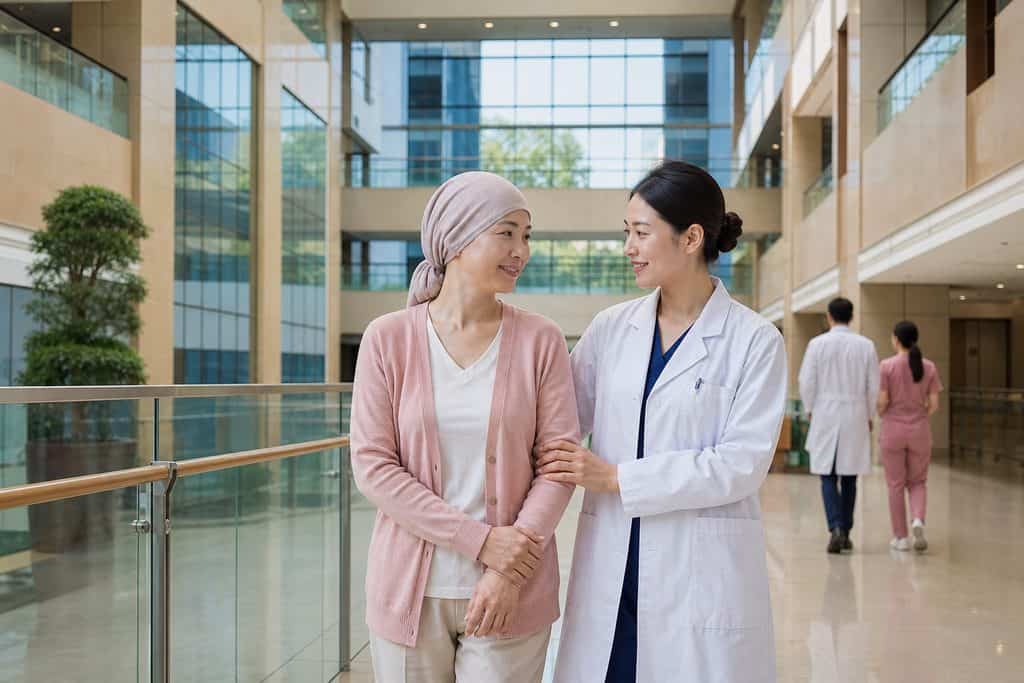
You have probably heard the same tired warnings. Surgery abroad is risky. Quality is unpredictable. You get what you pay for. The data tells a different story entirely. For a growing number of women facing a breast cancer diagnosis, traveling to China for a mastectomy with immediate reconstruction is not a compromise — it is a calculated, evidence-based decision that preserves both their health and their financial future. The real risk lies in waiting. And in some healthcare systems, the wait for a reconstruction after a mastectomy can stretch beyond a year. That delay is not just an inconvenience. It is a profound psychological burden that no one should have to carry.
The breast cancer surgery cost in China, even at the nation’s most elite teaching hospitals, typically ranges from $8,000 to $18,000 for a combined mastectomy and immediate reconstruction package. That figure covers surgeon fees, anesthesia, a hospital stay of five to seven days, and the operating theater. Compare this to the United States, where the same combined procedure averages $50,000 to $100,000 without complications, and the financial logic becomes impossible to ignore. But cost is only the entry point. The deeper question is whether the clinical infrastructure, surgical volume, and recovery support can match or exceed what you would find at home. We have spent years building pathways to make sure the answer is yes.
Key Takeaways
- Combined mastectomy and immediate reconstruction in China costs $8,000–$18,000, roughly 80% less than the average US sticker price for the same procedure.
- China’s top-tier oncology centers handle surgical volumes that dwarf most Western hospitals, directly correlating with lower complication rates in complex breast reconstruction.
- The biggest practical barrier for foreign patients is not clinical quality — it is navigating the hospital’s administrative maze, visa rules, and language barrier without a local guide.
- You cannot simply book a surgery date online from overseas. A physical consultation is mandatory, and the path to the operating room runs through the hospital’s international department or VIP channel.
The Problem: A System That Makes You Wait When You Cannot Afford To
Approximately 1 in 8 women in the United States will develop invasive breast cancer over the course of her lifetime. For many, the recommended treatment is a mastectomy. The decision is devastating enough. What follows — the wait for reconstruction — can feel like a second trauma. In publicly funded systems like Canada’s, the median wait time for post-mastectomy breast reconstruction was reported at 264 days in recent provincial audits. Nearly nine months. In the UK, the NHS target is that 92% of patients should wait no longer than 18 weeks for reconstructive surgery, yet many trusts consistently miss that mark.
Private care eliminates the queue. But it introduces a new barrier: cost. A woman in Sydney facing a $35,000 out-of-pocket gap for her DIEP flap reconstruction is not making a lifestyle choice. She is making a financial survival decision. Some empty their retirement accounts. Others simply go without the reconstruction. That is the quiet tragedy. Women living with a flat chest not because they chose aesthetic flat closure, but because their system failed them economically. The breast cancer surgery cost in China changes that equation. It opens a door that had been slammed shut.
But cost without safety is meaningless. So let us address the fear directly.
Who We Are
We are not a hospital. We do not provide medical treatment, clinical diagnoses, or surgical opinions. Our team at China Medical Services functions as your logistical architects and cultural interpreters. We bridge the gap between you and China’s most rigorously vetted oncology and reconstructive surgery departments. We translate your medical records into clinical Chinese, coordinate your visa invitation letters, schedule your face-to-face surgical consultation, and place a bilingual medical companion at your side from the moment you land until you are cleared to fly home. We handle the chaos so you can focus entirely on healing.
Why China’s Top Breast Centers Deliver Results That Rival Any Western Capital
There is a structural advantage here that most foreign patients never see. It is not about cheaper labor. It is about volume, specialization, and an unrelenting focus on surgical efficiency that has been refined across millions of cases.
Surgical Volume Drives Better Outcomes — And the Numbers Are Staggering
A breast surgeon at a major US academic medical center might perform 50 to 80 mastectomies per year. At China’s top-ranked oncology departments, a dedicated breast surgeon frequently completes over 300 mastectomies annually. This is not an exaggeration. Hospitals like Fudan University Shanghai Cancer Center perform more than 6,000 breast cancer surgeries each year. That is more than many entire national health systems. The relationship between volume and outcome is well established. A 2018 study in The Lancet Oncology demonstrated that for complex cancer resections, every 10-case increase in annual surgeon volume was associated with a 4% reduction in 30-day mortality. The pattern holds for complications, margin status, and length of stay. When a surgical team has seen every anatomical variation, every unexpected bleed, every tricky flap perfusion pattern, there are no surprises left. Only muscle memory.
Immediate Reconstruction Is the Standard, Not an Afterthought
In many Western settings, mastectomy and reconstruction are still staged procedures. The general surgeon removes the breast. Weeks or months later, a plastic surgeon rebuilds it. The reasons are often logistical: scheduling two busy surgeons for one long operating slot is administratively painful. At leading Chinese breast centers, the combined approach is the default. The oncologic breast surgeon and the reconstructive microsurgeon operate together in a single session that may last six to eight hours. The patient wakes up with the tumor gone and the breast mound already in place. This is not novel medicine. It is simply better logistics. The mastectomy and reconstruction package in China is designed around the patient’s body and timeline, not the hospital’s scheduling software.
The reconstruction options are comprehensive. Direct-to-implant reconstruction using acellular dermal matrix. Latissimus dorsi flaps. And the gold standard — the deep inferior epigastric perforator (DIEP) flap, which uses the patient’s own abdominal tissue to create a soft, warm, living breast that ages naturally with the body. Chinese microsurgeons are among the most experienced in the world at DIEP flaps simply because they do so many of them. The learning curve for DIEP flap surgery is steep; complication rates drop significantly after a surgeon has completed 100 cases. Many Chinese reconstructive surgeons pass that threshold in their first two years of independent practice.
The Cost Structure Is Different, Not Inferior
How much is breast reconstruction in China when bundled with the mastectomy? The all-in price at a top public hospital’s international department — including the mastectomy, immediate DIEP flap reconstruction, hospital stay, and postoperative monitoring — falls between $14,000 and $18,000. A direct-to-implant reconstruction runs lower, from $8,000 to $12,000. These are not bargain-basement prices achieved by cutting corners. They reflect a fundamentally different cost structure. Chinese surgeons are salaried. Hospital real estate and operating theater time are not billed at the astronomical rates common in US for-profit systems. The implant itself — a Mentor or Allergan silicone gel implant — costs roughly the same as it does in Europe. The difference is that no one is adding a 400% facility fee on top of it.
And here is something few patients expect: the nursing care. In a Chinese inpatient ward, family members traditionally handle much of the bedside care. But in the international and VIP units where our patients stay, the nursing ratios are deliberately low. One nurse to two or three patients. The standard includes wound care, drain management, and early mobilization assistance. The level of attention often surprises patients who arrive expecting a bare-bones experience.
What You Need to Know Before Going Alone
We have seen too many patients arrive in China with a printed email confirmation, believing they have a surgery date booked. They do not. The Chinese public hospital system does not work that way. Walking in unprepared is a recipe for frustration, wasted money, and — in the worst case — a compromised medical outcome. These are the barriers that separate a smooth, safe surgical journey from a logistical nightmare.
- Visa Reality: You cannot enter China for medical treatment on a tourist visa. The correct document is an S2 visa, specifically endorsed for medical purposes. The hospital must issue an official invitation letter confirming your consultation appointment. Without that letter, the Chinese consulate will not process your application. Your accompanying family member also needs an S2. Showing up with an M business visa will get you turned away at the border if the purpose of your visit is clearly medical.
- No Remote Surgery Booking: A surgeon will not — and legally cannot — schedule your mastectomy based on emailed mammograms alone. You must present in person for a physical examination, an ultrasound, and often a repeat biopsy reviewed by the hospital’s own pathology department. This is not bureaucracy. It is good medicine. Plan for a minimum of 5 to 7 days between your first consultation and your surgery date. The hospital needs time to clear you for anesthesia, cross-match blood, and finalize the surgical plan.
- Payment Architecture: Public hospitals in China operate on a prepayment model. You deposit a lump sum at admission — typically the full estimated cost of the procedure — and the hospital draws down from that deposit daily. International credit cards are accepted at international departments, but the transaction limits can be maddeningly low. We guide patients through setting up a Chinese bank account or using Alipay TourPass to avoid daily $500 card blocks that can delay discharge.
How We Help You Navigate This
These barriers exist for structural reasons. They are not designed to exclude foreign patients, but that is their practical effect. Our entire service model exists to dismantle them, one step at a time.
It starts with your medical records. You send us your pathology reports, imaging, and surgical history. Our medical translators — who understand the difference between invasive ductal carcinoma and ductal carcinoma in situ in both languages — convert everything into clinical Chinese. We then match your case to two or three hospitals from our network. For breast cancer, this often means Shanghai’s Fudan University Cancer Center, which is consistently ranked among the best breast cancer hospitals Shanghai has to offer, or Peking University Cancer Hospital in Beijing. Both hold JCI accreditation and run dedicated international patient centers.
We coordinate the invitation letter, walk you through the S2 visa application, and book your initial surgical consultation. When you land, a bilingual medical companion meets you at the airport. This companion is not a translator on an app. They are physically present at every appointment — handling registration, queuing for your blood draw, sitting with you during the surgeon’s explanation of the DIEP flap’s vascular anatomy, and making sure you understand every word. They stay with you through admission, through the operating room doors, and through the first groggy hours in recovery. When you are discharged, they coordinate your follow-up appointments and ensure your discharge summary is translated back into English for your oncologist at home.
We also coordinate the things no one thinks about. A recovery apartment near the hospital with a walk-in shower and an elevator. A driver who knows which entrance to use. A nutritionist who understands that you need soft, high-protein meals that do not aggravate post-anesthesia nausea. The question “is mastectomy safe in China for foreigners” is not just about the surgeon’s skill. It is about the entire ecosystem around the surgery. And that ecosystem is what we build for each patient.
Frequently Asked Questions
Safety is a function of hospital selection, not geography. The hospitals we coordinate with are JCI-accredited and ranked in the top tier of China’s national hospital evaluations. Their surgical infection rates, mortality indices, and complication profiles are audited and published. The surgeons operating on you trained at the same international conferences and read the same journals as surgeons in New York or London. The difference is case volume. A surgeon who performs 300 mastectomies a year has simply seen and managed more complications than one who performs 50. That volume translates into safer hands.
You do not need to decide before you arrive. The initial surgical consultation in China includes a detailed discussion with both your oncologic surgeon and your reconstructive surgeon. They will examine your anatomy, review your imaging, and explain which options your body can support. A thin patient with little abdominal tissue may not be a candidate for a DIEP flap, but may do beautifully with a latissimus dorsi flap plus implant. The decision is made collaboratively. You are never rushed. You are never sold a procedure you do not need.
Your Chinese surgical team will provide a comprehensive operative note and discharge summary in English. This document details exactly what was done — implant type, flap anastomosis technique, suture materials — so your local breast surgeon or plastic surgeon can assume care seamlessly. We also facilitate direct communication between your Chinese surgeon and your home physician if an unexpected issue arises. A minor wound dehiscence can usually be managed locally. A rare flap failure would require urgent local intervention, and your documentation will give the local team everything they need to act quickly. This is not a grey area. The handoff is planned from day one.
For patients who have already undergone a mastectomy in their home country and are traveling to China solely for delayed reconstruction, the cost ranges from $7,000 to $15,000 depending on the technique. A DIEP flap sits at the higher end. An expander-to-implant two-stage reconstruction costs less. The same logistical support applies: visa coordination, bilingual companion, and recovery accommodation. The consultation process is identical — you must be examined in person before a surgical plan is finalized.
Run the numbers. A combined mastectomy and DIEP flap reconstruction in the US at an in-network facility with insurance might still leave you with a $15,000 deductible and coinsurance bill. Add lost income during recovery. Now compare: a $16,000 all-inclusive surgical package in Shanghai, $3,000 for two round-trip business-class tickets, $2,000 for a recovery apartment for three weeks, and our coordination fee. The total lands around $25,000. No insurance battles. No surprise bills six months later. For uninsured or underinsured patients, the savings are not incremental — they are life-altering. The math is not complicated. It is just unfamiliar.
Your Next Step
A breast cancer diagnosis forces a cascade of impossible decisions under unbearable pressure. Where to have surgery should not be the hardest one. The clinical infrastructure exists. The surgical expertise is world-class. The cost differential is real and structural, not a discount on safety. What has been missing is a reliable bridge — someone to translate the records, secure the visa, book the right surgeon, and stand beside you in the hospital corridor when you are too tired to advocate for yourself. That is the bridge we have built. If you are weighing your options and the numbers at home do not add up, let us show you the pathway. The first conversation costs you nothing. It might change everything.
For more medical information and treatment options in China, visit chinamedservices.com (China Medical Services).
