Sun Yat-sen University Cancer Center Breast Surgery: A Guide for International Patients
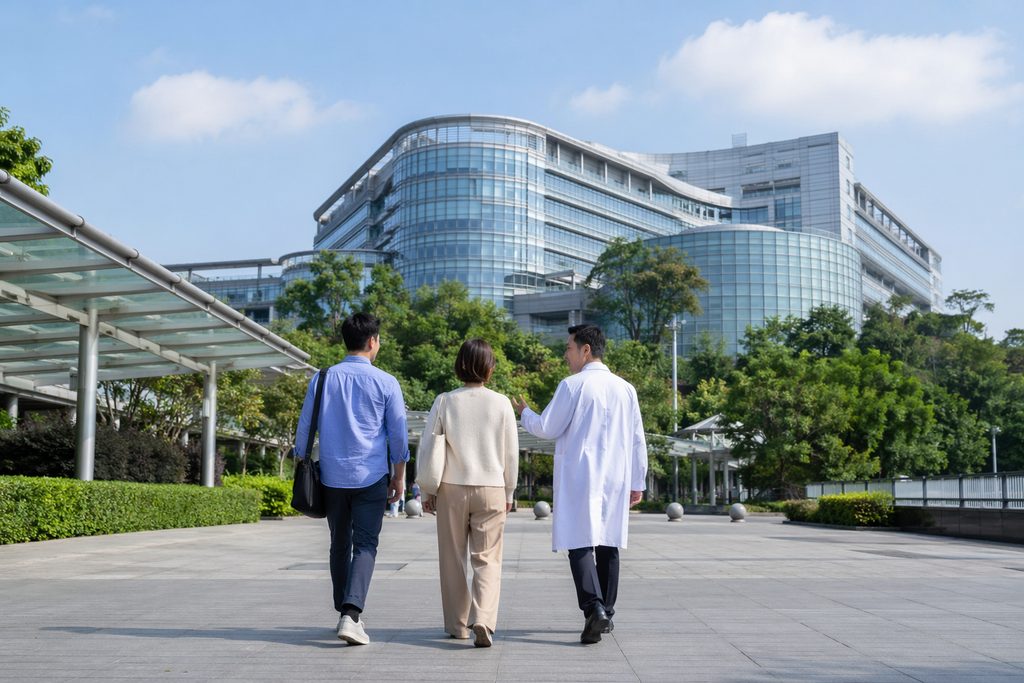
Breast cancer surgery at Sun Yat-sen University Cancer Center (SYSUCC) in Guangzhou is a serious option for international patients facing high treatment costs at home. The facility ranks among China’s top oncology institutions, with breast surgery volumes that dwarf most Western centers. But navigating the process from abroad requires understanding how the system actually works — not how you might hope it works. This guide explains the costs, the clinical reality, the visa pathway, and the logistics that determine whether this route makes sense for you.
Key Takeaways
- SYSUCC performs breast cancer surgeries at roughly 20–30% of typical U.S. private-pay costs, with total treatment packages often landing between $8,000 and $25,000 depending on complexity.
- The center is consistently ranked among China’s top 10 for oncology by the Fudan University hospital rankings — a distinction earned through volume, not marketing.
- Public hospital rules mean you cannot book breast surgery from overseas without an in-person consultation first, unless you access the international VIP channel.
- Language, payment, and post-operative follow-up coordination are the three biggest practical hurdles — and all three are solvable with proper planning.
The Problem: Breast Cancer Surgery Costs Are Crushing Western Patients
A mastectomy with reconstruction in the United States routinely exceeds $50,000. Add lymph node dissection, anesthesia, pathology, and a hospital stay, and the bill can climb past $100,000 for uninsured or underinsured patients. Even with insurance, out-of-pocket maximums combined with lost income during recovery push many families into medical debt. The American Cancer Society reports that over 40% of cancer patients deplete their life savings within two years of diagnosis.
European patients face a different pressure: waiting. In the UK’s NHS, the 62-day cancer referral target has been missed for years, with breast cancer patients in some regions waiting 8–12 weeks from urgent referral to first treatment. Canada’s median wait for breast cancer surgery after diagnosis sits around 3–4 weeks, but can stretch to months in provinces with surgical backlogs.
For patients paying out of pocket — or facing delays that feel medically unacceptable — the question becomes: where else can I get this done well, and soon, without bankrupting my family?
Why Sun Yat-sen University Cancer Center Delivers Results
SYSUCC is not a small boutique clinic. It is a massive cancer-dedicated hospital in Guangzhou with over 2,100 beds and a clinical staff that treats more than 100,000 new cancer patients annually. The breast surgery department operates at a scale that changes outcomes.
Clinical Volume Drives Surgical Precision
Chinese top-tier cancer centers operate on a fundamentally different scale than Western hospitals. A senior breast surgeon at SYSUCC may perform 300–500 breast cancer procedures per year. The average U.S. general surgeon performs fewer than 50 breast cancer operations annually. That gap matters. Studies published in The Lancet Oncology and Annals of Surgical Oncology have repeatedly linked higher surgeon and hospital volume to lower complication rates, shorter operative times, and better long-term survival for breast cancer patients.
Volume also means the surgical team has seen every variation: early-stage lumpectomies, complex mastectomies with immediate reconstruction, cases involving neoadjuvant chemotherapy. Nothing is unusual to them.
Technology and Multidisciplinary Workflow at Scale
SYSUCC runs a true multidisciplinary tumor board model. Breast cancer cases are reviewed by surgeons, medical oncologists, radiation oncologists, pathologists, and radiologists together — not sequentially. For international patients, this means the treatment plan you receive reflects consensus, not one surgeon’s preference.
The center uses intraoperative frozen section pathology, sentinel lymph node biopsy with dual-tracer mapping, and oncoplastic techniques as standard practice. Robotic-assisted and endoscopic breast surgery options exist for selected patients. The pathology lab processes thousands of breast tissue specimens monthly, which means faster turnaround on receptor status (ER/PR/HER2) and genomic testing.
Cost Advantage Without Quality Compromise
The breast cancer surgery cost Sun Yat-sen University Cancer Center charges reflects structural economics, not lower standards. Chinese physician salaries are a fraction of U.S. equivalents. Hospital construction and equipment costs were amortized over decades of state investment. Malpractice insurance premiums are dramatically lower. None of these factors affect the quality of the scalpel.
What does this mean in real numbers? A straightforward lumpectomy with sentinel node biopsy might cost $5,000–$8,000. A full mastectomy with axillary dissection runs $8,000–$15,000. Immediate reconstruction adds $5,000–$10,000 depending on technique. The same procedures in the U.S. cost three to five times more. And these are the international patient rates — local patients pay even less.
What Breast Surgery at SYSUCC Actually Looks Like for a Foreign Patient
Let’s walk through the real process, because it differs from what you may expect from a Western hospital.
You do not simply email the hospital and book a surgery date. Public Chinese hospitals operate on a same-day registration system for outpatient clinics. Foreign patients who want a pre-arranged, English-supported experience use the hospital’s international department or a designated VIP channel. This is not an access fee — it is a coordination service that arranges your initial consultation, imaging, and admission through the official hospital pathway.
The typical timeline looks like this:
Week 1: You send your existing records — mammograms, ultrasound reports, biopsy pathology slides, receptor status results — for preliminary review. A written second opinion from a SYSUCC breast specialist costs $300–$500 and tells you whether your case is suitable for treatment there, and what the recommended surgical approach would be.
Week 2–3: You arrive in Guangzhou on an S2 visa (the correct category for short-term medical treatment). Your first in-person consultation happens within days of arrival. The surgeon reviews your records, orders any missing imaging, and confirms the surgical plan.
Week 3–4: Surgery is scheduled. For straightforward cases, admission can happen within 7–14 days of the initial consultation. Complex cases requiring additional imaging or multidisciplinary review may take longer.
Post-surgery: Inpatient recovery for a mastectomy typically lasts 3–7 days. Lumpectomy patients often go home the next day. Drains, wound care, and pathology results are managed before discharge.
The entire process — from first contact to completed surgery — commonly fits within 4–6 weeks.
Cost Breakdown: Breast Cancer Surgery in China for Foreigners
Knowing how much is breast cancer surgery in China for foreigners requires looking at the component costs, not just a single headline number. Here is a realistic breakdown for SYSUCC international patients:
| Procedure / Service | Estimated Cost (USD) | Comparison: U.S. Private Pay |
|---|---|---|
| Lumpectomy with sentinel node biopsy | $5,000 – $8,000 | $20,000 – $40,000 |
| Mastectomy (simple, no reconstruction) | $8,000 – $15,000 | $35,000 – $60,000 |
| Mastectomy with immediate reconstruction | $13,000 – $25,000 | $50,000 – $100,000+ |
| Written second opinion (remote) | $300 – $500 | $500 – $2,500 (U.S. academic centers) |
| Video consultation with breast specialist | $100 – $300 | $200 – $600 |
| In-person specialist consultation (international dept) | $800 – $1,200 | $300 – $700 (but weeks of waiting) |
| Bilingual medical companion (per day) | from $300 | N/A — not typically offered |
These figures are ranges. Your actual cost varies by hospital and case complexity. Neoadjuvant chemotherapy before surgery, extended lymph node dissection, or complex reconstruction will push the total higher. But even at the top of the range, most international patients pay less than half of what the same care would cost in the U.S. or Western Europe.
Breast cancer treatment packages China for international patients are not standardized products. Some private international hospitals in Shanghai and Beijing offer bundled packages that include surgery, hospital stay, nursing care, and basic follow-up for a fixed price. SYSUCC’s international department provides itemized billing rather than packages, which gives you a clearer picture of where your money goes. Both approaches have merit — packages offer predictability; itemized billing offers transparency.
Is Sun Yat-sen University Cancer Center Good for Breast Surgery? An Honest Assessment
Short answer: yes, it is one of the strongest options in China. But let’s be precise about what that means.
SYSUCC is ranked among China’s top 10 hospitals for oncology in the Fudan University hospital rankings — the most authoritative hospital evaluation system in China. The breast surgery department is a national key clinical specialty, meaning it receives priority funding and sets treatment standards for the country. Its surgeons publish in international peer-reviewed journals and participate in global clinical trials.
But there are trade-offs. The hospital is enormous. Daily outpatient volume exceeds 10,000 visits across all departments. Without Chinese language ability, you will struggle to navigate registration, payment queues, imaging departments, and pharmacy pickups. The hospital’s international department exists precisely because this is a recognized problem — but even with that support, the experience is not a Western-style concierge experience.
If you expect a private room with hotel-like amenities, you will be disappointed. Chinese public hospitals prioritize clinical efficiency over comfort. Private international hospitals in China — such as United Family or Jiahui — offer a more familiar environment, but their oncology departments cannot match SYSUCC’s surgical volume or subspecialty depth for breast cancer.
For most international patients, the smart approach is hybrid: use SYSUCC for the surgery itself, and arrange accommodation at a nearby international hotel or serviced apartment for recovery. Guangzhou has excellent options within 15 minutes of the hospital.
Practical Considerations: Documentation, Visa, and Payment for Your SYSUCC Breast Surgery
Before you book anything, understand the administrative requirements. They are not insurmountable, but they are specific.
Medical records. You need complete documentation: imaging (mammogram, ultrasound, MRI if done), pathology report from your biopsy, and receptor status (ER, PR, HER2, Ki-67). If your slides are available, arrange to have them sent or bring them physically. SYSUCC pathologists will re-confirm the diagnosis — this is standard practice and adds a layer of safety.
Visa. The correct visa for medical treatment in China is the S2 visa, annotated for medical purposes. Accompanying family members also apply for S2 visas. You will need an invitation letter from the hospital or a supporting document from a coordination service. The S2 visa typically allows stays of up to 180 days. For treatment exceeding that, an S1 visa applies. Do not apply for an M visa — that is for commercial and trade activities, and using it for medical treatment can create problems at the border.
Payment. Chinese public hospitals require prepayment. You will deposit funds at admission, and the hospital deducts from that balance as services are rendered. International credit cards are accepted at SYSUCC’s international department, but confirm limits with your card issuer before traveling. Wire transfers are also common for larger deposits. U.S. and European insurance policies rarely provide direct billing with Chinese public hospitals — you pay upfront and seek reimbursement afterward.
Language. SYSUCC’s international department has English-speaking coordinators, but they are not available 24/7. On the wards, nursing staff may have limited English. A bilingual medical companion who handles translation during consultations, explains discharge instructions, and helps with pharmacy and billing is worth considering. This is not a luxury — it is a practical tool that prevents miscommunication about medication schedules, drain care, and follow-up appointments.
Follow-up after returning home. Your SYSUCC surgeon will provide a discharge summary in English (request this specifically), including pathology results, surgical notes, and recommended adjuvant therapy. You will need a local oncologist to continue care — chemotherapy, radiation, or hormone therapy — after you return. Plan this handoff before you travel. The written second opinion and discharge documents are designed to make this transition smooth for your home-country medical team.
Frequently Asked Questions
Not through the standard public pathway. Public hospital rules require an in-person consultation before surgery can be scheduled. However, the international department and VIP channel allow you to pre-arrange your initial consultation, submit records for preliminary review, and coordinate a surgical timeline before you travel. This is not a guarantee of a specific surgery date — it is a structured pathway that minimizes your time in China before surgery.
For a lumpectomy, most patients leave the hospital within 24–48 hours and can resume light activity within a week. For a mastectomy without reconstruction, expect 3–7 days in hospital and 2–4 weeks before you feel comfortable traveling internationally. With immediate reconstruction, recovery extends to 4–6 weeks before long-haul flights are advisable. Your surgeon will clear you for travel based on drain removal, wound healing, and overall condition. Plan to stay in Guangzhou for at least 7–10 days after surgery for follow-up and drain management.
SYSUCC is a full-service cancer hospital with intensive care, interventional radiology, and 24/7 emergency surgical coverage. Complication rates for breast surgery are low — infection rates under 2%, seroma formation manageable, and major bleeding rare. The hospital’s scale means that if a complication arises, the specialists to handle it are in the same building, not a transfer away. You should still purchase medical travel insurance that covers complications and extended stays. This is a realistic precaution, not paranoia.
Yes. SYSUCC’s pathology department processes a high volume of breast cancer specimens daily and follows international protocols for ER, PR, HER2, and Ki-67 testing. HER2 testing includes FISH confirmation when immunohistochemistry is equivocal — the same standard used at U.S. academic centers. If you have any doubt about the accuracy of your home-country pathology, the re-confirmation at SYSUCC is a built-in second check.
Choose SYSUCC if your priority is surgical expertise, clinical volume, and cost efficiency — and you are willing to accept a less polished patient experience. Choose a private international hospital like United Family or Jiahui if you want English-speaking staff throughout, direct insurance billing, and Western-style amenities, and you are willing to pay 2–3 times more for surgery that may be performed by the same caliber of surgeon (many top specialists practice at both public and private facilities). For complex or advanced breast cancer, the public top-tier centers like SYSUCC remain the stronger clinical choice.
Your Next Step
If you are weighing breast cancer surgery abroad, the most important thing is to get accurate information about your specific case before making any travel commitment. China Medical Services helps international patients navigate the Chinese healthcare system — we are not a hospital and do not provide diagnoses, but we do help you understand whether SYSUCC or another top Chinese center is a realistic option for your situation. A free consultation is the lowest-pressure way to start that conversation. Bring your questions. We will give you straight answers.
For more medical information and treatment options in China, visit chinamedservices.com (China Medical Services).
