Cancer Second Opinion in China: What to Know Before You Decide
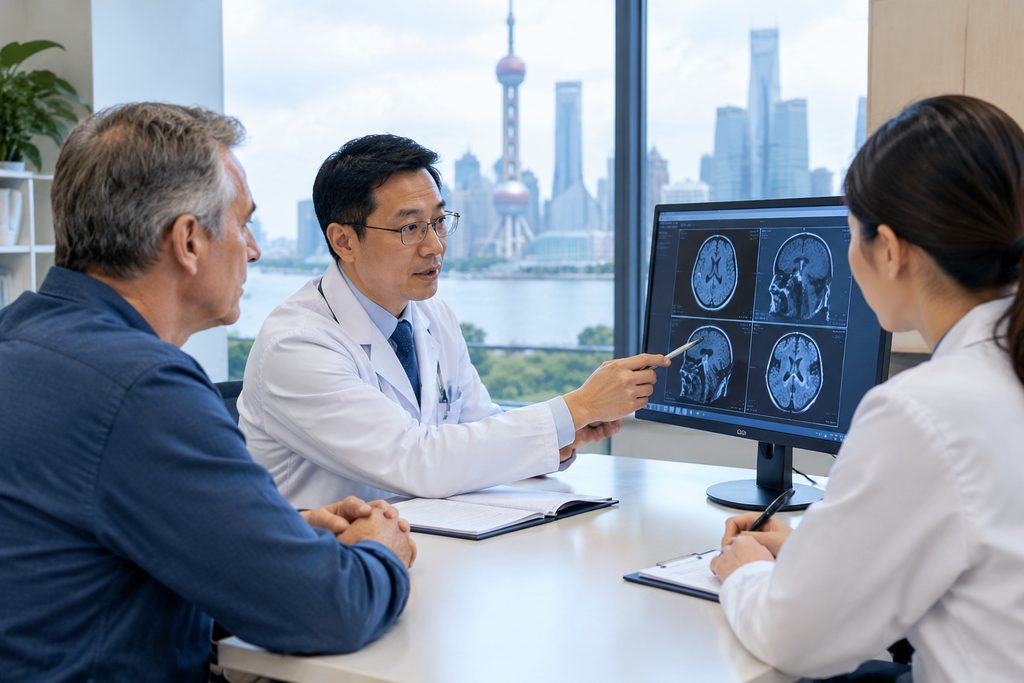
What if the treatment plan you were handed last week isn’t the only one worth considering? For a growing number of patients in the U.S., Europe, and the Middle East, the next step after a cancer diagnosis is a cancer second opinion in China — and the first question is almost always the same. What does it cost, and can I trust it?
Cancer Second Opinion in China Cost: The Short Answer
A written second opinion from a senior specialist at a top-ranked Chinese hospital typically runs $300 to $500. A video consultation with a specialty team runs $100 to $300 at a standard international department, and $500 to $800 with a top-tier specialist. Multidisciplinary team (MDT) reviews, where surgeons, oncologists, and radiologists meet on your case together, sit at $1,500 to $2,000. Those are our published ranges, and final pricing depends on the hospital and the complexity of your records.
Here’s the caveat that matters more than the price. A second opinion is not a treatment. It’s a review of what you already have — pathology slides, imaging, and your current plan — read by people who see volumes of your specific cancer that most Western centers don’t. Whether that review changes anything depends entirely on how complete your records are when they arrive.
The single biggest driver of second-opinion value isn’t the hospital you pick. It’s whether you send full pathology reports, actual imaging files, and treatment history — not a one-page summary.
Who This Is Right For — and Who It Isn’t
Cancer second opinions make the most sense for a specific kind of patient. If you recognize yourself below, this path is worth exploring.
- You have a confirmed diagnosis and a proposed plan, but you want it independently reviewed before committing to surgery, radiation, or a long chemotherapy course.
- You’ve been told your case is “borderline” — operable or not, resectable or not — and you want a second read on that call.
- Your cancer is rare, or your local team sees only a handful of cases a year.
- You’re weighing treatment abroad on cost grounds and want to know whether China is clinically credible before you consider travel.
And here’s who should probably not pursue this.
- Anyone in an acute emergency. If you need surgery this week, a remote review three weeks from now is the wrong tool.
- Patients whose local team is already a high-volume specialist center for their exact cancer. A second opinion may simply confirm what you have.
- Anyone hoping a remote review will produce a definitive “you’re cured” or “you’re terminal” verdict. It won’t. It produces an opinion — one input among several.
- Patients who cannot obtain their pathology slides or imaging files. Without source material, even the best specialist is guessing.
The Options, Compared
Before you spend anything, it helps to see what you’re actually choosing between. These are the realistic routes for a patient seeking an independent review.
| Route | Typical cost | Time to opinion | What you get |
|---|---|---|---|
| Local academic center (same country) | $0–$1,500 (insurance-dependent) | 2–6 weeks | In-person or telehealth review; familiar insurance pathway |
| U.S. comprehensive cancer center remote review | $2,000–$7,500 | 2–4 weeks | Detailed written opinion; often no insurance coverage |
| Written second opinion, Chinese top-tier hospital | $300–$500 | About 1–2 weeks after records arrive | Written analysis and treatment direction from a specialty team |
| Video consultation, Chinese international department | $100–$300 | Days to 2 weeks | Live discussion of symptoms, goals, and recommendations |
| Top-specialist or MDT video review | $500–$2,000 | 1–3 weeks | Senior specialist or multi-department panel on one case |
Which column suits you? If cost is the binding constraint and you mainly want a credible independent read, the written second opinion tier does most of the work. If your case is genuinely complex — multiple organ involvement, unclear pathology, competing surgical opinions — the MDT route earns its price. And if you’re already leaning toward treatment in China, start with a video consultation, because it tells you whether the relationship is worth building before you commit to anything larger.
Is Cancer Treatment in China Safe? An Honest Answer
This is the question Western patients ask us most, and it deserves a direct answer rather than a sales pitch.
China’s top hospitals are not fringe institutions. The Fudan Hospital Rankings evaluate the country’s 35,000-plus hospitals, and the top 100 — spread across 23 cities — represent roughly the top 5% nationally. Many carry JCI accreditation. Fuwai Hospital in Beijing, for example, performs more than 14,000 cardiac surgeries a year, the highest volume in the world. Oncology volumes at major Chinese centers are similarly large, which matters: surgical and treatment outcomes correlate with how many cases a team handles per year.
So the safety question isn’t “are Chinese hospitals good?” It’s “is this specific hospital, in this specific department, right for my specific cancer?” That’s a narrower and more answerable question, and it’s the one a second opinion is designed to address.
The honest counterpoints. Public hospitals in China are enormous — outpatient volumes at top centers can exceed 10,000 visits a day. English is not widely spoken outside international departments. You cannot book a standard public outpatient slot from overseas; registration happens on the day, and surgery is scheduled only after an in-person consultation. That’s the reality, and it’s why most international patients route through a hospital’s international or VIP department, where English-speaking staff exist and pricing runs roughly 1.5 to 2 times the standard channel.
Any service that promises you a guaranteed appointment with a named specialist on a specific date is overpromising. Chinese public hospitals do not work that way. Coordination means we submit your case through the official international department channel and advocate for you — not that we can reserve a surgeon’s calendar.
How to Get a Second Opinion for Cancer in China
The process is more documentation-heavy than most patients expect. Here’s how it actually unfolds.
Step one: assemble your records. You need the full pathology report — not the summary letter, the report, including immunohistochemistry and molecular markers if they exist. You need imaging on disc or in DICOM files, not screenshots. You need your current treatment plan, medication list, and any prior treatments with dates. If your hospital won’t release slides, ask for digital pathology images; many centers now provide them.
Step two: get the records translated. Chinese specialty teams read English, but pathology and imaging reports are dense, and a mistranslated staging line changes the entire review. Professional medical translation is part of what a coordination service handles — it is not a job for a general translation app.
Step three: route the case to the right department. This is where most self-directed attempts stall. Sending a lung cancer case to a general oncology inbox is not the same as sending it to a thoracic oncology team at a hospital ranked among China’s top 10 for that specialty. The department-level rankings are the useful map here, because hospital-wide prestige tells you very little about who is actually strong in your disease.
Step four: receive the written opinion. Expect a document covering the team’s read of your pathology and imaging, their assessment of the proposed plan, alternative approaches, and a recommended direction. It is a reference document, not a prescription, and it should be shared with your treating physician at home.
Step five: decide what happens next. Some patients take the written opinion back to their local team and never travel. Others move to a video consultation, and a smaller number proceed to treatment in China. All three are legitimate outcomes.
What It Costs, and What’s Included
Our published ranges, which exist so you can budget honestly before you speak to anyone:
- Written second opinion from a top hospital specialist: $300–$500
- Video consultation, standard international department: $100–$300
- Top-specialist video consultation: $500–$800
- Multidisciplinary team video consultation: $1,500–$2,000
- In-person top-specialist consultation coordination: $800–$1,200
- Hospital appointment coordination (checkup, outpatient, admission, or surgery): from $300
- Bilingual medical companion, on the ground: from $300 per day
These figures cover coordination and interpretation work — record translation, submission through the hospital’s official international channel, and bilingual support. They do not cover hospital charges, which are billed by the hospital directly and vary enormously by cancer type, stage, and treatment protocol. If you want a sense of how Chinese hospital pricing compares generally, cardiac bypass surgery at a top public hospital runs roughly $12,000 to $20,000 against $120,000-plus in the United States. Cancer treatment cost gaps are typically in a similar range, though immunotherapy and targeted drugs narrow it considerably.
One structural detail worth knowing: any consultation fee is credited in full toward on-the-ground coordination if you proceed to treatment in China within 90 days. It applies once, to the coordination fee only, and never to hospital charges.
Practical Considerations: Records, Visas, Payment, and Follow-Up
Records. Start requesting them the day you decide to seek a second opinion. Pathology slide release can take two to three weeks at some institutions, and everything downstream waits on it.
Visa. If you travel to China for medical treatment, the applicable short-stay category is S2, used for medical treatment and private affairs, subject to the latest requirements from the Chinese embassy or consulate in your country and supported by hospital documentation. Stays beyond 180 days generally fall under S1. Accompanying family members apply under S2 as well. Note that the M visa is a commercial and trade visa and has nothing to do with medical treatment — if a service tells you otherwise, that’s a red flag.
Payment. Public hospitals require prepayment, with insurance reimbursed afterward. Private international hospitals — JCI-accredited facilities with English-speaking staff — often bill insurance directly. Confirm which model applies before you commit.
Language. At a hospital handling 10,000 outpatient visits a day, navigation is genuinely difficult without Chinese. This isn’t a scare tactic; it’s the practical reason bilingual accompaniment exists as a service.
Follow-up at home. Ask your local oncologist in advance whether they will accept and act on an external opinion. Some will, some won’t. Knowing the answer before you spend money is worth the phone call.
Frequently Asked Questions
Yes, for most cases. A written review or video consultation handles the majority of second-opinion needs, and it’s the reason we recommend starting remotely. Travel only becomes necessary when the review identifies a treatment option you want to pursue in person.
It’s a clinical reference document, not a legal instrument or a prescription. Whether your physician acts on it is entirely their call. In practice, most oncologists will read a well-documented external opinion, especially when the source hospital is a recognized high-volume center.
That happens, and it’s uncomfortable. A contradiction doesn’t automatically mean your local team is wrong — it means two qualified groups read the same data differently. The productive move is to bring the discrepancy back to your treating physician and ask them to address it directly.
Look at specialty-level rankings rather than overall hospital reputation. China’s Fudan specialist reputation rankings cover 45 specialties with top-10 lists, so you can identify which hospitals genuinely lead in your disease. Our rankings by city are organized that way, and browsing by department is usually faster than browsing by city.
The review gets delayed or comes back hedged. This is the most common failure point, and it’s almost always fixable — it just costs time. Send everything, even the parts that seem irrelevant.
Your Next Step
A second opinion is a low-cost, low-risk way to pressure-test a plan before you commit your body and your savings to it. It won’t give you certainty, and it shouldn’t be treated as a verdict — but it gives you a second set of trained eyes on a decision you’ll live with.
We’re China Medical Services, a coordination service, not a hospital. We don’t diagnose, we don’t treat, and we don’t promise outcomes. What we do is translate your records, route your case to the right specialty team through official hospital channels, and interpret what comes back. If you’d like to talk through whether a second opinion makes sense for your situation, start with a free consultation — no obligation, and no pressure to travel.
This article is for general information only and is not medical advice. Treatment decisions should always be made with a qualified physician who has reviewed your complete medical history.
For more medical information and treatment options in China, visit chinamedservices.com (China Medical Services).
