Cancer Treatment China Kazakhstan: Cross-Border Care from Almaty
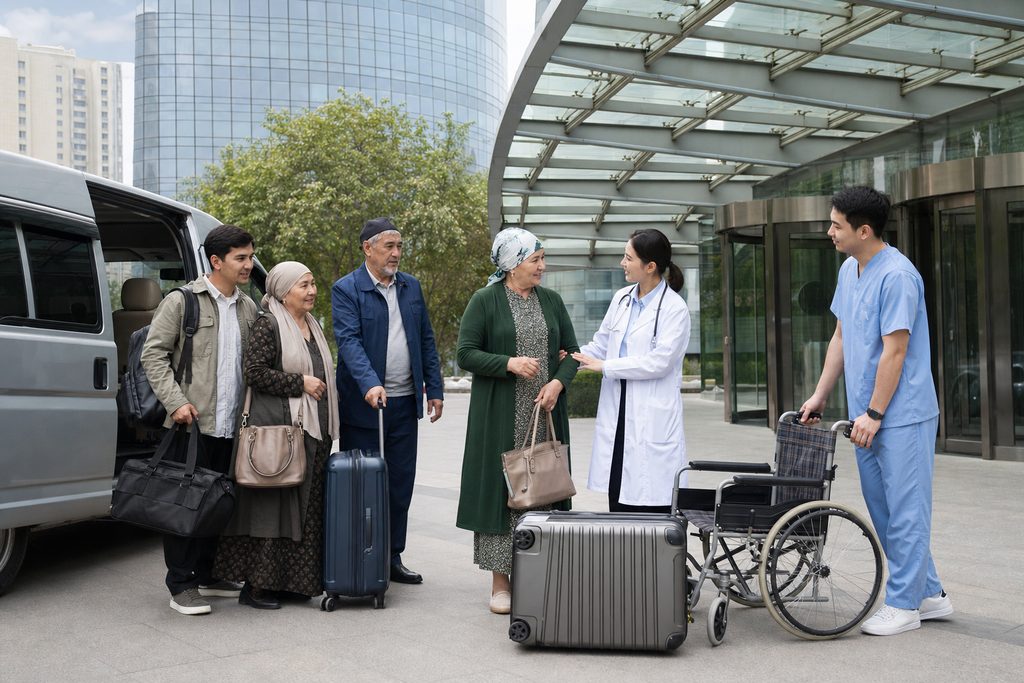
When you hear “cancer treatment abroad,” the first image is often chaos. Unfamiliar hospitals. Language barriers. A maze of logistics while you’re already exhausted. But the core idea is simpler than it sounds: you’re accessing a concentrated pool of clinical expertise and technology that may not be available at home, often at a fraction of the cost you’d face in Western Europe or North America. For families in Almaty considering this path, the question usually isn’t just about medicine. It’s about whether the entire journey can actually work without falling apart.
Our team has spent years building that bridge. We don’t treat cancer. We handle the ground-level reality so you can focus on what matters. This article walks through the real sequence of events, the honest numbers, and the parts nobody talks about — from the moment you type “cancer treatment cost China for Kazakhstan patients” into a search bar to the day you return home.
How This Actually Works, Step by Step
The process starts with paper. Not flights. Not hospital bookings. Paper.
You send us the existing diagnostic materials — pathology reports, imaging discs (CT, MRI, PET-CT), blood work, and a summary of any treatments already completed. Everything must be in English or Russian. If it’s not, we arrange certified translation. This step alone can take three to five business days.
Our team then routes your file to the relevant oncology department at a top-tier Chinese hospital. We work exclusively with institutions ranked in the top 5% of China’s 35,000+ hospitals, as assessed by the Fudan University hospital rankings or JCI accreditation standards. The department reviews your case and produces a written second opinion. This document outlines the Chinese team’s assessment of your diagnosis, proposed treatment protocol, and an estimate of the treatment timeline and cost range. This written opinion costs from $300 to $500. It is for reference only — not a prescription.
If the written opinion makes sense to you and your local oncologist, the next step is usually a video consultation with the Chinese specialist. This costs $500 to $800 for a top-specialist session. You speak directly with the doctor, with a medical interpreter on the line. You ask your questions. You hear the reasoning behind the protocol. You get a feel for the team.
Only after this remote evaluation do we discuss travel. A surprising number of patients never need to travel. The remote consultation alone provides enough clarity to adjust treatment at home. But if the recommended protocol — a specific radiotherapy technique, a surgical approach, a clinical trial — is only available in China, we move to the logistics phase.
Is Cancer Treatment in China Safe for Foreigners? What the Data Shows
Safety isn’t a slogan. It’s a structure.
China’s top-tier hospitals operate under dual accountability. Domestically, they answer to the National Health Commission’s tertiary hospital evaluation standards, which are revised every four years and include over 1,000 measurable indicators covering infection control, surgical volume, mortality rates, and patient safety protocols. Internationally, a growing number have pursued JCI accreditation, the same standard used by hospitals in the United States, Singapore, and the UAE.
The scale is what surprises most Western patients. Fuwai Hospital in Beijing performs over 14,000 cardiac surgeries annually — the highest volume of any center globally. That volume translates into procedural repetition that simply doesn’t exist in smaller systems. For oncology specifically, hospitals like Fudan University Shanghai Cancer Center and Peking University Cancer Hospital treat patient volumes that generate deep subspecialization. A radiation oncologist there may handle more cases of a specific tumor type in one month than a generalist in a smaller country sees in a year.
But safety also means infrastructure for foreign patients. The international medical departments at these hospitals employ English-speaking coordinators, provide translated consent forms, and maintain dedicated inpatient wards with Western-style amenities. This is not the chaotic public outpatient hall you may have seen in videos. That exists. We don’t send our patients there.
The honest answer to “is cancer treatment in China safe for foreigners” is that it depends entirely on which door you walk through. Walk through the international VIP door, with a coordinator who knows the system, and you’re in a highly regulated, protocol-driven environment. Walk through the general public door alone without Mandarin, and you’ll be lost. That’s not a safety issue. That’s a navigation issue.
A Realistic Timeline
People imagine flying to China and starting chemotherapy the next week. That’s not how it works. Here’s an honest sequence.
| Stage | What Happens | Typical Duration |
|---|---|---|
| Document gathering | Collecting all prior scans, pathology slides, reports, and translating if needed | 1–2 weeks |
| Written second opinion | Expert panel reviews materials and issues a written analysis | 5–10 business days |
| Video consultation | Scheduling a live call with the specialist; may require 1–2 weeks lead time for top names | 1–2 weeks to schedule, 45–60 minutes for the call |
| Decision period | You discuss with your family and local doctor; this is your time, not ours | 1–4 weeks |
| Visa processing | S2 visa application with hospital invitation letter; processing times vary by consulate | 1–3 weeks |
| Travel and arrival | Flight from Almaty to Urumqi (1.5 hours) or Beijing (4.5 hours), airport pickup, settling in | 2–3 days |
| In-person consultation and pre-treatment tests | Face-to-face with the specialist, repeat imaging if required, treatment plan finalized | 3–7 days |
| Treatment commencement | First cycle of chemotherapy, first radiation fraction, or surgery date | 1–2 weeks after arrival |
Total realistic window from first contact to treatment start: six to ten weeks. Anyone promising faster is cutting corners you don’t want cut.
What Can Go Wrong — and What Happens Then
Let’s talk about the moments that make people anxious.
The pathology doesn’t match. Sometimes the Chinese hospital requests a re-biopsy or re-staining of your original tissue samples. Their pathologists may disagree with the original classification. This happens in roughly 10–15% of cross-border cases we see, particularly for rare tumors. It’s not a failure. It’s a second set of eyes catching something. The result is a delay of one to two weeks while the pathology department completes its analysis. The treatment plan adjusts accordingly.
The visa is delayed. Consulates in Almaty process S2 visas on their own timeline. A hospital invitation letter helps, but it doesn’t guarantee speed. If the visa takes longer than expected, we push back the hospital appointment. Nothing is booked non-refundably until the visa is in hand.
You arrive and the specialist recommends a different protocol than the remote opinion suggested. The remote evaluation is based on scans and reports. The in-person assessment includes physical examination and sometimes repeat imaging that reveals new information. This is not a bait-and-switch. This is medicine. The remote opinion gives you a direction. The in-person consultation finalizes the map.
You need to stay longer than planned. Treatment response varies. A planned six-week course may extend to eight or ten. We help extend accommodations and adjust return flights. The S2 visa can be extended within China if needed, though it requires a trip to the local Exit-Entry Administration bureau.
In every one of these scenarios, the answer is the same: we handle the adjustment. You don’t navigate it alone.
How to Travel from Almaty to China for Chemotherapy: The Practical Route
Geography matters here. Almaty is closer to western China than it is to Astana.
Urumqi, the capital of Xinjiang, is a 1.5-hour direct flight from Almaty International Airport. That’s shorter than a flight from Almaty to Moscow. Urumqi is home to several large tertiary hospitals with oncology departments that regularly treat patients from Central Asia. The cultural and linguistic overlap — Uyghur, Kazakh, Russian, and Mandarin all spoken — makes the transition less jarring than landing in a purely Mandarin environment.
But the best oncology hospitals in Urumqi for Kazakh patients are not necessarily the best in China overall. They are competent, accredited, and geographically convenient. For complex or rare cancers, however, the flight to Beijing (4.5 hours) or Shanghai (6 hours with a connection) puts you in front of the teams that write the textbooks. The decision is a trade-off: proximity versus subspecialty depth.
The travel sequence looks like this. Direct flight from Almaty to Urumqi, Beijing, or Shanghai. We arrange airport pickup — $200 round-trip. Our bilingual medical companion meets you at the hospital on day one, handles registration, translates every conversation, and stays with you through consultations, tests, and treatment sessions. This costs from $200 per day for an 8-hour shift. For patients staying weeks, we negotiate accommodation near the hospital. Serviced apartments with kitchenettes are common and cost significantly less than hotels.
The visa is an S2 short-stay visa, annotated for private affairs including medical treatment. Your accompanying family member applies for the same category. The hospital provides an official invitation letter and treatment confirmation document. We guide you through the application, but we never guarantee approval — that’s the consulate’s decision.
Practical Considerations: Records, Payment, Insurance, and Follow-Up
Medical records travel before you do. Bring everything. Original pathology slides — not just the report, but the actual glass slides. The Chinese pathology department will re-examine them. Bring the DICOM files of your CT, MRI, and PET-CT scans on a CD or USB drive, not just printed films. Bring a detailed treatment summary from your Kazakh oncologist, in English or Russian, listing every chemotherapy agent, dosage, and cycle number you’ve received.
Payment is upfront. China’s public hospitals, even at the international VIP level, operate on a prepayment model. You deposit an estimated amount at admission, and the hospital draws down from it as services are rendered. Any surplus is refunded at discharge. Costs vary widely by hospital, treatment type, and case complexity. As a reference, a course of chemotherapy at a top-tier international department may range from $3,000 to $8,000 per cycle. Radiotherapy packages can range from $8,000 to $25,000 depending on the technique — IMRT, VMAT, proton therapy where available. These are not quotes. They are ranges based on cases we’ve coordinated.
Insurance is almost always out-of-network reimbursement. Chinese public hospitals do not direct-bill foreign insurers. You pay the hospital, obtain detailed invoices and medical reports in English (the international department provides these), and submit them to your insurer for reimbursement. Check your policy’s out-of-network coverage before you travel. Some international private hospitals in China — United Family, Jiahui — offer direct billing, and we can connect you with JCI-accredited private options if that’s a priority.
Follow-up care back in Almaty must be arranged before you leave China. The Chinese oncologist will provide a detailed discharge summary and treatment report. You hand this to your local doctor. For ongoing monitoring, we can arrange periodic video follow-ups with the Chinese team — $100 to $300 per session — so your local oncologist and the Chinese specialist stay aligned.
An oncology package in China with visa support for Kazakhstan patients is not a fixed-price product you buy off a shelf. It’s a coordinated sequence of services: remote evaluation, visa guidance, travel logistics, hospital coordination, bilingual accompaniment, and discharge planning. Some providers bundle these into a single coordination fee. Our VIP end-to-end coordination ranges from $5,000 to $8,000, depending on complexity and duration. Any remote consultation fee you’ve already paid is credited in full toward that coordination cost if you proceed to treatment within 90 days. That’s a one-time credit applied to the coordination service only — never to hospital treatment charges.
Frequently Asked Questions
No honest provider can give you a single number without reviewing your case. Treatment cost depends on cancer type, stage, protocol, drug regimen, and hospital tier. As a range based on cases we’ve coordinated: a full course of chemoradiotherapy for a locally advanced cancer at a top-tier international department typically falls between $20,000 and $60,000. Surgical oncology cases vary even more widely. The written second opinion includes a treatment plan with an itemized cost estimate specific to your case. That’s the number you should budget against, not a generic online figure.
For common cancers treated with standard protocols, yes — Urumqi’s tertiary hospitals provide competent, guideline-based care and the logistical convenience is real. For rare tumors, recurrent disease, or cases requiring subspecialty surgical expertise or advanced radiotherapy techniques like proton therapy, Beijing and Shanghai offer deeper bench strength. The written second opinion often helps clarify this: if the reviewing team in Beijing says the protocol is standard and can be delivered in Urumqi, you have your answer.
The international department you’re admitted through has on-call coverage. For treatment-related complications — febrile neutropenia after chemotherapy, for example — the protocol is to present immediately to the same hospital’s emergency department, with your international department coordinator notified simultaneously. They bridge the communication. This is one reason we strongly advise against navigating treatment through the general public system alone. The safety net is the coordinator who knows your case.
Many Chinese oncology departments integrate TCM modalities — acupuncture for chemotherapy-induced nausea, herbal formulations for fatigue — as complementary support, not as a replacement for conventional treatment. These are offered within the same hospital system, with the oncologist and TCM practitioner communicating. If this interests you, we can guide you toward hospitals with integrated oncology-TCM programs. Never substitute unverified herbal regimens for prescribed chemotherapy without your oncologist’s explicit agreement.
Check the Fudan hospital rankings. China’s top 100 hospitals are evaluated by an independent academic panel and published annually. The list is publicly available. We work exclusively with hospitals that appear on this list or hold active JCI accreditation. You can verify both independently. A real top-tier hospital has published research, trains residents, and handles case volumes that a “medical tourism” facility never could. If a provider can’t name the specific hospital and department they’re proposing before you pay anything, that’s a red flag.
Your Next Step
This article has covered the sequence, the costs, the risks, and the practical reality of traveling from Kazakhstan to China for cancer care. The core message is that this path exists, it’s well-trodden, and it works when it’s coordinated properly — but it’s not a shortcut.
Our team at China Medical Services handles the coordination layer. We connect you with ranked oncology departments across 340+ top-tier hospitals in 37 cities, arrange remote evaluations, and manage the on-ground logistics if you decide to travel. We don’t treat cancer. We don’t promise outcomes. We make sure you never stand alone in a hospital corridor wondering where to go next.
If you’re considering this path, start with the written second opinion. It costs from $300 and gives you a concrete, case-specific document to discuss with your family and your local oncologist. There’s no commitment beyond that. Reach out for a free initial consultation — we’ll talk through your situation and tell you honestly whether this route makes sense. No pressure. Just clarity.
This article is for informational purposes only and does not constitute medical advice. Treatment decisions should be made in consultation with qualified medical professionals. Costs cited are reference ranges based on prior coordinated cases and vary by hospital, case complexity, and treatment protocol.
For more medical information and treatment options in China, visit chinamedservices.com (China Medical Services).
