Carpal Tunnel Surgery Cost China: Open vs Endoscopic Release Pricing Guide
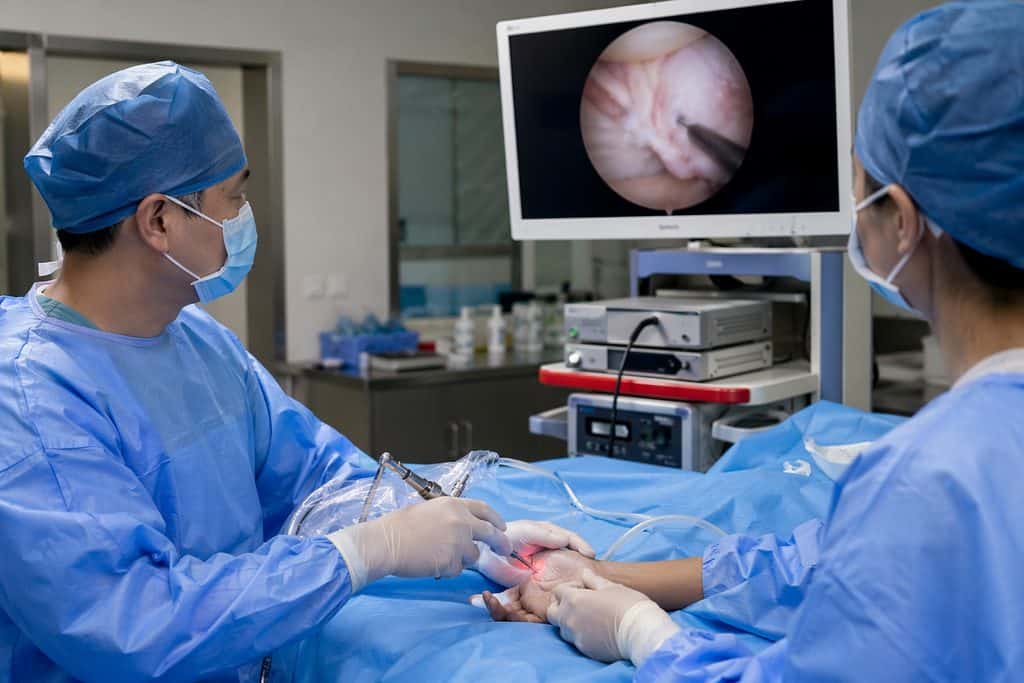
While a patient in the United States can expect a bill between $7,000 and $12,000 for a routine carpal tunnel release, the same procedure at a leading Chinese orthopedic center typically runs between $1,200 and $5,500. The gap is not a reflection of quality. It is a reflection of a different economic structure — and for the uninsured or underinsured, it changes the math entirely.
Key Takeaways
- The all-inclusive carpal tunnel surgery cost China ranges from $1,200 for a standard open release to $5,500 for an endoscopic procedure at a top-tier international hospital.
- Chinese hand surgeons at high-volume centers perform several hundred carpal tunnel releases annually, a caseload that dwarfs the average Western surgeon’s volume.
- Language barriers and hospital navigation are real challenges — public hospital corridors are crowded, signage is in Mandarin, and you cannot simply walk in and book surgery from abroad.
- Endoscopic release offers a faster return to work but costs more and requires a surgeon with specific, high-volume experience — not every hospital offers it at the same proficiency level.
The Problem: A Common Surgery, an Uncommon Price Tag
Carpal tunnel syndrome affects approximately 1 in 20 adults in the United States. When night splints and corticosteroid injections stop working, surgery becomes the logical next step. But logic collides with reality the moment the estimate arrives. For a patient with a high-deductible health plan, an outpatient open carpal tunnel release in the US can leave them with $4,000 to $7,000 in out-of-pocket costs. An endoscopic release at a surgery center pushes that number higher.
So people wait. They modify their work. They sleep with numb hands. And the median nerve keeps getting compressed. The condition is progressive — the longer the compression persists, the higher the risk of permanent thenar muscle atrophy and irreversible weakness. Waiting is not a neutral choice. It carries a clinical cost.
Why Chinese Orthopedic Centers Deliver Comparable Results at a Fraction of the Cost
Patients researching how much does carpal tunnel surgery cost in China often worry that a lower price signals lower safety. The data does not support that fear. What it reflects is a high-volume, efficiency-driven hospital system where surgeons accumulate procedural experience at a pace rarely seen in lower-volume Western settings.
Volume Breeds Technical Fluency
A dedicated hand surgeon at a major Chinese public hospital may perform 10 to 15 carpal tunnel releases in a single operating session. Over a year, that surgeon logs several hundred cases. Compare this to a typical US orthopedic hand specialist, who might perform 50 to 80 annually. Carpal tunnel release is a procedure where outcomes correlate directly with experience — a surgeon who has done it 2,000 times simply moves differently than one who has done it 200 times. The risk of incomplete ligament release or injury to the recurrent motor branch of the median nerve drops when the anatomy has become second nature.
Structural Cost Advantages, Not Quality Compromises
The cost differential is structural. A Chinese operating room runs at roughly one-fifth the per-hour cost of its American counterpart. Disposable surgical packs, anesthesia services, and implant costs — when an endoscopic system is used — are all lower. Hospital stays, when required, are a fraction of the daily rate in the US or Europe. None of these savings come from cutting corners on sterilization protocols, surgeon training, or post-operative monitoring. The top-tier hospitals we reference are JCI-accredited or ranked on the Fudan Hospital Ranking, a rigorous annual evaluation of China’s 35,000+ hospitals. The orthopedic departments we connect patients with are staffed by surgeons who trained at institutions like Peking Union Medical College Hospital or Shanghai’s Huashan Hospital, home to one of the world’s busiest hand surgery units.
Open Release vs. Endoscopic Release: What the Price Difference Actually Buys
The choice between techniques is not just about the scar. It is about recovery time, surgical risk profile, and cost — and the trade-offs are real. An endoscopic carpal tunnel release price Shanghai hospital quote will consistently run higher than an open release at the same facility. Here is what you are paying for.
| Factor | Open Release | Endoscopic Release |
|---|---|---|
| Incision Size | 2–4 cm at the base of the palm | 1 cm at the wrist crease |
| Pillar Pain Duration | Typically 4–8 weeks; can persist longer | Often resolves within 2–3 weeks |
| Return to Work (Desk Job) | 2–3 weeks | 1–2 weeks |
| Return to Heavy Manual Work | 6–8 weeks | 4–6 weeks |
| Nerve Injury Risk | Very low — direct visualization | Slightly higher — limited visual field; surgeon experience critical |
| Cost Range (China, All-Inclusive) | $1,200–$2,800 | $2,800–$5,500 |
Open release remains the global standard. It gives the surgeon a direct view of the transverse carpal ligament and the median nerve. There is no camera, no learning curve with endoscopic equipment. The trade-off is post-operative pillar pain — that deep, aching tenderness at the base of the palm where the ligament was cut — which tends to linger longer with the open approach.
Endoscopic release, when done by a surgeon who performs it regularly, gets patients back to light work faster. But the procedure has a steeper learning curve. A 2020 systematic review in the Journal of Hand Surgery found that the risk of transient nerve injury is slightly higher with the endoscopic technique, though permanent nerve injury rates are comparable between the two methods when the surgeon is experienced. The key word is “experienced.” This is not a procedure to have done by a surgeon who does five a year. At a high-volume Chinese hand center, the endoscopic release is a bread-and-butter procedure — not an occasional novelty.
Where to Have the Surgery: Evaluating Hospitals, Not Just Prices
Searching for the best hospital for carpal tunnel surgery Beijing leads most foreign patients to a short list of institutions with established international patient programs. Beijing Jishuitan Hospital is widely regarded as China’s premier orthopedic and hand surgery center — its hand surgery department handles a caseload that rivals any unit in the world. Shanghai’s Huashan Hospital, affiliated with Fudan University, runs a hand surgery department that pioneered microsurgical techniques in China and continues to train specialists from across Asia.
But the “best” hospital on a ranking list is not automatically the right hospital for an international patient. A foreigner who speaks no Mandarin will struggle at a high-volume public hospital unless they arrive through the hospital’s international medical center or VIP department. These channels provide English-speaking coordination, priority scheduling, and private recovery rooms. They also cost more — roughly 1.5 to 2 times the standard public rate. That premium buys you a navigable experience, not better surgical hands. The surgeon is the same. The difference is the wrapper around the care.
Private international hospitals like Shanghai’s Jiahui International Hospital or Beijing’s United Family Hospital offer a Western-style experience from start to finish: English-speaking staff, direct insurance billing, private rooms, and a familiar patient flow. The surgical fee at these facilities sits at the upper end of our quoted range. For some patients, the seamless experience is worth the premium. For others, the public hospital international wing offers the best balance of clinical expertise and cost.
Practical Considerations: Visa, Payment, and What to Bring
Planning to book carpal tunnel surgery package China means handling logistics that go beyond choosing a surgeon. The practical side matters as much as the clinical one.
Visa category is a common point of confusion. Foreign nationals traveling to China for medical treatment apply for an S2 visa, a short-stay category used for private affairs including medical care. The M visa is strictly for commercial and trade activities — it is not applicable to medical travel. Your accompanying family member applies for an S2 visa as well. Approval depends on the specific requirements of the Chinese embassy or consulate in your country, and you will need an invitation letter and supporting documents from the hospital that has accepted your case.
Payment is almost always required upfront. Chinese public hospitals operate on a prepaid deposit system — you fund a hospital account at admission, and services are deducted as they are provided. Private international hospitals may accept direct billing from select international insurers, but most public hospital international wings require payment at the time of service. Keep all receipts, detailed invoices, and translated procedure codes for reimbursement from your home insurer if your policy covers overseas care.
Bring your nerve conduction study and electromyography reports. Bring any MRI or ultrasound imaging of the wrist. Bring a summary from your referring physician that states the diagnosis, the conservative treatments you have tried, and the rationale for surgery. These records allow the Chinese surgical team to confirm the diagnosis without repeating every test — though they may still order a confirmatory nerve conduction study if your existing report is more than six months old.
Frequently Asked Questions
At JCI-accredited or Fudan-ranked hospitals with established international patient programs, the safety profile of carpal tunnel release is comparable to what you would expect at a reputable Western hospital. The surgical techniques are identical. The sterilization standards are audited. The variable is not the country — it is the specific hospital and surgeon. A hand surgeon at Beijing Jishuitan Hospital who has performed 3,000 carpal tunnel releases is operating at a level of technical fluency that exceeds most Western hand surgeons by sheer repetition. The risk lies in choosing a facility without verifying its international patient infrastructure, not in the procedure itself.
A full-service quote from a hospital international department typically includes the surgeon’s fee, anesthesiologist’s fee, operating room charges, the cost of any endoscopic equipment or disposable instruments, a short post-operative observation stay if needed, and basic post-op medications. It does not include your pre-operative nerve conduction study if you need a repeat one, your airfare, accommodation, or the cost of a bilingual medical companion if you choose to hire one. Always ask for a line-item breakdown before committing. A quote that seems unusually low may exclude anesthesia or facility fees.
Public hospitals in China generally do not allow you to book a surgery date without a prior in-person consultation. The standard pathway is: you send your medical records for a remote evaluation, the surgical team confirms you are a candidate, you arrive in China for a face-to-face consultation and pre-operative clearance, and then a surgery date is set. This process typically takes 3 to 7 business days from arrival to surgery. Some hospital international departments can compress this timeline if your records are complete and the surgeon’s schedule permits, but no reputable hospital will promise a surgery date sight-unseen.
Some international health insurance plans cover elective surgery abroad, but most US-based plans do not — unless you have a specific international rider or a travel medical policy that includes surgical benefits. Contact your insurer directly and ask three specific questions: Does my plan cover elective surgery performed outside my home country? Does it require pre-authorization? Will it reimburse at out-of-network rates or at a negotiated rate? If the answer to the first question is no, you are paying out of pocket. The good news is that the out-of-pocket cost in China is often lower than the deductible and coinsurance you would pay at home.
Your Next Step
The decision to travel for surgery is never just about price. It is about access, timing, and trust. We help international patients navigate the Chinese healthcare system — matching you with appropriate hospitals, coordinating remote surgical evaluations, and arranging bilingual support on the ground. We are not a hospital and we do not provide medical advice. What we provide is a clear path through a complex system, so you can make an informed decision without guessing. If you would like to understand your specific options and receive a tailored cost estimate, you can reach our team through the consultation page. There is no charge for the initial conversation, and no obligation to proceed.
For more medical information and treatment options in China, visit chinamedservices.com (China Medical Services).
