Health Checkup for Central Asian Patients: Costs, Hospitals & Timeline
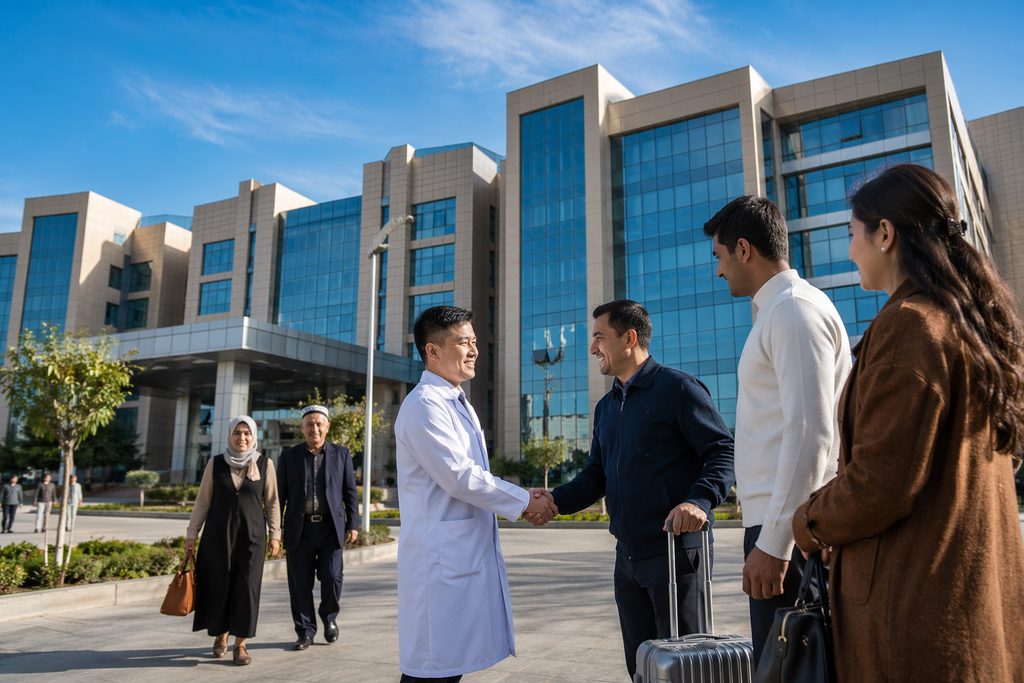
Roughly 1 in 3 adults in Central Asia has elevated blood pressure, and cardiovascular disease remains the leading cause of death across Kazakhstan, Uzbekistan, and Kyrgyzstan. Yet comprehensive preventive screening in the region often means fragmented testing, long waits for imaging, or travel to Moscow or Istanbul. China has quietly built a different model: high-volume executive screening centers in Shanghai and Beijing that complete a full-body assessment in one or two days, using equipment that matches Western standards, at a fraction of the cost. An executive health checkup package Shanghai price typically starts around $300 and rarely exceeds $1,500 even for advanced imaging — a figure that surprises most patients who have priced comparable panels in Europe or the Gulf.
This guide covers what Central Asian patients actually need to know before booking. Not marketing fluff. Real costs, real hospital names, visa specifics, and the parts of the process that frustrate people if they arrive unprepared.
How This Actually Works, Step by Step
The sequence is simpler than most people expect, but it is not instant. Here is what happens from your first message to walking into the screening center.
First, you send us your basic profile: age, gender, known conditions, current medications, and what you want checked. A 45-year-old man with a family history of cardiac disease needs a different panel than a 30-year-old woman wanting baseline screening. We use this to recommend a package scope and a hospital.
Second, we confirm the hospital’s international department availability and package details. Public hospital VIP wards and private international hospitals both run executive screening programs, but their booking lead times differ. Some can confirm within 3 business days. Others need 2 weeks.
Third, you arrange your S2 visa. This is the short-stay visa category used for private affairs including medical treatment. The hospital or our coordination team provides an invitation letter and appointment confirmation to support your application. Processing at the Chinese embassy in Almaty, Tashkent, or Bishkek typically takes 4 to 7 working days, but it can stretch to 2 weeks during peak periods.
Fourth, you fly in. Most Central Asian patients choose direct flights to Urumqi, Beijing, or Shanghai. Urumqi is geographically closest for patients from Kazakhstan and Kyrgyzstan, and its top hospitals run solid screening programs. But for the most comprehensive executive packages with English-speaking staff, Shanghai and Beijing remain the primary destinations.
Fifth, the checkup itself. You arrive at 7:30 or 8:00 AM, fasted. A coordinator walks you through blood draws, ultrasound, CT or MRI if included, cardiac stress testing, endoscopy if requested, and specialist consultations. Results start coming back the same afternoon. A full written report with English translation is usually ready within 3 to 5 days, or faster for premium packages.
What an Executive Health Checkup in Shanghai Actually Includes
The term “executive package” gets thrown around loosely. In Shanghai’s top screening centers, it means something specific: a bundled set of tests designed to be completed in one or two days, with a physician summary at the end. The scope varies by hospital and price tier.
A baseline executive package at a public hospital VIP ward in Shanghai — think Zhongshan Hospital or Huashan Hospital — generally includes complete blood count, metabolic panel, lipid profile, tumor markers (AFP, CEA, CA19-9, PSA for men), thyroid function, chest X-ray or low-dose CT, abdominal ultrasound, ECG, and a physician consultation. Cost runs from $300 to $600.
Step up to a premium package and you add coronary CT angiography, brain MRI, full-body MRI, carotid ultrasound, bone density scan, and gastroenterology consultation with optional endoscopy. These packages at hospitals like Shanghai Jiahui International Hospital or United Family Shanghai run $800 to $1,500. That is still roughly one-fifth to one-tenth of what a similar executive panel costs at a private London or Dubai clinic.
| Package Tier | Typical Scope | Price Range (USD) | Duration |
|---|---|---|---|
| Standard executive | Blood panel, tumor markers, chest CT, abdominal ultrasound, ECG, physician review | $300–600 | Half day to 1 day |
| Advanced executive | Above + coronary CT, brain MRI, carotid ultrasound, bone density | $800–1,200 | 1–2 days |
| Comprehensive VIP | Above + full-body MRI, endoscopy, specialist consults, same-day preliminary report | $1,200–1,500+ | 1–2 days |
These figures reflect the full body checkup cost China for foreigners at established screening centers. Private international hospitals sit at the higher end. Public hospital international departments sit lower. Both are legitimate options; the tradeoff is language support and scheduling flexibility versus price.
A Realistic Timeline
People underestimate the lead time. Here is what a typical schedule looks like from first inquiry to completed screening, assuming no major complications.
| Stage | What Happens | Realistic Duration |
|---|---|---|
| Week 1, Days 1–3 | Initial consultation, package selection, hospital confirmation | 2–3 business days |
| Week 1, Days 4–7 | Hospital issues invitation letter; you submit visa application | 3–5 days |
| Week 2 | Visa processing at Chinese embassy/consulate | 4–7 working days, sometimes 2 weeks |
| Week 3 | Flight booking, hotel arrangement, fasting instructions review | 2–3 days |
| Week 3–4 | Arrival in China, checkup day(s) | 1–2 days on-site |
| Week 4–5 | Full written report delivered, follow-up video consultation if needed | 3–5 days after checkup |
Total realistic window: 3 to 5 weeks from first contact to holding your complete report. Can it be faster? Sometimes. If you already hold a valid Chinese visa and book a private international hospital with short lead time, the whole thing can compress into 10 days. But planning for 4 weeks removes most of the stress.
One thing people forget: document translation. If your existing medical records are in Russian or Kazakh, they need translation before the screening team can properly contextualize your results. Budget 1 to 2 days for this. It is not hard, but it must happen before your arrival, not after.
What Can Go Wrong — and What Happens Then
Being honest about failure modes is more useful than pretending everything runs perfectly. Here are the real ones, and what we do about them.
The visa gets delayed. This happens. Chinese embassies in Central Asia can slow down during holiday periods or when application volume spikes. If your visa is delayed, we work with the hospital to push your appointment to a later date. Most screening centers will reschedule once without penalty if given 72 hours’ notice. You may lose a flight change fee, but the checkup slot is usually recoverable.
A test finds something unexpected. A lung nodule on CT. Elevated tumor markers. A thyroid lesion. This is not rare — incidental findings occur in roughly 20 to 30 percent of comprehensive screenings. If something shows up, the screening physician will flag it and recommend next steps. That may mean a follow-up specialist consultation in the same hospital, additional imaging, or a biopsy. You are not obligated to pursue treatment in China. You can take the full report home and consult your local doctors. But having the imaging files and the written interpretation gives you a head start either way.
The report is in Chinese. Public hospital systems sometimes generate reports in Chinese even when the consultation was in English. Our coordination includes translation of the key findings and recommendations. For a fully bilingual report from the start, private international hospitals are the safer choice.
You arrive without fasting. It sounds trivial. It is not. If you eat before your blood draw or abdominal ultrasound, those tests get rescheduled or produce unreliable results. We send fasting instructions twice — once when booking, once the evening before. Follow them.
Is a Health Checkup in China Reliable? What the Data Shows
This is the question Central Asian patients ask most directly, and it deserves a direct answer. Is health checkup in China reliable? The short answer: yes, at the right hospitals. The longer answer requires understanding what “reliable” means in a screening context.
China’s top-tier hospitals run enormous diagnostic volumes. Fuwai Hospital in Beijing performs over 14,000 cardiac surgeries annually. Zhongshan Hospital in Shanghai handles one of the highest volumes of diagnostic imaging in Asia. Volume matters because it drives both equipment utilization and radiologist experience. A radiologist who reads 50 chest CTs a day sees patterns that a lower-volume reader might miss.
Equipment standards at the hospitals we work with are current-generation. Siemens, GE, and Philips dominate the imaging suites at top public and private hospitals. Accreditation matters too: many international departments and private hospitals hold JCI certification, which requires meeting international patient safety and quality standards.
The reliability gap is not in the machines. It is in the interpretation and follow-up. A screening is only as useful as the physician summary that ties the findings together. That is why the package should include a face-to-face or video consultation with a physician who reviews everything — not just a stack of lab printouts handed to you at the front desk. At the hospitals we recommend, this review is standard.
So, is a Chinese health checkup reliable? At a top-ranked hospital with an international department, yes — comparable to what you would get in Seoul or Singapore. At a random clinic you found on a map app, not necessarily. Hospital selection is the whole game here.
Choosing the Right Hospital for Your Screening
For patients asking about the best hospital for comprehensive health screening Beijing, the honest answer is that several hospitals do this well, and the right choice depends on your priorities.
In Beijing, Peking Union Medical College Hospital (PUMCH) runs one of the most respected executive screening programs in the country. Its international medical department handles foreign patients, and its physician roster is consistently ranked among China’s top tier. Huashan Hospital and Zhongshan Hospital in Shanghai offer comparable programs with strong cardiology and oncology screening components. For a more Western-style experience with English-speaking staff throughout, private international hospitals like United Family and Jiahui are the standard options.
If you want to narrow by specialty, our department rankings break down the top 10 hospitals for cardiology, oncology, neurology, and 42 other specialties based on China’s Fudan rankings. For screening purposes, the general executive programs at the hospitals above are sufficient for most patients. The specialty rankings matter more if a screening finding requires follow-up care.
One practical note: if you want to book VIP health screening package Shanghai without weeks of back-and-forth, the private international hospitals are the most streamlined. They confirm faster, communicate in English natively, and handle insurance billing directly. Public hospital VIP wards cost less but require more coordination. Both are legitimate. The tradeoff is real.
Practical Considerations: Visa, Payment, Insurance, Language
Four things Central Asian patients need to sort before flying. None are complicated, but all are easy to get wrong.
Visa. You apply for an S2 visa, not an M visa. The M visa is for commercial and trade activities and is not appropriate for medical travel. The S2 covers short-term private affairs including medical treatment. Your family members accompanying you also apply for S2. The hospital invitation letter and appointment confirmation are the key supporting documents. Processing time varies by embassy — budget 2 weeks to be safe.
Payment. Public hospitals in China generally require prepayment at the time of service. You pay the screening package fee upfront, typically by card or bank transfer. Private international hospitals may bill your insurance directly if your plan covers overseas preventive care. Check with your insurer before booking. Many Central Asian patients pay out of pocket because the cost is low enough that insurance paperwork is not worth the effort.
Insurance. Most international health insurance plans do not cover routine executive screening unless it is explicitly included as a wellness benefit. If you have a plan from a European or Gulf insurer, call them and ask. The phrase to use: “preventive health screening abroad, self-initiated.” If they cover it, the private international hospitals are the easier billing route.
Language. In Shanghai and Beijing’s international departments, English is workable. In Urumqi or other cities, Russian may actually be more useful given the regional demographics. Our bilingual coordinators handle the gaps either way. You do not need to speak Mandarin to complete a screening. But you do need someone who does — whether that is us or a hospital-provided interpreter.
Bring a USB drive or ensure cloud access for your imaging files. CT and MRI data is large. Most hospitals provide a CD or digital download link. Having the raw DICOM files matters if you need a second opinion back home.
Frequently Asked Questions
A standard executive screening takes half a day to one full day. Premium packages with MRI, CT angiography, and endoscopy take one to two days. The written report follows 3 to 5 days later. If you need same-day preliminary results, some private international hospitals offer a verbal summary before you leave.
Yes. Citizens of Kazakhstan, Uzbekistan, Kyrgyzstan, Tajikistan, and Turkmenistan generally need a visa to enter China. The S2 visa is the applicable category for short-term medical treatment and private affairs. The hospital’s invitation letter supports your application. Processing takes 4 to 7 working days on average, but apply 2 weeks ahead to be safe.
Yes, and many patients do. Shanghai and Beijing are major international cities with extensive tourism infrastructure. Once your screening is complete and your results are reviewed, there is no medical restriction on sightseeing. Just schedule the checkup for your first or second day in China so results are ready before you depart.
The screening physician will explain the finding and recommend next steps. You can pursue further evaluation at the same hospital, at a specialized department, or back home with your own doctors. You are never obligated to proceed with treatment in China. The value of the screening is that you learn about the problem early and with imaging data in hand.
Your Next Step
China’s executive screening programs offer Central Asian patients something hard to find elsewhere: comprehensive testing, current-generation equipment, and physician-reviewed results at a price that makes preventive care actually accessible. The process works when the hospital is chosen carefully and the logistics are handled before you fly. That is what China Medical Services does — we match patients with the right screening program, coordinate the appointment and visa documentation, and provide bilingual support on the ground. We do not provide medical advice, and we do not promise outcomes. We handle the coordination so you can focus on the results. If you are considering a checkup in China, tell us your situation and we will help you think through whether it makes sense — no pressure, no obligation.
For more medical information and treatment options in China, visit chinamedservices.com (China Medical Services).
