Checkup in China: Paying and Refunds for Foreign Patients
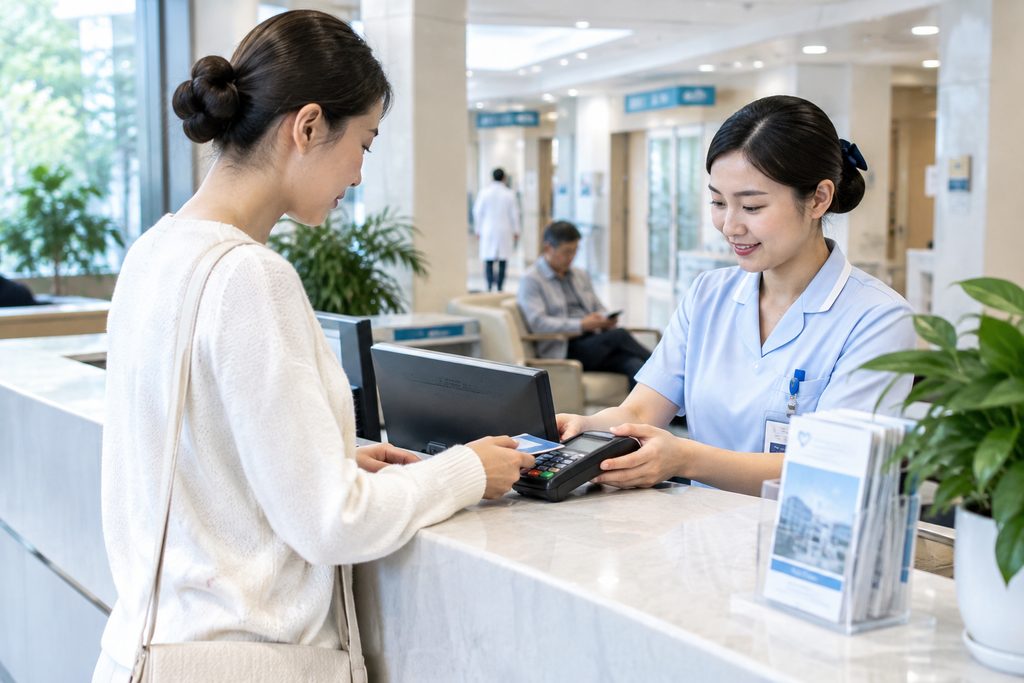
Checkup in China: Paying and Refunds for Foreign Patients
A health checkup in China is a packaged set of screenings — bloodwork, imaging, heart and lung tests, sometimes endoscopy — completed in a single morning at a hospital’s international or VIP unit. The medical checkup cost China hospitals quote to foreign patients usually runs between $300 and $2,500, depending on how deep the package goes. That number surprises people in both directions. Some expect Western prices and budget too much. Others assume “cheap” and get caught out by add-ons.
Here is the part nobody explains upfront: paying is easy, but refunds follow rules that are not written for foreigners. This guide covers both.
How This Actually Works, Step by Step
The sequence matters more than most people realize, because each step determines what you can still cancel and what you cannot.
Step one — you choose a package and a hospital. Most top-tier hospitals publish checkup menus online, but the English versions are often outdated. You send us your age, sex, symptoms, family history, and what you want screened. We match you to a hospital and a package tier.
Step two — you receive a written quote. Not an estimate. A fixed list: base package, optional add-ons (colonoscopy, cardiac CT, tumor markers), and the international unit surcharge if applicable.
Step three — you pay a deposit or the full amount. Public hospitals generally require prepayment before scheduling. Private international hospitals often invoice after, or bill your insurer directly.
Step four — you arrive, register, and get screened. Bring your passport. Registration, payment verification, and the actual testing happen in one visit, typically 3–5 hours.
Step five — results come back in 3–10 working days. English translation is available at most international units, sometimes for an extra fee.
If you cancel before step four, most hospitals refund the deposit minus an administrative fee. After step four begins, refunds become partial or nonexistent. That single line explains 90% of refund disputes.
What a Medical Checkup Costs in China — Real Numbers
Pricing splits into three tiers, and the gap between them is wider than most patients expect.
| Package Tier | Typical Price (USD) | What’s Included | Where |
|---|---|---|---|
| Basic | $300 – $600 | Blood panel, urinalysis, ECG, chest X-ray, ultrasound, basic physical | Public hospital international unit |
| Comprehensive | $700 – $1,500 | Above plus cardiac CT, tumor markers, thyroid, abdominal and pelvic ultrasound, endoscopy option | Public VIP unit or mid-tier private |
| Executive / Premium | $1,800 – $2,500+ | Above plus MRI, colonoscopy, specialist consultations same day, private suite, English coordinator | Private international hospital |
For comparison, an equivalent executive physical at a major U.S. academic hospital runs $3,000–$8,000. That gap is real, and it is the main reason foreigners book checkups here. But the comparison only holds if you compare like with like. A $300 basic package in China is not the same product as a $5,000 U.S. executive physical.
Two cost traps worth naming. First, add-ons. A colonoscopy can add $400–$800. A cardiac CT adds $300–$500. Second, the international unit surcharge. Public hospitals charge roughly 1.5–2x the standard rate for English service and shorter queues. That surcharge is not a scam — it funds the staff who make the visit workable without Mandarin.
A Realistic Timeline
Most patients underestimate the front end. The checkup itself is fast. Everything before it is not.
| Stage | Duration | Notes |
|---|---|---|
| Package selection and quote | 2–5 days | Faster if you send records and priorities in one message |
| Hospital appointment confirmation | 3–10 days | Popular international units book out 1–3 weeks in peak season |
| Visa (if required) | 1–3 weeks | S2 category for medical treatment; processing varies by consulate |
| Travel and arrival | 1–2 days | Build in a rest day before the appointment |
| The checkup itself | 3–5 hours | Morning appointments; fasting required for bloodwork |
| Results and English report | 3–10 working days | Some markers take longer; ask for a firm date |
Total realistic window from first inquiry to results in hand: three to six weeks. If someone promises you a full executive checkup with results in 48 hours from overseas, ask exactly which steps they are skipping.
What Can Go Wrong — and What Happens Then
Refund problems rarely come from hospitals being dishonest. They come from mismatched expectations.
You cancel after the appointment is confirmed. Most hospitals keep an administrative fee, commonly 10–30% of the deposit. Some keep the entire deposit if cancellation happens within 48–72 hours of the slot. Ask for the cancellation policy in writing before you pay.
You paid a third-party agency, not the hospital. This is the worst scenario. If you wired money to a middleman who then books on your behalf, the hospital’s refund policy does not apply to you. You are bound by whatever contract you signed with the agency. Our own service model avoids this: coordination fees are separate from hospital charges, and hospital payments go to the hospital.
You want a refund for a test you skipped. If you decided mid-visit not to do the colonoscopy, the hospital may refund that line item — or may not, if the equipment and prep were already allocated. Policies differ. Ask before the visit, not after.
Your insurer denies the claim. That is not the hospital’s problem, and no refund is owed. This is worth understanding before you assume insurance will cover a checkup.
Can Foreigners Get a Health Checkup in China — and Can You Pay With Insurance?
Yes to the first question. Foreigners can book health checkups at public hospital international units, private international hospitals, and TCM hospitals across the country. No residency or local ID is required for most packages — a passport is enough.
Insurance is where it gets messy. Most Chinese hospitals do not bill international insurance directly for outpatient checkups. You pay out of pocket, collect an itemized English receipt and medical report, then submit a claim to your insurer at home. Whether a routine checkup is reimbursable depends entirely on your policy — many plans exclude preventive screening unless it is medically indicated.
Private international hospitals are the exception. Several accept direct billing from major international insurers, which removes the reimbursement step entirely. If direct billing matters to you, filter for it early. Our directory of private international hospitals lists which facilities offer it.
One more thing about paying: bring a card that works in China. International credit cards are accepted at private hospitals and large public international units, but smaller counters may only take local payment apps. Cash in RMB still works everywhere. Set up a payment app before arrival if you can.
Practical Considerations: Records, Visa, and Language
Gather your records first. Prior lab results, imaging, medication lists, and vaccination history all help the physician interpret your new results. If your records are in English, most international units handle them fine. If they are in another language, arrange translation before you travel.
Visa category matters. Medical treatment falls under the S2 short-stay category, and accompanying family members apply under the same category. The M visa is for commercial and trade activity and has nothing to do with medical travel — a surprising number of websites get this wrong. Requirements change, so confirm current documentation with the nearest Chinese embassy or consulate before booking flights.
Language is the quiet variable. A checkup involves instructions, fasting rules, and a physician explaining findings. Without Mandarin, even a well-organized visit can go sideways. That is the specific gap a bilingual companion fills: registration, queue management, payment, and translation of what the doctor actually said. Our patient support page explains how that works in practice.
And plan your follow-up before you leave. Ask for the full report in English, plus original imaging files on a USB drive. Your doctor at home will want both.
Frequently Asked Questions
A comprehensive package typically runs $700–$1,500 at a public hospital VIP unit, and $1,800–$2,500 or more at a private international hospital. Basic packages start around $300. Final pricing varies by hospital and by which add-ons you select.
Most do, with conditions. Cancellations before the appointment usually return the deposit minus a 10–30% administrative fee. Once testing has begun, refunds are partial at best. Always get the written cancellation policy before paying.
Yes, through a hospital’s international unit. Standard public outpatient registration cannot be reserved from overseas, but international and VIP units accept advance booking. Lead time is typically one to three weeks in peak season.
Direct billing is available at some private international hospitals and rare at public ones. Elsewhere you pay upfront, collect an itemized English receipt, and file a claim at home. Check your policy’s stance on preventive screening first.
Contact the hospital as early as possible. Refund amounts depend on how close you are to the appointment date and whether any preparation has already been scheduled. Written policies vary widely between hospitals.
Your Next Step
Paying for a checkup in China is straightforward once you know the tiers, the surcharge, and the refund rules — the confusion comes from booking blind. Get the quote in writing, confirm the cancellation terms, and know which visa category applies to you.
We are China Medical Services. We match international patients with hospitals across 37 cities, coordinate appointments through official international units, and provide bilingual support on the ground. We do not provide medical care and we do not sell priority access. If you want help choosing a package or understanding what a specific hospital will charge, start with a free consultation at our patient support page.
This article is for general information only and is not medical advice. Screening recommendations depend on your age, history, and risk factors. Consult a qualified physician before booking any checkup or procedure.
For more medical information and treatment options in China, visit chinamedservices.com (China Medical Services).
