Checkup in China: What Our Service Covers and What It Costs
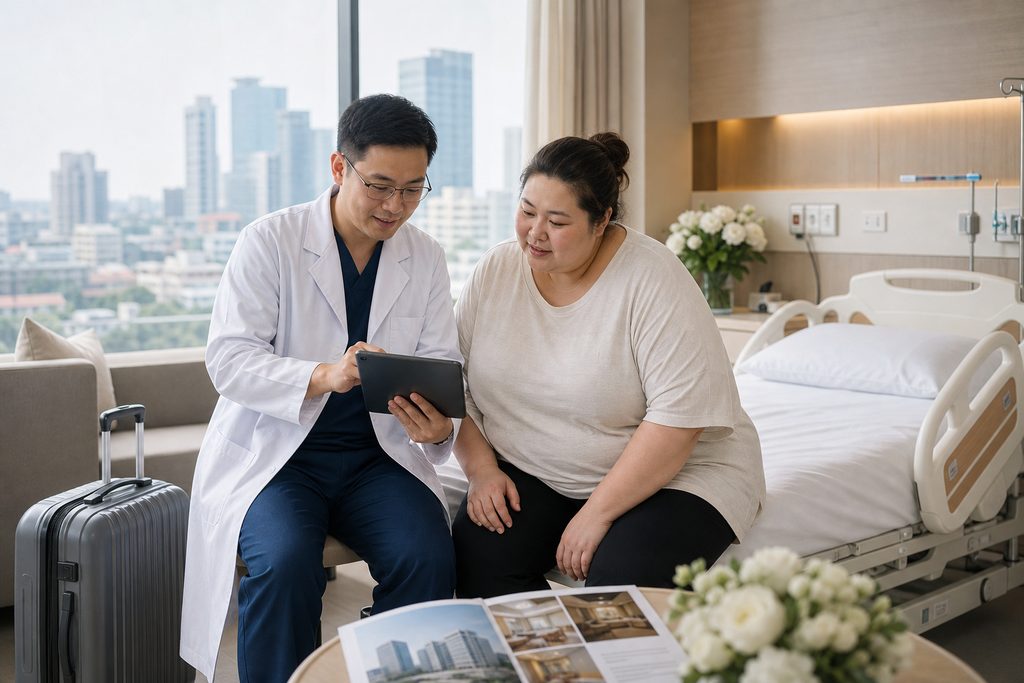
A full body checkup in China is exactly what it sounds like: a single, structured day of diagnostics — bloodwork, imaging, cardiac testing, specialist reads — bundled into one appointment instead of scattered across six months of referrals. For international patients, the appeal is simple. You can complete in one morning what often takes weeks to schedule elsewhere, at a fraction of Western prices.
But here is the part most people discover too late. A Chinese hospital will not simply hand you a slot because you emailed from abroad.
Public hospitals in China run on same-day registration. You queue, you take a number, you see the doctor that day. That system works beautifully for the 1.4 billion people it was built for. It does not work for someone landing in Shanghai on a Tuesday with no Mandarin and no hospital card.
That gap — between world-class diagnostics and a registration system that assumes you live there — is the space our team works in every day. This article explains what a checkup in China actually includes, what it costs, how to book a health screening package in Shanghai or an executive health checkup in Beijing, and where the real risks sit.
How This Actually Works, Step by Step
Here is the honest sequence, from your first message to your results in hand.
Step one: you tell us what you need. Not a diagnosis — a goal. Annual physical. Cardiac risk assessment. Post-treatment follow-up. A second look at an abnormal scan from home. You send existing reports if you have them: recent bloodwork, imaging CDs, discharge summaries, medication lists.
Step two: we match you to a hospital and a package. Our database covers 340+ top-ranked hospitals across 37 cities. That is the top 5% of China’s 35,000+ hospitals, ranked by the Fudan Index and JCI accreditation. For a routine executive screening, a private international hospital is often the better fit — English-speaking staff, direct insurance billing, Western-style scheduling. For something more complex, a public hospital’s international department brings senior specialists and English service at roughly 1.5 to 2 times the standard-channel price.
Step three: appointment coordination. We handle registration, medical card creation, and package confirmation. Appointment coordination starts from $300, and if we cannot secure the appointment shown in your order, that fee is refunded in full.
Step four: the checkup day itself. This is where a bilingual medical companion earns their fee. From $300 per day, a companion handles queuing, number-taking, payment, wayfinding, and translation. Large Chinese hospitals see tens of thousands of outpatients daily. Without language support, a wrong turn costs you an hour.
Step five: results and interpretation. Reports come back, usually within 3 to 7 working days for standard panels. We help you get them translated and routed to your home physician.
What Does a Full Body Checkup in China Include?
Packages vary, but a comprehensive executive screening typically covers the following. Think of it as three tiers stacked together.
- Laboratory panel: complete blood count, liver and kidney function, lipid profile, fasting glucose, HbA1c, thyroid function, urinalysis, stool analysis
- Imaging: chest CT or low-dose chest CT, abdominal ultrasound, thyroid ultrasound, carotid ultrasound
- Cardiac: resting ECG, echocardiography, treadmill stress test where indicated
- Cancer screening markers: tumor marker panels, plus endoscopy where age and risk factors justify it
- Specialist consults: internal medicine review, plus referrals to cardiology, gastroenterology, or other departments as findings require
- Optional add-ons: MRI, coronary CT angiography, bone density, gastroscopy and colonoscopy under sedation
The gastroscopy and colonoscopy point deserves emphasis. In China, same-day sedation endoscopy is routine and inexpensive by Western standards. In many countries, that single procedure carries a waiting list measured in months. If you have been putting off a colonoscopy because of scheduling friction at home, a China checkup trip can fold it into the same visit.
Traditional Chinese medicine adds another layer. Acupuncture, tuina massage, and herbal consultation are available at dedicated TCM hospitals and increasingly inside international departments. For chronic pain, sleep issues, and post-illness recovery, many international patients add a TCM consult to their screening day. You can explore options through our traditional Chinese medicine hospital directory.
A Realistic Timeline
People consistently underestimate two things: how long records take to prepare, and how far ahead popular hospitals book. Here is a working schedule with honest ranges.
| Stage | Timeframe | What Happens |
|---|---|---|
| Initial consultation | Day 1–3 | You share goals and existing reports; we recommend hospitals and packages |
| Record translation | 3–7 days | Reports translated into Chinese for the reviewing physician |
| Package confirmation | 3–10 days | Hospital confirms availability; popular slots book 2–4 weeks out |
| Visa application (S2) | 1–3 weeks | Applied for with a hospital invitation letter and supporting documents |
| Travel and checkup day | 1 day on site | Full screening typically completed in a single morning |
| Preliminary results | 3–7 working days | Lab and imaging reports released |
| Full report and follow-up | 1–3 weeks | Consolidated report; specialist review if findings require it |
Total realistic planning window: four to eight weeks from first contact to results, assuming no urgent findings. If you need a checkup within two weeks, it is sometimes possible at private international hospitals. Public hospital international departments are less flexible.
What Can Go Wrong — and What Happens Then
We would rather you hear this from us than discover it at a registration desk.
You cannot pre-book a standard public outpatient slot from overseas. This is the most common misunderstanding. Public hospital general clinics operate on same-day registration. If you want a guaranteed appointment before you fly, you are looking at an international department or VIP channel — and paying the 1.5 to 2 times premium that comes with it. Anyone promising you a standard-channel appointment locked in advance is misrepresenting how the system works.
Your preferred specialist may be unavailable on your dates. We coordinate; we do not control surgeon schedules. Our commitment is a best-effort match plus a full refund of the coordination fee if we cannot secure the appointment shown in your order. What we will not do is promise a specific doctor on a specific date.
Findings may require follow-up you did not budget for. A screening is a search, not a guarantee of a clean result. If imaging shows something that needs biopsy or specialist consultation, that is a new clinical path with new costs. Budget for the possibility.
Payment structure catches people off guard. Public hospitals require prepayment; insurance reimbursement happens afterward, in your home country, on your home policy’s terms. Private international hospitals more often bill your insurer directly. Confirm which model applies before you commit.
Is a Medical Checkup in China Safe for Foreigners?
The short answer: yes, at accredited institutions, with the same caveats that apply anywhere.
Safety questions from international patients usually fall into three buckets. First, equipment and standards. JCI-accredited private hospitals and top-tier public hospitals meet international protocols; imaging equipment at major centers is current-generation. Second, hygiene and infection control. Accredited facilities follow standard precautions. Third, radiation exposure. A low-dose chest CT is a low-dose protocol by design, but CT is still CT — discuss cumulative imaging history with the reviewing physician rather than stacking scans reflexively.
The real variable is not safety. It is comprehension. A report you cannot read is a report you cannot act on. That is why translation and bilingual accompaniment are not luxuries in this context — they are the difference between a folder of paper and an actual clinical picture.
For anything beyond routine screening, consider starting with a structured remote consultation before booking travel. A written second opinion or video consultation lets a Chinese specialist review your records and tell you whether the trip is worth making — and what to prioritize once you arrive.
Practical Considerations: Records, Visa, Payment, Language
Yes, through a private international hospital or a public hospital’s international department, both of which offer English-language service. Standard public channels remain same-day registration and are impractical to pre-book from overseas. A bilingual companion can bridge the gap if you choose a standard-channel route.
Beijing and Shanghai sit at the top of the range, reflecting specialist density and demand. Second-tier cities often cost 20 to 40 percent less for comparable packages. The tradeoff is fewer English-capable staff and less international patient infrastructure.
Most lab and imaging results return within 3 to 7 working days; consolidated reports take longer. If a finding needs specialist review, we help arrange follow-up consultation. We do not provide medical advice ourselves, and no screening outcome can be guaranteed in advance.
If you are already traveling to China, or facing a long wait at home, screening here can be efficient and cost-effective. If you have a complex active condition, start with a remote second opinion first — it may tell you the trip is unnecessary, which is a genuinely useful answer.
Your Next Step
A checkup in China is fast, thorough, and considerably cheaper than equivalent screening in the US or Europe — provided you solve the registration and language problem before you book flights. That problem is what we exist to solve. Our team coordinates hospital matching, appointments, bilingual accompaniment, and visa documentation, and we are explicit about what we cannot promise: no guaranteed specialists, no guaranteed dates, no clinical outcomes. Start with a free consultation through our patient services page, or browse top-ranked hospitals by city to see what is available where you plan to travel. No pressure, no obligation — just a clear picture of what is possible.
This article is for general information only and does not constitute medical advice. Screening packages, pricing, and availability vary by hospital and case complexity. Consult a qualified physician regarding your individual health decisions.
Frequently Asked Questions
Yes. The hospitals used for international patients are JCI-accredited and follow the same international safety standards as top hospitals in the US and Europe. Surgical teams perform high volumes of procedures — often more than their Western counterparts — which studies show leads to better outcomes.
Costs vary by procedure and hospital, but international patients typically save 40-80% compared to US prices — even when factoring in travel and accommodation. A consultation with our team will give you an exact, all-inclusive quote with no hidden fees.
Send us your existing medical reports to get started. We handle everything from hospital selection and appointment scheduling to visa assistance and post-operative recovery planning. Your medical records are reviewed by the specialist before you even book a flight.
For more medical information and treatment options in China, visit chinamedservices.com (China Medical Services).
