A Checkup for Travelers to China: Costs, Safety, and How to Book
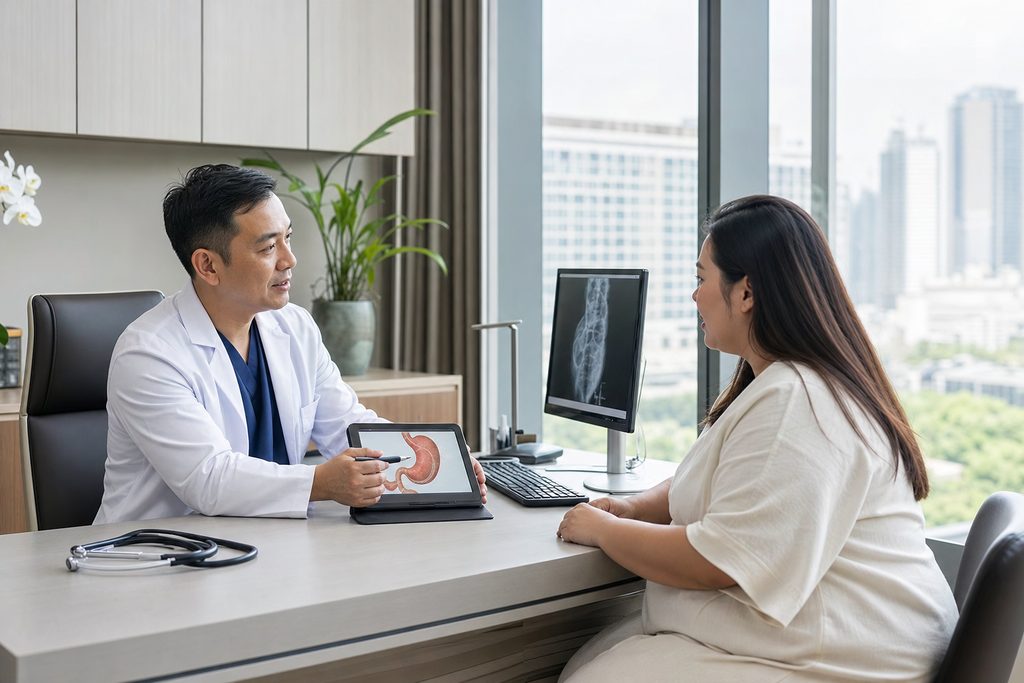
When 42-year-old Daniel from Manchester started planning a three-month consulting stint in Shenzhen, his wife asked one question he couldn’t answer: “When was your last proper checkup?” He’d been putting it off for two years. Between NHS wait times for non-urgent screenings and a packed work schedule, it never happened. Then a colleague mentioned getting a comprehensive health screen during a business trip to Shanghai — same day, full results, a fraction of UK private pricing. Daniel was skeptical. Is it actually safe? How does booking work? What does a full body checkup cost China compared to back home?
Those are the right questions. Every year, tens of thousands of foreign travelers and expats undergo health screenings in Chinese hospitals. Many are surprised by the speed, thoroughness, and value. Others walk in unprepared and face language barriers, confusing package options, and unnecessary stress. This guide covers what you need to know before booking a checkup as a traveler to China — pricing, safety standards, the best hospitals in Beijing and Shanghai, and how the process works from start to finish.
Key Takeaways
- A full body checkup cost China typically ranges from $150 to $800, compared to $2,000–$5,000 for equivalent private screenings in the US or UK.
- Top-tier Chinese hospitals perform over 1 million health screenings annually, with standardized protocols and JCI-accredited international departments.
- Language barriers and navigation inside massive hospital campuses are the biggest practical hurdles for foreigners — not medical quality.
- You should understand package tiers, preparation requirements, and result delivery timelines before booking anything.
The Problem: Health Screenings Back Home Are Expensive, Slow, or Fragmented
In the United States, a comprehensive executive physical at a major medical center runs between $2,000 and $5,000 without insurance. In the United Kingdom, private full-body health assessments at clinics like Nuffield Health or Bupa start around £800 to £1,500 for anything beyond basic bloodwork. The NHS does not offer routine full-body screening for asymptomatic adults — you get invited for specific age-based screenings like bowel cancer checks starting at age 60, but nothing comprehensive.
That leaves a gap. Working professionals in their 30s and 40s who want a complete picture — cardiovascular markers, liver and kidney function, thyroid panel, tumor markers, chest imaging, abdominal ultrasound — face either long waits for fragmented public care or steep private bills. A 2023 survey by the International Federation of Health Plans found the average US price for a basic metabolic panel alone was $179, while an abdominal ultrasound averaged $620. Add a chest CT, cardiac stress test, and specialist consultation, and the total climbs fast.
For travelers already heading to China for business or extended stays, the math gets interesting. The same tests that cost thousands at home are available at a fraction of the price in Chinese hospitals — often with same-day or next-day results. But cost savings mean nothing if the quality is questionable or the process is chaotic. That’s where understanding the system matters.
Why China Delivers Results for Health Screenings
China’s top hospitals are screening machines. Literally. The scale of operations at hospitals like Peking Union Medical College Hospital or Zhongshan Hospital in Shanghai dwarfs most Western institutions. That volume creates efficiency, standardized protocols, and competitive pricing — without cutting corners on equipment quality.
Clinical Volume Creates Standardized, Efficient Protocols
Fuwai Hospital in Beijing performs over 14,000 cardiac surgeries annually — the highest volume of any heart center globally. That same operational discipline applies to their preventive screening programs. When a hospital runs thousands of health checks monthly, the workflow is refined to a science: blood draw at station A, ultrasound at station B, CT at station C, all coordinated by staff who do this every single day. You are not a special case disrupting a routine. You are the routine.
Contrast that with a Western clinic where a comprehensive screening might involve scheduling three separate appointments over two weeks. The Chinese model consolidates everything into a single visit — often completed in 3 to 5 hours. That’s the structural advantage of volume.
Technology and Equipment Match Western Standards at Top Hospitals
The top 5% of China’s 35,000+ hospitals — roughly 340+ institutions ranked by Fudan University and JCI — use the same imaging equipment you’d find at Mayo Clinic or Charité in Berlin. Siemens, GE, Philips. 3T MRI machines, 256-slice CT scanners, automated laboratory analyzers. A hospital’s equipment list is not the thing to worry about. The thing to worry about is whether you can navigate the process without Chinese language skills. We’ll get to that.
Cost Advantage Without Quality Compromise
Why exactly is a full body checkup cost China so much lower? Three structural reasons. First, labor costs for nurses, technicians, and administrative staff are substantially lower than in the US or Western Europe. Second, hospital efficiency — the sheer volume of patients means equipment utilization rates are extremely high, spreading fixed costs across more procedures. Third, the health screening market in China is competitive. Major hospitals compete for corporate contracts and individual patients, which keeps package pricing disciplined.
None of these factors touch clinical quality. A radiologist reading your chest CT at Ruijin Hospital in Shanghai trained at a top Chinese medical school, sees more imaging studies in a month than many Western radiologists see in a year, and works with the same equipment. Lower cost here is an economic reality, not a quality signal.
What a Full Body Checkup Package Actually Includes
If you’ve never booked a health screening in China, the package structure might surprise you. It’s not a menu of individual tests. It’s a tiered bundle — and the tiers are standardized across most major hospitals. Understanding these tiers is the single most important step in booking the right comprehensive health checkup package China has to offer.
A basic package (typically $150–$300) covers the essentials: complete blood count, liver and kidney function, lipid profile, fasting glucose, urinalysis, chest X-ray, abdominal ultrasound, and a basic physical exam with height, weight, blood pressure, and vision. This is the package most travelers choose as a “peace of mind” screen.
A mid-tier package ($300–$500) adds cardiac assessment — resting ECG, sometimes a treadmill stress test — plus thyroid function, tumor markers like CEA and AFP, and a low-dose chest CT instead of X-ray. For men over 40 or anyone with cardiovascular risk factors, this is the sweet spot for value.
Executive packages ($500–$800 or more) include everything above plus head MRI, coronary artery calcium scoring, full hormone panels, and sometimes a same-day consultation with a specialist to review findings. Some hospitals market these as “VIP” or “gold” packages. The executive health screening Shanghai price at a top-tier hospital like Huashan or Renji typically falls in this range.
One critical note: packages are not personalized medicine. They are population-level screening bundles. If you have a specific concern — a family history of colon cancer, unusual fatigue, a suspicious mole — tell the hospital before booking. Most will let you add targeted tests to any package for an additional fee.
How Long Does a Full Health Screening Take in China?
Plan for a half day. In most cases, the entire screening — from registration to final test — takes 3 to 5 hours. That’s the honest answer to how long does a full health screening take in China. But there are important caveats.
Arrive before 8:00 AM if your package includes fasting bloodwork. The blood draw station at a busy public hospital can have 50 people in line by 9:00 AM. Early arrival means you’re through phlebotomy in 15 minutes instead of 45. After the blood draw, you can eat — most hospitals provide a simple breakfast for checkup patients.
The rest of the morning flows through stations: ultrasound, ECG, chest imaging, physical exam. The order varies by hospital. A coordinator or nurse guides you through each step. At international departments or VIP wings, the process is smoother — shorter queues, English-speaking staff, more comfortable waiting areas. You pay more for that convenience, but for a one-time screening it’s often worth it.
Results timing depends on the package. Basic bloodwork results are often available the same afternoon. Imaging reports take 24 to 48 hours. Full written reports with physician comments typically arrive within 3 to 5 business days. Some international departments offer same-day preliminary review with a doctor who walks you through the findings. If you’re only in China for a few days, request this upfront.
Is a Medical Checkup in China Safe for Foreigners?
The short answer: yes, at the right hospitals. The longer answer requires nuance. Is a medical checkup in China safe for foreigners? At any of the 340+ top-ranked hospitals in major cities, the clinical safety standards are comparable to Western institutions. These hospitals are JCI-accredited or ranked by Fudan University’s hospital evaluation — the most rigorous assessment systems in China. Equipment is modern. Infection control protocols are enforced. Physicians are well-trained.
What differs is the experience. A public hospital’s general checkup center can feel overwhelming: crowds, announcements in Mandarin, minimal signage in English, staff who may not speak your language. That’s not a safety issue — it’s a navigation and communication issue. But for a foreign traveler, feeling lost and confused can be genuinely stressful.
The solution is choosing the right facility. Options include:
- International departments of public hospitals — English-speaking staff, Western-style service, higher prices than general checkup centers but still far below Western private clinics. Examples: PUMCH International Medical Services in Beijing, Huashan Hospital International Medical Center in Shanghai.
- Private international hospitals — United Family, Jiahui, Parkway, Raffles. Fully English-speaking, JCI-accredited, direct insurance billing. The most comfortable option, priced accordingly ($500–$1,200 for comprehensive packages).
- General checkup centers at top public hospitals — lowest cost, highest volume, least English support. Workable if you bring a bilingual companion or have basic Mandarin skills.
One honest caveat: if you have a complex medical history or active symptoms, a checkup package is not a substitute for a proper clinical consultation. A screening is designed for asymptomatic people. If something is wrong, you need a doctor, not a package.
Best Hospitals for Health Checkups in Beijing and Shanghai
Choosing the right hospital matters more than choosing the right package. The best hospital for health checkup Beijing has to offer depends on your priorities: cost, English support, or clinical prestige. Here’s a practical breakdown.
| Hospital | City | Type | English Support | Typical Package Range |
|---|---|---|---|---|
| Peking Union Medical College Hospital (PUMCH) | Beijing | Public, Top 100 | International dept. | $300–$800 |
| China-Japan Friendship Hospital | Beijing | Public, Top 100 | International dept. | $250–$600 |
| United Family Healthcare | Beijing | Private, JCI | Fully English | $500–$1,200 |
| Zhongshan Hospital Fudan University | Shanghai | Public, Top 100 | International dept. | $300–$700 |
| Huashan Hospital | Shanghai | Public, Top 100 | International dept. | $300–$750 |
| Jiahui International Hospital | Shanghai | Private, JCI | Fully English | $450–$1,000 |
These ranges reflect typical comprehensive package pricing for self-paying international patients. Actual quotes vary by hospital and case complexity, and prices change. Always confirm current package details directly with the hospital or through a coordination service before booking flights.
For travelers considering other cities, our database of 340+ top-ranked hospitals covers 37 cities including Guangzhou, Shenzhen, Chengdu, and Hangzhou. The same tiering logic applies: public hospital international department for value, private international hospital for comfort.
How to Book a Comprehensive Health Checkup Package China
Here’s the part most guides gloss over. You cannot simply book a checkup at a Chinese public hospital’s international department online from overseas like you’d book a hotel room. The process requires direct communication, and language barriers are real. Here’s how it actually works.
Step 1: Choose your hospital and package. Review the hospital’s checkup packages on their website or through a coordination service. Confirm what’s included, the price, and whether English-speaking staff are available.
Step 2: Contact the hospital’s international department directly. Email or phone. Some hospitals have WeChat-based booking for international patients. Expect to provide your passport details, preferred date, and package choice. Response times vary from same-day to several days.
Step 3: Confirm preparation requirements. Most comprehensive packages require 8–12 hours of fasting before bloodwork. Some require you to avoid alcohol for 24 hours and strenuous exercise for 48 hours. If your package includes a stool test, you’ll need to collect a sample — the hospital will provide instructions.
Step 4: Pay the deposit or full fee. Public hospital international departments typically require prepayment. Payment methods vary — some accept international credit cards, others require local payment or bank transfer. Private international hospitals accept major credit cards and often bill insurance directly.
Step 5: Arrive on the day with your passport. Registration requires your passport. Arrive at least 30 minutes before your scheduled time. Bring any prior medical records or imaging if you want the reviewing physician to compare findings.
If this process sounds manageable, it is — with patience and clear communication. If it sounds like a headache, that’s fair too. Many travelers use a coordination service to handle the booking, translation, and on-the-day navigation. A bilingual medical companion typically costs from $300 per day and makes the difference between a smooth morning and a stressful one. That’s a decision for you to make — not a requirement.
Practical Considerations: Documentation, Payment, and Follow-Up
Before you book, there are a few practical realities to handle. None are dealbreakers, but ignoring them will cost you time and frustration.
Visa. Travelers coming to China specifically for medical purposes — including a health screening — use an S2 visa, which covers short-term private affairs including medical treatment. If your stay exceeds 180 days, you’d need an S1 visa. Most checkup visits fit within a standard tourist or business trip, but if the primary purpose of your trip is medical, the S2 is the correct category. Requirements vary by embassy, so check with your local Chinese consulate before applying. Never assume a standard tourist visa covers medical activities.
Payment. Public hospital international departments generally require prepayment via bank transfer or on-site payment. Some accept international credit cards; many do not. Private international hospitals accept Visa, Mastercard, and often direct insurance billing. If you have international health insurance, confirm coverage before booking — some insurers reimburse preventive screenings at overseas facilities, others do not. Get written confirmation.
Results and follow-up. You’ll receive a written report — usually in Chinese with an English summary at international departments. If anything abnormal shows up, the hospital will recommend follow-up testing or specialist consultation. You can do that follow-up in China or bring the report home to your regular doctor. Chinese hospital imaging is typically provided on CD or via a digital link, which you can share with any physician anywhere.
Language. At international departments and private hospitals, English is spoken. At general checkup centers, it’s not. If you’re going the budget route, bring a Chinese-speaking friend or hire a bilingual companion. Getting lost in a 10-building hospital campus because you can’t read a sign is not how you want to spend your morning.
Frequently Asked Questions
At top-tier hospitals, yes. The packages cover the same core tests — cardiovascular, metabolic, cancer screening, imaging — and the equipment is equivalent. The main difference is that Chinese packages are standardized bundles, while Western executive physicals often include more personalized physician consultation time. If you want a longer doctor review, book a package that includes a same-day consultation.
What does a full body checkup cost China compared to the US or UK?
Expect to pay $150 to $800 for a comprehensive package at a top Chinese hospital, depending on tier and facility. Equivalent private screening in the US runs $2,000 to $5,000. In the UK, £800 to £1,500. The savings are structural — lower
For more medical information and treatment options in China, visit chinamedservices.com (China Medical Services).
