Amputation Revision in China: Prosthetic-Ready Stump Surgery & Cost
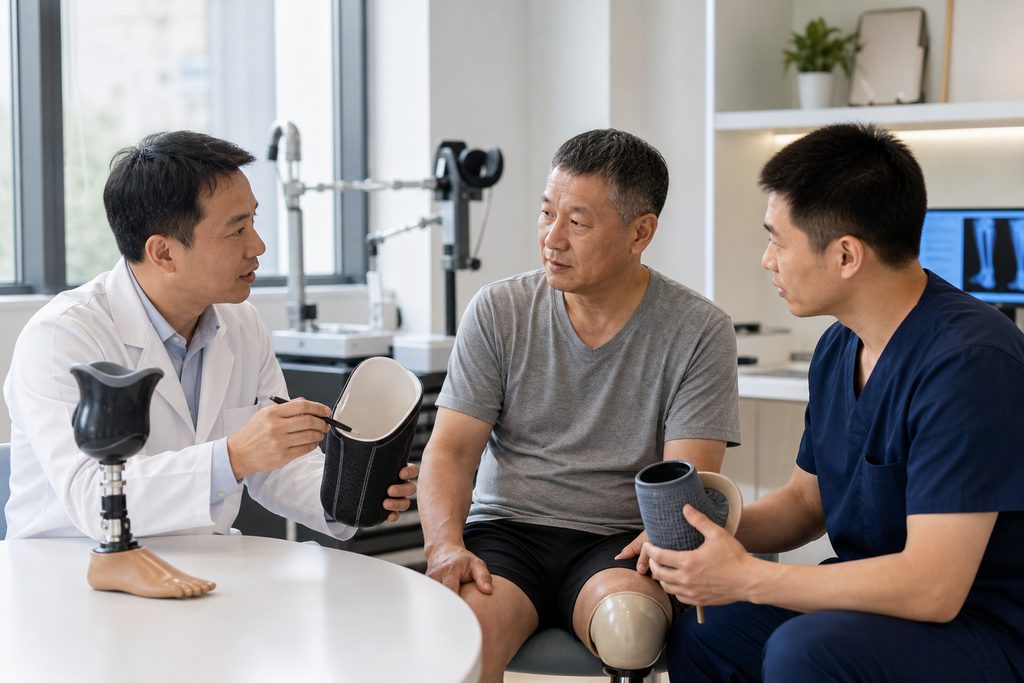
While a patient in the United States might wait 4–6 weeks for a scheduled amputation revision consultation, surgeons in Shanghai’s top orthopedic centers can frequently mobilize a surgical team within 72 hours of your arrival. The average amputation revision surgery cost China runs between $5,000 and $18,000 — a figure that stands in stark contrast to the $40,000–$70,000 billed for comparable procedures in the American healthcare system. We have seen this gap change lives.
Key Takeaways
- China’s top-tier orthopedic hospitals perform revision surgeries at 20–30% of Western costs, with prosthetic-fitting coordination built directly into the surgical plan.
- The best stump revision hospital Shanghai options offer integrated, single-admission workflows where the revision surgeon and prosthetist collaborate before the first incision.
- Language barriers and a fragmented public hospital system make independent navigation nearly impossible without a bilingual medical coordinator.
- Prosthetic-ready surgery demands specific soft-tissue techniques — not every revision achieves this. You need to verify a hospital’s prosthetic partnership before committing.
The Problem: When a Standard Amputation Becomes a Daily Battle
Roughly 1 in 4 lower-limb amputees develops a symptomatic neuroma or chronic stump pain within two years of their primary surgery. The data from a 2022 meta-analysis in the Journal of Rehabilitation Medicine puts the incidence of residual limb pain at 32–45% across large cohorts. That is not a rare complication. It is a coin toss.
You know the reality better than any statistic. A poorly contoured bone end catches on the socket rim with every step. Excess soft tissue bunches and breaks down under shear forces. The skin over the distal tibia thins until it is translucent — one friction blister away from a wound that will not heal. Your prosthetic sits in the corner. You sit at home. The cycle grinds on: attempted fitting, tissue breakdown, weeks of wound care, repeat. Some patients endure three or four revision attempts locally before considering a different path.
Western surgical waitlists compound the misery. In Canada, a non-emergent orthopedic revision can stretch past six months. In the UK, the NHS target of 18 weeks for consultant-led treatment is routinely missed for complex limb cases. Every month of waiting is a month of muscle atrophy, joint contracture, and psychological erosion. The stump changes shape. The window for optimal prosthetic fitting narrows.
Who We Are
We are China Medical Services. We are not a hospital. We do not provide medical treatment, clinical diagnoses, or surgical opinions. We are your logistical architects — a team that bridges the gap between you and China’s top-tier orthopedic and rehabilitation expertise. Our network spans 340+ top-ranked hospitals across 37 cities. We handle hospital matching, appointment coordination, bilingual medical companion services, visa guidance, and the thousand small frictions that make seeking care abroad feel impossible. Our job is to make sure you arrive prepared, understand every step, and never face a language barrier alone.
Why Prosthetic-Ready Amputation Revision in China Delivers Results
Volume Creates a Different Kind of Surgeon
The best stump revision hospital Shanghai can offer is not a single institution — it is a tier of orthopedic centers where revision surgery is a high-frequency, high-focus subspecialty. Surgeons at hospitals like Shanghai Sixth People’s Hospital or Beijing Jishuitan Hospital manage limb trauma and amputation complications at a volume that has no Western parallel. Shanghai Sixth performs over 1,200 microsurgical and limb-salvage procedures annually. A senior revision surgeon there may complete more targeted stump revisions in a single month than a general orthopedic surgeon in a Western community hospital performs in a year.
Volume drives pattern recognition. A surgeon who sees thirty failed myodesis cases a year develops an intuitive grasp of which muscle-balancing technique will stabilize the femur inside the socket. They know — without needing to pause and reference — how much tibial bevel is too much for a specific skin type. This is not abstract theory. It is operational expertise hardened by repetition.
Prosthetic-Ready Means the Prosthetist Is in the Room Before Surgery
Prosthetic-ready amputation surgery abroad is not a marketing phrase in China’s top centers. It describes a specific workflow: the prosthetist evaluates your residual limb before the revision, marks optimal myodesis points on your skin, and discusses socket interface goals with the surgeon during the preoperative briefing. The surgeon then executes a revision designed around a specific socket type — not a generic “heal well and we will figure out the prosthetic later” approach.
This integration matters because the technical requirements for a successful prosthetic fit are unforgiving. The bone end must be smoothly contoured without sharp edges that create pressure points. Muscle groups need to be anchored under physiological tension — too loose and they atrophy, too tight and they pull the stump into a non-functional position. The skin closure must place the scar away from weight-bearing surfaces. None of these details can be optimized after the fact. They are surgical decisions made in the first cut. When the prosthetist and surgeon operate as a single team, the revision has one goal: a limb that accepts a socket without pain, without breakdown, and without delay.
The Amputation Revision Surgery Cost China Reality
Let us address the question that brings most patients to this page. The amputation revision surgery cost China varies by hospital tier, case complexity, and length of stay. Here is what you can expect:
| Procedure | China (USD) | United States (USD) | United Kingdom (USD) |
|---|---|---|---|
| Standard trans-tibial revision | $5,000–$8,000 | $25,000–$40,000 | $18,000–$30,000 |
| Complex trans-femoral revision with myodesis | $8,000–$14,000 | $40,000–$65,000 | $30,000–$50,000 |
| Neuroma excision with targeted muscle reinnervation (TMR) | $12,000–$18,000 | $55,000–$80,000 | $40,000–$60,000 |
| Inpatient rehabilitation (per week) | $1,200–$2,500 | $8,000–$15,000 | $5,000–$10,000 |
These are not discounted prices for compromised care. They reflect structural economic differences — lower labor costs, higher surgical throughput, and hospital systems built for scale rather than margin. The clinical outcomes at China’s top orthopedic hospitals are tracked and published. Complication rates for revision surgery at Fudan-ranked institutions align with international benchmarks. You are paying less because the system costs less to operate, not because anyone is cutting corners.
Also worth noting: your prosthetic fitting and initial socket fabrication are typically coordinated during the same hospital admission. That means you leave China with a functioning prosthesis, not just a healing wound and a referral letter.
What You Need to Know Before Going Alone
We believe in telling you the hard parts upfront. China’s top hospitals deliver exceptional surgical care. Accessing that care independently as a foreign patient is genuinely difficult. Here is what stands between you and a smooth experience:
- Visa Requirements: Medical treatment in China requires an S2 visa with a specific annotation for medical purposes. This is not a tourist visa. You need an invitation letter from the treating hospital, a detailed treatment plan, and proof of financial means. Hospital international departments can issue these letters — but only after you have established a clinical relationship, which is nearly impossible to do from abroad without a coordinator who already has those channels open.
- Public Hospital Navigation: A top-tier Chinese public hospital sees 10,000–15,000 outpatient visits daily. Registration counters operate in Mandarin. Signage may have English translations, but the staff at payment windows, imaging departments, and pharmacy counters rarely speak functional English. You cannot simply walk in and find your way. You will lose hours, miss appointments, and risk critical miscommunication about your surgical preparation.
- Payment Systems: Public hospitals require prepayment — typically a deposit covering the estimated full cost of surgery and hospitalization — before admission. International credit cards are not universally accepted. Wire transfers can take days to clear. WeChat Pay and Alipay dominate the domestic payment ecosystem, and linking a foreign card to these platforms is inconsistent. Without a local facilitator, the financial logistics alone can delay your surgery by a week or more.
- Post-Operative Coordination: Your surgeon may do a brilliant revision. But if the prosthetist, physiotherapist, and wound care nurse are not aligned on your discharge timeline, you will spend extra weeks in a hospital room waiting for socket fabrication. This coordination does not happen automatically. It requires someone who speaks both clinical Mandarin and the language of prosthetic rehabilitation to push the process forward.
How We Help You Navigate This
These barriers exist for structural reasons, not because anyone intends to exclude foreign patients. Our entire service exists to dissolve them.
Before you travel, we translate your medical records, imaging, and prior surgical notes into clinical Chinese. We submit your case to the international departments of hospitals that match your specific needs — not just any orthopedic center, but one with a documented track record in prosthetic-ready revision surgery. We secure the invitation letter required for your S2 visa application. We provide a transparent cost estimate so you arrive knowing what to expect financially.
During your stay, a bilingual medical companion meets you at the airport, accompanies you to every consultation, translates in real time during your surgical briefing, and handles every administrative touchpoint — registration, payment, pharmacy pickup, imaging appointments. You focus on your health. We handle the friction.
After surgery, we coordinate the prosthetic fitting timeline with the hospital’s rehabilitation department. We ensure your wound checks, suture removal, and initial socket fitting happen on schedule. When you are ready to fly home, you leave with a functioning prosthesis and a clear follow-up plan. Our coordination fee for this end-to-end service starts from $5,000, depending on case complexity and length of stay. Any video consultation fee you pay is credited in full toward this coordination service if you proceed with treatment within 90 days.
Frequently Asked Questions
Yes — and this is one of the strongest reasons patients choose China for revision surgery. At hospitals with integrated prosthetic departments, the initial socket fitting and gait training begin during your inpatient stay, typically 4–6 weeks after surgery. You leave China with a functional prosthesis, not a referral to a prosthetist back home. The prosthetic cost is separate from the surgical fee and ranges from $3,000–$8,000 depending on componentry.
Stump care follows a structured protocol: daily wound assessment by the surgical team, compression therapy to control edema starting 48–72 hours post-op, and progressive desensitization exercises guided by a rehabilitation therapist. The prosthetic team typically begins evaluation for socket casting at the 3-week mark, once suture lines are stable and swelling has subsided sufficiently. Pain management includes multimodal approaches — regional nerve blocks, oral analgesics, and in some centers, mirror therapy for phantom limb pain.
Your treating surgeon provides a detailed operative report and discharge summary in both Chinese and English. We arrange a written second opinion or video consultation with your surgeon if you experience complications after returning home. These follow-up consultations cost $300–$500. We cannot guarantee outcomes — no ethical service can — but we ensure you are not abandoned once you leave China. Your local prosthetist will also receive full documentation of the surgical technique and socket specifications to support ongoing care.
No. Every revision case is different. The condition of your residual limb, your bone quality, your skin integrity, your vascular status, and your prosthetic goals all shape the surgical plan and the cost. We do not sell packages. We assess your case individually, match you with an appropriate hospital, and build a customized coordination plan. Anyone offering a fixed-price “amputation revision package” without reviewing your medical records is not being honest about what this surgery requires.
Your Next Step
You have lived with a limb that limits you. You know the weight of that limitation — the prosthetic that stays in the closet, the stairs you avoid, the life that has narrowed around a surgical outcome you did not choose. A prosthetic-ready revision surgery in China can reset that trajectory. It is not a guarantee. It is a carefully planned, expertly executed opportunity.
If you want to understand whether this path makes sense for your specific case, reach out for a free consultation. We will review your situation honestly. No pressure. No sales script. Just a clear-eyed conversation about what is possible.
For more medical information and treatment options in China, visit chinamedservices.com (China Medical Services).
