Cosmetic Treatment in China Explained: Costs, Safety, and Top Clinics
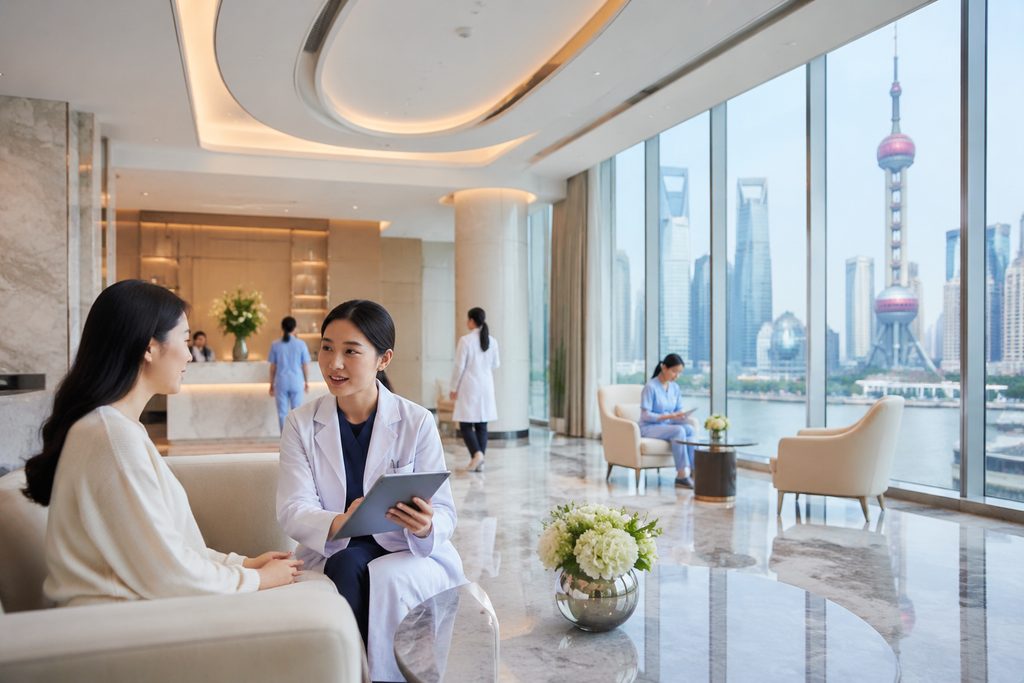
Cosmetic Treatment in China Explained: Costs, Safety, and Top Clinics
Have you ever looked at a quote for a procedure in the United States or Europe and wondered if the same operation costs a fraction elsewhere? For many international patients, the answer sits in China, where cosmetic surgery cost China averages 50 to 70 percent below Western prices — a rhinoplasty that runs $8,000 in the US can be performed at a top Chinese hospital for $2,500 to $4,500.
But price alone is a terrible reason to get on a plane. The real question isn’t whether China is cheap. It’s whether the quality, safety standards, and communication are good enough to justify the journey. That’s what this guide answers.
Cosmetic Treatment in China Explained: The Short Answer
China has world-class plastic surgery departments at its top public hospitals and a growing network of private international clinics, particularly in Shanghai, Beijing, and Guangzhou. The best facilities match Western safety protocols and employ surgeons who trained abroad. Costs run 50 to 70 percent lower than in the US or Western Europe.
The complication? China’s medical system is not built for foreigners. Public hospitals don’t accept overseas appointments for standard cosmetic consultations. You cannot simply email a top surgeon and book a date. The system runs on in-person registration, and without Chinese language skills, navigating it is close to impossible.
The gap between “China has excellent cosmetic surgery” and “you can actually access it” is where most international patients get stuck. The clinical quality exists. The bridge to reach it usually doesn’t — unless someone builds it for you.
Who This Is Right For — and Who It Isn’t
Cosmetic surgery abroad is not for everyone. Being honest about that saves people from expensive mistakes.
This is typically a good fit if you:
- Are considering procedures like rhinoplasty, double eyelid surgery, facial contouring, breast augmentation, or liposuction
- Have a budget that makes Western pricing prohibitive (or you’d rather spend the savings on recovery and travel)
- Can travel for 10 to 21 days, including consultation, surgery, and initial recovery
- Are comfortable working through a coordinator who handles language and logistics
- Have realistic expectations and no untreated medical conditions that complicate anesthesia
You should probably not pursue this if you:
- Have uncontrolled diabetes, bleeding disorders, or active infections
- Are looking for a specific surgeon you saw on social media without verifying their credentials
- Cannot commit to the recovery timeline (flying home three days after facial contouring is a bad idea)
- Expect to resolve body dysmorphia through surgery — no procedure fixes that
- Need urgent revision of a botched procedure with complex medical complications
If you fall into the second group, staying home and working with a local surgeon is genuinely the better path. No honest coordinator will tell you otherwise.
The Options, Compared
Here’s how China stacks up against the alternatives international patients typically consider. Prices are ranges for common procedures and vary by hospital, surgeon seniority, and case complexity.
| Factor | China (Top Public Hospital) | China (Private International Clinic) | United States | South Korea | Thailand |
|---|---|---|---|---|---|
| Rhinoplasty | $2,500–$4,500 | $5,000–$9,000 | $8,000–$15,000 | $4,000–$8,000 | $3,000–$6,000 |
| Double eyelid surgery | $1,200–$2,500 | $3,000–$5,500 | $4,000–$7,000 | $2,000–$4,000 | $1,500–$3,000 |
| Facial contouring | $4,000–$8,000 | $8,000–$15,000 | $15,000–$30,000 | $6,000–$12,000 | $5,000–$10,000 |
| English-speaking staff | Limited (international dept.) | Yes | Yes | Partial | Yes |
| Direct insurance billing | No (prepay + reimburse) | Often yes | Yes | Rare | Sometimes |
| Wait time for consultation | Days to weeks | Days | Weeks to months | Weeks | Days |
| JCI-accredited options | Yes (select hospitals) | Yes | Yes | Yes | Yes |
Which column fits you? If cost is the deciding factor and you’re willing to work through an international department, top Chinese public hospitals offer the strongest value. If you want English-speaking staff, direct insurance billing, and a Western-style experience, private international clinics cost more but remove most friction. South Korea and Thailand remain strong alternatives, though China’s public-hospital pricing undercuts both for complex procedures.
Is Cosmetic Surgery Safe in China? What the Standards Actually Look Like
This is the question that matters most. And the honest answer is: it depends entirely on where you go.
China’s top-tier public hospitals — the ones ranked in the Fudan Hospital Rankings and accredited by JCI — meet international safety standards. Their plastic surgery departments handle high surgical volumes, maintain sterile protocols comparable to Western facilities, and employ anesthesiologists with decades of experience. Several rank among China’s top 10 for their specialties, according to the Fudan specialist reputation rankings.
The risk lies elsewhere. China has thousands of clinics offering cosmetic procedures, and regulation is uneven. Unlicensed practitioners, counterfeit injectables, and cut-rate operating rooms exist. The difference between a $1,500 rhinoplasty and a $4,000 one is often not skill — it’s whether the facility is legitimate.
Never book a cosmetic procedure in China through a social media advertisement, a hotel concierge, or an unverified agent. Verify the hospital’s accreditation, the surgeon’s credentials, and the facility’s license before committing. If a provider cannot produce these documents, walk away.
For patients who want to understand how Chinese hospitals are ranked and verified, our guide to China’s top-ranked hospitals by city breaks down the Fudan ranking system and what the accreditation tiers mean in practice.
How Much Does Rhinoplasty Cost in China — and What Drives the Price
Rhinoplasty is the most common procedure international patients ask about, so let’s use it as the benchmark. At a top public hospital in Shanghai or Beijing, expect $2,500 to $4,500. At a private international clinic, $5,000 to $9,000.
What moves the number?
- Surgeon seniority. A department chief with 20+ years of experience charges more than a junior attending
- Technique. Open rhinoplasty with cartilage grafting costs more than a simple implant procedure
- Revision vs. primary. Revision surgery runs 30 to 50 percent higher
- Hospital tier. International departments charge roughly 1.5 to 2 times the standard public rate for English service and shorter waits
- Anesthesia and facility fees. These vary significantly between public and private settings
One thing to understand: Chinese public hospitals require prepayment. You pay upfront, then file for reimbursement with your insurance afterward. Private international clinics often bill insurance directly, which simplifies the process but comes at a higher sticker price.
For a broader view of what different specialties cost and where China’s strengths lie, our department-by-department guide covers pricing and top-ranked hospitals across 45 specialties.
Practical Considerations: Visas, Records, and Recovery Logistics
The clinical side is only half the equation. The logistics trip up more patients than the surgery itself.
Visa. Foreigners traveling to China for medical treatment apply for an S2 visa, which covers short-stay medical treatment and private affairs. Family members accompanying you apply for the same category. The S2 requires supporting documents from the hospital confirming your appointment and treatment plan. Note: the M visa is for commercial and trade activities only — it is not a medical visa, and using it for treatment creates problems at immigration. Requirements change, so confirm current rules with the nearest Chinese embassy or consulate before applying.
Medical records. Bring your full medical history, any prior surgical records, and clear photos if your procedure involves facial or body contouring. Chinese surgeons will want to review these before consultation. Having them translated into Chinese speeds up the process considerably.
Payment. Public hospitals accept international credit cards at international departments, but not all. Wire transfers are common for larger amounts. Private clinics are more flexible.
Language. This is the biggest practical barrier. Top Chinese hospitals see thousands of outpatients daily. Signage, registration systems, and most staff operate in Chinese. Even at international departments, the level of English varies. A bilingual medical companion — someone who handles registration, queuing, payment, translation, and accompanies you to appointments — is not a luxury in this environment. It’s often the difference between a smooth process and a stressful one.
Recovery and follow-up. Plan to stay in China for the full initial recovery period. For rhinoplasty, that’s typically 10 to 14 days before flying. For facial contouring, longer. Once home, arrange follow-up with a local physician and keep your Chinese surgeon’s contact for questions.
For patients considering private facilities that offer English-speaking staff and direct insurance billing, our guide to private international hospitals covers what’s available and how they differ from public options.
Frequently Asked Questions
Generally, no. Standard outpatient appointments at public hospitals cannot be reserved from abroad in advance. You register in person on the day. Surgery can only be scheduled after an in-person consultation. The exception is hospital international departments or VIP channels, which sometimes allow pre-booking — at roughly 1.5 to 2 times the standard fee.
Not at top hospitals. The cost difference comes from lower labor costs, higher surgical volumes, and a different healthcare pricing structure — not inferior materials or technique. The risk is at unregulated clinics, which is why verifying accreditation matters. A $1,500 rhinoplasty at an unverified facility is a different product entirely from a $3,500 procedure at a JCI-accredited hospital.
This is a real concern, and you should plan for it before surgery. Complications like infection, asymmetry, or dissatisfaction can occur anywhere. Before you leave China, get your surgeon’s written post-operative instructions, contact information, and a summary of the procedure. Arrange a local physician who can handle basic follow-up. For significant complications, you may need to return — factor that possibility into your decision.
Yes. Medical treatment falls under the S2 visa category for short stays (or S1 for stays exceeding 180 days). You’ll need supporting documents from the hospital. The M visa is for business and trade and does not cover medical treatment. Confirm current requirements with your nearest Chinese embassy or consulate, as rules can change.
Start with accreditation and ranking data, not advertisements. Fudan-ranked hospitals and JCI-accredited facilities provide verifiable quality benchmarks. Look at surgical volume, specialty rankings, and whether the facility has an international department experienced with foreign patients. Avoid choosing based on price alone or unverified online reviews.
Your Next Step
Cosmetic treatment in China offers genuine value — but only when you match the right hospital to your procedure and navigate the system correctly. The savings are real. So are the logistical hurdles. Understanding both is what separates a good outcome from a costly mistake.
We are China Medical Services, a coordination platform connecting international patients with 340+ top-ranked hospitals across 37 cities. We are not a hospital and we do not provide medical diagnoses or treatment recommendations. What we do is help you understand your options, connect with the right facility, and handle the practical details — from hospital matching and appointment coordination to bilingual medical companions who stay with you through registration, consultation, and recovery.
If you’re exploring cosmetic treatment in China and want a clear picture of what’s realistic for your situation, start with a conversation. No pressure, no obligation — just informed guidance from people who know the system. Reach out for a free consultation and we’ll help you take the next step.
This article is for informational purposes only and does not constitute medical advice. Cosmetic surgery carries risks, and outcomes vary by individual. Always consult a qualified, licensed physician before making treatment decisions.
For more medical information and treatment options in China, visit chinamedservices.com (China Medical Services).
