Medical Crisis Family Reunification Service China: Getting Your Family Here Fast
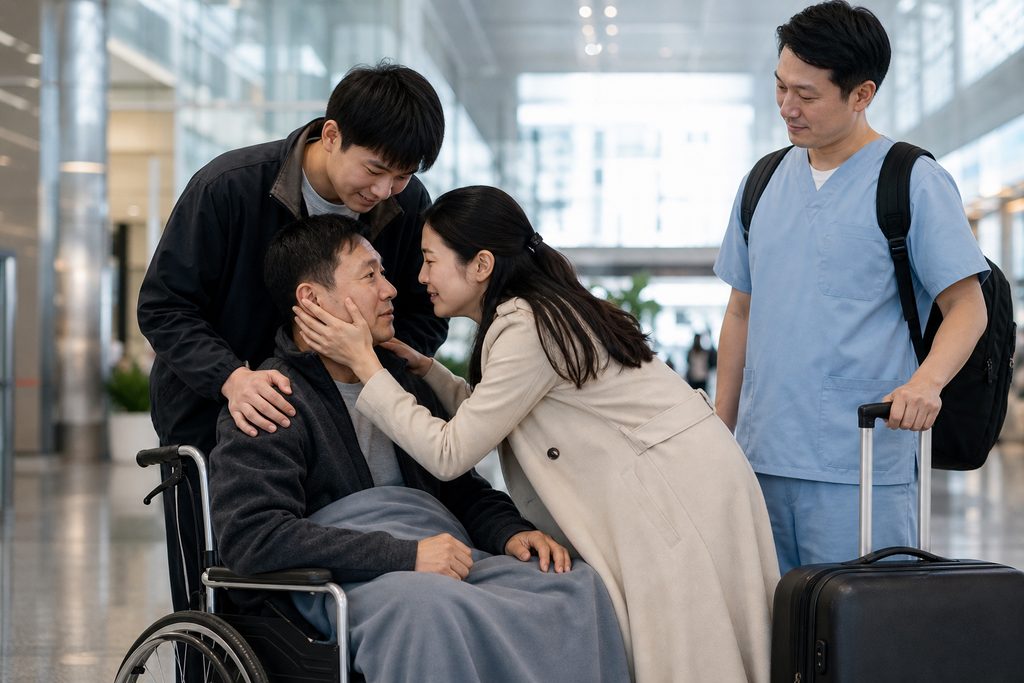
You have probably heard that getting a family member to China during a medical emergency means drowning in paperwork for weeks. The consulate never answers. The forms are only in Chinese. The reality is different. A medical visa for family China emergency can be secured in as little as 3 to 5 business days when you know the exact documentary pathway and which office to approach. The problem is that almost no one outside the system knows these steps until they are in crisis mode, phone in hand, hospital lobby, desperate.
Key Takeaways
- Emergency family reunification visas for China are processed through a specific S2 visa category, not standard tourist or business channels — and the documentary requirements are unforgiving if you miss a single stamp.
- A complete, correctly formatted hospital invitation letter cuts processing time from 2-3 weeks down to 3-5 business days in most jurisdictions.
- Without a local coordinator physically present at the hospital’s medical records office, families routinely lose 7-10 days just obtaining the correct documents.
- You do not need to be physically in China to initiate this process. A properly authorized representative can obtain and courier the hospital documentation to your family member’s home country.
The Problem: A Family Member Is in a Chinese Hospital and You Are 5,000 Miles Away
A patient is admitted through an emergency room in Shanghai. They are stabilized. Surgery is scheduled. And then the attending physician asks the question that stops everything: “Who is your medical decision-maker? We need them here.”
This moment happens more often than anyone talks about. China’s top-tier hospitals treat a growing number of international patients each year. Fuwai Hospital alone performs over 14,000 cardiac surgeries annually, and a meaningful percentage involve foreign nationals who traveled specifically for that expertise. But complications do not send a calendar invite. A post-operative issue, an unexpected finding during pre-surgical screening, a need for family consent — these things materialize at 11 p.m. on a Thursday, and suddenly a spouse or adult child in London or Los Angeles needs to be in Beijing by Monday.
The standard visa process is not built for this. A regular tourist visa takes two to three weeks. A business visa requires an invitation letter from a Chinese entity that most families simply do not have. And the clock is ticking.
Who We Are
We are not a hospital. We do not provide medical treatment, clinical diagnoses, or emergency medical advice. Our team functions as your logistical architects — we bridge the gap between your family and China’s top-tier medical expertise. We handle the documentary assembly, the hospital liaison work, the consular submission strategy, and the on-ground coordination that turns a bureaucratic process measured in weeks into one measured in days. We have done this for families from over 30 countries. We know which window at which visa center processes emergency applications fastest on a Tuesday morning.
Why the S2 Visa Pathway Works When Every Other Route Fails
Most families make the same mistake. They go to the Chinese consulate website, see “Tourist Visa” and “Business Visa,” and start down the wrong path. The correct instrument for family reunification during a medical crisis is the S2 visa, annotated for medical visitation purposes. This is not a loophole. It is the official, designated visa category for family members visiting a foreign national receiving medical treatment in China.
The S2 visa requires a very specific set of documents. Get them right, and the consular officer has a clear, pre-established protocol to expedite. Get them wrong — miss one hospital stamp, submit a photocopy where an original is required — and the application sits in a queue with all the others. The difference between 3 days and 3 weeks is almost always documentary precision, not processing volume.
The Hospital Invitation Letter Is the Single Most Important Document
This is where families lose time. The hospital must issue an official invitation letter on letterhead, stamped with the hospital’s official seal, specifying the patient’s name, passport number, diagnosis, treating department, and the relationship and passport details of the family member being invited. It must state explicitly that the family member’s presence is required for medical decision-making or care support.
Getting this letter right requires someone physically present at the hospital. The medical records office, the international patient department, the attending physician’s administrative staff — these are different offices in different buildings on a Chinese hospital campus that might span 50 acres and serve 10,000 outpatients a day. Our bilingual coordinators handle this on the ground. They know which desk to approach, what phrasing the consulate expects, and how to get the stamp applied while the ink is still wet.
Processing Times That Actually Reflect Reality
The official line from most Chinese consulates is 4 to 10 business days for an S2 visa. In practice, with a complete emergency application package — hospital invitation letter, proof of relationship, patient’s admission records, and a cover letter stating the medical urgency — we routinely see approvals in 3 to 5 business days. Some consulates offer same-day or next-day emergency processing when the documentation is flawless and the medical circumstances are clearly life-threatening or require imminent surgical consent.
This is not a guarantee. Every consulate operates independently, and no one can promise a specific approval date. But the pattern is consistent: complete documentation submitted through the correct channel moves fast. Incomplete documentation does not move at all.
What You Need to Know Before Trying This Alone
The barriers are real. They are not insurmountable, but they will cost you time you may not have if you encounter them unprepared.
- Hospital documentation is not digitized in the way Western families expect. Most Chinese public hospitals still issue critical documents — admission records, official invitation letters, stamped treatment summaries — as physical paper with a red chop seal. A scan or photocopy is not sufficient for visa purposes. Someone must collect the original, and that original must be couriered to the applicant’s home country. Our team handles this physical handoff and international courier coordination. Without it, families wait for documents that never arrive because no one knew a physical original was required.
- Language barriers extend beyond translation apps. The consulate needs specific phrasing. The hospital’s international department may be in Building 3 when the medical records office is in Building 1. A family member calling from overseas cannot navigate a Chinese hospital switchboard, find the right extension, and explain in Mandarin what document they need and why. We can. Our bilingual staff are on the ground, in the hospital, speaking to the right people in the right terms.
- Proof of relationship must be documented, not assumed. A marriage certificate or birth certificate is required. If the documents are not in English or Chinese, they must be translated and notarized. This step alone can add a week if you do not know it is coming. We flag this on day one and help coordinate the translation.
How We Help You Navigate This
These barriers exist for structural reasons, not because the system is designed to exclude families. Chinese hospitals want family members present for major medical decisions. The visa system has a category explicitly for this purpose. The gap is operational — the distance between what the system requires and what a distressed family can produce from overseas.
We close that gap. The process starts with a consultation where we understand the patient’s situation — which hospital, which department, what the attending physician has communicated, and who needs to travel. We then deploy a bilingual coordinator to the hospital to obtain the official invitation letter and supporting documents. Those documents are reviewed for consular compliance, couriered to the family member’s location, and accompanied by a submission guide specific to the relevant consulate. For families who need it, we can coordinate airport pickup, local accommodation near the hospital, and a bilingual medical companion to translate during the first critical conversations with the care team. More details on our coordination services are available on our patient support page.
The family support visa for patient in China cost varies by the complexity of the case and the hospital involved. Hospital appointment coordination starts from $300, and our VIP end-to-end coordination service, which includes full documentary handling, courier logistics, and on-ground support, ranges from $5,000 to $8,000 depending on the number of family members and the duration of support required. Any coordination fee paid is credited in full toward on-the-ground services if the family later proceeds with treatment coordination through us — a one-time credit applied to the coordination fee only, never to hospital treatment charges.
Frequently Asked Questions
With a complete, correctly formatted documentation package, we see approvals in 3 to 5 business days at most consulates. Some offer emergency same-day processing when the medical circumstances are demonstrably urgent — for example, when a surgery consent deadline is imminent. The key variable is almost always document completeness, not consular backlog. Incomplete applications stall regardless of urgency.
Yes. The S2 visa covers family visitation for patients receiving medical treatment, not only emergency situations. The same documentation pathway applies — a hospital invitation letter, proof of relationship, and the patient’s admission or treatment records. The processing timeline is typically longer for non-emergency cases, closer to the standard 4 to 10 business days, because the consulate does not prioritize the application. But the mechanism exists and works reliably.
This happens, and it is almost always a procedural issue, not a refusal. The hospital’s international patient department or medical records office may not understand what the consulate requires. They may issue a letter that lacks the official stamp, or uses phrasing the consulate will reject. Our coordinators bridge this gap. They explain to the hospital exactly what the consulate needs, in Mandarin, with sample language if necessary. In our experience, hospitals are cooperative once they understand the requirement. They simply need someone to articulate it clearly.
In most jurisdictions, yes — the applicant must appear in person to submit biometrics. Some countries have visa application centers that handle the submission, but the applicant still needs to be physically present. We cannot eliminate this requirement. What we can do is ensure the paperwork is flawless so that the in-person submission is a formality, not the start of a back-and-forth that consumes weeks.
This is the scenario every family fears. Chinese hospitals typically require written consent from the patient or a legally authorized representative for major procedures. If the patient is conscious and competent, they can consent for themselves. If they are not, the hospital will look to next of kin. In the window before the family member arrives, we can coordinate a remote video consultation with the attending physician — our video consultation service ranges from $100 to $800 depending on the specialist — so the family can understand the situation, ask questions, and communicate their wishes. This is not a substitute for being present. It is a bridge until the family arrives.
Your Next Step
A family member in a Chinese hospital, a surgery scheduled, a consent form waiting for a signature — this is not a situation where you can afford to learn the visa system by trial and error. The pathway exists. The S2 visa is the correct instrument. The difference between getting your family here fast and watching a calendar fill with delays is almost entirely about documentation precision and having someone on the ground who knows which office to walk into.
If you are facing this situation right now, start with a conversation. Tell us the hospital, the patient’s status, and who needs to travel. We will map the fastest route from where you are to where you need to be. Visit our consultation page to begin — there is no cost for the initial discussion, and no obligation. You need information before you need a plan. We will give you both.
For more medical information and treatment options in China, visit chinamedservices.com (China Medical Services).
