Full Body Check-Up in China: What It Includes, Real Costs, and How to Book Safely
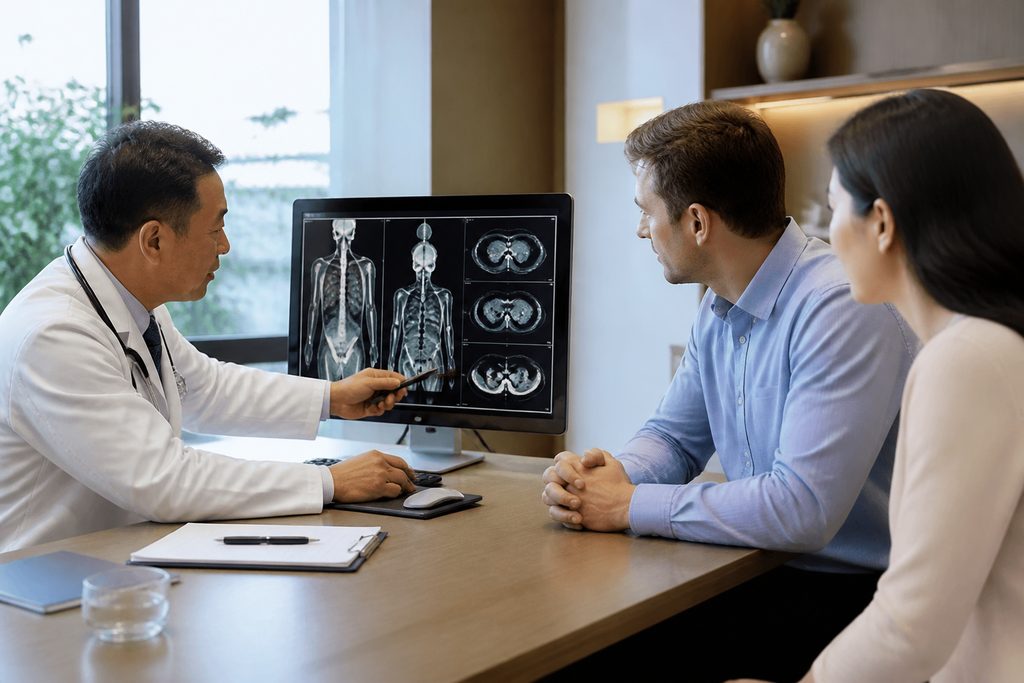
A full body check-up in China is a comprehensive health screening package that compresses dozens of diagnostic tests into a single hospital visit, typically lasting half a day to one full day. Think of it as an annual physical on overdrive: blood panels covering 30 to 60 biomarkers, ultrasound of major organs, chest imaging, cardiac stress testing, and often tumor marker screening. The appeal for international patients is straightforward: the full body check up cost China hospitals charge runs between $300 and $1,500 for executive-tier packages that would bill at $5,000 to $15,000 in the United States or Western Europe. That price gap exists because Chinese hospitals operate at massive scale, with dedicated physical examination centers processing hundreds of patients daily through assembly-line efficiency that still maintains clinical rigor.
Key Takeaways
- A comprehensive full body check-up in China costs $300–$1,500, with executive packages at top Beijing and Shanghai hospitals reaching $2,000+
- Chinese check-up centers complete most screenings in 4–6 hours, with results delivered within 3–7 days via app or email
- Language barriers in public hospital check-up centers are real — most signage and staff operate in Mandarin only
- Private international hospitals offer English-speaking check-up packages with direct insurance billing, but at 2–3x public hospital prices
The Problem: Routine Screening in the West Is Expensive, Fragmented, and Slow
In the United States, a comprehensive executive physical at a facility like the Mayo Clinic or Cleveland Clinic costs between $4,000 and $10,000, and that often excludes advanced imaging like CT calcium scoring or full-body MRI. Wait times for non-urgent screening appointments stretch 4 to 8 weeks in major metropolitan areas. In the United Kingdom, NHS health checks cover basic cardiovascular risk assessment but omit cancer screening beyond national programs, and private “MOT” health screens at London clinics run £800 to £2,500 for a fraction of what Chinese executive packages include.
The fragmentation compounds the cost. A patient wanting cardiac stress testing, abdominal ultrasound, comprehensive blood work, and a dermatology screen in the US would book four separate appointments across three facilities, take two days off work, and wait three weeks for results to trickle in from different labs. That is the structural problem Chinese check-up centers solved by consolidating everything under one roof.
Why a Full Body Check-Up in China Delivers Results
Volume Creates Efficiency That Western Clinics Cannot Match
Top-tier Chinese hospitals run dedicated physical examination centers that process 300 to 500 patients daily. Fuwai Hospital in Beijing, which performs over 14,000 cardiac surgeries annually, operates a check-up center where cardiologists read stress test results alongside radiologists reviewing chest CTs in the same building, often the same morning. This is not a marketing claim — it is the operational reality of a hospital system built around scale. A patient arriving at 7:30 AM at a Shanghai check-up center typically completes blood draw, ultrasound, ECG, chest X-ray, and physician consultation by noon. Results upload to a mobile app within 72 hours.
Compare that to the fragmented Western workflow. Different facilities, different scheduling systems, different result portals. The Chinese model treats the annual check-up as a standardized clinical pathway, not a series of disconnected appointments.
Technology Deployment Without the Premium Price Tag
Chinese hospitals adopt advanced imaging at a pace that surprises Western visitors. Low-dose chest CT, which the American Cancer Society recommends for high-risk lung cancer screening, costs $80 to $150 in Chinese check-up centers versus $300 to $600 in the US. Cardiac CT calcium scoring runs $100 to $200 in China. Full-body MRI screening, increasingly popular among health-conscious executives in Asia, costs $500 to $900 at Chinese private hospitals compared to $2,500 to $5,000 in the US.
The reason is structural. Chinese hospitals negotiate equipment purchases at national scale. Radiologists read 50 to 80 scans daily, not 15 to 20 as in the US. Labor costs for technicians and nurses run 60 to 70 percent lower. These savings pass through to the patient without compromising diagnostic quality — the same Siemens and GE machines used in American hospitals dominate Chinese imaging departments.
Cost Advantage Without Quality Compromise
The full body check up cost China patients pay reflects economics, not corner-cutting. A standard executive package at a Fudan-ranked hospital in Shanghai — including 40+ blood markers, abdominal and thyroid ultrasound, chest CT, ECG, and physician review — costs $500 to $800. The equivalent battery of tests in the US, booked individually, would exceed $4,000. At private international hospitals like United Family or Jiahui, the same package with English-speaking staff and direct insurance billing runs $1,500 to $2,500 — still 40 to 60 percent below US executive physical pricing.
Quality control exists. The hospitals in our Top 100 hospital database hold JCI accreditation or Fudan ranking, meaning their laboratories participate in international proficiency testing and their radiologists meet continuing education standards comparable to Western peers.
What Is Included in a Full Body Check Up in China: Package Breakdown
Chinese check-up packages follow a tiered structure. Understanding the tiers prevents overpaying for tests you do not need or under-buying coverage for risks you carry.
| Package Tier | Typical Inclusions | Price Range (USD) | Best For |
|---|---|---|---|
| Basic (Standard) | Blood count, liver/kidney function, lipids, glucose, urinalysis, chest X-ray, abdominal ultrasound, ECG, basic physician consult | $300–$500 | Adults under 40 with no risk factors |
| Executive (Comprehensive) | All basic tests plus thyroid panel, tumor markers (AFP, CEA, CA19-9, PSA for men, CA125 for women), low-dose chest CT, cardiac ultrasound, carotid ultrasound, H. pylori breath test | $600–$1,200 | Adults 40+ or with family history of cancer/cardiac disease |
| Premium (Executive Plus) | All executive tests plus full-body MRI, coronary CT calcium scoring, genetic screening panels, comprehensive hormone profile, same-day specialist consultations | $1,500–$3,000 | High-net-worth individuals, executives seeking maximum coverage |
Prices vary by hospital and case complexity. Public hospital check-up centers charge the lower end of each range. Private international hospitals charge the upper end but add English interpretation, private rooms, and faster result turnaround.
Best Hospital for Full Body Check Up Beijing: How to Choose
The best hospital for full body check up Beijing depends on what you prioritize: clinical depth, English support, or cost efficiency. Beijing hosts 21 of China’s Fudan Top 100 hospitals — the highest concentration in the country.
For clinical depth, Peking Union Medical College Hospital (PUMCH) operates one of the most comprehensive check-up centers in China. Its premium packages include consultations with specialists from departments ranked among China’s top 10 for internal medicine, cardiology, and oncology. Expect to pay $1,000 to $2,500 for executive-tier screening. The trade-off: PUMCH’s check-up center operates primarily in Mandarin, so international patients need a bilingual companion or should book through the hospital’s international department.
For English-speaking convenience, private international hospitals in Beijing like United Family and Raffles Medical offer check-up packages with English-speaking nurses, Western-style facilities, and direct insurance billing. Executive packages run $1,800 to $2,800. You trade some clinical volume for comfort and language access.
For cost efficiency, Beijing’s public tertiary hospitals — including Fuwai Hospital for cardiac-focused screenings and Beijing Friendship Hospital for general packages — deliver executive check-ups at $600 to $1,000. The Beijing hospital guide on our site details which facilities accept international patients directly.
Executive Health Screening Shanghai Price: What the Market Charges
Shanghai’s check-up market is more commercially developed than Beijing’s, with sharper price competition. The executive health screening Shanghai price typically lands between $500 and $1,500 at public hospital centers, and $1,200 to $2,500 at private international facilities.
Zhongshan Hospital Fudan University, ranked among China’s top hospitals for cardiac and general surgery, offers executive screening packages starting around $700. Huashan Hospital, known for neurology and dermatology, prices comprehensive packages at $600 to $1,200. Both operate high-volume check-up centers where international patients can complete screening in a single morning, though Mandarin language support is standard rather than exceptional.
Shanghai’s private international hospitals — Jiahui, Parkway, and United Family — compete aggressively on executive screening. Jiahui’s “Premier Health Screen” includes full-body MRI, cardiac CT, and same-day specialist review for approximately $2,200. Parkway Health bundles similar coverage at $1,800 to $2,400 with direct insurance billing for major international insurers including Cigna, Aetna, and Allianz.
See the Shanghai hospital directory for a full comparison of check-up facilities by tier and specialty.
Is a Full Body Check Up in China Safe? Standards, Regulation, and Real Risks
Short answer: yes, when conducted at accredited hospitals. The longer answer requires understanding where safety concerns come from and how to avoid the facilities that generate them.
Chinese check-up centers at Fudan-ranked or JCI-accredited hospitals follow standardized protocols for equipment calibration, reagent quality, and result verification. Laboratories participate in external quality assessment programs. Radiologists hold board certifications equivalent to Western credentials. The National Health Commission inspects public hospital check-up centers annually.
The risks concentrate in unaccredited private “health screening centers” that market aggressively to tourists. These facilities may use older equipment, employ less experienced technicians, or over-interpret borderline results to upsell additional testing. The rule: book through a hospital-affiliated check-up center or a JCI-accredited private hospital. Our Top 100 hospital list includes only facilities with verified accreditation.
Radiation exposure deserves honest discussion. A chest CT delivers approximately 7 mSv of radiation — equivalent to about two years of background exposure. Low-dose chest CT reduces that to 1.5 mSv. Full-body MRI involves no ionizing radiation. If you are under 40 with no smoking history or family cancer risk, a chest X-ray may suffice; discuss this with the check-up physician before accepting CT as default.
Book Full Body Check Up Package China: Practical Steps
You can book full body check up package China facilities offer through three channels: directly with the hospital’s international department, through a private international hospital’s patient services team, or through a coordination service like ours. Each path has trade-offs.
Direct booking with public hospitals requires Mandarin proficiency or patience with email response times. Many public hospital check-up centers do not accept online bookings from overseas phone numbers. Walk-in registration works but means queueing at 6:30 AM for a same-day slot — not practical for international travelers.
Private international hospitals accept online bookings through their websites and respond in English within 24 to 48 hours. This is the smoothest path if budget allows.
The coordination route — which is what we do at China Medical Services — handles registration, scheduling, and bilingual accompaniment for a coordination fee starting at $300. We are not a hospital and do not provide diagnoses. We are the bridge between you and the check-up center, ensuring your paperwork is correct, your appointments are sequenced properly, and a bilingual companion is with you throughout the screening.
Visa considerations matter. Medical check-ups fall under the S2 visa category, which covers short-term private affairs including medical treatment. Supporting documents from the hospital — an appointment confirmation or invitation letter — strengthen your application. The S2 visa is not a guarantee of entry; approval rests with the Chinese embassy or consulate reviewing your application.
Practical tip: Schedule your check-up for the second day after arrival in China. Jet lag can skew blood pressure readings, cortisol levels, and heart rate variability. One full day of rest before testing produces more accurate baseline data.
Payment methods vary. Public hospital check-up centers accept cash, Chinese bank cards, and WeChat Pay or Alipay — but not international credit cards. Private international hospitals accept Visa, Mastercard, and direct insurance billing. If you book through a coordination service, the service fee is typically invoiced separately from hospital charges.
Results delivery takes 3 to 7 days depending on package complexity. Most hospitals provide results through a mobile app or email. Some provide English translations; others deliver results in Chinese only. Confirm translation availability before booking.
Frequently Asked Questions
The full body check up cost China hospitals charge international patients ranges from $300 for basic packages at public hospital centers to $3,000 for premium executive screening at private international hospitals. Most comprehensive executive packages fall between $600 and $1,500. Prices vary by hospital, package tier, and whether you book directly or through a coordination service.
Private international hospitals always provide English results. Public hospital check-up centers typically issue results in Chinese, though many will provide English translation for an additional fee — usually $30 to $80. Confirm this before booking. If you use a bilingual medical companion, they can translate results on the spot during your physician consultation.
If a screening result is abnormal, the check-up center will recommend follow-up testing or specialist consultation. At public hospitals, you can often see a specialist the same week — sometimes the same day — because the check-up center is part of a full hospital system. At private international hospitals, referrals to in-house specialists are typically arranged within days. You are never obligated to pursue treatment at the same facility where you completed screening.
At Fudan-ranked or JCI-accredited hospitals, yes. These facilities follow international laboratory quality standards, use current-generation imaging equipment, and employ board-certified physicians. The risk lies in unaccredited private screening centers that market to tourists. Stick to hospital-affiliated check-up centers or JCI-accredited private hospitals, and the safety profile is comparable to Western facilities.
Private international hospitals accept advance online bookings from overseas. Public hospital check-up centers often require in-person registration or a Chinese phone number for booking, which is where a coordination service helps. Booking 2 to 4 weeks in advance is recommended, especially for premium packages that include MRI or specialist consultations.
Your Next Step
A full body check-up in China offers comprehensive screening at a fraction of Western prices — but navigating the system requires either Mandarin proficiency or reliable coordination. We help international patients book check-up packages at accredited hospitals, arrange bilingual companions, and handle the logistics that make the experience smooth rather than stressful. If you are considering a check-up in Beijing, Shanghai, or another Chinese city, tell us what you need and we will match you with the right facility. No pressure — just practical guidance from people who know the system.
For more medical information and treatment options in China, visit chinamedservices.com (China Medical Services).
