China Hospital for Tourists: Access Top Care Without the Wait
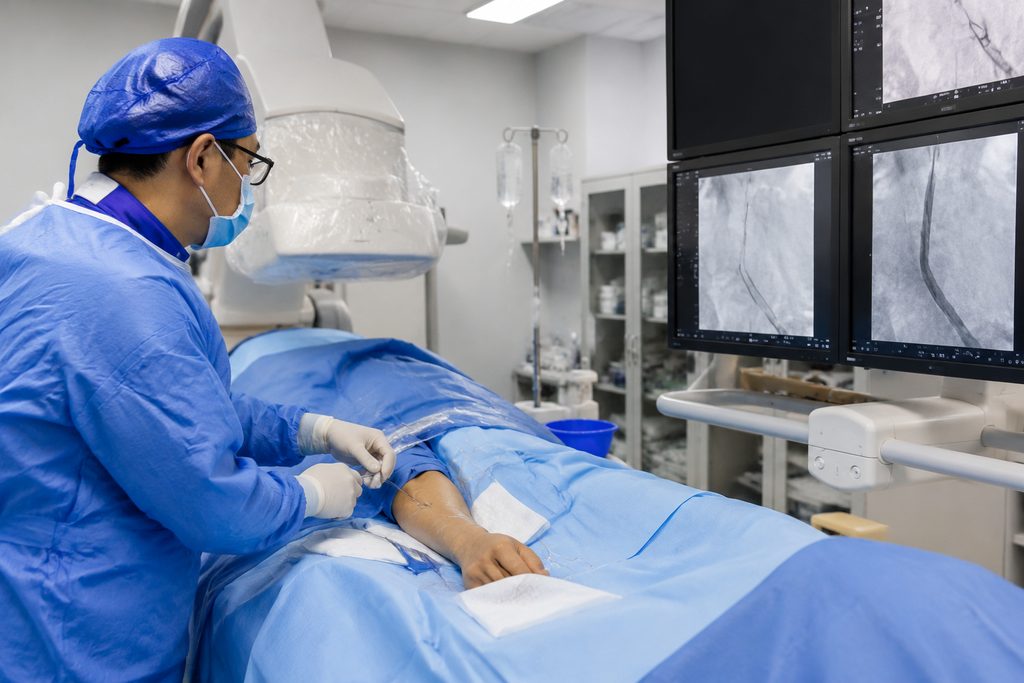
You have probably heard that seeking medical care in China means compromising on quality, wading through bureaucracy, or gambling on a system you do not understand. The reality is almost the opposite. Some of the best hospitals in China for international patients now treat more complex cases each year than the most famous clinics in the United States, and they do it at a fraction of the cost.
The catch is not quality. The catch is navigation.
China has more than 35,000 hospitals. Only a small fraction — roughly the top 5% — meet the standards international patients expect: JCI accreditation, English-speaking staff, and specialists who train and publish alongside their Western peers. Finding those hospitals is easy. Getting an appointment, understanding the payment flow, and managing a hospital that sees 10,000 outpatients a day is where most visitors get lost.
That is exactly the problem this guide solves.
Key Takeaways
- China’s top-ranked hospitals handle extraordinary surgical volumes — Fuwai Hospital in Beijing performs over 14,000 cardiac surgeries a year, more than any other single center globally.
- Major procedures often cost one-fifth to one-tenth of US prices. Heart bypass surgery at a top Chinese public hospital typically runs $12,000–$20,000, versus $120,000 or more in the United States.
- Public hospitals do not allow foreigners to book routine outpatient slots from overseas in advance. Same-day registration is the norm, and surgery is scheduled only after an in-person consultation.
- Medical travel to China uses the S2 visa (annotated for medical treatment), not the M visa. The M visa is strictly for commercial and trade activity.
The Problem: World-Class Care Behind a Language and Logistics Wall
Consider a patient in the UK or Canada facing a hip replacement. The wait for elective orthopedic surgery in parts of the UK’s National Health Service has stretched past 18 months in recent years, according to NHS referral data. In Canada, the median wait from referral to hip replacement has hovered around 26 weeks — and that is the median, not the worst case.
Meanwhile, a patient in the United States without comprehensive insurance stares down a bill that can exceed $40,000 for the same operation.
These are not abstract numbers. They represent months of lost mobility, lost income, and lost independence. And for patients in the Middle East, Southeast Asia, or Russia, the local options may be limited by technology, specialist availability, or both.
China sits in an unusual position. It has the surgical volume, the equipment, and the specialists. What it lacks — for a first-time foreign visitor — is a clear front door.
Why China Delivers Results for International Patients
The case rests on three structural advantages that are hard to replicate elsewhere.
Clinical Volume That Sharpens Skill
Surgeons get better by operating. A senior orthopedic surgeon at a top Chinese hospital may complete several hundred joint replacements annually. The average US orthopedic surgeon performs far fewer. High-volume centers also develop standardized protocols for complications, which matters more than any single surgeon’s reputation.
Fuwai Hospital is the clearest example. Its cardiac surgery volume is the highest in the world. That kind of repetition builds institutional muscle — in anesthesia, intensive care, and post-operative management, not just in the operating room.
English-Speaking Doctors and International Departments
Here is a fact that surprises many patients: China’s top public hospitals operate dedicated international departments (sometimes called VIP or special-needs clinics) staffed with English-speaking physicians. These departments handle appointment booking, interpretation, and coordination in a way the general outpatient hall simply cannot.
Private international hospitals take this further. Facilities like United Family, Jiahui, Parkway, and Raffles offer Western-style care, JCI accreditation, and direct insurance billing. For patients who prioritize a familiar environment over the lowest possible price, these are legitimate options — not a compromise.
Cost Advantage Without a Quality Trade-Off
Lower prices in China do not come from cutting corners. They come from labor economics, hospital efficiency, and volume. A nurse’s salary, a hospital bed’s operating cost, and the price of a stent all sit far below US levels. The implant itself is often the same device, made by the same multinational manufacturer.
That is why the price gap is so wide — and why it does not signal lower quality.
How Much Does Heart Surgery Cost in China? A Real Comparison
Cost is the question every patient asks first. The table below reflects typical ranges at top-tier Chinese public hospitals. Actual figures vary by hospital and case complexity.
| Procedure | China (Top Public Hospital) | United States | Typical Savings |
|---|---|---|---|
| Coronary artery bypass graft | $12,000–$20,000 | $120,000+ | ~85% |
| Hip replacement | $8,000–$14,000 | $30,000–$40,000 | ~70% |
| Knee replacement | $9,000–$15,000 | $35,000–$50,000 | ~75% |
| Dental implant (per tooth) | $800–$2,000 | $3,000–$5,000 | ~65% |
| Spinal fusion | $15,000–$25,000 | $80,000–$150,000 | ~80% |
For patients searching for hip replacement cost at a Shanghai hospital, the realistic range at a top public facility is $8,000–$14,000, all-in. At a private international hospital, expect roughly 1.5 to 2 times that — still well below Western pricing.
Dental care deserves its own note. Patients who want to book dental implants in China frequently save enough on a full-mouth restoration to cover flights and a two-week stay. Implant systems used in top Chinese clinics are typically the same Swiss, German, or Korean brands sold elsewhere.
Is Medical Tourism in China Safe? Evaluating Providers Honestly
This is the question that keeps patients up at night, and it deserves a direct answer rather than reassurance.
China’s top hospitals are safe by any international standard. They are accredited, regulated, and audited. The risks in medical travel are rarely clinical — they are logistical and informational.
Common mistakes we see:
- Booking through unverified intermediaries who promise a specific surgeon or a guaranteed surgery date. No legitimate coordinator can guarantee that. Public hospital rules require an in-person consultation before surgical scheduling.
- Assuming the M visa works for medical travel. It does not. Medical travel uses the S2 visa, annotated for treatment purposes, with supporting hospital documentation. Family members accompanying a patient apply for S2 as well.
- Underestimating the language barrier. A hospital that sees 10,000 outpatients daily runs on Chinese. Registration kiosks, lab queues, and pharmacy counters are not designed for non-Chinese speakers. This is precisely where a bilingual companion earns their fee.
- Skipping the second opinion. Some patients arrive expecting surgery and discover, after proper review, that a different approach is appropriate. Getting a written second opinion before booking flights is the single most valuable step in the process.
The Practical Path: What Actually Happens, Step by Step
Here is how a realistic medical journey to China unfolds, with honest timelines.
Step 1 — Written second opinion (1–2 weeks). You send existing examination reports, imaging, and history. A relevant Chinese specialty reviews them and returns written analysis and treatment direction. This costs $300–$500 and is for reference only, not a prescription.
Step 2 — Video consultation (within days of Step 1). You speak directly with the Chinese specialty team, explain your symptoms and goals, and hear their recommendations. Fees range from $100–$300 for a standard international department to $500–$800 for a top specialist, and $1,500–$2,000 for a multidisciplinary team review.
Step 3 — S2 visa application (1–3 weeks, varies by consulate). You apply with hospital supporting documents. Processing times differ by country and season. Never book non-refundable flights before the visa is in hand.
Step 4 — Arrival and in-person consultation. This is the appointment that unlocks everything. Surgery is scheduled only after a physician examines you in person.
Step 5 — Treatment and recovery. Public hospitals require prepayment; private international hospitals often bill insurance directly. Plan for a recovery window before flying home.
A critical detail: any consultation fee paid through our service is credited in full toward on-the-ground coordination if you travel within 90 days. That credit applies once, to the coordination fee only, and never to hospital treatment charges.
Where to Start: Matching Your Condition to the Right Hospital
China’s hospital landscape splits into three categories, and choosing the right one matters more than choosing the “best” hospital overall.
Top public hospitals (Fudan-ranked). These are the volume leaders — Peking Union Medical College Hospital, Zhongshan Hospital at Fudan University, West China Hospital, Ruijin Hospital. Best for complex surgery and serious disease. You can browse rankings by specialty on our department pages.
Private international hospitals. Best for patients who prioritize English-language service, insurance billing, and a Western care environment. Our private hospital directory lists JCI-accredited options.
Traditional Chinese Medicine hospitals. Best for chronic condition management, rehabilitation, and integrative care. Acupuncture, tuina massage, and herbal formulas have a legitimate role — particularly in post-surgical recovery and pain management.
For most international patients, the decision comes down to a simple trade-off: public hospitals offer the deepest expertise at the lowest cost; private hospitals offer the smoothest experience at a moderate premium. Neither is wrong. The right answer depends on your condition, your budget, and your tolerance for navigating a system that was not built with foreign visitors in mind.
Frequently Asked Questions
No. Public hospitals require an in-person consultation before scheduling surgery. What you can do in advance is arrange a written second opinion or video consultation, which clarifies whether surgery is appropriate and which hospital is the right fit. International departments can sometimes pre-arrange the consultation slot itself.
No — and this is a common and costly mistake. The M visa is for commercial and trade activities only. Medical travel uses the S2 visa, annotated for treatment, supported by hospital documentation. Stays exceeding 180 days require the S1 category. Always confirm current requirements with the nearest Chinese embassy or consulate, as rules can change.
Consultation fees are for the medical review itself and are not refundable on their own. However, if you do travel within 90 days, the fee is credited in full toward coordination services. We never promise a specific surgeon or a guaranteed surgery date — only that we will coordinate diligently, and if we cannot secure the appointment you paid for, that coordination fee is refunded.
Many patients do exactly that, and top hospitals are safe environments. The real challenge is practical: registration, payment, pharmacy, and follow-up instructions all happen in Chinese. A bilingual medical companion — from $300 per day — handles queuing, registration, payment, wayfinding, and translation so you are not navigating a 10,000-patient hospital alone.
Your Next Step
The gap between “China has world-class hospitals” and “I can actually access one” is a logistics problem, not a medical one. Understanding the S2 visa, the in-person consultation rule, and the real cost ranges puts you in a position to make a clear-eyed decision.
We are China Medical Services — a coordination team, not a hospital. We do not diagnose or treat. We connect international patients with the right Chinese hospitals, arrange written second opinions and video consultations, and provide bilingual support on the ground. Start with a free consultation at our patient services page, and we will help you understand whether China is the right path for your case — with no pressure either way.
For more medical information and treatment options in China, visit chinamedservices.com (China Medical Services).
