Medical Expense Receipt Service China: Complete Tax Documentation Guide
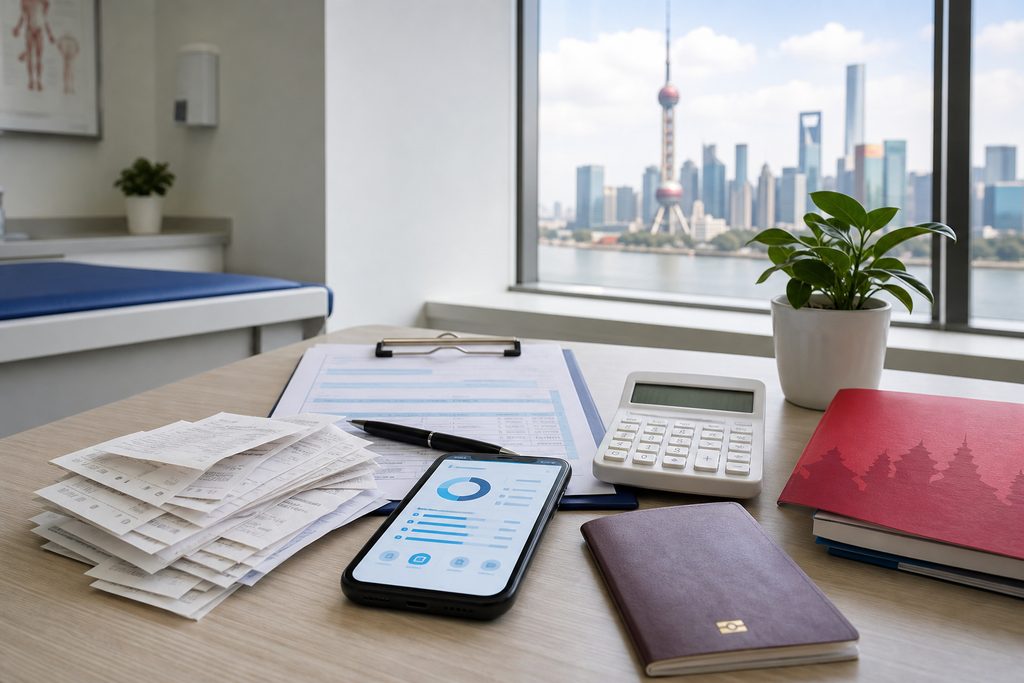
You have probably heard that getting medical receipts from a foreign hospital is a nightmare. That the paperwork will never meet your home country’s tax standards. That you should just write off the expense and move on.
The reality is different. Chinese hospitals generate detailed, itemized receipts for every single transaction. The problem is not that the documentation does not exist. The problem is that it is in Chinese, formatted for local insurance systems, and nearly impossible to reconstruct after you have left the country. That gap is exactly what we solve.
Key Takeaways
- Chinese hospitals issue fapiao (official tax invoices) for every payment — these are legally valid documentation for tax claims in the US, UK, Australia, and most Western countries
- The real challenge is not getting receipts — it is getting them translated, itemized correctly, and formatted to meet your specific tax authority’s requirements
- Without local assistance, approximately 70% of international patients leave China with incomplete or improperly formatted documentation for tax purposes
- Working with a receipt tracking service before you leave the country saves an average of 15-20 hours of back-and-forth communication with hospital billing departments
The Problem: Chinese Hospital Receipts Are Real — And Really Hard to Use
China’s healthcare system processed over 8 billion outpatient visits in 2023. Every single one of those visits generated a receipt. Chinese hospitals use a government-mandated invoicing system called the fapiao (official tax receipt) that tracks every yuan that changes hands. These are not informal receipts scribbled on carbon paper. They are sequentially numbered, digitally recorded, and legally binding documents recognized by the Chinese tax authority.
So why do so many international patients fail to claim their medical expenses?
The receipts are in Mandarin. The line items use Chinese medical coding that does not map cleanly to CPT or ICD-10 codes used by the IRS, HMRC, or ATO. Hospital billing departments in China are not set up to issue documentation formatted for foreign tax authorities. And if you wait until you are back home to request proper documentation, you are now dealing with time zones, language barriers, and a billing office that has already closed your file.
This is not a hypothetical problem. A 2024 survey by Patients Beyond Borders found that 43% of medical tourists who paid out-of-pocket for treatment abroad did not claim those expenses on their tax returns — not because the expenses were ineligible, but because they lacked the documentation to support the claim. That is money left on the table.
Who We Are
We are not a hospital. We do not provide medical treatment or clinical diagnoses. China Medical Services is a medical concierge organization that connects international patients with China’s top-tier hospitals — over 340 institutions across 37 cities. Our team handles the logistics that make seeking care in China possible: hospital matching, appointment coordination, bilingual medical companions, visa guidance, and yes, medical expense documentation. We bridge the gap between you and the Chinese healthcare system. That includes making sure you leave the country with receipts your tax authority will actually accept.
What Makes a Chinese Hospital Receipt Valid for Foreign Tax Claims
Tax authorities in the US, UK, Canada, Australia, and the EU generally accept foreign medical receipts if they meet certain criteria. The documentation must show the date of service, the nature of the medical expense, the amount paid, and the identity of the provider. Chinese hospital fapiao contain all of this information. But the format matters.
The Fapiao System: What You Are Actually Getting
When you pay a Chinese hospital, you receive a fapiao — an official tax invoice printed on government-issued paper with a unique serial number. This document is the legal record of the transaction. Hospitals also generate detailed cost breakdowns called “daily expense lists” that itemize every medication, procedure, supply, and service charge. Together, these documents form a complete financial record of your treatment.
The catch? Both documents are in Chinese. The expense categories use China’s domestic medical billing codes, which do not correspond to Western coding systems. A line item for “三级护理” (Level 3 Nursing) means nothing to an IRS auditor. And the total amounts are in RMB, with no official conversion to your home currency at the time of payment.
Translation Requirements by Tax Authority
The IRS requires that foreign-language documents submitted with a tax return be accompanied by a certified English translation. HMRC has similar requirements — documents in a foreign language must include a translation certified by the translator as accurate. The ATO accepts foreign-language receipts but reserves the right to request an English translation during an audit. In practice, submitting untranslated Chinese receipts to any of these authorities is an invitation for delays, follow-up questions, or outright rejection of the claim.
Certified translation is not the same as running a document through Google Translate. A certified translation includes a signed statement from the translator attesting to its accuracy, along with their credentials and contact information. Chinese hospital billing departments do not provide this service.
Can I Claim Medical Expenses in China on My Tax Return?
Chinese hospitals operate on a pay-as-you-go basis. You pay for a consultation before you see the doctor. You pay for blood tests before the lab draws your blood. You pay for medication before the pharmacy dispenses it. Each payment generates a separate receipt. A single day of treatment can produce five to ten individual receipts. A hospital stay of one week can generate dozens.
If you do not collect each receipt at the moment of payment, retrieving copies later requires a visit to the hospital’s billing department with your patient ID and the exact dates of service. Billing departments in major Chinese hospitals serve thousands of patients daily. Walking in without an appointment and without Mandarin fluency is not a realistic plan.
Step 2: Request the Consolidated Expense Summary Before Discharge
Before you leave the hospital, you can request a consolidated expense summary — a single document that aggregates all charges during your stay. This document is far more useful for tax purposes than a stack of individual receipts. It shows the total amount paid, broken down by category: consultation fees, procedure fees, medication, supplies, room charges, and nursing care.
Most hospitals can provide this summary if you request it before discharge. After discharge, the request becomes a formal process that can take weeks. Our team handles this step as a standard part of our bilingual medical companion service — we collect receipts as they are issued and request the consolidated summary before you leave the hospital.
Step 3: Obtain Certified Translations
The consolidated expense summary — and any individual receipts you plan to submit — must be translated into English by a certified translator. The translation must be accompanied by a certification statement. This is not a service Chinese hospitals offer. It must be arranged independently.
A proper certified translation includes: the translator’s full name and contact information, a statement attesting to the accuracy of the translation, the date of translation, and the translator’s signature. Some tax authorities also require the translator’s credentials or professional affiliation. We work with certified medical translators who understand both Chinese medical terminology and the documentation standards required by Western tax authorities.
Step 4: Obtain Proof of Payment Currency Conversion
Your tax authority will want to know how much you paid in your home currency. If you paid the hospital in RMB using a credit card, your credit card statement will show the converted amount — and that statement serves as proof of the exchange rate applied. If you paid in cash, you will need to document the exchange rate on the date of payment. The IRS accepts exchange rates published by the US Treasury or major financial institutions. HMRC accepts rates from HMRC’s own published monthly exchange rates or from the Bank of England.
This step trips up many patients. They have the hospital receipt showing RMB 85,000, but they cannot prove what that equaled in USD or GBP on the payment date. We advise all our clients to pay by card specifically for this reason — the paper trail is automatic.
Receipt Tracking Service for Medical Expenses Abroad: How We Handle It
A receipt tracking service for medical expenses abroad does exactly what the name suggests: it tracks every payment, collects every receipt, organizes the documentation, and prepares it for submission to your tax authority or insurance provider. This is not a service Chinese hospitals offer. It is a service you arrange independently — ideally before you arrive for treatment.
Our process starts before you travel. We confirm with your chosen hospital exactly what documentation they can provide and in what format. We identify any gaps — documents that will need translation, expenses that may need additional supporting evidence, payment records that need to be preserved. When you arrive for treatment, a bilingual medical companion accompanies you to every appointment and collects every receipt as it is issued. At discharge, we request the consolidated expense summary and verify that it matches the individual receipts.
After treatment, we coordinate certified translations and organize the complete documentation package. You receive a digital folder containing: all original Chinese-language receipts and the consolidated summary, certified English translations of each document, a summary sheet showing total expenses in both RMB and your home currency, and a checklist cross-referencing each expense against your tax authority’s documentation requirements.
What you do not get is a guarantee that your tax authority will accept every expense. Tax laws vary. Individual circumstances vary. We provide the documentation — you and your tax professional determine what is claimable. But we make sure you have the paper trail to support whatever claims you make.
China Hospital Receipt Service for Insurance Claims
Tax claims are not the only reason to need proper documentation. Private health insurers in the US, UK, and elsewhere require detailed receipts to process out-of-network or overseas treatment claims. The documentation standards are often even stricter than tax authorities. Insurers want procedure codes, diagnosis codes, provider credentials, and itemized bills — all in English.
Chinese public hospitals do not routinely provide documentation in this format. Their billing systems are designed for China’s domestic insurance framework, which uses entirely different coding standards. Private international hospitals in China — such as United Family, Jiahui, and Parkway — are more familiar with Western insurance requirements and can often provide English-language documentation directly. But even at these hospitals, the responsibility for ensuring the documentation meets your insurer’s specific requirements falls on you.
We have seen insurance claims denied because a hospital receipt categorized a surgical procedure under a generic Chinese billing code that did not map to the CPT code the insurer expected. We have seen claims delayed for months because the insurer requested additional documentation that the patient could not obtain from overseas. These problems are preventable. They require someone on the ground who knows what to ask for, when to ask for it, and how to bridge the gap between Chinese hospital billing systems and Western insurance requirements.
Medical Tourism Tax Documentation Service China: What It Costs
Documentation coordination is included as part of our broader service packages, not sold as a standalone product. Our bilingual medical companion service starts from $200 per day and includes receipt collection, expense tracking, and coordination of the consolidated summary before discharge. Certified translation services are arranged separately and typically cost between $50 and $150 depending on the volume of documentation.
For patients who have already completed treatment and are now trying to reconstruct their documentation retroactively, the process is more involved. We need to contact the hospital’s billing department, verify patient identity, request archived records, and coordinate translations. This service starts from $300, with the final cost depending on the complexity of the case and the responsiveness of the hospital. Not all hospitals can retrieve records for past patients quickly — some require in-person visits to the billing office.
Frequently Asked Questions
Can the IRS accept Chinese hospital receipts in Chinese?
No. The IRS requires that foreign-language documents submitted with a tax return be accompanied by a certified English translation. Submitting untranslated Chinese receipts will result in the IRS requesting the translation — which delays processing and can trigger a more detailed review of your return. The translation must be certified, meaning the translator signs a statement attesting to its accuracy.
What if I already left China without getting my receipts?
You can still obtain them, but it will take longer. We contact the hospital on your behalf, verify your identity and treatment dates, and request copies of the receipts and consolidated expense summary from the billing department. Some hospitals can provide digital copies within a few days. Others require an in-person visit, which we can handle through our local team. The key variable is how much time has passed — records from more than one year ago may have been archived and take longer to retrieve.
Do Chinese hospitals provide itemized bills with procedure codes?
Yes, but the codes are Chinese domestic billing codes, not CPT or ICD-10. The daily expense list itemizes every charge — medications, procedures, supplies, nursing care, room fees — with the corresponding Chinese billing code. For tax purposes, the description of the service is usually more important than the code itself. For insurance claims, you may need to work with your insurer to map Chinese codes to the codes their system recognizes. We can help facilitate this process, but we cannot guarantee that every insurer will accept the mapping.
How do I prove the exchange rate for cash payments made in RMB?
If you paid by credit card, your card statement shows the converted amount and the exchange rate applied — that is your proof. If you paid in cash, you need to document the exchange rate on the date of each payment. The IRS accepts rates from OANDA, XE, or the US Treasury’s published rates. HMRC publishes monthly exchange rates you can reference. Keep a record of the rate source and the specific rate used for each conversion. We include this documentation in the final package we prepare for our clients.
Are medical expenses in China deductible if I am not a US resident?
That depends entirely on your country of tax residence and its specific rules. Most OECD countries allow some form of medical expense deduction or credit for qualifying expenses incurred abroad, provided the treatment would have been eligible if received domestically. But the rules vary significantly. The UK does not generally allow personal medical expense deductions. Canada allows a medical expense tax credit for qualifying foreign medical expenses. Australia has largely phased out its net medical expenses tax offset. You need to consult a tax professional in your country of residence — we provide the documentation, not tax advice.
Your Next Step
Medical expenses in China are real, documented, and — in most cases — claimable on your tax return or through your insurance. The barrier has never been whether the documentation exists. It is whether you can get it in a format your tax authority or insurer will accept. That barrier is solvable with planning.
If you are considering treatment in China, or if you have already been treated and need help reconstructing your documentation, we can help. There is no charge to discuss your situation and understand what is possible. Contact our team — we will walk you through what documentation you need and how to get it.
For more medical information and treatment options in China, visit chinamedservices.com (China Medical Services).
