Medical Tourism China Patient Stories: Real Experiences, Real Results
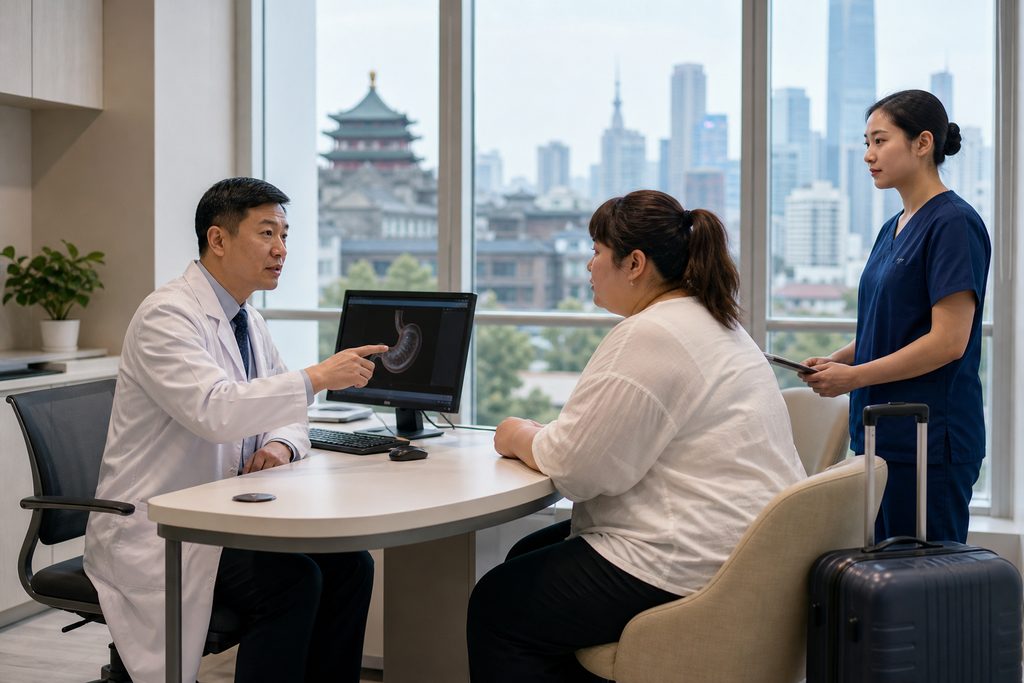
Have you ever stared at a treatment plan from your local hospital and felt the numbers simply don’t add up? A quote for a hip replacement that equals a year’s salary, or a cardiac procedure that means remortgaging the house. You started searching. You found Chinese hospitals performing high volumes of these exact procedures at a fraction of the cost. But then the questions start piling up. Is it safe? Will they speak English? What if something goes wrong? The search for authentic medical tourism China patient reviews often leads to glossy marketing pages that feel more like brochures than real guidance.
Our team coordinates treatment journeys for international patients at 340+ top-ranked hospitals across China. We don’t perform surgery. We handle the logistics, the language barrier, and the hospital matching. Over years of this work, patterns emerge. Certain questions come up in every single conversation. Certain fears. And a handful of real experiences — not polished testimonials, but the actual sequence of events — that help new patients understand what they’re signing up for. This article walks through what those experiences actually look like, the good and the difficult, so you can decide with your eyes wide open.
How This Actually Works, Step by Step
The typical journey doesn’t start with a plane ticket. It starts with a pile of medical records and a lot of uncertainty. Here is the sequence most of our patients follow, from first contact to arriving home after treatment.
Step 1: You send us your existing records. MRI reports, blood work, diagnostic summaries, doctor’s notes. Anything you already have. We don’t ask you to redo tests at this stage. The goal is to give a top Chinese specialist enough raw material to form a preliminary view. This is where many patients feel stuck — they worry their records aren’t good enough. They almost always are.
Step 2: We match the case to a department. Not just a hospital. A specific department with a documented track record in your condition. For orthopedics, that might be the team at Peking University Third Hospital. For oncology, it could be the specialists at Fudan University Shanghai Cancer Center. The hospital’s overall ranking matters less than the specific department’s volume and outcomes for your exact problem.
Step 3: The specialist reviews and responds. This comes in one of two forms. A written second opinion, where the specialist analyzes your records and writes a detailed assessment with treatment direction. Or a video consultation, where you speak directly with the medical team. The written opinion is for reference only — it is not a prescription. The video call lets you ask questions and gauge the team’s communication style. Both options cost between $300 and $800 depending on the specialist’s seniority.
Step 4: You decide whether to travel. If the proposed treatment plan makes sense, we coordinate the logistics. This includes visa support documentation, hospital appointment scheduling through the international or VIP channel, and arranging a bilingual medical companion. This is not the standard public outpatient route — that path requires in-person queuing and cannot be booked from overseas. The international channel costs more but provides English-speaking coordination and confirmed appointments.
Step 5: Arrival, treatment, recovery, follow-up. You land. Someone meets you. You attend appointments with a translator who knows the hospital layout. Treatment happens. You recover. You fly home with a discharge summary and a plan for your local doctor. The entire coordination service fee — from $300 for basic appointment booking to $5,000-8,000 for full VIP coordination — covers the logistics, not the hospital bill.
And here is something most people don’t realize: any consultation fee you pay for a remote second opinion or video call gets fully credited toward the on-the-ground coordination service if you travel within 90 days. You’re not paying twice.
What Real Patient Stories Surgery China Actually Reveal
When people search for real patient stories surgery China, they usually want one thing: proof that someone like them went through this and came out okay. The challenge is that genuine patient experiences are nuanced. They don’t read like testimonials. Here are the patterns we observe across dozens of cases — composite sketches built from real situations, stripped of identifying details.
A 62-year-old man from the UK needed a hip replacement. The NHS wait time was 14 months. His pain was worsening. He sent us his X-rays and a brief medical history. We connected him with the orthopedics department at a Shanghai hospital that performs over 1,000 joint replacements annually. The video consultation cost him $500. The specialist confirmed he was a good candidate and outlined a minimally invasive approach. He flew to Shanghai six weeks later. Surgery took two hours. He stayed in the hospital for five days, then moved to a nearby serviced apartment for two more weeks of physiotherapy. Total hospital bill: approximately $18,000. His local quote in the UK private sector had been £14,000 — about $17,800 — but with a six-month wait for the surgeon he wanted. The difference wasn’t just cost. It was time.
Another case: a 45-year-old woman from Canada with a complex gynecological condition. She had already undergone two surgeries at home without resolution. Her search for medical tourism China patient reviews led her to our site. She needed a specialist who had seen hundreds of cases like hers, not dozens. We identified a department head at Peking Union Medical College Hospital whose team handles a high volume of complex referrals. The written second opinion cost $400. The specialist identified a surgical approach her previous surgeons hadn’t considered. She traveled for the procedure. Recovery was uneventful. She spent roughly $22,000 on hospital costs — a fraction of what a third surgery in Canada’s private system would have cost, and with a surgeon who performed her specific procedure weekly, not occasionally.
These aren’t miracle stories. They’re logistics stories. The medical expertise existed in China. The patient needed a bridge to access it. That’s the recurring theme.
A Realistic Timeline
People underestimate how long the pre-travel phase takes. Here is an honest breakdown, from first contact to walking through the hospital doors.
| Phase | What Happens | Typical Duration |
|---|---|---|
| Record gathering | You collect and send existing medical reports, scans, and doctor summaries. We may request specific missing items. | 3–10 days |
| Document translation | Non-English or non-Chinese records are translated professionally. This is not optional — the reviewing specialist needs full context. | 2–5 days |
| Department matching and scheduling | We identify the right department and specialist. The hospital confirms availability for a remote consultation. | 5–14 days |
| Remote consultation | Written second opinion or video call. You receive the specialist’s assessment and proposed treatment direction. | 1–7 days after records reach the specialist |
| Decision and visa processing | You decide to travel. We provide supporting documents for the S2 visa application. Embassy processing times vary by country. | 7–21 days |
| Travel and hospital admission | Flights booked, arrival coordinated, hospital check-in completed. | 3–10 days from visa approval |
| Treatment and in-country recovery | Surgery or procedure, hospital stay, initial recovery. This varies enormously by procedure type. | 5 days to 6 weeks |
The total pre-travel window is rarely less than three weeks and more commonly five to eight weeks. Anyone promising a faster turnaround is cutting corners on the consultation phase — which is the single most important step for your safety.
Is It Safe to Have Surgery in China? The Question Behind Every Other Question
Almost every patient asks some version of “is it safe to have surgery in China.” It is the right question. The answer requires separating the hospital tier you’d actually use from the generalized image of a healthcare system you don’t know.
The hospitals we work with fall into a specific category. They are among the top 5% of China’s 35,000+ hospitals. They appear on the Fudan University hospital rankings, which evaluate clinical capacity, research output, and specialty reputation. Many also hold Joint Commission International accreditation. These are institutions where a single department may handle more cases of a specific procedure in a month than a typical Western hospital handles in a year.
Take Fuwai Hospital in Beijing. It performs over 14,000 cardiac surgeries annually — the highest volume of any cardiac center globally. Volume correlates with outcomes. Surgeons who do the same procedure multiple times weekly develop an instinct that no amount of training can replicate. For a patient considering cardiac surgery abroad, that volume is a safety signal.
Infection control standards at these top-tier hospitals are rigorous. Operating theaters are modern. Post-operative monitoring protocols are comparable to international norms. The variable is communication. In a standard public ward, nursing staff may not speak English. This is where the bilingual medical companion changes the safety equation — ensuring that your pain levels, symptoms, and concerns are accurately conveyed and addressed. The medical care is there. The bridge is language.
There are also things that can go wrong. Acknowledging them doesn’t weaken the case for medical travel. It strengthens it, because you plan for them.
What Can Go Wrong — and What Happens Then
Complications happen in every healthcare system on earth. The question is what recourse exists when they happen far from home.
Unexpected findings during surgery. The pre-operative imaging suggested one thing. The surgeon finds another. This happens. At a top Chinese hospital, the surgical team has the depth to adapt intraoperatively. The challenge is that you, under anesthesia, cannot consent to a changed plan. The solution is clear pre-operative documentation: your consent form specifies what the surgeon is authorized to do if findings differ from expectations. Your companion ensures the hospital has your family’s contact information for real-time consultation.
Post-operative infection or complication. The hospital’s infection control protocols are your first line of defense. If a complication develops, you are already inside the facility best equipped to manage it. The question becomes one of extended stay logistics — visa extensions, accommodation changes, additional costs. We handle the extension paperwork. The hospital handles the medicine.
Misaligned expectations about recovery. A patient expects to fly home ten days after a knee replacement. The surgeon recommends three weeks of supervised physiotherapy first. Pushing against medical advice is dangerous. The better approach is building buffer time into your trip from the start. Book flexible return tickets. Budget for an extra week or two of accommodation.
Language breakdown in a critical moment. Your companion steps out for lunch. A nurse needs to communicate something urgent. This is why we recommend companions for full-day coverage during the immediate post-operative period. It is also why many top international departments assign English-speaking nursing staff to foreign patients. Ask about this before you book.
None of these scenarios are unique to China. They are inherent to seeking care away from home. The difference is preparation. A patient who knows what can go wrong is a patient who has already thought through the response.
How Much Is Hip Replacement in China? Breaking Down the Numbers
Cost is the starting point for most searches. When someone types “how much is hip replacement in China,” they are usually comparing it against a number they already have — a quote from a local hospital, an insurance gap, a procedure they cannot afford at home. Here is what the numbers actually look like.
| Procedure | China Top Public Hospital (International/VIP Channel) | US Average (Without Complications) | UK Private Sector |
|---|---|---|---|
| Total hip replacement | $15,000 – $22,000 | $40,000 – $65,000 | £12,000 – £16,000 |
| Total knee replacement | $14,000 – $20,000 | $35,000 – $55,000 | £11,000 – £15,000 |
| Coronary artery bypass graft | $18,000 – $28,000 | $70,000 – $200,000+ | £20,000 – £35,000 |
| Spinal fusion (single level) | $20,000 – $30,000 | $80,000 – $150,000 | £25,000 – £45,000 |
These are hospital charges — the surgeon’s fee, anesthesia, operating theater, implant, and inpatient stay. They do not include flights, accommodation, the coordination service fee, or post-discharge physiotherapy. They vary by hospital, implant choice, and case complexity. A patient with significant comorbidities or a revision surgery will land at the higher end of these ranges, or above them.
The implant itself drives a meaningful portion of the cost. Chinese hospitals stock both domestic and imported prosthetics. An imported implant from a brand you recognize — DePuy, Zimmer, Stryker — will increase the bill. A domestic implant of equivalent specifications may reduce it. The specialist discusses these options during the consultation.
One thing that surprises patients: the hospital bill is paid upfront. Chinese public hospitals do not bill international insurers directly. You pay, then claim reimbursement from your insurance provider. Private international hospitals in China — United Family, Jiahui, Parkway — do offer direct billing, but their procedure costs run higher, closer to Western private-sector pricing. The tradeoff is convenience versus savings.
How to Evaluate Best Hospitals in China for Foreigners Reviews
Searching for “best hospitals in China for foreigners reviews” returns a mix of useful information and noise. Some review platforms aggregate genuine patient feedback. Others are marketing fronts. Knowing how to filter what you find matters.
Look for reviews that mention specific departments, not just the hospital name. A hospital might be world-class for cardiology and merely average for orthopedics. A glowing review from a cardiac patient tells you nothing about the joint replacement team. The Fudan specialty rankings — which evaluate 45 clinical departments separately — are more useful than overall hospital rankings. A hospital ranked in the top 10 nationally for oncology earned that position through peer assessment and clinical metrics specific to cancer care.
Ignore reviews that promise guaranteed outcomes. No ethical hospital guarantees a surgical result. If a review or a service provider claims a 100% success rate or promises a specific recovery timeline, walk away. Medicine is probabilistic. Good hospitals communicate in ranges and likelihoods, not certainties.
Pay attention to communication complaints. The most common negative review from foreign patients is not about medical quality. It is about language barriers and feeling uninformed. A bilingual companion solves this, but the fact that it needs solving tells you something about the baseline experience in a standard Chinese ward. Reviews that mention English-speaking staff by name or describe clear pre-operative communication are green flags.
Check whether the reviewer used an international channel. A patient who navigated the standard public system alone and had a frustrating experience is describing a different service than what you would receive through a coordinated international pathway. The medical care might be identical. The experience around it — registration, waiting, explanation, discharge instructions — will differ substantially.
Our database of top-ranked hospitals organizes institutions by city and specialty, drawing from the Fudan rankings and JCI accreditation status. It is a starting point for narrowing your options, not a substitute for a specialist consultation about your specific case.
Practical Considerations: Records, Visas, and the Paper Trail
The medical decision is one part of the equation. The administrative machine around it is another. Patients who get this right have a smoother experience. Patients who underestimate it face delays and frustration.
Medical records must be complete and recent. Most specialists want imaging and reports from within the last three to six months. Older records may trigger a request for updated scans before the specialist will commit to a treatment opinion. This adds time. If you know you are considering travel, get fresh imaging done at home before you start the consultation process.
The visa category is S2, not M. This is the single most common administrative error we see in online forums. The M visa is for commercial and trade activities. It has nothing to do with medical treatment. Foreign patients traveling for healthcare apply for an S2 visa, which covers short-term private affairs including medical visits. The hospital provides a supporting letter confirming your appointment. We guide you through the documentation requirements, but the visa decision rests with the Chinese embassy or consulate in your country. Processing times vary. Some nationalities face additional scrutiny. Budget three weeks for visa processing and do not book non-refundable flights until the visa is in your hand.
Payment is upfront, and insurance reimbursement is your responsibility. We mentioned this earlier, but it bears repeating. The hospital expects settlement before discharge. You receive itemized receipts and medical reports formatted for insurance claims. Whether your insurer reimburses you depends on your policy’s coverage for overseas treatment. Check this before you travel. Some policies exclude elective
Frequently Asked Questions
Yes. The hospitals used for international patients are JCI-accredited and follow the same international safety standards as top hospitals in the US and Europe. Surgical teams perform high volumes of procedures — often more than their Western counterparts — which studies show leads to better outcomes.
Costs vary by procedure and hospital, but international patients typically save 40-80% compared to US prices — even when factoring in travel and accommodation. A consultation with our team will give you an exact, all-inclusive quote with no hidden fees.
Send us your existing medical reports to get started. We handle everything from hospital selection and appointment scheduling to visa assistance and post-operative recovery planning. Your medical records are reviewed by the specialist before you even book a flight.
For more medical information and treatment options in China, visit chinamedservices.com (China Medical Services).
