China Prescription and Pharmacy Service for International Patients: English-Labeled Medications
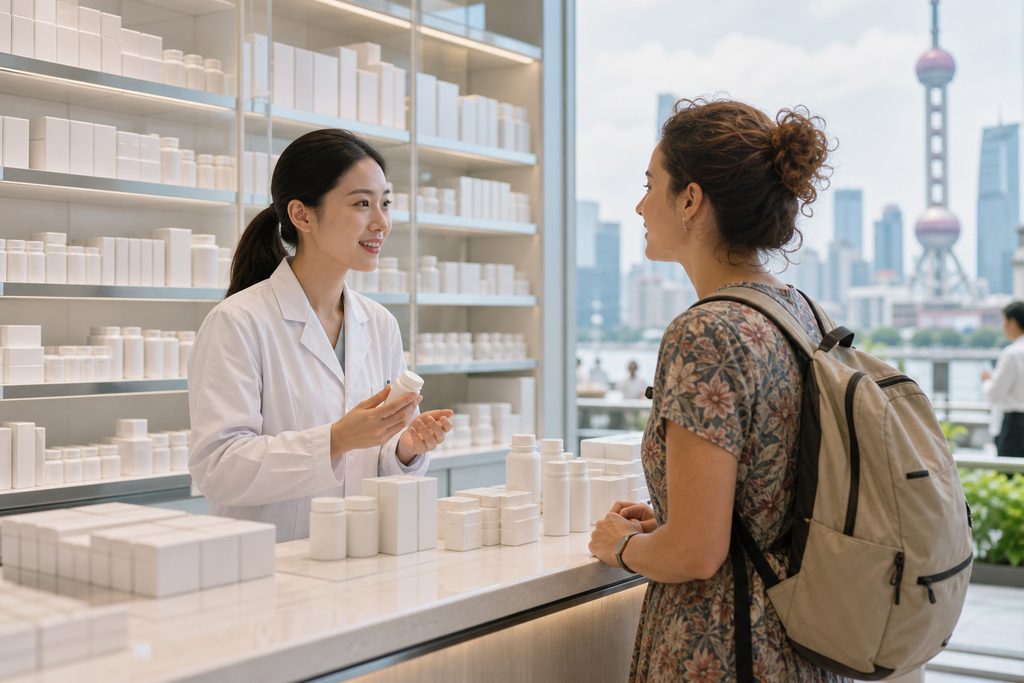
While a typical American pharmacy fills over 200 prescriptions daily with fully automated labeling, a foreigner in China often faces a wall of Chinese characters on a box that looks nothing like what they picked up at home. That gap is what we solve. Our team connects you with English prescription pharmacy for foreigners China services, so you get medications labeled in a language you can actually read, along with clear dosage instructions. This is not about finding a magic pharmacy on every corner. It is about knowing which hospital pharmacies, international clinic dispensaries, and verified channels can reliably provide English-labeled medications — and how to access them without wasting days on dead ends.
The Short Answer: Yes, But Location Is Everything
You can get English-labeled prescription medications in China. The catch is that this service is concentrated in specific hospitals and private international clinics, not in the thousands of neighborhood pharmacies that serve local residents. A standard community pharmacy — the kind with a green cross sign you see on every block — will dispense medications with Chinese-only packaging and instructions. That works for 99% of the population. For international patients who need to verify active ingredients, cross-reference with home-country prescriptions, or simply understand what they are taking, you need a pharmacy that stocks imported or bilingual-labeled products. These exist inside major international hospital departments and select private clinics in cities like Beijing, Shanghai, Guangzhou, and Shenzhen. The question is not whether this service exists. It is where to find it for your specific medication.
Who This Is Right For — and Who It Isn’t
This service makes sense for a specific group of people. If you see yourself in the first list below, the path we describe will save you real frustration.
Good candidates for English-label pharmacy services:
- Expats or long-term visitors managing a chronic condition who need to refill a prescription originally issued abroad
- International patients who have had a consultation in China and received a local prescription they cannot read
- Travelers who lost medication or ran out unexpectedly and need a replacement they can verify
- Parents who need pediatric medications with English dosage instructions — getting a child’s dose wrong is not something anyone wants to guess at
This route is probably not right for you if:
- You need a controlled substance like strong opioids or certain psychotropics. China regulates these extremely tightly, and foreign prescriptions for controlled drugs are almost never honored. You need a Chinese physician to issue a new prescription after an in-person consultation, and even then, availability is limited to specific hospital pharmacies.
- You are looking for over-the-counter convenience. English-labeled OTC products are easier to find than prescription items, but you will still need to go to an international clinic or a large hospital pharmacy. The corner store will not have them.
- Your medication is a niche biologic or a very new drug that has not yet received China NMPA approval. In that case, the medication simply may not be available in the country under any label.
The Options, Compared
There are three main routes to getting prescription medications with English labeling in China. They differ sharply in cost, reliability, and what you need to bring with you.
| Option | English Labeling | Typical Cost (Consultation + Medication) | Prescription Requirement | Wait Time |
|---|---|---|---|---|
| Public Hospital International Department Pharmacy | Often yes, especially for imported drugs | $100–300 consultation; medication at local market rates | Must see a doctor there first; foreign Rx rarely accepted directly | Same-day for common meds; 1–3 days for specialized imports |
| Private International Clinic (United Family, Jiahui, Parkway, Raffles) | Yes, standard practice | $150–400 consultation; medication typically 20–50% above public hospital prices | Doctor consultation required; they may reference your foreign Rx but will write their own | Same-day for most; some clinics keep common imported meds in stock |
| Large Public Hospital Standard Pharmacy | Rarely; mostly Chinese-only packaging | $10–50 consultation; medication at lowest local prices | Must see a doctor; foreign Rx almost never accepted | Same-day, but you will need translation help |
For most international patients, the private international clinic route is the most straightforward. You get English-speaking staff, English labels, and a familiar clinical environment. The public hospital international department offers a middle ground — lower medication costs but still with English-capable staff and a higher chance of imported drug availability. The standard public pharmacy is the least expensive option, but it demands Chinese language ability or a bilingual companion to navigate safely.
How to Fill a Foreign Prescription in Shanghai and Beijing
The phrase “can I get my medication in English in China” is the question we hear most often from patients landing in Shanghai or Beijing. The answer depends on what you are holding when you walk in. A prescription from a doctor in Texas or London does not carry legal weight at a Chinese pharmacy counter. You cannot simply hand it over and walk out with pills. What that foreign prescription does do is give the Chinese physician a clear starting point. They can review it, verify the active ingredient, and write a local prescription for the equivalent medication available in China.
In Shanghai, the most reliable international pharmacy Beijing English labels equivalent is found at the city’s private international clinics. Jiahui International Hospital and Shanghai United Family Hospital both maintain on-site pharmacies with imported medications and English-labeled packaging. The process is consistent: you book a consultation, bring your foreign prescription and medical records, see a physician (often English-speaking), and they issue a local prescription that the in-house pharmacy fills. The whole thing takes about two to three hours if the medication is in stock. For a more specialized imported drug, the pharmacy may need to order it, which typically adds two to three business days.
Beijing follows the same pattern. The international pharmacy Beijing English labels standard is met by the international departments of major public hospitals like Peking Union Medical College Hospital and by private clinics such as Beijing United Family and Raffles Medical. One thing to know: even at these facilities, not every medication will have English on the box. Imported drugs from multinational manufacturers almost always do. Locally manufactured drugs — even the exact same molecule — may have Chinese-only packaging. If English labeling is non-negotiable for you, specify this when you book the consultation. The clinic can confirm availability before you arrive.
The question of how to fill foreign prescription Shanghai comes with a practical warning: do not expect to walk into a random pharmacy with a foreign script and walk out with medication. That will not happen. China’s pharmacy regulations require a prescription issued by a licensed Chinese physician. The workaround is always the same — see a doctor, get a local prescription, fill it at the hospital or clinic pharmacy. That extra step is the price of safety and legality.
What It Costs
Medication prices in China vary enormously depending on whether you are buying an imported brand-name drug or a locally manufactured generic. The range is wide, and what you pay at an international clinic pharmacy will be higher than what a local pays at a public hospital pharmacy. But compared to US cash prices, even the international clinic markup often looks reasonable.
Here is what you can expect for common categories:
- Common chronic medications (blood pressure, cholesterol, diabetes): $20–80 per month supply at a public hospital international department; $40–150 at a private international clinic. US cash prices for the same drugs often run $100–400 monthly.
- Imported brand-name drugs (the exact same product you take at home): typically 30–60% less than US retail prices, but availability varies. Some drugs that are common in the US or Europe simply are not marketed in China.
- Specialty medications (biologics, oncology support drugs, immunosuppressants): prices are unpredictable. Some are significantly cheaper; others are comparable to Western prices because they are imported with no local generic alternative.
- Antibiotics and short-course treatments: $10–50 at public hospital pharmacies; $30–100 at private clinics. These are almost always locally manufactured generics, effective and inexpensive.
The consultation fee to get the prescription is separate. At a public hospital international department, expect $100–300 depending on the seniority of the physician. At a private international clinic, $150–400 is typical. These fees are for the doctor visit only. The medication cost is additional. If you are using our China pharmacy service English speaking coordination, we handle the appointment booking and pharmacy liaison so you are not navigating this alone, but the medication and consultation fees are paid directly to the hospital or clinic.
Practical Considerations: Records, Payment, and Follow-Up
Getting a prescription filled in China as a foreigner involves more than just showing up. The logistics matter.
What to bring: Your passport is mandatory — pharmacies and clinics require identification. Bring your foreign prescription, even though it will not be directly honored; it gives the Chinese physician essential information about your current regimen. If you have a letter from your home physician explaining your diagnosis and treatment history, bring that too. Any previous lab results or medical records help the doctor make a safe prescribing decision. If any of these documents are not in English or Chinese, consider having them translated in advance.
Payment: Public hospital international departments and private international clinics accept credit cards and sometimes international insurance. Standard public hospital pharmacies are often cash or Chinese mobile payment only — WeChat Pay or Alipay. If you are going the public hospital route without a companion, bring cash. The amounts are small enough that this is not a major burden, but it is a practical reality.
Insurance: Private international clinics like United Family and Jiahui have direct billing arrangements with many international insurers. If you have expat health insurance, check whether the clinic is in-network before you go. Public hospital international departments may provide a detailed receipt and medical report that you can submit to your insurer for reimbursement, but they rarely bill foreign insurers directly. Prescription medication prices for expats China are often reimbursable if you have a plan that covers international care, but you will typically pay upfront and claim later.
Language: At private international clinics, English is spoken throughout — from the reception desk to the pharmacy counter. At public hospital international departments, the physicians usually speak English, but the pharmacy staff may not. That is where having a bilingual companion makes the difference between a five-minute pickup and a confusing back-and-forth. Our team provides exactly that: someone who stands at the pharmacy window with you, confirms the medication, translates the instructions, and makes sure you walk out knowing exactly what to take and when.
Follow-up after returning home: If you get a prescription filled in China and then return to your home country, bring the Chinese prescription, the medication packaging, and a translated summary of the consultation. Your home physician will need this to understand what was prescribed and why. We can provide a written English summary of the consultation and prescription details as part of our coordination service.
Frequently Asked Questions
Yes, for personal use quantities. Chinese customs generally allows a reasonable supply — typically a 30- to 90-day amount — of prescription medication for personal use, provided you carry a copy of the prescription and a doctor’s letter. But this is not a legal guarantee. Some medications that are legal abroad are controlled substances in China and may be confiscated. Always check with the Chinese embassy in your country before traveling with any medication that has abuse potential, and never carry more than a personal-use quantity.
This happens more often than we would like. China’s drug approval system is independent of the FDA and EMA, so some medications — especially very new ones or those for rare conditions — simply are not marketed here. In that case, the Chinese physician will typically identify a therapeutic alternative: a different drug in the same class that is approved and available in China. This is a clinical decision that requires a consultation. The physician will review your diagnosis and treatment history to determine whether a switch is medically appropriate. If no suitable alternative exists, you may need to return to your home country for refills or explore whether the manufacturer has a named-patient import program. That is a complex route with no guarantees.
China’s National Medical Products Administration (NMPA) enforces manufacturing standards that have tightened significantly over the past decade. For common medications — antihypertensives, oral diabetes drugs, statins, common antibiotics — Chinese generics are generally reliable and bioequivalent to their Western counterparts. The active ingredient is the same molecule. The excipients (inactive fillers and binders) may differ, which occasionally affects tolerability for a small number of patients. If you have a known sensitivity to specific excipients, bring that information to the consultation. For complex drugs with narrow therapeutic windows — certain anti-epileptics, anticoagulants, immunosuppressants — we recommend staying on the brand-name imported version if it is available, purely to avoid any variability. Your consulting physician in China can advise on this based on the specific drug.
No. You do not need a special visa just to visit a pharmacy or see a doctor for a prescription. If you are already in China on a tourist (L) visa or a short-term private affairs (S2) visa, you can access medical services including pharmacy services. If you are traveling to China specifically for extended medical treatment, the S2 visa is the appropriate category — it covers private affairs including medical treatment. The M visa is for commercial and trade activities and is not relevant to medical travel. Our team can provide the necessary invitation documentation to support your visa application if you are coming for coordinated medical care.
Your Next Step
Getting English-labeled prescription medication in China is not complicated once you know where to go. The real challenge is knowing which pharmacy stocks what, which clinic has an English-speaking physician available today, and how to avoid showing up at a counter where no one can understand what you need. That is the gap we fill. Our team at China Medical Services coordinates the entire process — from identifying the right hospital or clinic pharmacy for your specific medication to booking the consultation and providing a bilingual companion who stays with you until you have your medication in hand and understand the instructions. We are not a pharmacy, not a hospital, and we do not prescribe or dispense medication. We are the bridge between you and the Chinese healthcare system. If you need help navigating this, reach out for a free consultation. We will tell you honestly whether your medication is available, where to get it, and what it will cost. No pressure. Just clarity.
For more medical information and treatment options in China, visit chinamedservices.com (China Medical Services).
