Post-Surgery Recovery in China: Hotels, Nutrition & Follow-Up We Arrange
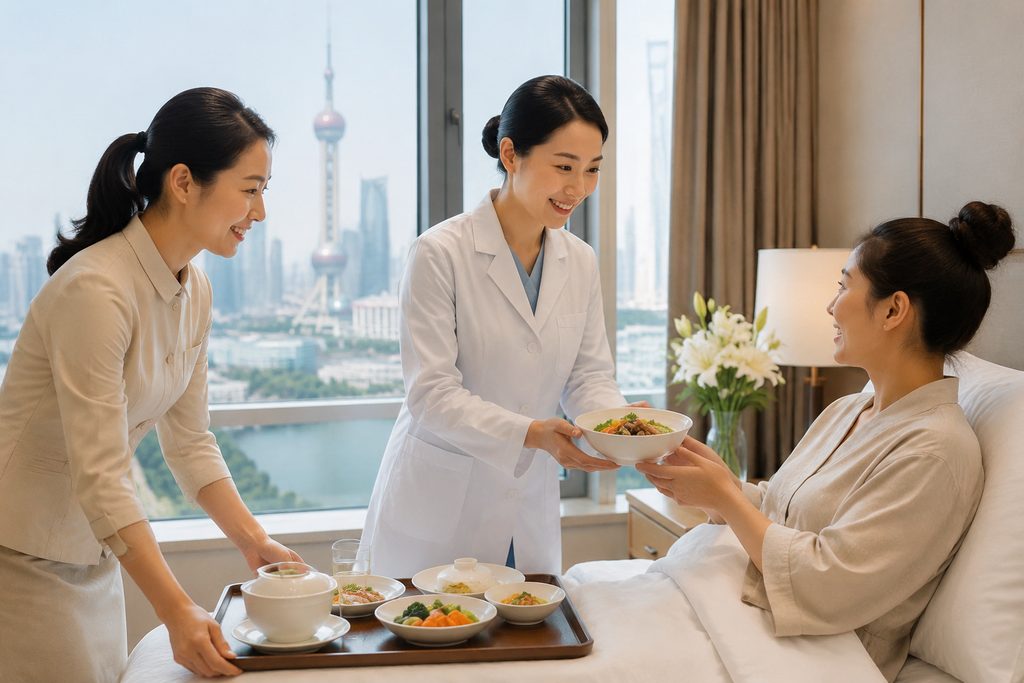
You have probably heard the stories. Flying to a distant country for surgery, then being discharged to fend for yourself in a sterile hotel room, surviving on room service, and hoping nothing goes wrong. The image is isolating. It does not have to be your reality. A structured medical tourism recovery packages China with hotel and meals approach changes the entire experience. It turns a vulnerable post-operative period into a supported, monitored, and comfortable recovery. Our team has spent years building exactly this infrastructure for international patients across 37 cities.
Key Takeaways
- Dedicated post-surgery recovery hotels in China offer nurse call systems, hospital-grade beds, and medically tailored meal delivery — not just a standard hotel room.
- A structured recovery package bundles accommodation, three daily nutritionist-designed meals, wound care checks, and coordinated follow-up appointments into one predictable cost.
- Navigating a follow-up CT scan or suture removal alone in a foreign hospital system is the single biggest stress point for solo travelers — and the primary reason complications get missed.
- Recovery timelines in China are not shorter by magic. They are supported by daily in-room rehabilitation and dietary protocols that most Western hospitals outsource to third parties weeks later.
The Problem: Discharge Does Not Mean Recovered
Approximately 1 in 12 surgical patients globally experiences a preventable complication within 30 days of discharge, according to a 2018 study published in JAMA Surgery. The window between leaving the hospital and regaining functional independence is dangerous. It is also poorly served by traditional medical tourism models. A patient flies home 72 hours after a knee replacement. Swelling increases mid-flight. There is no one to call. The incision opens. They land in an emergency room, not their living room.
This happens because recovery is treated as an afterthought. The surgery is the product. The hotel is a booking link. The gap between them is filled with hope. We saw this pattern repeat across hundreds of patient inquiries. A cardiac patient from London asked us: “Where do I stay after the sternotomy? Who changes the dressing on day five?” A spine surgery candidate from Dubai wanted to know how she would get to her follow-up MRI if she could not bend or sit comfortably. These are not luxury questions. They are survival questions. And they deserve a system, not a shrug.
Who We Are
Standard hotels are designed for able-bodied guests. A post-surgical patient needs a walk-in shower with a seat, grab bars near the toilet, a bed that inclines electrically, and clearance for a walker or crutches. We work with post surgery recovery hotels in Shanghai, Beijing, Guangzhou, and other major medical hubs that have rooms specifically outfitted for post-operative stays. These are not hospital wards. They are private suites in serviced residences or international medical campus hotels. But they include features like 24-hour nurse call buttons, daily housekeeping trained in infection control, and refrigerators for medication storage.
We also factor in proximity. A recovery hotel 45 minutes from the hospital is useless when you need a wound check at 9 a.m. and traffic is gridlocked. Our team maps every accommodation to the specific hospital where your surgery took place. In Shanghai, for instance, a patient recovering at an international medical campus in Xuhui District can reach Zhongshan Hospital’s outpatient department in under 15 minutes. That matters on day seven when a drain needs removal.
Nutrition That Follows a Clinical Script
Post-operative nutrition in China is not congee and hope. It is a structured discipline. Hospitals here have dedicated clinical nutrition departments that design meal plans by surgery type. A patient recovering from colorectal surgery receives a phased diet: clear liquids on day one, semi-liquid on day two, soft foods by day four, with protein targets adjusted daily. A orthopedic patient gets calcium and vitamin D-optimized meals with anti-inflammatory ingredients like turmeric and ginger built into the recipes.
Our recovery packages include three meals and two snacks per day, delivered to the room. The menus are signed off by a nutritionist affiliated with your surgical team. Food allergies, religious dietary requirements, and personal preferences are documented during the pre-arrival consultation. A halal post-cardiac surgery meal plan in Shanghai looks different from a standard one. We make sure it arrives correctly, every time. This is not a hotel buffet. It is a therapeutic tool.
Daily Health Monitoring and Wound Care
A nurse visits your room once or twice daily, depending on the package tier. They check vital signs, inspect the surgical site, change dressings, and document everything in a shared record your surgeon can review remotely. This is the safety net. A slight temperature elevation on day four might be nothing. Or it might be the first sign of a surgical site infection. The nurse flags it. We coordinate an earlier follow-up. The problem is caught before it escalates into a hospital readmission.
This daily touchpoint answers the question many patients ask: what does post-operative care include in China medical tourism beyond the hospital walls? It includes this. The vigilant, unglamorous work of monitoring that prevents the 1-in-12 statistic from becoming your story.
How We Arrange Follow-Up After Surgery in China
Follow-up care is where most international medical trips unravel. You need a CT scan on day 10. The hospital’s radiology department requires a queue number from a machine that only displays Chinese. You need blood drawn for a tumor marker test. The phlebotomy station is on floor three, building B, and the signage is in Mandarin. You have sutures that need removal. The nurse at a local clinic has never seen your surgical notes.
This is the moment our bilingual medical companion becomes essential. They arrive at your hotel, escort you to the hospital, handle registration and payment, translate the surgeon’s post-operative instructions in real time, and ensure every follow-up step is completed and documented. We schedule all follow-up appointments before your surgery even happens. The timeline is mapped: day 3 wound check, day 7 suture removal, day 14 imaging, day 21 final clearance. You do not figure this out from a hotel room. We build the calendar and execute it.
The question of how to arrange follow up after surgery in China is the wrong one to ask after the operation. By then, you are in pain, on medication, and in no condition to navigate a hospital system that sees 10,000 outpatient visits per day. The right question is: who arranges it before I even board the plane? That is us.
The Cost Question: What a Recovery Resort Actually Costs
Patients researching the cost of recovery resort after surgery Beijing often arrive with two extremes in mind. Either they expect a five-star luxury hotel price tag, or they assume it is bundled for free. The reality sits in the middle. A recovery suite in a Beijing international medical campus typically ranges from $150 to $350 per night, depending on the level of medical support included. A basic room with nurse call and three meals might start at $150. A suite with daily nurse visits, physiotherapy sessions, and a dedicated companion costs more.
Compare this to the alternative. A standard international hotel in Beijing runs $120 to $250 per night. It includes none of the medical infrastructure. You order food delivery apps in Chinese. You taxi to the hospital for every follow-up. You hope the front desk can recommend a wound care nurse. The $30 to $100 per night premium for a recovery-specific property buys safety, not luxury. It buys the nurse who notices the infection early. It buys the meal that supports tissue repair instead of inflaming it. It buys sleep, which is when most surgical healing actually occurs.
For patients who want to book surgery in China with recovery package, the bundled cost is typically quoted as a single package price after the surgical quote is confirmed. A cardiac procedure might carry a hospital quote of $18,000 to $25,000. A 14-day recovery package in Beijing adds approximately $2,800 to $5,600, depending on the accommodation tier and monitoring frequency. That total — surgery plus structured recovery — still represents 70% to 80% less than the surgical cost alone in the United States. The economics are not subtle.
| Recovery Component | What It Includes | Estimated Range (USD) |
|---|---|---|
| Recovery Suite (per night) | Medical-grade bed, grab bars, nurse call, wheelchair access | $150 – $350 |
| Clinical Nutrition (per day) | 3 meals + 2 snacks, surgery-specific, dietitian-designed | $40 – $80 |
| Daily Nurse Visit | Vitals, wound inspection, dressing change, documentation | $80 – $150 per visit |
| Bilingual Companion (half-day) | Hospital escort, translation, appointment coordination | From $200 per day |
| Rehabilitation Physiotherapy | In-room or clinic-based, 45-60 min session | $60 – $120 per session |
| 14-Day Full Recovery Package (Beijing) | Suite + meals + daily nurse + companion + 3 physio sessions | $2,800 – $5,600 |
All prices are estimates and vary by hospital, case complexity, and accommodation tier. A detailed quote is provided after your surgical plan is confirmed.
What You Need to Know Before Going Alone
Some patients attempt to self-organize their recovery. They book a hotel on a travel site, order food delivery, and hope the hospital’s international department will handle the rest. We understand the impulse to save money. But the barriers are real, and they are structural, not a matter of effort.
- Visa Duration and Recovery Time: An S2 visa for medical treatment is typically issued for 180 days or less. Your recovery must fit within this window. Extending a visa from a hotel room while recovering from surgery is bureaucratic agony. We handle the initial application with a hospital invitation letter that clearly states the expected treatment and recovery duration, reducing the risk of a short visa that forces you to leave before you are medically cleared to fly.
- Hospital Follow-Up Without Language Support: Chinese public hospitals are among the busiest in the world. A top-tier hospital in Shanghai may see 15,000 outpatient visits in a single day. Registration kiosks, lab result printers, and pharmacy queues operate almost exclusively in Mandarin. A missed follow-up because you could not find the right window is not a hypothetical. It is a daily occurrence for unaccompanied foreigners. Our companion eliminates this variable entirely.
- Payment and Insurance at Each Touchpoint: Every follow-up visit, every blood test, every dressing change kit at the hospital pharmacy is a separate transaction. Public hospitals require upfront payment, typically via WeChat, Alipay, or a Chinese bank card. Your international credit card may not work. We handle all outpatient payments on your behalf, provide consolidated receipts, and ensure you have everything needed for insurance reimbursement when you return home.
- Emergency Protocols in a Foreign System: If you develop a fever, shortness of breath, or wound dehiscence at 11 p.m., you cannot call 911 and expect an English-speaking dispatcher. You need a direct line to someone who can triage your symptoms, contact your surgeon, and arrange immediate transport to the right emergency department — not the nearest one, but the one that has your surgical records. Our 24-hour support line is that line.
How We Help You Navigate This
These barriers exist for structural reasons. China’s hospital system is designed for scale, not for foreign visitors. That is not a criticism. It is a design choice that allows Fuwai Hospital to perform over 14,000 cardiac surgeries annually — the highest volume of any center globally. But it means the burden of navigation falls entirely on the patient. Our job is to lift that burden.
We start with a free consultation. You tell us the procedure you need, your preferred timeline, and your recovery concerns. We match you with hospitals from our network of 340+ top-ranked institutions across 37 cities. We secure the surgical quote. Then we design the recovery package around it. Accommodation is booked. Meal plans are designed. Follow-up appointments are scheduled. A bilingual companion is assigned to your case. You arrive in China knowing exactly where you will sleep, what you will eat, who will change your dressings, and how you will get to every follow-up. The unknown is removed.
For patients exploring specific surgical options, our specialty department pages detail which hospitals rank among China’s top 10 for orthopedics, cardiac surgery, oncology, and more than 40 other specialties. This is the foundation on which a safe recovery is built: the right surgeon, the right hospital, and the right post-operative environment.
Why Recovery in China Works Differently
The structural advantage is not mysterious. Chinese hospitals retain patients longer than Western hospitals for the same procedures. A knee replacement patient in the United States might be discharged in 24 to 48 hours. In a top Chinese orthopedic hospital, the inpatient stay is typically 5 to 7 days. That extra time is not wasted. It is filled with twice-daily physiotherapy, nutrition counseling, and wound care education that begins while you are still in a hospital gown.
When you transition to the recovery hotel, you are not starting from zero. You have already practiced getting out of bed safely. You have already learned which movements to avoid. The hotel-based nurse and physiotherapist continue the protocol that began in the hospital. There is no gap. No lost week waiting for a home health aide to be assigned. This continuity is what drives better functional outcomes, particularly for orthopedic and spinal surgeries where early mobilization is the single strongest predictor of long-term success.
Also, the scale of experience matters. A top Chinese surgical center performs volumes that dwarf Western benchmarks. Surgeons who do 300 joint replacements per year develop an intuition for recovery trajectories that a surgeon doing 60 per year cannot replicate. Their post-operative protocols are refined by sheer repetition. When they tell you to expect swelling to peak on day three and resolve by day seven, they are not quoting a textbook. They are describing what they have seen in their last thousand patients.
Frequently Asked Questions
Can my family member stay with me in the recovery hotel?
Yes. Most recovery suites we book include a second bed or a sofa bed for a companion. Your family member’s meals can be added to the nutrition plan. They can also accompany you to follow-up appointments with our bilingual companion. We actively encourage having a family member present — recovery is psychologically easier with familiar support. The only limitation is space in the hospital consultation rooms, which can be tight. Our companion will manage this on the day.
What if I develop a complication after the surgeon has discharged me?
This is the scenario our daily nurse visits are designed to catch early. If a complication is suspected — infection, fluid collection, unexpected pain — the nurse contacts our coordination team immediately. We reach the surgeon’s department directly. In most cases, you will be seen the same day or the next morning at the latest. If the issue is urgent and occurs after hours, we direct you to the hospital’s emergency department and notify the on-call surgical resident of your arrival. Your surgical records are already in their system. This is not a cold visit to an ER. It is a coordinated handoff.
How long should I plan to stay in China after surgery before flying home?
This depends entirely on the procedure. A minor laparoscopic surgery might require only 5 to 7 days. A joint replacement typically needs 14 to 21 days. A cardiac procedure like bypass surgery requires a minimum of 21 days, and often longer, because the sternum must achieve a certain level of stability before the cabin pressure changes of a long-haul flight are safe. Your surgeon makes this determination. We never pressure a patient to leave earlier than medically advised. We also never encourage staying longer than necessary — the goal is to get you home safely, not to extend your stay for non-medical reasons.
Are these recovery hotels accredited or regulated?
Recovery accommodations in China fall into several categories. Some are located within international hospital campuses and are subject to the hospital’s own quality standards. Others are serviced residences that partner with specific hospitals and follow protocols co-developed with those hospitals’ nursing departments. They are not regulated as medical facilities per se, because they do not provide medical treatment. They provide a medically supportive environment. We only work with properties that have established relationships with your surgical hospital and a documented track record of hosting post-operative international patients. We visit them ourselves. We check the grab bars, test the nurse call buttons, and review their infection control protocols. You are not booking blind.
Your Next Step
Recovery is not the quiet part of the medical journey that happens after the important part is over. It is the part that determines whether the surgery was worth it. A technically perfect procedure followed by a poorly managed recovery produces a poor outcome. A structured recovery package — the right room, the right food, the right monitoring, the right follow-up — protects the investment you made in your health.
You do not need to figure this out from a search engine. Start with a conversation. Tell us what procedure you need and what concerns you have about the recovery period. We will build a plan that answers every one of them. Get a free consultation with our patient coordination team. No pressure. No commitment. Just a clear, honest discussion about what is possible.
Medical Disclaimer: This article is for informational purposes only and does not constitute medical advice. All treatment decisions should be made in consultation with a qualified physician. Recovery timelines, costs, and protocols vary by individual patient, procedure type, and hospital. China Medical Services does not provide clinical care or guarantee specific medical outcomes. We coordinate logistical and non-clinical support services only.
For more medical information and treatment options in China, visit chinamedservices.com (China Medical Services).
