China Surgery Plus Thailand Recovery: The Multi-Destination Medical Tourism Model
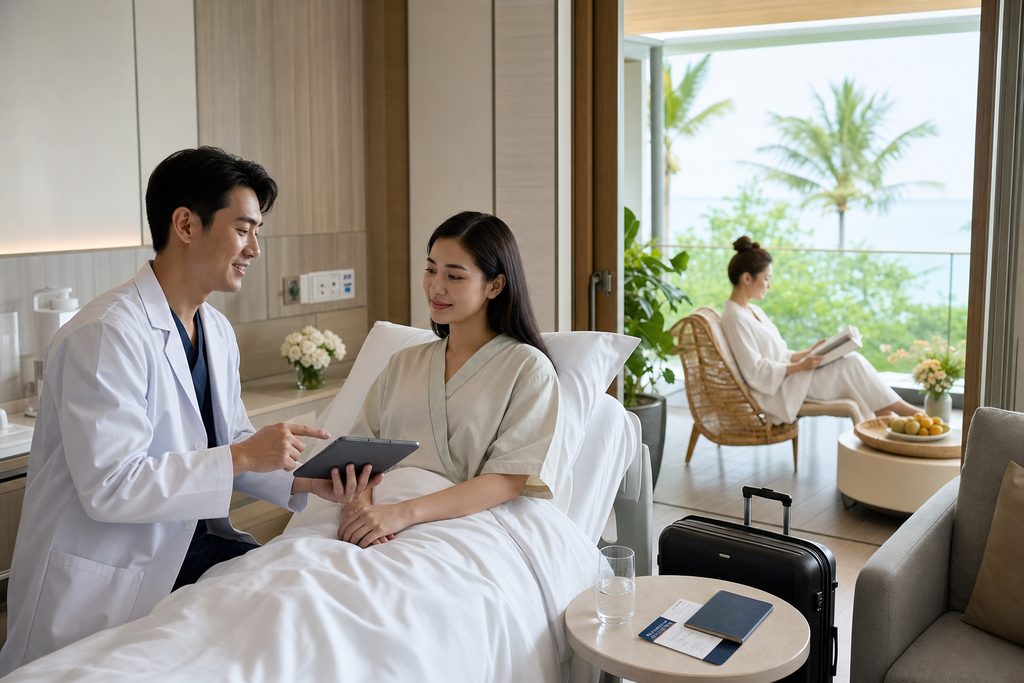
When 42-year-old Michael first heard the diagnosis, he had no idea where to start looking for treatment. A hip replacement. The quote from his local hospital in California was $45,000. The wait was seven months. And the recovery? His insurance covered three days in the hospital and a handful of physical therapy sessions. He started searching online at 2 a.m., typing phrases like “medical tourism multi-destination service China surgery plus Thailand recovery.” The results were a confusing mess of glossy brochures and anonymous forums. Is this even real? Is it safe? And what does a package like that actually cost?
We have been answering those questions for years. Our team does not perform surgeries. We are not a hospital. We are the logistical bridge connecting international patients with China’s top 5% of hospitals—340+ institutions ranked by Fudan University and accredited by JCI—and then coordinating a seamless recovery phase in Thailand. The model is not a fantasy. It is a calculated, evidence-based strategy to access world-class surgical volume at a fraction of Western costs, followed by a recovery in an environment designed for healing. But it requires a clear-eyed understanding of the moving parts.
Key Takeaways
- Combining Chinese surgery with Thai recovery can reduce total medical spend by 60-80% compared to US cash-pay rates, with surgical outcomes from hospitals performing 10x the annual procedure volume of a typical Western center.
- The “multi-destination” model separates the sterile, high-efficiency surgical event from the comfort-driven recovery phase, allowing each to happen in the country best optimized for it.
- This is not a simple package you can book with a credit card. Visa sequencing, medical record transfer, and post-operative continuity of care are genuine logistical hurdles that require professional coordination.
- You should understand that the cost of surgery in China plus recovery in Thailand package price varies dramatically based on hospital tier, surgeon seniority, and the level of recovery resort you select—there is no one fixed number.
The Problem: When One Country Cannot Do It All
Medical tourism traditionally asks a single country to be everything: the surgeon, the hospital room, the recovery ward, the rehabilitation center, and the hospitality provider. That is a tall order. Countries that excel at high-volume, technologically advanced surgery—like China—do not always offer the tranquil, resort-style recovery environment that actually improves healing outcomes. And countries famous for wellness and recovery—like Thailand—often lack the sheer clinical volume in complex tertiary procedures that drives surgical mastery.
The data is stark. A 2023 study in the International Journal of Health Services found that surgical complication rates drop measurably when a surgeon performs a procedure more than 100 times per year. In China’s top orthopedic hospitals, a single surgeon might perform 500 hip replacements annually. In a typical US community hospital, the average is 30. Volume drives precision. But the same Chinese public hospital that delivers that surgical excellence might have a shared recovery ward with six beds, constant noise, and no Western food options. That is not where you want to spend two weeks learning to walk again.
Thailand flips the script. The country has invested heavily in medical tourism infrastructure, but its strength lies in hospitality-integrated recovery, not necessarily in the highest-stakes surgical interventions. A 2022 report from the Medical Tourism Association noted that Thailand’s private hospitals excel in patient experience scores, but for certain complex procedures, the surgical volume at any single Thai center is a fraction of what a top Chinese hospital handles. The solution seems obvious, but executing it is not.
Who We Are
We are not a hospital. We do not provide medical treatment or clinical diagnoses. We are your logistical architects—we bridge the gap between you and China’s top-tier medical expertise, then ensure your recovery in Thailand is medically continuous and personally comfortable. Our team handles hospital matching, appointment coordination, bilingual medical companion services, visa guidance, and the handoff to accredited Thai recovery partners. We work with 340+ top-ranked hospitals across 37 Chinese cities, and we have spent years building the relationships that make a two-country medical journey possible. We are case managers, not salespeople. Our role is to make an inherently complex process feel straightforward.
Why Splitting Surgery and Recovery Across Two Countries Delivers Results
Clinical Volume in China: The Numbers Behind the Precision
There is a direct, well-documented relationship between how often a surgical team performs a procedure and how well their patients do. A landmark 2020 analysis in The Lancet examining over 500,000 surgical cases found that high-volume hospitals had a 24% lower risk-adjusted mortality rate for complex procedures compared to low-volume centers. China’s top hospitals operate at a scale that is hard to comprehend. Fuwai Hospital in Beijing performs over 14,000 cardiac surgeries annually—the highest volume of any center on the planet. Zhongshan Hospital at Fudan University in Shanghai handles a caseload in oncology and thoracic surgery that dwarfs most European university hospitals. When you are the 400th knee replacement a surgeon has done that year, the procedure is not an event. It is a rhythm.
This is not about national pride. It is about structural reality. China’s population is 1.4 billion. Its top 100 hospitals, as ranked by the Fudan University hospital rankings, draw from an enormous patient pool. A surgeon at Peking Union Medical College Hospital (PUMCH) sees rare pathologies in a single month that a Western specialist might encounter in a career. That concentrated exposure translates into intraoperative decision-making that is faster, more accurate, and less likely to result in complications.
Thailand’s Recovery Ecosystem: Why Environment Affects Healing
Surgery is a trauma. The body needs more than a clean room and vital sign checks to heal well—it needs low stress, good nutrition, gradual mobility, and psychological calm. Thailand’s Joint Commission International (JCI)-accredited recovery resorts and hospital-affiliated rehabilitation centers have built an entire industry around this insight. Facilities in Phuket, Chiang Mai, and Hua Hin offer private villas with nursing care, physiotherapy pools, and medically supervised meal plans. The cost is a fraction of what a comparable US rehabilitation facility charges, but the quality of the recovery experience often exceeds it.
A 2021 study in the Journal of Travel Medicine examined patient-reported outcomes among medical tourists who recovered in dedicated recovery resorts versus standard hospital wards. The resort group reported significantly lower pain scores, better sleep quality, and higher satisfaction with their overall treatment journey. The mechanism is not mysterious. Sleep, nutrition, and emotional state are not luxuries—they are biological inputs to tissue repair and immune function. A recovery environment that optimizes these inputs is not a spa gimmick. It is a clinical advantage.
How Does a China Surgery and Thailand Recovery Package Work in Practice?
The sequence is more structured than most patients expect. The surgical event in China typically requires a 7-10 day stay: pre-operative testing, the procedure itself, and initial post-operative monitoring until the surgical team clears you for travel. That clearance is the critical gate. You do not leave China until the surgeon confirms that wound closure is stable, infection risk is minimal, and you are medically fit for a short flight. Then you transfer to Thailand for the longer rehabilitation phase—usually 2 to 4 weeks depending on the procedure.
This is not two separate trips stitched together. Medical records, imaging, and surgical notes transfer directly from the Chinese hospital to your Thai recovery team. Your physiotherapy protocol is designed with input from your Chinese surgeon. If a complication arises in Thailand, the recovery center has admitting privileges at a nearby JCI-accredited hospital, and your original surgical team in China remains available for remote consultation. The model works because the handoff is structured, not improvised.
What About the Cost of Surgery in China Plus Recovery in Thailand Package?
Let us address the question every patient asks first. There is no single price tag. The cost of surgery in China plus recovery in Thailand package varies by procedure, hospital tier, surgeon seniority, and the recovery accommodation you select. But we can provide realistic ranges based on the cases we coordinate.
Take a total hip replacement. In the United States, the cash-pay price at a reputable hospital is typically $35,000 to $50,000. In a top-tier Chinese public hospital’s international department, the same procedure—using the same implant brands (Zimmer, Stryker, DePuy Synthes)—runs $12,000 to $18,000. Add a 3-week recovery stay at a Thai resort-style rehabilitation center with daily physiotherapy, nursing care, and private accommodation, and you are looking at an additional $6,000 to $10,000. The combined total: $18,000 to $28,000. That is a 40-60% reduction from the US price, and it includes a recovery experience that no US hospital would offer at any price.
For cardiac procedures, the differential is even larger. A coronary artery bypass graft (CABG) in China’s top cardiac centers costs $12,000 to $20,000. In the US, the same surgery averages over $120,000. Recovery in Thailand adds $8,000 to $15,000 depending on duration and amenities. The combined China surgery Thailand recovery medical tourism price still lands at roughly one-fifth of the US cost.
Is It Safe to Have Surgery in China and Recover in Thailand?
This is the question that keeps people awake. And it deserves a direct answer. The surgical safety profile of China’s top-ranked hospitals is comparable to high-income Western countries for the procedures medical tourists typically seek. The Fudan University hospital ranking system identifies the top 100 hospitals in China—roughly the top 5% of the country’s 35,000+ hospitals. These institutions are subject to rigorous accreditation, publish outcomes data, and employ surgeons who train internationally. Fuwai Hospital’s cardiac surgery mortality rates are publicly reported and competitive with the Cleveland Clinic. PUMCH’s orthopedic department publishes complication rates in international peer-reviewed journals.
The safety question around the multi-destination model focuses on the transfer. Is it safe to fly after surgery? The answer depends on the procedure and the timing. For orthopedic surgeries, patients typically fly 7-10 days post-operatively, once the risk of deep vein thrombosis (DVT) has been managed and the surgical wound is stable. For abdominal or cardiac surgeries, the window is longer—often 10-14 days. Your Chinese surgical team makes the clearance decision based on objective criteria: wound appearance, lab values, mobility status. No patient flies without documented medical clearance. The flight from major Chinese cities to Bangkok or Phuket is 4-5 hours, and patients travel with compression stockings, anticoagulation protocols when indicated, and a full medical summary. The Thai recovery team receives you at the airport.
The risk profile of this model is not zero. No surgery is risk-free. But the risks are known, manageable, and comparable to the risks of recovering in a single location. The key variable is the quality of the handoff between the surgical team and the recovery team—and that is where professional coordination makes the difference between a safe transfer and a fragmented one.
Best Hospitals in China for Surgery with Thailand Recovery Resort Options
Not every Chinese hospital is suited to this model. The best hospitals in China for surgery with Thailand recovery resort coordination share three characteristics: they have dedicated international departments with English-speaking staff, they are experienced in treating overseas patients, and they understand the medical transfer protocol required for a multi-destination journey. Based on our case experience, several institutions stand out.
For orthopedic procedures, Peking University Third Hospital and Shanghai’s Sixth People’s Hospital are among the highest-volume joint replacement centers globally. Both have international wings that handle foreign patients routinely. For cardiac surgery, Fuwai Hospital in Beijing and Zhongshan Hospital in Shanghai are the heavyweights—Fuwai alone performs more cardiac surgeries annually than any other hospital worldwide. For oncology, Fudan University Shanghai Cancer Center and Peking Union Medical College Hospital offer multidisciplinary teams that rival major US cancer centers in diagnostic sophistication and surgical volume. These hospitals are not luxury resorts. They are high-efficiency clinical machines. The luxury comes later, in Thailand.
On the Thai side, recovery resort selection depends on your procedure and personal preferences. Orthopedic patients often prefer facilities with hydrotherapy pools and intensive physiotherapy programs—options in Phuket and Hua Hin are well-established. Cardiac patients need centers with telemetry monitoring and cardiology consultation availability. Our team matches you with accredited Thai partners based on your specific post-operative needs, not a one-size-fits-all package.
What You Need to Know Before Going Alone
The multi-destination model is logistically demanding. Patients who attempt to book China surgery with Thailand recovery holiday arrangements independently often encounter barriers that derail the process. Here is what you are up against.
- Visa Sequencing: Medical treatment in China requires an S2 visa with a specific annotation for medical purposes. Your accompanying family member also needs an S2. Then you need a separate Thai visa or visa-exempt entry depending on your nationality. Getting the sequence wrong—applying for the wrong visa type, or having a visa expire while you are still recovering—can strand you. The Chinese S2 visa typically requires an invitation letter from the hospital, which is not something hospitals issue casually. We coordinate this documentation so your visa timeline matches your actual treatment and recovery schedule.
- Medical Record Continuity: Chinese hospitals generate records in Chinese. Thai recovery centers operate in Thai and English. A surgical discharge summary that gets lost in translation creates real clinical risk. We provide certified medical translation and ensure that your Thai recovery team receives a complete, accurate record of your procedure, medications, and post-operative precautions before you arrive.
- Payment Systems: Chinese public hospitals typically require pre-payment or deposit before admission, and international credit cards are not universally accepted. Wire transfers can take days to clear. Thai recovery centers are more flexible but still require deposits. Managing payment timing across two countries, two currencies, and two banking systems is not trivial. We provide clear payment schedules and can facilitate transactions where needed.
How We Help You Navigate This
These barriers exist for structural reasons—not because anyone is trying to make the process difficult. A Chinese public hospital’s priority is clinical care, not international patient logistics. A Thai recovery resort’s priority is rehabilitation, not Chinese medical record interpretation. We fill the gap.
Our process starts with a free consultation. You tell us your diagnosis, your surgical needs, and your recovery preferences. We identify the Chinese hospitals best suited to your procedure, using the Fudan University rankings and our own case data. We coordinate the hospital appointment, arrange for a bilingual medical companion to be with you during your China stay, and manage the medical record transfer to your selected Thai recovery center. Our bilingual companion handles the practical chaos of a Chinese hospital—registration, queueing, payment, translation—so you can focus on your health. When you are cleared for transfer, we ensure your Thai team is ready. The entire sequence is mapped before you ever board a plane.
We also provide a transparent cost structure. Our coordination fees start from $300 for hospital appointment coordination, with bilingual companion services from $200 per day. These fees are separate from your hospital and recovery center costs, which we help you understand and negotiate. There are no hidden markups on your medical bills. You pay the hospital directly. You pay the recovery center directly. We charge for the coordination that makes the whole thing work.
Frequently Asked Questions
Most patients stay 7-14 days post-surgery in China, depending on the procedure. Orthopedic surgeries typically allow transfer after 7-10 days once wound healing is confirmed and DVT risk is managed. Cardiac or abdominal surgeries require a longer observation period, often 10-14 days. The final decision rests with your Chinese surgeon, who must document medical fitness for air travel. We do not influence this timeline—it is a clinical decision.
Your Thai recovery center has a pre-established relationship with a nearby JCI-accredited hospital. If a complication arises—infection, wound dehiscence, unexpected pain—you are transferred to that hospital for evaluation and treatment. Your original Chinese surgical team is contacted for remote consultation. The recovery center’s nursing staff is trained to recognize early warning signs and escalate appropriately. This is not a scenario where you are left alone to figure things out.
Not in the way you might book a vacation package online. The medical component cannot be commoditized because your surgery depends on a specific surgeon’s availability, your pre-operative assessment, and the hospital’s scheduling. The recovery component is more predictable, but it still requires medical review of your surgical records before confirmation. What we provide is a coordinated, sequential booking process where the handoff between the two phases is managed professionally. You get a clear timeline and cost estimate before committing, but this is case management, not e-commerce.
Is it safe to have surgery in China and recover in Thailand compared to staying in one country?
The safety profile depends entirely on the quality of the hospitals and the coordination between them. When you use top-ranked Chinese hospitals
For more medical information and treatment options in China, visit chinamedservices.com (China Medical Services).
