Gender-Affirming Care for Adolescents China: Trans Youth Treatment Access
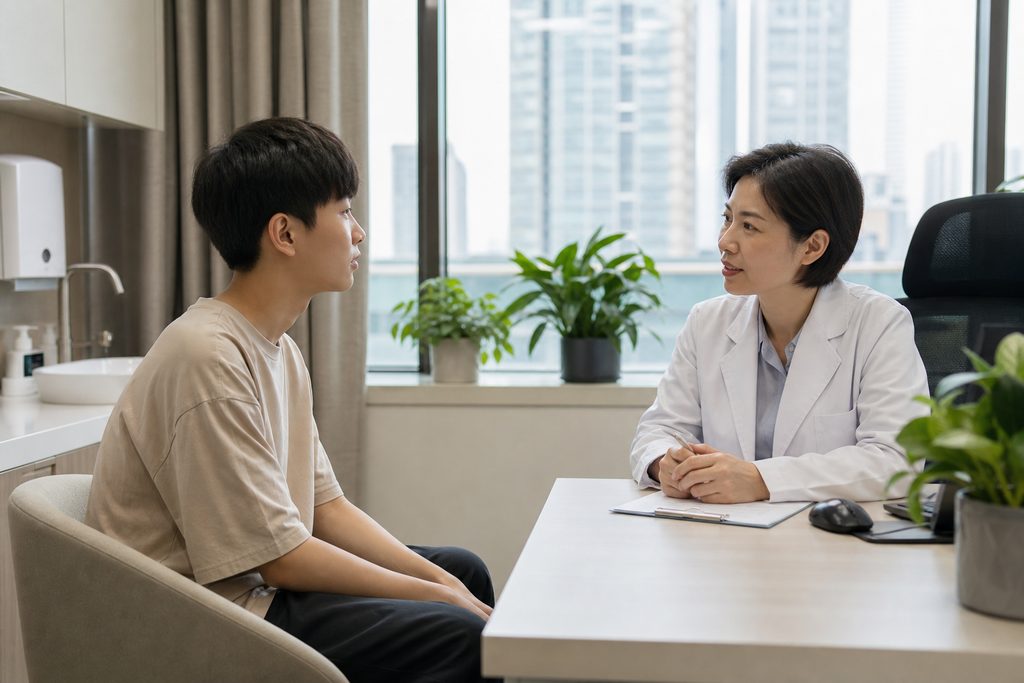
In the United Kingdom, a transgender teenager referred today to the NHS Gender Identity Development Service faces a wait of five years or more for a first appointment. That is the official estimate from the Tavistock and Portman NHS Foundation Trust, which until recently held the sole contract for youth gender services in England. In the Netherlands, the wait stretches beyond three years. In parts of Canada, it can exceed two years. Meanwhile, at a private international clinic in Shanghai, the same family can schedule a comprehensive multidisciplinary assessment within two to three weeks — and the gender affirming care cost China for an initial evaluation package runs from approximately $1,500 to $3,000, a fraction of what private-pay families spend in London or Toronto.
That contrast is not marketing spin. It reflects structural differences in how healthcare systems allocate capacity — and it explains why a growing number of families are looking east. We do not provide medical treatment. Our team at China Medical Services connects international patients with top-ranked Chinese hospitals and accredited private clinics. We handle logistics — hospital matching, appointment coordination, bilingual medical companions, visa guidance. You focus on your child. We handle everything else.
Key Takeaways
- Private gender-affirming care in China typically costs 60% to 80% less than equivalent private-pay care in the US or UK, with multidisciplinary assessments starting from approximately $1,500.
- China’s major international hospitals in Shanghai and Beijing operate under JCI accreditation standards, with English-speaking clinical teams and protocols aligned to WPATH guidelines.
- Puberty blockers and hormone therapy for adolescents require rigorous psychological and endocrinological assessment — China’s top clinics apply the same multi-stage evaluation process used in Western gender services.
- Families must navigate visa requirements, language barriers, and differences in medical record documentation. Going alone is difficult. Going with experienced coordination support transforms the experience.
The Problem: When Waiting Is Not Neutral
A 2023 study published in the Journal of Adolescent Health tracked mental health outcomes among 104 transgender youth referred to gender-affirming care. Those who waited longer than one year for treatment showed significantly higher rates of depression and self-harm compared to those who accessed care within six months. The researchers concluded that “prolonged waiting times are independently associated with deterioration in mental health.” This is not a theoretical concern. Approximately 1.4% of adolescents aged 13 to 17 identify as transgender in the United States, per CDC Youth Risk Behavior Survey data. Applied globally, millions of families are navigating the same bottleneck.
Public systems are overwhelmed. Private care in Western countries is prohibitively expensive for most families. A private initial assessment at a London-based gender clinic runs £1,500 to £3,000. In the US, the same evaluation without insurance can exceed $5,000. And those are just the first appointments. Ongoing endocrine monitoring, psychological support, and surgical referrals add tens of thousands more. Families burn through savings. Some give up. Others look abroad — and that search increasingly leads to questions about transgender youth treatment abroad options in Asia.
Who We Are
Families researching how to access puberty blockers in China for teens often assume the process will be less rigorous than in Western systems. That assumption is wrong — and that is a good thing. The clinical pathway at accredited international clinics follows a structured, multi-stage protocol:
The adolescent undergoes a minimum of three to six assessment sessions with a clinical psychologist specializing in gender identity development. This includes separate sessions with parents or guardians. An endocrinologist conducts baseline blood work, bone density scanning, and Tanner staging. A formal multidisciplinary team meeting reviews the case before any treatment recommendation is issued. Puberty blockers — typically GnRH agonists such as leuprorelin or triptorelin — are prescribed only after documented informed consent from both the adolescent and legal guardians. The entire process typically spans two to three months from first consultation to prescription, compared to two to five years in many public systems abroad.
This is not a faster process because corners are cut. It is faster because the system has capacity. That distinction is critical. Parents should be deeply suspicious of any clinic anywhere in the world that offers puberty blockers after a single visit. The Shanghai clinics we work with do not do that. Neither should anyone else.
The Gender Affirming Care Cost China Advantage
Let us talk numbers directly. A family paying out of pocket for adolescent gender-affirming care in the United States can expect to spend $25,000 to $50,000 in the first year alone — covering psychological assessments, endocrinology visits, laboratory monitoring, and medication costs. In the United Kingdom, private-pay families face similar figures in pounds sterling. These are not exaggerated estimates. They reflect actual billing data from private gender clinics in London and New York.
In Shanghai, the same first-year care pathway at a JCI-accredited international clinic typically costs between $8,000 and $15,000. That includes comprehensive psychological assessment, endocrinology consultations, laboratory monitoring, and medication. The gap widens further when families consider medical tourism packages China gender transition options that bundle clinical services with accommodation and logistical support. These packages are not mass-market tourism products. They are coordinated care plans arranged through hospital international patient departments, with transparent per-service pricing.
| Service Component | US Private Pay (Approx.) | Shanghai International Clinic (Approx.) |
|---|---|---|
| Initial Multidisciplinary Assessment | $5,000 – $8,000 | $1,500 – $3,000 |
| Ongoing Endocrinology (annual) | $3,000 – $6,000 | $1,200 – $2,500 |
| Psychological Support (12 sessions) | $2,400 – $4,800 | $1,200 – $2,400 |
| Medication (puberty blockers, annual) | $8,000 – $15,000 | $3,000 – $6,000 |
| Estimated First-Year Total | $18,400 – $33,800 | $6,900 – $13,900 |
These figures vary by hospital and case complexity. They are not quotes. But the structural gap — roughly 60% to 80% lower — holds across the board. The question families should ask is not “can we afford to go to China.” It is “can we afford not to explore this option.”
Finding the Best Transgender Clinic Shanghai Has to Offer
Shanghai has emerged as the primary destination for international families seeking adolescent gender-affirming care in China. The best transgender clinic Shanghai options cluster in the city’s private international hospital sector. Jiahui International Hospital operates a dedicated mental health center with psychologists trained in gender identity assessment. United Family Shanghai runs an integrated pediatric and adolescent medicine department that coordinates endocrinology and psychology under one roof. ParkwayHealth Shanghai offers English-speaking endocrinologists with experience in transgender hormone therapy protocols.
These are not standalone gender clinics in the Western sense. They are multidisciplinary departments within full-service international hospitals. That structure matters. It means the adolescent’s care team can consult internally with pediatricians, nutritionists, and adolescent medicine specialists without external referrals. It also means parents have one point of contact for all clinical services — a significant advantage when navigating care from abroad.
What You Need to Know Before Going Alone
China’s healthcare system rewards preparation and punishes improvisation. Families who arrive without coordinated support face a gauntlet of practical obstacles that have nothing to do with clinical quality and everything to do with infrastructure.
- Visa Requirements: Medical treatment in China requires an S2 visa with a formal invitation letter from the treating hospital. This letter must specify the medical purpose of the visit, the intended duration of treatment, and the hospital’s official stamp. Obtaining this document independently from overseas is extremely difficult — most hospital international departments will not issue invitation letters to unvetted inquiries. The S2 visa is not the same as a tourist visa. Showing up on an L visa for medical treatment risks denial at the border.
- Medical Records and Documentation: Chinese hospitals require translated, notarized copies of all relevant medical records before scheduling appointments. This includes psychological assessment reports, prior endocrine workups, and family medical history. Translation must be professionally certified. Hospitals will reject machine-translated documents. The process typically takes two to four weeks when handled properly — and fails entirely when done incorrectly.
- Payment Systems: Chinese private international hospitals operate on a pre-payment or deposit model. International credit cards work at major institutions, but daily transaction limits, currency conversion fees, and bank fraud alerts frequently disrupt payments. WeChat Pay and Alipay dominate domestic transactions — neither is easily accessible to short-term foreign visitors without a Chinese bank account. Hospital cashiers may not speak English. A $10,000 deposit held up by a payment processing failure is not a hypothetical scenario. It happens regularly.
How We Help You Navigate This
These barriers exist for structural reasons. They are not designed to exclude international patients — but they functionally do. Our role is to dismantle each one systematically.
Before your family travels, we collect and review all medical documentation, coordinate certified translation, and submit the complete package to the hospital’s international patient department. We secure the official invitation letter required for S2 visa applications. We schedule all initial consultations — psychology, endocrinology, and any additional specialties — in a compressed timeline so your time in China is used efficiently, not spent in waiting rooms. A typical coordinated care visit spans seven to ten days for the full assessment phase, compared to the weeks or months it would take a family navigating independently.
During your stay, a bilingual medical companion accompanies every hospital visit. They translate clinical conversations in real time — not just the words, but the nuance. They handle registration, payment processing, pharmacy collection, and follow-up scheduling. They know which floor the endocrinology lab is on and which window processes international insurance claims. After you return home, we coordinate ongoing prescription management, telemedicine follow-ups, and documentation for your home-country healthcare providers. The relationship does not end when the flight lands.
Our bilingual medical companion service starts from $200 per day. Hospital appointment coordination begins from $300. These are logistical services — they do not include medical treatment costs, which are paid directly to the hospital. We are transparent about this structure because families deserve clarity when making decisions this consequential.
Frequently Asked Questions
Is gender-affirming care for adolescents legal in China?
Yes. There is no law prohibiting gender-affirming medical care for minors in China when provided through licensed medical institutions with appropriate clinical assessment and parental consent. Private international hospitals in Shanghai and Beijing operate under the same regulatory framework that governs all private healthcare delivery. The key limitation is practical, not legal: very few hospitals have dedicated adolescent gender services. The clinics we work with have established protocols and experienced clinical teams — but they represent a small subset of China’s overall hospital system.
What if my child decides to stop treatment — is that supported?
Absolutely. The clinical protocols at accredited international clinics include ongoing assessment of treatment continuation. Puberty blockers are, by design, reversible — their purpose is to pause pubertal development and buy time for thoughtful decision-making. If an adolescent decides to discontinue, the clinical team supports that decision and manages the medical transition back to endogenous puberty. No clinic we work with pressures families toward irreversible interventions. The entire assessment framework is built around the principle that adolescents need time, not urgency.
How do we handle follow-up care after returning to our home country?
This is one of the most practical concerns families raise — and one we address from the first consultation. Chinese endocrinologists provide detailed treatment summaries, medication protocols, and lab reference ranges formatted for international healthcare providers. We coordinate telemedicine follow-ups at intervals determined by the clinical team — typically every three to six months for adolescents on hormone therapy. Prescription refills can be managed through international pharmacy coordination, though families should verify import regulations for GnRH agonists in their home country before departing China. Some medications that are standard in Chinese protocols may require special import permits elsewhere. We flag these issues early so there are no surprises.
Your Next Step
Accessing gender-affirming care for an adolescent is never a simple decision — regardless of which country you choose. The clinical questions are complex. The emotional weight is real. The logistical challenges are significant. What China offers is not a shortcut around clinical rigor. It is an alternative pathway through a system that has built capacity where Western systems have built waiting lists. The medicine is the same. The protocols are the same. The difference is access, cost, and time — and for families watching their teenager struggle through years of waiting, those differences matter enormously.
If you want to understand whether this path makes sense for your family, start with a conversation. No commitment. No pressure. Just straight answers about what is possible and what it costs. Contact our team for a free initial consultation — we will help you understand your options, not sell you on a decision that belongs to your family alone.
For more medical information and treatment options in China, visit chinamedservices.com (China Medical Services).
