Why Choose China for Treatment Instead of Singapore: Cost, Speed, and Volume
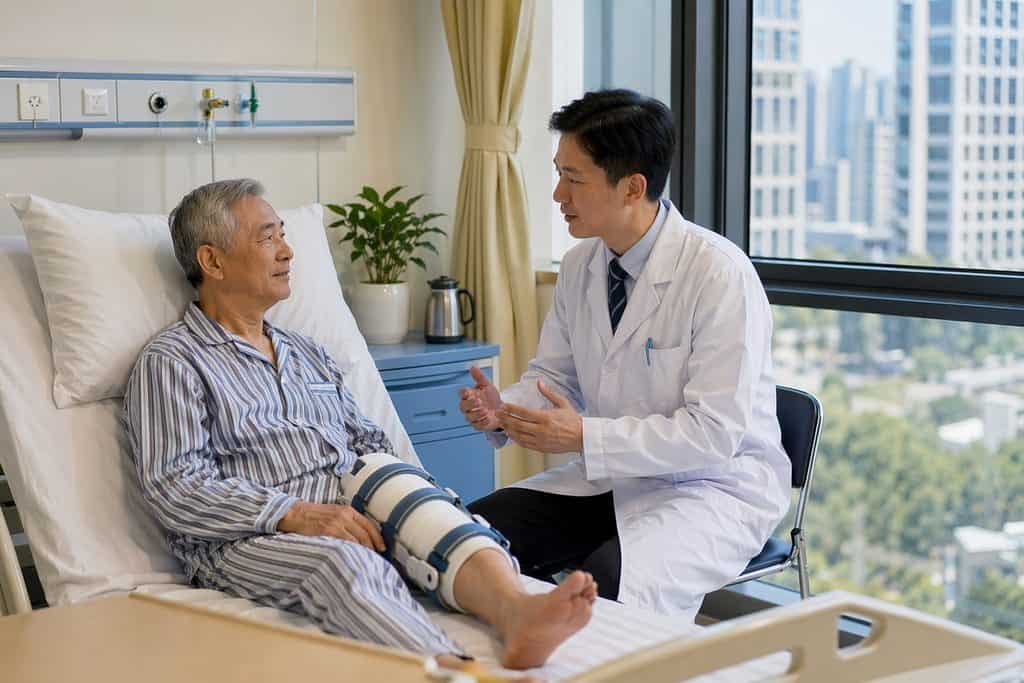
What if the biggest barrier to world-class cancer care was not the medicine itself, but the price tag and the queue? For thousands of international patients each year, that question leads to a direct comparison between two Asian medical hubs. The cancer treatment cost China vs Singapore is often the first number patients check. But the real decision runs deeper than a single invoice.
Key Takeaways
- Top Chinese hospitals perform complex procedures at 50–70% lower cost than comparable Singapore facilities, with surgical volumes that often exceed Western and regional benchmarks.
- China’s Fudan-ranked top 100 hospitals concentrate clinical volume in ways that directly affect surgeon experience—some centers complete over 14,000 cardiac surgeries annually.
- Language and logistics remain real barriers. Public hospital outpatient clinics cannot be booked from overseas, and without bilingual support, navigating a 10,000-patient-per-day hospital is extremely difficult.
- S2 visa is the correct category for medical treatment in China—not the M visa, which is strictly for commercial and trade activities.
The Problem: Paying More and Waiting Longer for Comparable Care
Singapore has earned its reputation. The Joint Commission International accredits 22 Singapore hospitals, and the country consistently ranks among the top global destinations for medical tourism. But that reputation carries a premium. A cardiac bypass in Singapore at a private hospital typically runs between $45,000 and $70,000 USD. At a top-tier Chinese public hospital, the same procedure generally costs $12,000 to $20,000. The gap is not marginal—it is structural.
Wait times compound the financial pressure. Singapore’s public healthcare system, while excellent, faces the same capacity constraints as other developed systems. Non-urgent orthopedic procedures can queue for 3 to 6 months. China’s top hospitals, by contrast, operate at a scale that most healthcare systems never approach. Fuwai Hospital in Beijing performs more than 14,000 cardiac surgeries per year—the highest volume of any cardiac center globally. That volume translates into scheduling capacity that simply does not exist in smaller systems.
Why China Delivers Results at Scale
The argument for China is not based on a single factor. It rests on three structural advantages that interact: clinical volume, technology adoption speed, and labor economics that do not compromise outcomes.
Clinical Volume Drives Surgical Repetition
Surgeons get better by operating. That is not a slogan; it is the most consistent finding in surgical outcomes research. A study published in the New England Journal of Medicine found that hospitals performing more than 100 pancreaticoduodenectomies annually had mortality rates of 4% or lower, while low-volume centers exceeded 12%. Chinese top-tier hospitals operate at the high end of these curves. The question “is heart surgery safe in China” deserves a data-grounded answer: at Fuwai Hospital, the mortality rate for coronary artery bypass grafting is approximately 1%, comparable to or better than the best Western centers. Volume is the mechanism.
Singapore’s total population is under 6 million. China has 1.4 billion people and 35,000+ hospitals. The top 5% of those hospitals—the 340+ institutions in our database—serve patient flows that dwarf entire national systems. A surgeon at a Shanghai tertiary hospital may see more complex cancer cases in one month than a Singaporean surgeon sees in a year. That matters for rare pathologies, revision surgeries, and cases where experience is the only differentiator.
Technology Adoption Without Bureaucratic Lag
Chinese hospitals adopt new surgical platforms quickly. Robotic surgery systems, proton therapy centers, and minimally invasive techniques are deployed across multiple cities. Shanghai alone hosts several proton and heavy ion centers, and the city’s top hospitals routinely perform robotic-assisted procedures for prostate, colorectal, and gynecologic cancers. The best hospital in Shanghai for foreigners is often a Fudan-ranked public hospital with an international department—not a standalone private clinic. These international departments combine the hospital’s full surgical resources with English-speaking coordination staff.
Singapore adopts technology carefully, which is a legitimate strength. But careful adoption means slower diffusion. A patient needing a specific robotic procedure or a particular radiotherapy modality may find it available at one or two Singapore centers. In China, the same technology is often available across multiple cities, creating pricing competition and scheduling flexibility.
Structural Cost Advantages Without Quality Compromise
Why is surgery cheaper in China? The answer is not lower standards. It is labor economics and hospital efficiency. Physician salaries in China are lower than in Singapore, but the top hospitals recruit from the same global talent pool and publish in the same journals. Facility costs, nursing labor, and administrative overhead all run lower. Meanwhile, the equipment is identical—Siemens, GE, Philips, Da Vinci. The consumables are the same brands. The difference is the cost of the team, not the cost of the tools.
Medical tourism packages China price points typically land 50–70% below Singapore for equivalent procedures. A knee replacement that costs $25,000–35,000 in Singapore runs $10,000–15,000 at a top Chinese orthopedic hospital. A course of proton therapy for prostate cancer can cost $60,000–80,000 in Singapore versus $30,000–45,000 in Shanghai. These are not promotional numbers; they reflect the underlying cost structure.
Cancer Treatment Cost China vs Singapore: A Direct Comparison
Oncology is where the cost gap widens most dramatically. Cancer care involves repeated cycles—surgery, chemotherapy, radiation, imaging, follow-up. Small per-unit savings compound into six-figure differences over a full treatment course.
| Procedure / Treatment | China (Top Public Hospital) | Singapore (Private Hospital) |
|---|---|---|
| Cardiac bypass surgery | $12,000 – $20,000 | $45,000 – $70,000 |
| Knee replacement | $10,000 – $15,000 | $25,000 – $35,000 |
| Proton therapy (prostate cancer, full course) | $30,000 – $45,000 | $60,000 – $80,000 |
| Liver resection (complex) | $15,000 – $25,000 | $40,000 – $60,000 |
| Gastric cancer surgery + hospital stay | $10,000 – $18,000 | $30,000 – $50,000 |
These figures vary by hospital and case complexity. A patient with comorbidities, a longer ICU stay, or a need for imported consumables will see different numbers. But the structural gap holds across nearly every procedure category.
Why choose China over Singapore for medical treatment when both countries offer world-class care? For many patients, the answer is volume plus cost. Singapore offers excellent care in a compact, English-speaking environment. China offers comparable or higher surgical volumes at a fraction of the price, with the trade-off being a more complex logistical environment.
How Much Cheaper Is Surgery in China Than Singapore? The Real Math
Let us run a realistic scenario. A 58-year-old patient from Australia needs a coronary artery bypass graft. In Singapore, the private hospital quote is $55,000. Airfare from Sydney is $700, a hotel for two weeks for a companion is $3,500, and the total lands around $59,200 before insurance.
The same patient at Fuwai Hospital in Beijing through its international department: surgery $18,000, airfare $900, two weeks of accommodation $2,500, bilingual coordination and interpretation $1,500. Total: approximately $22,900. The savings exceed $36,000. Even after adding a companion’s travel and meals, the patient keeps more than $30,000.
That math is why medical tourism packages China price comparisons keep appearing in patient forums and expatriate communities. The savings are not theoretical. They are the difference between affording treatment and delaying it.
Practical Considerations: Visas, Payment, and Follow-Up
The logistics are real, and honesty about them matters. China is not Singapore when it comes to ease of navigation. Patients should understand four things before committing.
First, the visa. Foreign nationals seeking medical treatment in China apply for an S2 visa, which covers short-term private affairs including medical treatment. Stays exceeding 180 days require an S1 visa. The M visa is for commercial and trade activities only—it is not a medical visa, and using it for treatment creates compliance risk. Supporting documents from the treating hospital are typically required. Requirements vary by embassy, so confirm with the nearest Chinese consulate before booking flights.
Second, appointment logistics. Public hospital outpatient clinics in China do not accept overseas advance bookings for standard registration. Patients either walk in on the day, queue for a registration number, and see whichever specialist is available, or they use the hospital’s international department or VIP channel, where senior specialists can be pre-booked. The international department typically costs 1.5 to 2 times the standard rate but includes English-language coordination and a less chaotic experience.
Third, payment. Chinese public hospitals operate on a prepayment model. Patients deposit funds upfront, and treatment draws down the balance. Private international hospitals in Shanghai and Beijing, such as United Family or Jiahui, often accept direct insurance billing. Public hospital international departments generally require self-pay with reimbursement claimed from the insurer afterward. Confirm the payment structure with the specific hospital before arrival.
Fourth, follow-up care. A patient who has surgery in China and returns home needs a local physician willing to manage postoperative care. Chinese hospitals provide discharge summaries and imaging records in English upon request, but the handoff requires planning. Patients should identify a home-country physician before departure and share the Chinese hospital’s contact details for any questions that arise during recovery.
Request all records in English before leaving China. Imaging on CD or USB, operative notes, pathology reports, and discharge summaries. Getting these documents after returning home is significantly harder.
Frequently Asked Questions
At top-tier centers, yes. Fuwai Hospital in Beijing performs over 14,000 cardiac surgeries annually with a bypass mortality rate around 1%, comparable to leading Western centers. The key is choosing a Fudan-ranked hospital with a dedicated cardiac surgery department, not a general hospital. Safety correlates strongly with volume.
The Fudan University hospital rankings are the most authoritative reference in China. The comprehensive top 100 list assigns tier grades from A++++ to A, while specialty reputation rankings name the top 10 hospitals in 45 specialties including oncology, cardiac surgery, and orthopedics. Cross-reference the specialty ranking for your specific condition with the hospital’s international department availability. Our top hospitals database organizes this information by city and specialty.
Chinese hospitals carry medical liability insurance, and international departments have established protocols for adverse events. Patients have the right to request second opinions, transfer to another hospital, or return home for further care. The realistic risk is not clinical negligence—it is communication failure. That is why bilingual support during treatment is not a luxury; it is a safety measure. Document everything, keep your own records, and do not sign consent forms you do not fully understand.
For surgical procedures at top public hospitals, yes. The savings come from lower labor and facility costs, not lower quality. But factor in travel, accommodation, interpretation, and the value of your time. Some patients find that a 40% net saving after all expenses is the more realistic figure. Still substantial, but plan conservatively.
No, but you need someone on your team who does. International departments at major hospitals have English-speaking staff, but the moment you step outside that department—pharmacy, imaging, billing, the hospital canteen—Chinese is the default. A bilingual medical companion handles registration, queueing, payment, translation, and navigation. For most international patients, this support is the single most important logistical decision after choosing the hospital.
Your Next Step
The decision between China and Singapore is not about which country has better medicine. Both have world-class institutions. It is about whether you are willing to trade logistical convenience for surgical volume and cost savings that can reach $30,000 or more per procedure. That trade-off is personal, and it depends on your condition, your budget, and your tolerance for navigating an unfamiliar system.
We are China Medical Services, a coordination team that helps international patients connect with top-ranked Chinese hospitals. We are not a hospital and we do not provide diagnoses or treatment. What we do is handle the practical layer—hospital matching, appointment coordination, bilingual accompaniment, and visa guidance—so you can make an informed decision without the guesswork. If you are weighing your options, start with a conversation. Visit our patient services page to learn how we work, or explore our specialty rankings to see which Chinese hospitals lead in your specific condition. The information is free, and the decision remains entirely yours.
For more medical information and treatment options in China, visit chinamedservices.com (China Medical Services).
