First Affiliated Hospital of Chongqing Medical University Oncology for International Patients
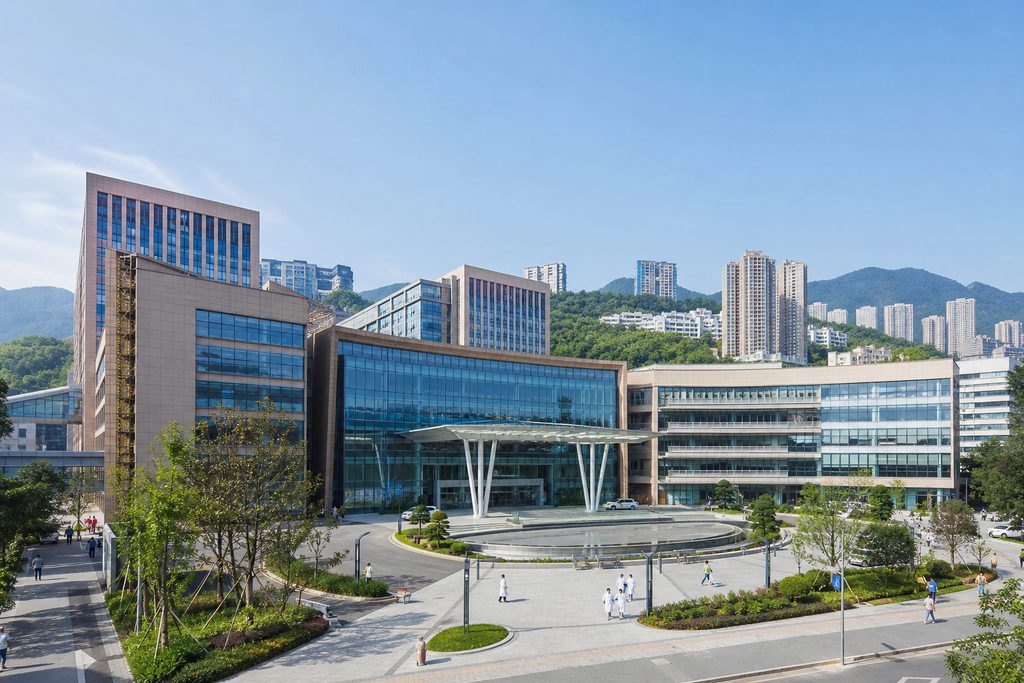
First Affiliated Hospital of Chongqing Medical University Oncology for International Patients: What You Need to Know Before You Go
Key Takeaways
- The First Affiliated Hospital of Chongqing Medical University is a major public teaching hospital with a dedicated oncology department serving both domestic and international patients.
- Oncology treatment cost in Chongqing China typically runs 60-80% lower than comparable care in the United States, even when using the hospital’s international/VIP channel.
- Public hospitals in China cannot be booked directly from overseas for standard outpatient care — surgery and inpatient treatment require an in-person consultation first.
- You will need an S2 visa for medical treatment, not an M visa, and you should prepare for language barriers unless you arrange bilingual support.
When 54-year-old Daniel from Manchester received a stage II colorectal cancer diagnosis, his first question wasn’t about survival rates. It was about money. His NHS wait for surgery stretched past nine weeks, and private care in the UK quoted him £38,000. A colleague mentioned medical travel. Daniel started searching for “oncology treatment cost Chongqing China” and landed on a hospital he had never heard of: the First Affiliated Hospital of Chongqing Medical University.
Daniel’s situation is common. Cancer care in Western countries is excellent but expensive and sometimes slow. For international patients, the math can be brutal. What Daniel found — and what this article explains — is that a major Chinese teaching hospital can deliver high-volume oncology care at a fraction of Western prices. But the path is not simple. You need to understand how the system actually works.
The Problem: Cancer Care Costs Are Crushing Patients in the US and Europe
Cancer treatment in the United States now routinely exceeds $150,000 for a standard course of chemotherapy plus surgery. A single immunotherapy infusion can cost $15,000. In the UK, the NHS is free at the point of use, but wait times for oncology have deteriorated sharply. Cancer Research UK reported in 2024 that nearly one in three cancer patients waited longer than the 62-day target from urgent referral to first treatment.
Private care solves the wait problem but creates a financial one. A private oncology package in London or New York can easily reach $100,000 to $200,000. For patients without comprehensive insurance — or with high deductibles — this is ruinous.
And the problem is growing. The World Health Organization projects a 77% increase in global cancer cases by 2050. More patients will chase the same limited oncology resources. Waitlists will lengthen. Costs will climb. For a growing number of patients, staying home is not an option.
Why the First Affiliated Hospital of Chongqing Medical University Deserves a Look
The First Affiliated Hospital of Chongqing Medical University (CQMU) is not a boutique international clinic. It is a massive public teaching hospital — one of the largest in western China — with over 3,000 beds and an annual outpatient volume in the millions. That scale matters for cancer care.
Clinical Volume Drives Better Outcomes
Oncology is a volume game. Surgeons and medical oncologists who treat hundreds of cases per year develop pattern recognition that no textbook can teach. At a hospital of this size, the oncology department handles a caseload that most Western cancer centers would struggle to match. A US community oncologist might manage 150-200 active patients. At a major Chinese teaching hospital, individual specialists routinely manage several times that number.
Volume is not just about experience. It also means the hospital maintains dedicated tumor boards, standardized protocols, and the full range of treatment modalities under one roof — surgery, chemotherapy, radiotherapy, interventional radiology, and palliative care. For a patient with a complex diagnosis, that integration reduces fragmentation.
Technology and Efficiency at Scale
Chinese public hospitals run on a different operational model than Western ones. Outpatient clinics process thousands of patients daily. Imaging departments run CT and MRI scanners from early morning into the evening. The result is that diagnostic workups that take weeks in some Western systems can be completed in days at a Chinese teaching hospital.
For international patients, this efficiency is a double-edged sword. The system moves fast, but it is designed for Chinese-speaking patients who navigate it daily. Without bilingual support, you will struggle. With it, you can move through the system at a pace that surprises most Western visitors.
Cost Advantage Without Quality Compromise
The oncology treatment cost in Chongqing China is structurally lower than in the West. This is not because Chinese oncologists are less skilled. It is because labor costs, facility overhead, and pharmaceutical pricing are all lower. A chemotherapy regimen that costs $40,000 in the US might cost $8,000 to $12,000 at a major Chinese hospital. A complex cancer surgery might run $15,000 to $30,000 in China versus $80,000 to $150,000 in the US.
Even using the hospital’s international/VIP channel — which adds English-language coordination and priority scheduling at roughly 1.5 to 2 times the standard rate — the total cost remains far below Western private care. Patients should understand that this cost difference does not buy a different standard of medicine. It buys the same medicine at Chinese prices.
How to Get Cancer Treatment at Chongqing Medical University Hospital: The Real Process
This is where most international patients hit a wall. You cannot simply email the hospital and book a surgery date. Public hospitals in China operate on a face-to-face consultation model. Here is the actual sequence.
First, you need your complete medical records translated into Chinese — pathology reports, imaging, prior treatment summaries. The hospital will not schedule anything without reviewing these. Second, you or a representative must attend an in-person outpatient consultation. The oncologist reviews your case, orders any additional tests, and only then determines whether and when surgery or inpatient treatment can be scheduled.
Third, once the treatment plan is confirmed, the hospital will quote a cost estimate. You prepay a deposit — typically 50% to 100% of the estimated cost — before admission. Public hospitals in China do not bill insurance directly. You pay out of pocket and seek reimbursement from your insurer afterward.
Fourth, you need an S2 visa. This is the short-stay visa category used for private affairs, including medical treatment. The hospital must provide an invitation letter and treatment confirmation to support your application. Do not apply for an M visa — that is for commercial and trade activities and is not appropriate for medical travel.
Booking Cancer Treatment in Chongqing: What “Package” Actually Means
If you search for “book cancer treatment package Chongqing China,” you will find agencies offering all-inclusive packages. Be careful here. Legitimate packages typically include coordination services — appointment scheduling, document translation, airport pickup, bilingual accompaniment, and hospital admission support. They do not include the medical treatment itself, which is billed separately by the hospital at its standard rates.
| Cost Component | Standard Public Channel (USD) | International/VIP Channel (USD) |
|---|---|---|
| Initial oncology consultation | $30 – $80 | $150 – $300 |
| Comprehensive diagnostic workup (CT, MRI, labs) | $500 – $1,500 | $800 – $2,500 |
| Standard chemotherapy course (6 cycles) | $8,000 – $15,000 | $12,000 – $25,000 |
| Major cancer surgery (e.g., colorectal, gastric) | $10,000 – $25,000 | $15,000 – $40,000 |
| Radiation therapy course (25-30 sessions) | $6,000 – $12,000 | $9,000 – $18,000 |
| Bilingual medical companion (per day) | N/A | From $300 |
Prices vary by hospital and case complexity. The figures above are reference ranges based on typical charges at major Chinese public teaching hospitals, not a formal quote. The international channel costs more because it includes English-speaking coordination, priority scheduling, and often a private or semi-private room.
Who is this not suitable for? Patients requiring emergency treatment should not travel to China. The process takes time — typically two to six weeks from first contact to treatment start. Patients with unstable conditions, advanced disease requiring immediate intervention, or complex multimorbidity should think carefully before traveling. And patients who expect a Western-style private hospital experience may find the public hospital environment jarring, even in the VIP section.
Is Cancer Care in China Good for International Patients? An Honest Assessment
The short answer: yes, at top-tier teaching hospitals, with important caveats. The First Affiliated Hospital of Chongqing Medical University is one of the leading medical centers in western China. Its oncology department offers the full spectrum of modern cancer treatment, including targeted therapy, immunotherapy, and minimally invasive surgery. The clinical standards are comparable to Western academic centers.
But the experience is different. Chinese public hospitals are crowded, fast-paced, and not designed around patient comfort. Communication is in Mandarin. The food is Chinese. The nursing model expects family members to assist with basic care — a cultural norm that surprises many Western patients. If you come alone and expect a private room with a call button and an English-speaking nurse, you will be disappointed unless you use the international channel.
What about the “international oncology program China fast track” that some agencies advertise? There is no standardized national fast-track program for international oncology patients. What exists is the international/VIP channel at individual hospitals, which offers priority scheduling and English coordination at a premium. It is faster than the standard public route but not a magic bypass. You still need a face-to-face consultation. You still need to qualify for treatment.
Practical Considerations: Documents, Visas, and Money
Before you book a flight to Chongqing, get your paperwork in order. You will need your complete medical records — pathology slides, imaging on CD, treatment history, and a physician’s summary. Have these translated into Chinese by a certified translator. The hospital will not review English-only records in most cases.
Your visa is an S2. The Chinese embassy or consulate in your home country processes it. You will need an invitation letter from the hospital, a treatment confirmation, proof of funds, and a valid passport with at least six months remaining. Processing typically takes one to two weeks. Family members accompanying you also apply for S2 visas. If your treatment will exceed 180 days, you need an S1 visa instead.
Payment is straightforward but inflexible. Chinese public hospitals require prepayment — usually a deposit before admission, then top-ups as treatment progresses. Major credit cards are accepted at the international billing desk, but international wire transfers can take days. Bring multiple payment methods. Some hospitals accept international health insurance with prior arrangement, but most do not bill directly. You pay, then claim reimbursement.
Language is the biggest practical barrier. Even in the international department, not all staff speak fluent English. You will encounter Mandarin in the hallways, the pharmacy, the imaging department. A bilingual medical companion — someone who handles registration, queues, payment, and translation — costs from $300 per day and is, for most international patients, the single highest-value expense after the treatment itself.
Frequently Asked Questions
No. Chinese public hospitals require an in-person outpatient consultation before scheduling surgery or inpatient treatment. You can send your records for preliminary review, but the oncologist must see you face-to-face before any surgical booking is confirmed. Anyone claiming otherwise is not being honest with you.
For a standard course of treatment — diagnosis, surgery, and adjuvant chemotherapy — budget $25,000 to $60,000 using the international channel. Complex cases requiring immunotherapy or extended radiation will push higher. This excludes travel, accommodation, and bilingual support. Get a written cost estimate from the hospital after your initial consultation before committing.
Chinese teaching hospitals have robust complication management protocols, and the First Affiliated Hospital of Chongqing Medical University maintains intensive care capacity. But you should understand that medical malpractice litigation in China is difficult for foreigners, and treatment standards, while high, are not identical to Western protocols in every respect. Discuss contingency plans with your oncologist before treatment begins. Consider medical evacuation insurance if your condition is high-risk.
Some international health insurance plans cover treatment at Chinese hospitals, but most require prior authorization and many reimburse rather than pay directly. Contact your insurer before traveling. Get written confirmation of coverage scope, including whether the hospital’s international channel qualifies. Do not assume coverage — verify it.
You can get treated without speaking Chinese, but not comfortably. The international department at the First Affiliated Hospital of Chongqing Medical University has some English-speaking staff, but coverage is inconsistent. For a smooth experience, budget for a bilingual medical companion who can navigate the system with you.
Your Next Step
If you are considering oncology treatment in Chongqing, start by gathering your medical records and getting a realistic picture of your case. Our team at China Medical Services helps international patients navigate Chinese hospitals — we are not a hospital and we do not provide diagnoses or treatment. We handle the logistics: hospital matching, document translation, appointment coordination, visa guidance, and bilingual accompaniment. When you are ready to explore whether the First Affiliated Hospital of Chongqing Medical University is right for your case, request a free consultation and we will walk you through the process step by step.
Cancer care abroad is a big decision. The First Affiliated Hospital of Chongqing Medical University offers real clinical capability at a fraction of Western prices. But the system demands preparation. Understand the process, budget honestly, and bring the right support. Daniel from Manchester did exactly that — and six months after his surgery in Chongqing, he was back in the UK, cancer-free, with £31,000 still in his savings.
For more medical information and treatment options in China, visit chinamedservices.com (China Medical Services).
