Chongqing Neurology Care: A Guide for International Patients at the First Affiliated Hospital
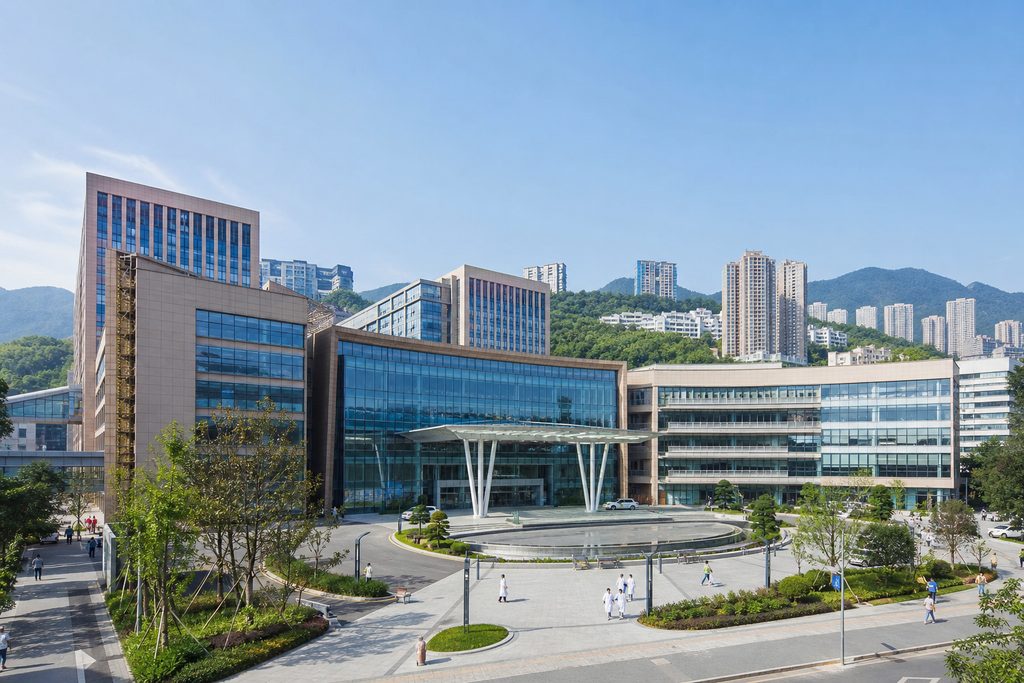
You have probably heard that getting specialized medical care in China means sacrificing quality for affordability. The data tells a different story. The First Affiliated Hospital of Chongqing Medical University runs one of western China’s highest-volume neurology departments, handling complex epilepsy, Parkinson’s, and brain tumor cases that many Western hospitals see only a handful of times each year. But the neurology treatment cost China international patients actually pay is not what you will find on a brochure — it depends heavily on how you enter the system.
Our team at China Medical Services has coordinated care for dozens of foreign patients through this hospital’s international pathway. The real question is not whether the hospital is good enough. It is whether the logistics make sense for your specific case.
Neurology at the First Affiliated Hospital: The Short Answer
Yes, the First Affiliated Hospital of Chongqing Medical University (CQMU) is a legitimate, top-tier destination for neurological care. Its neurology department is consistently ranked among China’s strongest in the Fudan University hospital rankings, particularly for epilepsy surgery, movement disorders, and neuro-oncology. For international patients, the hospital offers an international outpatient pathway that bypasses the chaotic general registration system.
But here is the caveat no one tells you upfront: you cannot simply email the hospital and book a neurology appointment from overseas. Public hospital rules require in-person registration for most departments. The international pathway exists, but it requires coordination through the hospital’s international medical center — and that is where most foreign patients get stuck.
Who This Is Right For — and Who It Isn’t
Traveling to Chongqing for neurological treatment makes sense for a specific profile of patient. Being honest about who should not come is what makes the rest of this guide credible.
Typically a good candidate:
- You have a confirmed or suspected diagnosis — epilepsy, Parkinson’s disease, brain tumor, multiple sclerosis — and want a second opinion from a high-volume center
- You need surgery that is prohibitively expensive or has a long wait time in your home country
- You already have imaging (MRI, CT, EEG) and medical records that can be translated and reviewed remotely first
- You are comfortable with a different clinical culture and can adapt to non-Western hospital workflows
Should probably not pursue this:
- You are in an acute neurological emergency — stroke, status epilepticus, rapidly progressing weakness. Stay where you are and get immediate care
- You have no confirmed diagnosis and no imaging. Coming to China without records means starting from zero, which wastes time and money
- You require intensive, long-term inpatient rehabilitation. China’s acute care is excellent; its post-acute rehab infrastructure for foreigners is less developed
- You expect the same communication style as a Western hospital. Chinese neurologists are skilled but direct, and English proficiency varies even in international departments
The Options, Compared
If you are considering the First Affiliated Hospital of Chongqing Medical University for neurology, you are really comparing three pathways. Each has different costs, wait times, and levels of service.
| Pathway | Typical Cost (USD) | Wait Time | English Support | Best For |
|---|---|---|---|---|
| Standard public outpatient | $30–80 per visit | Same-day queue, 2–6 hours waiting | Minimal | Budget travelers with Chinese-speaking companions |
| International medical center | $150–400 per visit | 1–3 days advance booking | Dedicated coordinator, some English | Most international patients |
| VIP/specialist green channel | $800–1,200 coordination + consultation fees | 3–7 days | Full bilingual support | Complex cases needing senior specialists |
The international medical center pathway is the sweet spot for most foreign patients. It costs more than the general queue but dramatically less than equivalent care in the US or Europe. The VIP channel makes sense when you need a specific senior neurologist and cannot afford a wasted trip.
Is CQMU Hospital Good for Brain Tumor Treatment?
The short answer is yes — with qualifications. The neurosurgery and neurology departments at the First Affiliated Hospital of Chongqing Medical University handle a high volume of brain tumor resections annually. This matters because surgical outcomes for glioma, meningioma, and metastatic brain tumors correlate strongly with case volume. A surgeon who removes 200 brain tumors a year simply has different muscle memory than one who removes 20.
But volume is not everything. The hospital’s neuro-oncology multidisciplinary team includes neurologists, neurosurgeons, radiation oncologists, and pathologists who review complex cases together. For international patients, the practical question is whether your specific tumor type and location match the department’s strengths. That is why we always recommend a written second opinion from a top specialist before committing to travel — it costs $300–500 and tells you whether Chongqing is actually the right destination for your case.
What Neurology Treatment Actually Costs in China
Let us put real numbers on the table. The neurology treatment cost China international patients encounter varies by procedure, but here are representative ranges based on public hospital international department pricing:
- Epilepsy surgery (temporal lobectomy or similar): $18,000–35,000 total, including hospitalization, surgery, and standard post-op care. The same procedure in the US typically runs $80,000–150,000
- Brain tumor resection (awake craniotomy for glioma): $25,000–50,000 depending on tumor location and complexity. US equivalent: $120,000–250,000
- Deep brain stimulation (DBS) for Parkinson’s: $30,000–60,000 including device and surgical fees. US cost: $100,000–200,000+
- Diagnostic workup (MRI, EEG, lumbar puncture, blood panel): $800–2,000 in the international department
These prices include the hospital’s international service markup, which is typically 1.5–2x the standard Chinese patient rate. They do not include flights, accommodation, visa fees, or translation services. And they assume no major complications.
How Much Does Epilepsy Surgery Cost in China?
Epilepsy surgery deserves its own section because it is one of the most common reasons international patients contact us about Chongqing. The First Affiliated Hospital has a dedicated epilepsy center with video-EEG monitoring units and a surgical program that handles both resective and neuromodulation procedures.
For a standard temporal lobe resection, expect $18,000–30,000 all-in. That includes pre-surgical evaluation (video-EEG, high-resolution MRI, neuropsychological testing), the surgery itself, and 7–14 days of post-operative hospitalization. Vagus nerve stimulation (VNS) or responsive neurostimulation (RNS) costs more — $35,000–60,000 — because the devices themselves are expensive regardless of where the surgery happens.
One honest caveat: pre-surgical evaluation for epilepsy is time-intensive. You may need 5–10 days of inpatient video-EEG monitoring before a surgical decision is made. That means a trip to Chongqing for epilepsy surgery is rarely shorter than 3–4 weeks total.
Booking a Neurology Appointment at the First Affiliated Hospital
Can you book a neurology appointment First Affiliated Hospital Chongqing from overseas? Not directly through the general registration system. The hospital’s public appointment platform requires a Chinese phone number and often a local ID verification. For foreign patients, the realistic options are:
- Contact the hospital’s international medical center directly — they accept email inquiries and can book appointments for foreign passport holders, usually with 3–7 days advance notice
- Use a coordination service — organizations like ours handle registration, medical record translation, and appointment scheduling. We charge from $300 for hospital appointment coordination, and if we cannot secure the appointment, you get a full refund
- Walk in — possible but not recommended. You will queue with thousands of local patients, and finding an English-speaking neurologist on short notice is unlikely
Practical Considerations: Records, Visas, and Follow-Up
Neurological records are more complex than most specialties. You will need imaging files in DICOM format, not just printed reports. EEG tracings matter for epilepsy cases. Pathology slides matter for brain tumors. Get everything digitized before you travel.
Visa: Medical treatment in China falls under the S2 visa category, which covers short-term private affairs including medical treatment. Your accompanying family members also apply for S2 visas. Processing typically takes 1–3 weeks at most Chinese embassies, and you will need a letter from the hospital confirming your appointment or treatment plan. The hospital’s international medical center can provide this document once your appointment is confirmed.
Payment: Public hospitals in China, including the international departments, require pre-payment. You deposit funds at admission, and the hospital deducts as services are provided. Credit cards are accepted in international departments, but large surgical deposits may require wire transfer. Private international hospitals in China often bill insurance directly — public hospital international departments generally do not.
Language: The international medical center provides some English support, but it is not comprehensive. Neurologists may speak limited English. A bilingual medical companion (from $300/day) handles translation during consultations, helps with paperwork, and navigates the hospital’s physical layout — which is enormous and confusing even for locals.
Follow-up after returning home: This is the most overlooked issue. Chinese neurologists will want follow-up imaging or EEG at 3, 6, and 12 months post-surgery. You can either return to Chongqing for follow-up or have your local neurologist send results back for remote review. Video consultations for follow-up typically cost $100–300 per session.
Neurology Medical Tourism in China for Parkinson’s Disease
Parkinson’s disease has become a significant neurology medical tourism package China for Parkinson’s draw, and Chongqing is part of that trend. The First Affiliated Hospital’s movement disorders program offers medication optimization, botulinum toxin injections for dystonia, and deep brain stimulation surgery for advanced cases.
DBS is the headline procedure. China performs more DBS surgeries annually than any country except the United States, and the cost differential is stark: $30,000–60,000 in Chongqing versus $100,000–200,000+ in the US. The hardware is the same — Medtronic, Abbott, and Boston Scientific devices are used in Chinese hospitals — and Chinese neurosurgeons have extensive experience with both awake and asleep DBS techniques.
But DBS is not a one-and-done procedure. Programming and adjustment happen over months. If you have DBS in Chongqing, you need a plan for device programming back home. Not every Western neurologist is comfortable managing a DBS system implanted abroad. Discuss this with your home neurologist before committing.
Frequently Asked Questions
Yes, for most tumor types. The department performs a high volume of glioma and meningioma resections annually, and the neurosurgery team works closely with neuro-oncology and radiation oncology. But “good” depends on your tumor’s location, size, and molecular profile. A remote second opinion is the cheapest way to find out if this hospital is right for your specific case.
In Chongqing, a standard temporal lobe resection costs $18,000–35,000 including hospitalization. The same procedure in the US typically costs $80,000–150,000. The savings are real, but factor in travel, accommodation for 3–4 weeks, and the cost of follow-up care in your home country.
Not through the general public system. You need to go through the hospital’s international medical center or use a coordination service. The international center accepts email inquiries and can usually book appointments within 3–7 days for foreign passport holders. A coordination service handles the paperwork and translation, with fees starting from $300.
You need an S2 visa for short-term private affairs including medical treatment. Family members traveling with you also apply for S2 visas. The hospital provides a confirmation letter for your visa application once your appointment is booked. Processing takes 1–3 weeks at most Chinese embassies. The M visa is for commercial and trade activities only — it is not for medical treatment.
The surgical safety record at top-tier Chinese hospitals like the First Affiliated Hospital of Chongqing Medical University is comparable to Western academic medical centers. Infection rates are low, and the neurosurgeons are highly trained. The bigger risks are logistical: communication gaps, different post-op protocols, and the challenge of follow-up care once you return home. These are manageable with proper coordination but should not be underestimated.
Your Next Step
The First Affiliated Hospital of Chongqing Medical University offers genuine neurological expertise at a fraction of Western prices. But getting there requires navigating a system that was not designed for foreign patients. That is what we do. China Medical Services is not a hospital and does not provide diagnoses or treatment. We handle the logistics — hospital matching, appointment coordination, record translation, bilingual companionship — so you can focus on your health.
If you are considering neurological treatment in Chongqing, start with a free consultation about your case. We will tell you honestly whether this hospital makes sense for you, and if not, where else in China might be better. No pressure, no obligation. Just a clear-eyed assessment from people who know the system.
For more medical information and treatment options in China, visit chinamedservices.com (China Medical Services).
