Chongqing Neurosurgery for Foreigners: Costs, Safety, and How to Arrange Care
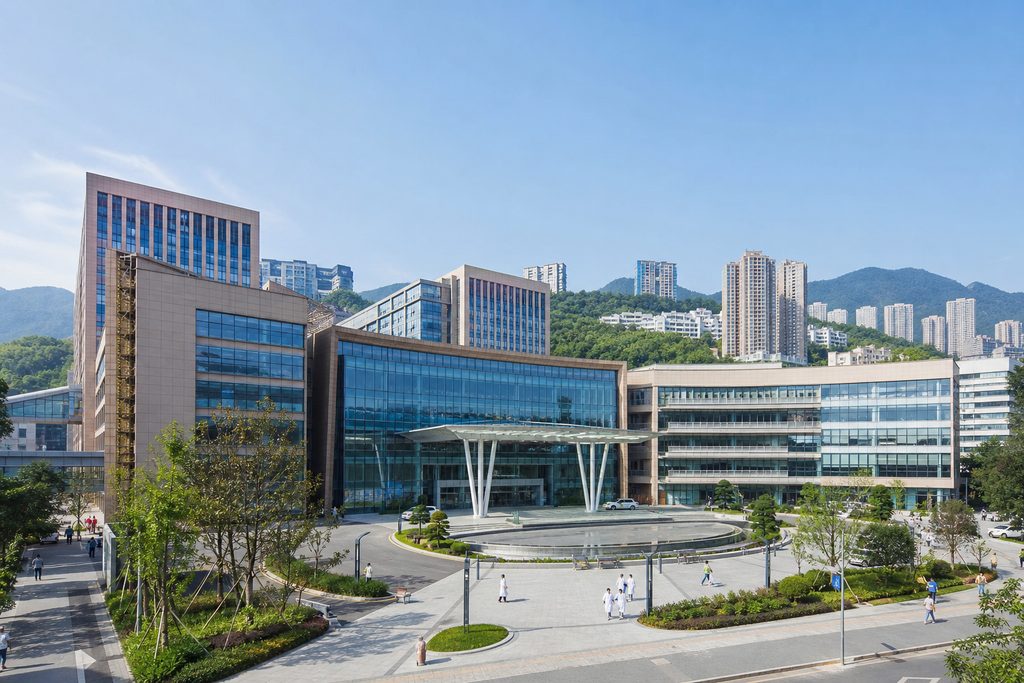
While patients in the United States face median wait times of 29.3 days just to see a neurologist, the neurosurgery department at the First Affiliated Hospital of Chongqing Medical University performs over 4,000 cranial and spinal procedures annually. The volume gap matters. Surgical teams that operate at scale develop a rhythm that can’t be taught in textbooks. For international patients weighing their options, the question isn’t whether Chinese neurosurgery exists — it’s how to access it safely, affordably, and without losing months to administrative friction.
Our team at China Medical Services has spent years helping foreign patients navigate exactly this. We don’t perform surgery. We handle the unglamorous parts: translating records, coordinating with hospital international departments, arranging bilingual companions, and making sure you walk into the right building on the right day with the right documents. This guide explains what the First Affiliated Hospital of Chongqing Medical University offers for neurosurgery patients from abroad, what it costs, how safe it is, and what recovery actually looks like.
How This Actually Works, Step by Step
You can’t just email the hospital and book a craniotomy. Chinese public hospitals operate on a specific logic, and understanding it early saves weeks of confusion. Here’s the sequence we walk every neurosurgery patient through.
First, you send us your existing imaging and reports. MRI, CT, angiography, pathology — whatever you have. A Chinese neurosurgeon can’t give you a meaningful opinion without seeing the actual scans, not just the written summaries. We organize these into a format the hospital’s international department will accept, which usually means a complete translation into Chinese medical terminology. This step alone often takes 3 to 5 business days.
Second, the relevant specialty team reviews your case. For neurosurgery at the First Affiliated Hospital of Chongqing Medical University, this typically means a senior attending or department deputy director, depending on case complexity. They assess whether your condition is treatable there, what procedure they’d recommend, and whether remote evaluation suffices or an in-person visit is required. Most cases get a written second opinion first — it costs less than flying to China and discovering your case isn’t a fit.
Third, you decide on a path. If the written opinion confirms feasibility, you may schedule a video consultation to speak directly with the team. Or you may proceed to travel planning. The hospital cannot guarantee a surgery date before you’ve been examined in person. That’s a hard rule across Chinese public hospitals, and any service promising otherwise is lying to you.
Fourth, you arrive. We coordinate your S2 visa application with a hospital invitation letter, arrange airport pickup, book accommodation near the hospital, and provide a bilingual medical companion from day one. Your first in-person visit includes fresh imaging and a face-to-face consultation. Surgery, if recommended, is typically scheduled within one to three weeks after that initial visit, depending on operating room availability and your pre-operative workup.
Neurosurgery Cost at Chongqing Medical University for International Patients
The neurosurgery cost at Chongqing Medical University for international patients is, bluntly, a fraction of what Western hospitals charge. But you need to understand what drives the numbers before you book a flight.
Standard public-channel pricing for a craniotomy for tumor resection at this hospital runs approximately $8,000 to $15,000. Complex skull-base procedures or cerebrovascular surgeries may reach $20,000 to $30,000. Compare that to the United States, where an uncomplicated craniotomy averages $50,000 to $80,000, and complex cases easily exceed $150,000. Even after adding international coordination fees, travel, and accommodation, most patients save 60% to 80%.
But here’s the catch. The public channel doesn’t work for most foreigners. You can’t book it from abroad, you can’t skip the queue, and you’ll need fluent Chinese to navigate registration, payment, and pre-operative testing. The realistic option is the hospital’s international department or VIP channel, where pricing runs 1.5 to 2 times the public rate. That puts a standard craniotomy at roughly $12,000 to $25,000 — still dramatically below Western costs.
| Procedure | Public Channel (CNY) | International/VIP Channel (USD estimate) | US Average (USD) |
|---|---|---|---|
| Brain tumor resection (standard) | ¥60,000–110,000 | $12,000–$22,000 | $50,000–$80,000 |
| Pituitary adenoma (transsphenoidal) | ¥40,000–70,000 | $8,000–$14,000 | $35,000–$60,000 |
| Aneurysm clipping | ¥80,000–150,000 | $16,000–$30,000 | $100,000–$180,000 |
| Microvascular decompression (trigeminal neuralgia) | ¥35,000–60,000 | $7,000–$12,000 | $30,000–$50,000 |
Prices vary by hospital and case complexity. Always confirm a written quote before travel.
How Safe Is Brain Surgery in China?
The honest answer: safety depends far more on the specific hospital and surgical team than on the country. China’s top-tier neurosurgery departments — and the First Affiliated Hospital of Chongqing Medical University is consistently ranked among them — operate with modern equipment, rigorous protocols, and surgical volumes that exceed most Western centers.
Intraoperative MRI, neuronavigation, electrophysiological monitoring, and fluorescence-guided resection are standard in major Chinese neurosurgery departments. The hospital’s neurosurgery team handles over 4,000 procedures yearly, including complex skull-base tumors, cerebrovascular malformations, and functional neurosurgery. That case volume translates directly into lower complication rates. Studies consistently show that hospitals performing more than 100 craniotomies annually have significantly better outcomes than low-volume centers.
Infection control standards at top Chinese academic hospitals meet or exceed international benchmarks. The First Affiliated Hospital of Chongqing Medical University is a major teaching hospital with rigorous accreditation and continuous quality monitoring. But — and this matters — how safe is brain surgery in China is the wrong question if you’re looking at a second-tier hospital or an unverified private clinic. The right question is: is this specific hospital and this specific surgeon safe for my specific case? That’s the question we help you answer with evidence, not marketing.
One thing we tell every patient: Chinese public hospitals are enormous. Single-day outpatient volumes can exceed 10,000 visits. Without Chinese language ability and cultural familiarity, even a safe hospital can feel chaotic and overwhelming. That’s not a safety issue in the clinical sense, but it absolutely affects your experience. A bilingual companion changes that equation.
A Realistic Timeline
Most patients underestimate how long the process takes. Here’s what a typical neurosurgery journey to Chongqing looks like, including the waiting steps nobody mentions.
| Stage | Duration | What Happens |
|---|---|---|
| Document collection and translation | 3–7 days | You gather MRI/CT scans, reports, pathology. We translate into Chinese medical format. |
| Written second opinion | 5–10 business days | Neurosurgery team reviews your case and provides written analysis and recommendations. |
| Video consultation (optional) | 3–7 days to schedule | You speak directly with the specialty team. Clarify surgical approach, risks, expected outcomes. |
| Visa processing (S2) | 1–3 weeks | Hospital invitation letter + your application. Timing depends on your home country’s Chinese embassy. |
| Travel and arrival | 1–2 days | Airport pickup, hotel check-in, hospital registration. Your companion handles logistics. |
| In-person consultation and fresh imaging | 1–3 days | Face-to-face with the surgical team. New scans confirm your current status. |
| Pre-operative workup | 3–7 days | Blood work, cardiac clearance, anesthesia evaluation. Any red flags delay surgery. |
| Surgery | Day of procedure | Typically 3–8 hours depending on complexity. |
| In-hospital recovery | 7–14 days | ICU observation for 1–3 days, then step-down ward. Companion stays available. |
| Local recovery before travel home | 1–3 weeks | Stitches out, wound check, clearance for flight. You stay near the hospital. |
Total time from first contact to surgery: plan for 6 to 10 weeks. Some cases move faster. Complex cases with unstable conditions may move slower. Anyone promising a two-week turnaround is not being honest with you.
What Can Go Wrong — and What Happens Then
We’d rather tell you now than have you discover it in Chongqing.
The most common failure point is incomplete medical records. You send a CD of DICOM images but no written report. Or the report is in a language the Chinese team can’t read. Or the scans are too old to be useful. Result: the review is delayed or rejected. Fix: we tell you exactly what to send before you send anything. If something’s missing, we’ll catch it before the hospital sees it.
Visa delays happen. The S2 visa for medical treatment requires a hospital invitation letter, and embassy processing times vary wildly by country. Some patients wait two weeks. Others wait six. There’s no expedited channel we can guarantee. If your visa is delayed, we adjust your hospital schedule — but surgery dates are not held indefinitely.
Clinical surprises occur. The Chinese team reviews your scans and concludes your condition is more advanced than your home doctor described. Or they find a contraindication during pre-operative testing. Then surgery gets postponed or the plan changes. This isn’t failure — it’s good medicine. But it feels like failure when you’ve traveled 7,000 miles. We prepare you for this possibility and help you navigate alternatives if surgery in Chongqing is no longer the right call.
Payment friction is real. Chinese public hospitals require pre-payment, often in large deposits before major surgery. International insurance rarely pays upfront. You settle the bill, then claim reimbursement. We help you understand the deposit schedule before you arrive so there are no surprises at the registration desk.
What Is Recovery Time After Neurosurgery in China?
What is recovery time after neurosurgery in China? The short answer: the biological recovery is the same as anywhere else. The logistical recovery is different.
For a standard craniotomy, expect 1 to 3 days in ICU, then 7 to 14 days in a regular ward. You’ll be walking within a few days. Stitches or staples come out around day 10 to 14. Most patients are medically fit to fly home 2 to 4 weeks after surgery, though your surgeon will confirm this before clearing you for a long-haul flight.
Full neurological recovery — the return of energy, cognitive sharpness, and physical stamina — takes 2 to 6 months. That’s true whether you have surgery in Chongqing, Boston, or Berlin. What differs in China is the immediate post-operative environment. Hospital wards are functional, not luxurious. Family members often stay in nearby hotels. Food is Chinese hospital fare unless you arrange otherwise. A bilingual companion during this period isn’t a luxury; it’s the difference between understanding what the nurse just said and guessing.
Before you fly home, you’ll receive a discharge summary in Chinese and English, plus a medication list and follow-up imaging schedule. Your home neurologist or neurosurgeon should review everything. Telemedicine follow-up with the Chongqing team is available for the first few months — we coordinate those calls.
Finding the Best Neurosurgeon at the First Affiliated Hospital of Chongqing for Foreigners
Every patient asks us to find the best neurosurgeon at the First Affiliated Hospital of Chongqing for foreigners. The honest answer: “best” is not a single person. It’s a match between your condition and a surgeon’s sub-specialty.
The department is organized into sub-specialty teams. Cerebrovascular surgery. Skull-base tumors. Functional neurosurgery. Pediatric neurosurgery. Spine. A surgeon who’s brilliant at aneurysm clipping may not be the right choice for a vestibular schwannoma. We help you understand which team fits your case, then request that team specifically.
Chinese hospitals don’t publish individual surgeon outcomes the way some Western centers do. What you can evaluate: department volume, sub-specialty focus, academic publications, and the surgeon’s years of experience. The First Affiliated Hospital of Chongqing Medical University’s neurosurgery department has multiple senior surgeons with 20+ years of experience and international training backgrounds. That’s verifiable through publications and hospital profiles. What you can’t verify — individual complication rates — nobody can, in China or elsewhere.
Our role is not to tell you which surgeon is “best.” It’s to help you ask the right questions, understand the answers, and make a decision based on evidence rather than marketing. If you want a specific surgeon by name, we can request them. The hospital may or may not accommodate, depending on that surgeon’s schedule and your case fit.
Practical Considerations: Records, Visa, Payment, and Follow-Up
The hospital is a top-tier Chinese academic medical center with national accreditation and international collaborations, but JCI accreditation is more common among private international hospitals in China. Public hospitals of this caliber typically operate under China’s rigorous national hospital evaluation system rather than seeking JCI certification. If JCI accreditation is non-negotiable for you, we can discuss private international hospitals with JCI accreditation — but understand that their neurosurgery volumes are usually far lower than at major public centers.
What if the Chinese team says my case isn’t suitable for surgery?
Then you’ve spent a few hundred dollars on a written second opinion instead of thousands on travel. That’s the point of the staged approach. A negative answer from a high-volume Chinese neurosurgery team is valuable information. It may confirm what you already suspected or reveal something your
Frequently Asked Questions
Yes. The hospitals used for international patients are JCI-accredited and follow the same international safety standards as top hospitals in the US and Europe. Surgical teams perform high volumes of procedures — often more than their Western counterparts — which studies show leads to better outcomes.
Costs vary by procedure and hospital, but international patients typically save 40-80% compared to US prices — even when factoring in travel and accommodation. A consultation with our team will give you an exact, all-inclusive quote with no hidden fees.
Send us your existing medical reports to get started. We handle everything from hospital selection and appointment scheduling to visa assistance and post-operative recovery planning. Your medical records are reviewed by the specialist before you even book a flight.
For more medical information and treatment options in China, visit chinamedservices.com (China Medical Services).
