Chongqing Southwest Hospital: A Patient Guide for Foreigners
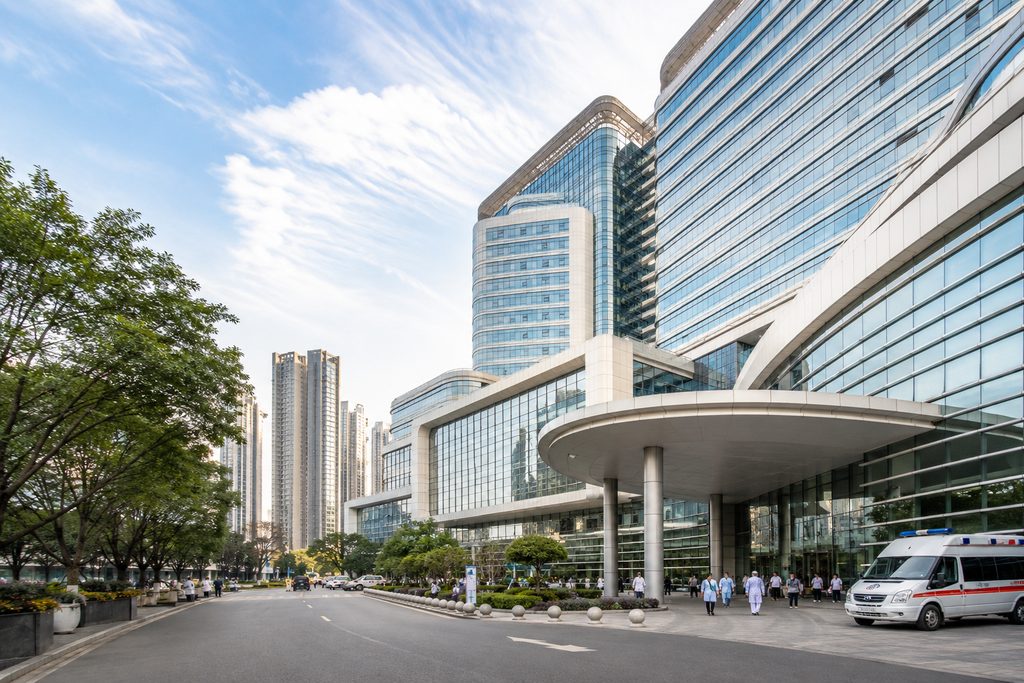
Chongqing Southwest Hospital: A Patient Guide for Foreigners
Roughly 1 in 8 people worldwide will need some form of hospital-based specialty care in any given year, and a growing share of them are willing to cross borders to get it. For Chongqing Southwest Hospital international patients, the appeal is straightforward: a large, high-volume tertiary hospital in a city of 32 million, with costs that often land at a fraction of U.S. rates. But the path from “interested” to “admitted” involves real logistics — records, translations, appointment rules, visa category, and a payment system that works differently from what most Western patients expect. This guide walks through all of it, honestly.
One thing to set straight at the start: we are not a hospital and we are not doctors. We’re a medical concierge service that helps international patients understand China’s hospital system, prepare documents, coordinate appointments through official international departments, and navigate the ground-level process once they arrive. Everything below reflects how the system actually works — including the parts that are inconvenient.
How This Actually Works, Step by Step
The sequence matters, because skipping a step usually costs weeks.
Step one: gather your existing records. You send us your current examination reports — imaging files, lab results, pathology slides if relevant, discharge summaries, and a plain-language description of your symptoms and goals. Scans should be in DICOM format where possible; radiology reports in PDF.
Step two: translation and case preparation. Chinese specialty teams review records in Chinese. Your materials get translated and organized into a case file the receiving department can actually read. This is where a lot of self-managed attempts stall — a folder of English PDFs dropped into a hospital inbox typically goes nowhere.
Step three: written second opinion or video consultation. A relevant Chinese specialty reviews the file and returns a written analysis with treatment suggestions and direction. If you want to speak with the team directly, a video consultation adds a live conversation where you explain symptoms and goals and hear their recommendations. Costs for these range from $100–300 for a standard hospital international department, $300–500 for a written second opinion from a top-tier hospital specialist, and $500–800 for a top-specialist video consultation. A multidisciplinary team review runs $1,500–2,000.
Step four: decide whether travel makes sense. Plenty of cases resolve at this stage — the Chinese team confirms your current plan is appropriate, or suggests a modification you can pursue locally. That’s a good outcome, not a failed one.
Step five: appointment coordination and arrival. If treatment in China is the plan, we coordinate registration through the hospital’s official international or VIP channel, help with the medical card, and arrange bilingual accompaniment for the in-person visit. Any later admission remains subject to hospital rules and the treating physician’s assessment.
Is Chongqing Southwest Hospital Good for International Patients?
This is the question most people actually type into Google, so let’s answer it directly.
Chongqing Southwest Hospital is one of the largest tertiary (Grade 3A) hospitals in western China, with a broad specialty footprint — burns and plastic surgery, hepatobiliary surgery, gastroenterology, orthopedics, and neurology among its better-known departments. It is a high-volume teaching hospital affiliated with a military medical university tradition, which means deep surgical experience and heavy patient throughput.
What that means for a foreign patient is mixed. Clinical depth: yes. English-language concierge infrastructure comparable to a private international hospital: not really. Large Chinese public hospitals can see tens of thousands of outpatients in a single day. Signage is largely in Chinese. Registration, payment, and pharmacy queues are self-navigated unless someone is walking you through them.
So the honest verdict: it’s a strong choice for complex surgical or specialty cases where you want serious clinical volume and Chinese-level pricing. It is a poor choice if what you want is a Western-style hotel-like hospital experience with English-speaking staff at every desk. If that’s your priority, look at JCI-accredited private international hospitals instead — private international hospitals with direct insurance billing cover that need, at higher prices.
For comparison shopping across the country, our directory of top-ranked Chinese hospitals by city groups facilities by Fudan ranking tier, and the specialty rankings for 45 departments let you check which hospitals sit in the top 10 for your specific condition.
A Realistic Timeline
These ranges assume no complications and a cooperative document trail. Add buffer generously.
| Stage | Typical Duration | What Slows It Down |
|---|---|---|
| Records gathering and translation | 3–10 days | Missing imaging files, illegible reports, pathology slides not released |
| Written second opinion | 3–7 business days | Specialist availability; complex cases needing multiple reviewers |
| Video consultation scheduling | 5–14 days | Time zone alignment; interpreter booking |
| Appointment coordination (international/VIP channel) | 1–3 weeks | Department-specific wait; peak seasons |
| S2 visa application | 1–3 weeks | Consulate processing times; invitation/supporting documents from the hospital |
| Travel and arrival | 2–5 days | Flight availability; jet lag recovery before appointments |
| In-person consultation and diagnostics | 1–5 days | Additional tests ordered at first visit |
| Surgery scheduling (if indicated) | Days to several weeks | Pre-operative clearance, operating room availability, surgeon’s schedule |
| Recovery before flying home | 1–6 weeks | Procedure type; physician clearance to fly |
Total realistic planning window from first contact to surgery: six to twelve weeks for most non-urgent cases. Urgent cases move faster, but the hospital decides that, not the concierge.
What Can Go Wrong — and What Happens Then
Let’s be blunt about failure modes, because you deserve to plan around them.
The specialist you want isn’t available. Chinese public hospital experts have packed schedules. We can request a specific department, and often a specific physician, but we can’t guarantee it. If the requested slot can’t be secured, appointment coordination fees are refunded in full. That’s the actual recourse — not a promise that we’ll somehow make it happen.
Your case turns out to need more diagnostics first. Chinese specialists frequently order additional imaging or labs at the first in-person visit before committing to a surgical plan. Budget extra days in Chongqing. This is normal, not a red flag.
The plan changes after arrival. A remote evaluation is a preliminary read. The in-person exam can shift the recommendation — sometimes toward a less invasive option, occasionally toward more work than expected. Nobody can contractually promise a specific procedure before the surgeon has examined you.
Language breakdown at the wrong moment. This is the most common practical failure. A patient arrives, gets through registration with an interpreter, then faces a pharmacy queue or a billing dispute alone. This is precisely why bilingual accompaniment exists as a separate service rather than an afterthought.
Payment friction. Public hospitals require prepayment; insurance reimbursement happens afterward, in your home country, on your insurer’s timeline. If you assumed direct billing, you may face a cash-flow surprise. Private international hospitals usually settle directly with major insurers — public ones generally don’t.
Chongqing Southwest Hospital Cost for Foreigners
Cost is the reason most people start looking at China in the first place, so here’s the shape of it.
Same procedure, Chinese top-tier public hospital versus U.S. pricing, typically lands at one-fifth to one-tenth. Coronary artery bypass grafting, for example, commonly runs $12,000–20,000 at a leading Chinese public hospital against $120,000+ in the United States. That gap holds broadly across cardiac surgery, orthopedic joint replacement, and complex oncologic surgery.
Two multipliers to keep in mind. First, the international/VIP channel — the route that lets you pre-book a senior specialist and get English support — costs roughly 1.5 to 2 times the standard fee. Second, prices vary by hospital and case complexity, so any number you read online is a range, not a quote.
Our own service fees sit separately from hospital charges and are published so you can plan: bilingual medical companion from $300 per day (half-day or full-day, covering registration, queuing, payment assistance, wayfinding, interpretation, and accompaniment — not a guarantee of a specific specialist), airport transfer $200 round-trip, hospital appointment coordination from $300, in-person top-specialist consultation coordination $800–1,200, and VIP end-to-end coordination $5,000–8,000. Any consultation fee is credited in full toward on-the-ground coordination if you proceed within 90 days — a one-time credit applied to the coordination fee only, never to hospital treatment charges.
To be clear about what we are: we provide case management. That means medical record translation, appointment coordination through the hospital’s official international department or VIP channel, and bilingual accompaniment labor. We are not charging for access, priority, or influence. No one can buy you a spot in a Chinese operating room, and any service implying otherwise should be treated with suspicion.
How to Book an Appointment at Chongqing Southwest Hospital
Three routes exist, and they suit different people.
Route one — walk-in registration. You arrive, queue for a same-day number in the department you need, see whoever is on duty. Cheapest. Requires Mandarin or a full-time interpreter. No advance surgery scheduling.
Route two — international department. You contact the hospital’s international office, submit records, and pre-arrange a specialist appointment. Higher fee, English support, and the route that makes sense for anyone flying in.
Route three — coordinated through a service. You hand your records to a concierge team, we handle translation, submission, scheduling, and accompaniment. This is what we do, and it exists mainly because routes one and two both assume you can manage a Chinese-language bureaucracy from 6,000 miles away.
Whichever route you take, the documents you’ll need are the same: passport, existing medical records with translations, prior imaging, a medication list, and — for the visa — supporting documentation from the receiving hospital.
Practical Considerations: Visa, Records, Payment, and Follow-Up
Visa category. Medical travel to China uses the S2 visa, which covers short-stay private affairs including medical treatment, and requires supporting documents from the hospital. Stays beyond 180 days fall under S1. Accompanying family members apply for S2 as well. Note that the M visa is for commercial and trade activity and has nothing to do with medical treatment — if anyone tells you to apply for an M visa to see a doctor, they’re wrong. Requirements shift, so always confirm current rules with the nearest Chinese embassy or consulate.
Records. Bring originals and copies. Bring imaging on physical media as well as digitally. Bring a translated medication list with generic drug names, since brand names differ.
Payment. Public hospitals: prepay, then claim reimbursement at home. Private international hospitals: often direct billing with major insurers. Bring a card that works internationally and confirm daily limits with your bank before you travel.
Language. Assume you need help. A hospital that sees 10,000+ outpatients a day is not designed around a solo English speaker.
Follow-up at home. Ask for a discharge summary and operative report in English before you leave, plus imaging on disc. Your home physician will need these, and retrieving them remotely afterward is slow.
If you’re still comparing cities, our China Medical Services homepage links to city guides covering Beijing, Shanghai, Guangzhou, Chengdu, and others, so you can weigh Chongqing against alternatives with deeper international patient infrastructure.
Frequently Asked Questions
It’s strong clinically — a large Grade 3A hospital with serious surgical volume and Chinese-level pricing. It’s weaker on English-language infrastructure compared to JCI-accredited private hospitals. If you need complex specialty care at lower cost and can arrange language support, it’s a reasonable choice. If you need a Western-style service environment, look elsewhere.
Major surgery typically runs one-fifth to one-tenth of U.S. pricing — cardiac bypass, for instance, commonly falls in the $12,000–20,000 range at leading Chinese public hospitals. Exact figures vary by hospital and case complexity, and the international/VIP channel adds roughly 50–100% over standard fees. Always request a written estimate before committing.
Not through standard outpatient registration — those are same-day, in-person queues. Advance booking requires the hospital’s international department or VIP channel. That’s the route we coordinate, though we can’t guarantee a specific physician or date, and coordination fees are refunded in full if the requested appointment can’t be secured.
The S2 visa covers short-stay medical treatment and requires supporting documents from the receiving hospital. Stays over 180 days use S1. Family accompanying you also apply for S2. The M visa is for commercial activity only and is not a medical visa. Confirm current requirements with your nearest Chinese embassy or consulate.
That’s a real possibility. Remote evaluations are preliminary; the in-person examination can shift the recommendation in either direction. No service can guarantee a specific procedure or outcome before a surgeon has examined you. Plan flexible travel dates and budget for additional diagnostics.
Your Next Step
The core message is simple: Chongqing Southwest Hospital can deliver serious clinical care at a fraction of Western pricing, but the process rewards preparation over improvisation. Records, translation, appointment channel, visa category, and payment method are the five things that decide whether your trip runs smoothly or stalls. We’re a medical concierge team — we translate records, coordinate appointments through official hospital channels, and provide bilingual accompaniment. We don’t diagnose, we don’t treat, and we don’t promise outcomes. If you’d like a straightforward conversation about whether your case fits, start with a free consultation — no pressure, and no obligation to travel.
This article is educational and does not constitute medical advice. Treatment decisions should always be made with a qualified physician who has examined you. Prices, visa rules, and hospital policies change — verify current details before making travel or financial commitments.
For more medical information and treatment options in China, visit chinamedservices.com (China Medical Services).
