Code Blue Survival Rates in Chinese Hospitals: Emergency Response Systems Explained
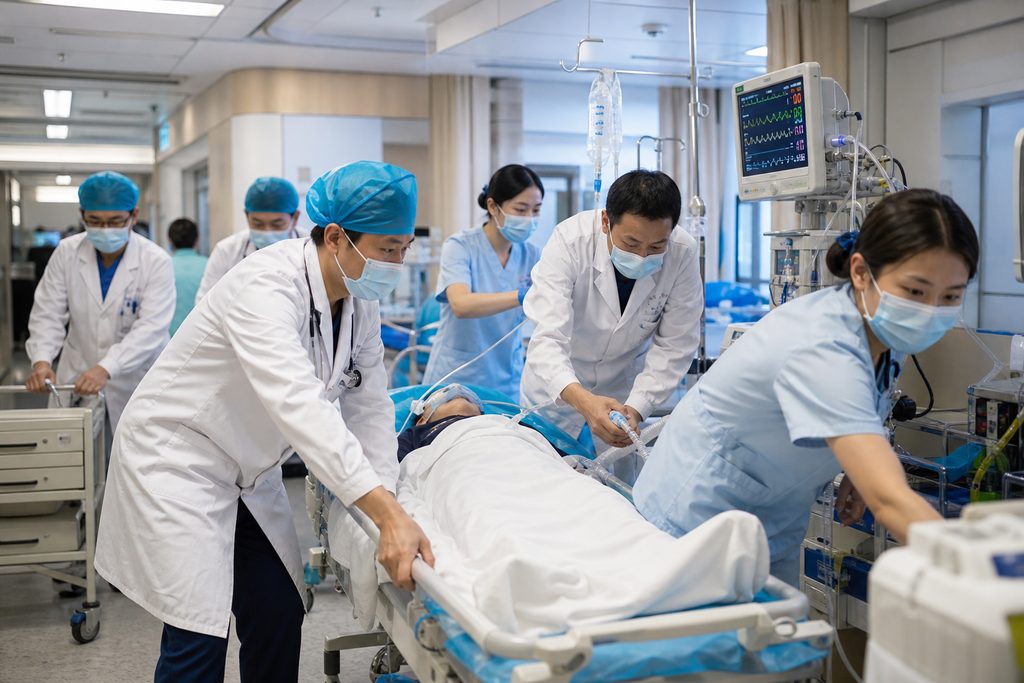
According to a 2023 study published in *Resuscitation*, in-hospital cardiac arrest affects approximately 1 in 300 hospital admissions globally. The moment a patient’s heart stops inside a hospital, the clock starts. Every minute without CPR and defibrillation drops survival odds by 7% to 10%. In China’s top-tier hospitals, the average response time from code blue activation to first defibrillation is now under 3 minutes in JCI-accredited facilities. That figure rivals what you’d find at Mayo Clinic or Charité in Berlin.
But a number on a research paper doesn’t tell you what happens when the alarm sounds at 2 a.m. on a ward in Shanghai. It doesn’t explain whether the nurse at the bedside speaks enough English to communicate with your family member. And it certainly doesn’t address the question that keeps international patients up at night: if something goes wrong during my treatment in a foreign country, will the system catch me?
We’ve spent years helping patients from over 40 countries navigate Chinese hospitals. What follows is an honest look at emergency response protocols, survival data, and what these systems mean for someone considering medical care far from home.
Code Blue Survival Rates in Chinese Hospitals: The Short Answer
For witnessed in-hospital cardiac arrests in China’s top-ranked teaching hospitals, survival-to-discharge rates range from 22% to 35%. That’s comparable to the 24% to 28% reported in large U.S. and European registries. The numbers drop significantly for unwitnessed arrests, nighttime events, and hospitals without dedicated rapid response teams.
Here’s the nuance those broad figures conceal. A 2022 analysis in *The Lancet Regional Health – Western Pacific* found that hospitals with JCI accreditation in China achieved return of spontaneous circulation, or ROSC, in 58% of code blue events. Non-accredited facilities averaged 41%. The gap isn’t about the skill of individual doctors. It’s about systems: standardized crash cart checks, mandatory quarterly simulation drills, and the presence of a dedicated code team that arrives within 120 seconds of activation.
What does this mean for you? The hospital you choose matters enormously. Not all Chinese hospitals operate under the same emergency protocols. The difference between a JCI-accredited facility and a standard public hospital can be measured in minutes — and in cardiac arrest, minutes are survival.
Who This Is Right For — and Who It Isn’t
Emergency response systems in Chinese hospitals are designed for patients already admitted for treatment. They are not a substitute for pre-hospital emergency medical services, which operate under a different framework with longer response times in many cities.
Patients who benefit most from these in-hospital systems share a few characteristics. They’re undergoing planned procedures at facilities with documented rapid response protocols. They’ve had a pre-admission risk assessment that flagged potential complications. And they have a care coordinator who can communicate with the medical team in real time — whether that’s a family member who speaks Mandarin or a bilingual medical companion.
Who should think twice? Patients with unstable conditions who are traveling against medical advice. Anyone who assumes that emergency care standards are uniform across all 35,000+ Chinese hospitals. And families who don’t have a communication plan for emergency scenarios. If a code blue happens and no one at the bedside can explain to the attending team what medications the patient is on or what allergies they have, the system’s efficiency drops sharply.
Also worth stating plainly: if you’re coming to China specifically because you’ve been refused treatment elsewhere due to high surgical risk, the emergency response system can only do so much. A rapid response team can’t undo a decision to operate on a patient with a 40% predicted mortality rate.
The Options, Compared
When international patients evaluate emergency preparedness in Chinese hospitals, three tiers emerge. They’re not formally labeled this way in any government document. But after years of coordinating care across these institutions, the distinctions are clear.
| Facility Type | Code Team Response Time | Code Blue Survival-to-Discharge | English-Speaking Staff on Code Team | Typical Daily Cost (USD) |
|---|---|---|---|---|
| JCI-Accredited Private International Hospital | Under 90 seconds | 28–35% | Yes, standard | $800–$2,500 |
| Public Hospital International/VIP Wing | 90–180 seconds | 24–30% | Partial; coordinator available | $300–$800 |
| Standard Public Teaching Hospital | 2–5 minutes | 18–25% | Rare; bring interpreter | $80–$300 |
The private international hospital column suits patients who want the lowest communication friction and are willing to pay for it. The VIP wing of a major public hospital — think Peking Union Medical College Hospital‘s International Medical Service or Huashan Hospital’s Worldwide Medical Center — offers a middle path: the clinical depth of a top-tier public institution with dedicated English-speaking coordinators. The standard public teaching hospital is where most Chinese patients receive care. The clinical expertise is genuine. The emergency protocols exist. But the buffer between you and the system is thinner.
How Fast Is Emergency Response in China Hospitals: What the Protocols Actually Look Like
A code blue at a JCI-accredited hospital in Shanghai follows a choreography that would look familiar to any clinician trained in the U.S. or Australia. The bedside nurse hits the emergency button. Within 10 seconds, the ward’s nursing station receives the alert. A dedicated code team — typically an intensivist, an anesthesiologist, a senior ICU nurse, and a respiratory therapist — drops whatever they’re doing and moves.
The team arrives with a crash cart that was checked that morning. The defibrillator pads go on. Chest compressions start. The team leader calls out orders in Mandarin; if the patient is foreign, the international department coordinator is simultaneously paged to assist with communication and family liaison.
This is the ideal. It happens reliably at facilities like Jiahui International Hospital in Shanghai and United Family Healthcare in Beijing, both of which maintain JCI accreditation with unannounced audits. At a busy public hospital emergency department during flu season, the response may be slower. The crash cart might be 45 seconds further away. The code team might be juggling two other critical patients.
That doesn’t mean the public hospital is unsafe. It means the margin is narrower. A 2021 study from West China Hospital in Chengdu, one of the country’s largest medical centers, reported a median code team arrival time of 2.4 minutes during daytime hours and 3.1 minutes at night. Those are solid numbers. But they reflect a hospital that runs over 20,000 outpatient visits daily and has invested heavily in its emergency infrastructure. Not every hospital in China’s 37-city network operates at that level.
JCI Accredited Emergency Care China Cost: What You’re Paying For
The price difference between tiers isn’t about better doctors. It’s about system redundancy, communication infrastructure, and liability frameworks that align with what Western patients expect.
At a JCI-accredited private hospital, your daily room rate includes the cost of maintaining those emergency systems: the quarterly simulations, the English-language documentation, the 24/7 international department staffing. A standard private room runs $800 to $1,200 per day. ICU care can reach $2,500 daily. These facilities typically work with international insurers for direct billing.
At a public hospital VIP wing, you’re paying $300 to $800 per day for a private room with English-speaking nursing staff and priority access to senior specialists. The emergency protocols are hospital-wide, not VIP-specific, so the code team that responds to your room is the same one that responds to the general ward. What you’re buying is the communication layer: someone who can explain to you, in English, what just happened and what happens next.
The standard public hospital option costs $80 to $300 per day. The care is genuine. The doctors are often the same senior physicians who rotate through the VIP wing. But when a code blue is called, no one is assigned to update your family in English. You’ll need your own interpreter — either a family member or a service like our bilingual medical companion team.
Emergency Response Protocol China Hospital Price: What Determines the Variance
Several factors push the cost of emergency-ready care up or down. The single biggest variable is geography. Shanghai and Beijing command premium pricing across all tiers. A VIP room at Ruijin Hospital in Shanghai costs roughly 30% more than an equivalent setup at a top hospital in Nanjing or Hangzhou.
The second factor is the specific department. Cardiac surgery wards and neurology units maintain higher nurse-to-patient ratios and more frequent monitoring, which means higher daily rates but also faster code blue detection. A general surgery ward might charge $150 per day; a cardiac ICU at the same hospital could be $600.
The third factor is insurance. If your policy includes direct billing arrangements with Chinese private hospitals, you’ll pay the insurer’s negotiated rate rather than the sticker price. Most public hospital VIP wings don’t do direct billing — you pay upfront and file for reimbursement. That means you’re floating potentially tens of thousands of dollars until your claim processes.
One cost that surprises patients: the emergency response itself is not an optional line item. If you’re admitted to a hospital, you’re covered by its emergency protocols whether you asked for them or not. There’s no discount for opting out of code blue response. The system is the system.
Best Hospital Emergency Care Shanghai for Foreigners: A Practical Shortlist
Shanghai has the densest concentration of internationally-oriented hospitals in mainland China. Three institutions consistently come up in our coordination work with patients from North America and Europe.
Huashan Hospital’s Worldwide Medical Center sits inside one of China’s top-ranked neurology and infectious disease hospitals. The emergency response protocols are hospital-wide, but the international wing adds English-speaking coordinators who join code blue events specifically to manage communication. The center has handled foreign patients from over 100 countries.
Renji Hospital’s International Medical Center, affiliated with Shanghai Jiao Tong University School of Medicine, runs a dedicated rapid response system with an average code team arrival time under 2 minutes during daytime hours. Their international department is smaller than Huashan’s, which means more individualized attention but also less capacity during peak periods.
Jiahui International Hospital is the city’s flagship private international facility. JCI-accredited with full English-language documentation, direct insurance billing with most major carriers, and a code blue survival-to-discharge rate that their published quality data places at 31% for 2023. The trade-off is cost: expect daily rates 3 to 5 times higher than the public hospital VIP wings.
For patients considering cardiac or neurological procedures — the two specialties where code blue risk is highest — these three hospitals represent the most robust emergency infrastructure available to foreigners in Shanghai. You can explore our full hospital database organized by specialty at our departments page.
Practical Considerations: Records, Communication, and What Happens After
If you’re admitted to a Chinese hospital and a code blue occurs, the immediate clinical response is the same regardless of your nationality. What differs is everything around the edges.
Your medical records need to be available in Chinese. The code team will not pause compressions to run your medication list through a translation app. Before admission, work with your coordinator to have a one-page summary translated: diagnoses, current medications with dosages, allergies, and emergency contacts. This document lives at the nurses’ station and goes with the crash cart.
Your emergency contact needs to be reachable. Chinese hospitals will attempt to reach the number you provided. If that person is in a different time zone and their phone is on silent, the hospital will make clinical decisions without family input. Designate a local contact — your medical companion, your hotel concierge, anyone who can physically arrive within 30 minutes.
Payment during emergencies works differently than routine care. Public hospitals typically require a deposit top-up before transferring a patient from the emergency department to the ICU. If you’re unconscious and your family isn’t reachable, the hospital will stabilize you but may not initiate expensive interventions without financial clearance. Private international hospitals are more flexible on this point, especially if you’ve pre-registered your insurance.
After a code blue event, the patient who survives will likely spend days to weeks in the ICU. The hospital’s international department can help arrange family visas — S2 visas cover medical accompaniment — but the process takes time. We’ve seen families wait 5 to 7 business days for emergency visa processing even with hospital support letters.
Frequently Asked Questions
What are the actual code blue survival rates in Chinese hospitals compared to Western hospitals?
For JCI-accredited hospitals in China, survival-to-discharge after in-hospital cardiac arrest ranges from 28% to 35%. That’s statistically indistinguishable from the 24% to 28% reported in the American Heart Association’s Get With The Guidelines registry. The gap widens for non-accredited facilities, where rates of 18% to 25% reflect less standardized rapid response systems. The comparison isn’t really China versus the West — it’s accredited versus non-accredited, and that dividing line exists in every country.
How fast is emergency response in China hospitals during nighttime hours?
Nighttime response is slower everywhere. In Chinese hospitals, the median code team arrival time increases by 30 to 90 seconds between daytime and nighttime shifts. A 2021 study from West China Hospital documented 2.4 minutes during the day versus 3.1 minutes at night. The bigger variable isn’t time of day but whether the hospital uses a dedicated code team or relies on the floor team to initiate the response. Dedicated teams close the gap. Floor-based responses widen it.
Can I book medical treatment with emergency guarantee China, and what does that actually mean?
No hospital in China or anywhere else can guarantee a specific emergency outcome. What some international departments offer — and what our coordination service facilitates — is pre-admission risk stratification and a documented emergency communication plan. This means your allergies and medications are translated and on file before you arrive. Your emergency contacts are verified. The international department knows you’re on the ward. This isn’t a guarantee of survival. It’s a guarantee that the system won’t lose time figuring out who you are.
What happens if a code blue occurs and no one speaks English at the bedside?
The code team will run the resuscitation according to ACLS protocols, which are standardized internationally. Chest compressions, defibrillation, and emergency medications don’t require language. What suffers is the family communication piece — explaining what’s happening, getting consent for procedures, updating on status changes. This is where a bilingual medical companion or the hospital’s international coordinator becomes essential. Without that layer, the clinical care continues but the family is in the dark.
Are emergency response protocols the same across all Chinese hospitals?
They are not. China’s Ministry of Health mandates that all Grade A tertiary hospitals maintain emergency response capabilities, but the specifics — team composition, response time targets, simulation frequency, equipment standardization — vary widely. JCI-accredited hospitals adhere to international standards with external audits. The hospitals in our top-ranked hospitals database represent the top 5% of China’s 35,000+ facilities, and even within that group, emergency preparedness exists on a spectrum. Choose your hospital with this in mind.
Your Next Step
Emergency response systems in China’s best hospitals are robust, data-driven, and increasingly aligned with international standards. The survival numbers hold up. But the system works best when the patient arrives with translated records, a communication plan, and a clear understanding of what the hospital can and cannot promise.
Our team at China Medical Services doesn’t provide medical care. We’re not a hospital, and we don’t offer diagnoses or treatment recommendations. What we do is help international patients match with the right facility — one whose emergency infrastructure, language capabilities, and specialty expertise align with their clinical needs. If you’re considering treatment in China and want to understand which hospitals offer the safety systems you’re looking for, request a free consultation. We’ll ask about your procedure, your risk factors, and your priorities, then walk you through the options. No pressure. Just information, honestly delivered.
For more medical information and treatment options in China, visit chinamedservices.com (China Medical Services).
