Complex Spine Deformity Service China: Scoliosis Kyphosis Multi-Level Reconstruction
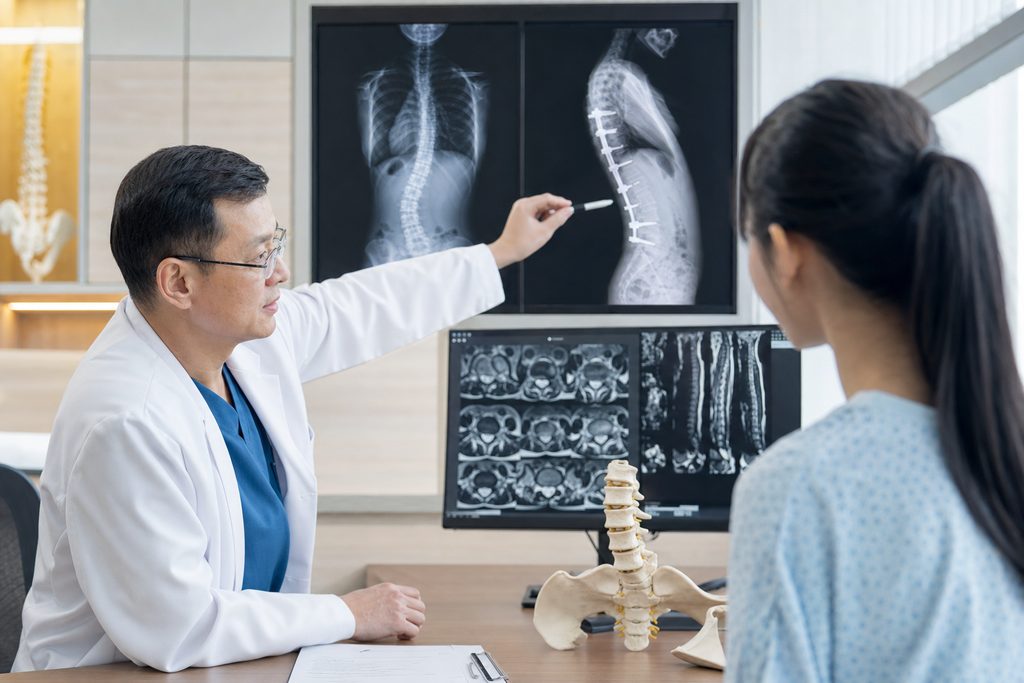
While patients in the United States face hospital bills exceeding $250,000 for multi-level spinal reconstruction, equivalent procedures at China’s top-tier orthopedic centers typically range from $40,000 to $80,000. The volume is staggering. A single high-volume spine unit in Shanghai or Beijing may complete over 500 major deformity corrections annually—numbers that dwarf the yearly caseload of most Western centers. The clinical question is not whether the surgery is cheaper. The question is whether the outcome is comparable. The data says yes.
Key Takeaways
- Multi-level complex spine reconstruction in China costs approximately 60-80% less than in the United States, with total surgical packages ranging from $40,000 to $80,000 depending on the number of vertebral levels fused and hardware complexity.
- China’s top orthopedic hospitals perform exceptionally high volumes of scoliosis and kyphosis correction annually. This repetition builds deep surgical expertise that directly impacts patient outcomes and complication rates.
- Navigating China’s hospital system independently is genuinely difficult. Language barriers, the S2 visa requirement, and the fact that public outpatient clinics cannot be booked from overseas create real friction for international patients.
- You cannot simply email a top surgeon and book a surgery date. All treatment requires an in-person consultation first. Working with a bilingual coordination team transforms this process from a guessing game into a structured, predictable pathway.
The Problem: When Your Spine Curves Beyond the Standard Fix
Adolescent idiopathic scoliosis affects approximately 2-3% of the population. Most cases are mild. But when a curve progresses past 45-50 degrees, or when an adult develops degenerative kyphosis that pitches the torso forward, bracing and physical therapy stop being answers. The patient faces a multi-level spinal reconstruction—a procedure that involves inserting pedicle screws into multiple vertebrae, performing osteotomies to cut and realign bone, and fusing long segments of the spine into a corrected position. This is not a single-level fusion. It is a six-to-ten-hour operation with real risks: neurological injury, blood loss exceeding two liters, hardware failure, and infection.
In the United Kingdom, the NHS waiting list for complex spinal surgery routinely stretches beyond 12 months. In Canada, patients wait a median of 26 weeks just to see a specialist, with surgical waits extending far longer. In the United States, the problem is different: cost. Even with insurance, a patient with a high-deductible plan may face $30,000 to $50,000 in out-of-pocket costs for a procedure that bills at $200,000 to $300,000. For uninsured patients, the surgery is simply out of reach. These numbers are not abstractions. They are the reason families remortgage homes and launch crowdfunding campaigns. The search for an alternative is not about luxury medical tourism. It is about survival and financial solvency.
Who We Are
We are not a hospital. We do not employ surgeons or provide clinical diagnoses. Our team functions as a bilingual medical coordination service—we connect international patients with China’s top-tier orthopedic hospitals and manage the logistical architecture that makes complex spine surgery abroad feasible. We handle hospital matching based on your specific deformity characteristics, appointment scheduling through official international medical channels, document translation, visa guidance, and on-the-ground bilingual accompaniment. We do not promise outcomes. We promise process—a transparent, well-organized pathway to care that would be nearly impossible to arrange independently from overseas.
Why China’s Spine Centers Deliver Exceptional Results for Complex Deformities
Surgical Volume Creates Pattern Recognition That Cannot Be Taught
A spine surgeon at Shanghai Changzheng Hospital or Peking University Third Hospital performs roughly 300 to 500 major deformity corrections each year. Compare this to the average US orthopedic spine surgeon, who completes approximately 50 to 80 multi-level reconstructions annually. This is not a subtle difference. It is a five-to-ten-fold gap in hands-on repetition. Spinal deformity surgery is deeply technical. Screw placement must be precise to within millimeters to avoid the spinal cord and nerve roots. Osteotomy cuts must be calculated based on the specific angular deformity. The surgeon’s ability to recognize intraoperative complications early—a drop in motor evoked potentials, unexpected bleeding from an epidural vein—depends on having seen those complications many times before. Volume builds that pattern library. Chinese spine surgeons operate inside a system that funnels a massive domestic population of untreated or under-treated deformity patients to a concentrated network of elite hospitals. The result is a depth of clinical experience that few Western centers can match.
Technology Deployment at Scale: Navigation, Neuromonitoring, and 3D Planning
Walk into the operating theater of a major Chinese orthopedic hospital and you will see the same technology that populates a top US academic medical center: intraoperative CT navigation, robotic arm-assisted pedicle screw placement, continuous somatosensory and motor evoked potential monitoring, and preoperative 3D-printed spine models for surgical rehearsal. The difference is utilization rate. A navigation system in a US hospital might be used for 30% of spine cases due to cost-per-use concerns. In a high-volume Chinese center, the same system runs for nearly every complex deformity case because the amortized cost per procedure drops dramatically when spread across thousands of annual surgeries. This means the surgical team’s familiarity with the technology is deeply ingrained. The neuromonitoring technician has seen thousands of signal changes and knows exactly when to alert the surgeon. The circulating nurse can anticipate every instrument request. The team cohesion—built on relentless repetition—is a safety factor that does not appear on any hospital marketing brochure.
The complex spine deformity surgery cost China Advantage: Structural Economics, Not Corner-Cutting
Let’s address the obvious question directly. How can a surgery that costs $250,000 in the US be performed for $40,000 to $80,000 in China without compromising quality? The answer lies in structural economics, not in inferior materials or rushed care. Chinese hospital systems operate on fundamentally different cost bases: surgeon and staff salaries are lower relative to US levels, hospital administrative overhead is leaner, and the implant supply chain is dominated by high-quality domestic manufacturers who produce FDA-equivalent pedicle screw systems and titanium rods at a fraction of the cost of imported Western implants. The implants used in a Chinese multi-level reconstruction are CE-marked or NMPA-approved and meet international ISO standards. The cost difference does not come from using cheaper screws. It comes from a healthcare economy where the entire surgical episode—operating room time, anesthesia, implant hardware, hospital stay, and surgeon fees—is priced for a domestic market that cannot sustain US-level charges. The international patient benefits from this pricing without any clinical compromise.
| Procedure | US Estimated Cost (USD) | China Estimated Cost (USD) |
|---|---|---|
| Adolescent Scoliosis Fusion (8-12 levels) | $180,000 – $280,000 | $40,000 – $65,000 |
| Adult Kyphosis Reconstruction with Osteotomy | $220,000 – $350,000 | $55,000 – $80,000 |
| Revision Spine Surgery (failed prior fusion) | $250,000 – $400,000 | $60,000 – $90,000 |
| Single-Level Anterior Cervical Discectomy | $40,000 – $70,000 | $12,000 – $18,000 |
Ranges reflect hospital international department pricing and vary by implant choice, number of levels fused, and length of stay. Final quotes are provided only after in-person consultation and imaging review.
What You Need to Know Before Going Alone
We have seen patients attempt to arrange complex spine surgery in China without local coordination. Some succeed. Most encounter obstacles that waste time, money, and emotional bandwidth. Here is what you face if you try to navigate this independently.
- The S2 Visa Requires Specific Documentation: You cannot enter China for medical treatment on a tourist visa. The S2 visa—specifically for medical purposes—requires an invitation letter from the admitting hospital, medical records confirming the diagnosis, and proof of sufficient funds. Obtaining that invitation letter from overseas without a local contact is difficult. Many hospital international departments will not issue it until you have completed an in-person consultation. This creates a circular problem: you need the visa to attend the consultation, but the hospital wants the consultation before issuing the visa letter. A coordination team breaks this loop by facilitating a preliminary video consultation and securing the documentation through official channels.
- Public Outpatient Clinics Cannot Be Booked from Abroad: China’s public hospital system operates on a same-day registration model for outpatient clinics. You cannot call from London or Dubai and reserve a slot with a specific professor two months in advance. The official international medical departments—which do accept overseas bookings—are separate from the standard public queue and charge higher consultation fees. Knowing which channel to use for which hospital, and which surgeon actually operates through the international pathway, is insider knowledge that cannot be Googled reliably.
- Language Barriers Are Absolute in Clinical Settings: Even at top-tier hospitals, the surgical team’s English proficiency is variable. The surgeon may read English-language journals fluently but struggle to explain a Ponte osteotomy to a nervous patient in conversational English. The anesthesiologist’s preoperative assessment, the nurse’s postoperative instructions, the billing department’s payment demands—all of these happen in Mandarin. A single mistranslated instruction about anticoagulation or wound care can have serious consequences.
How We Help You Navigate This
These barriers exist for structural reasons. The Chinese hospital system was built to serve a domestic population of 1.4 billion people, not to cater to international patients. That does not mean it cannot serve you well. It means you need a bridge. Our team provides that bridge.
The process begins with a detailed case review. You send us your imaging—standing full-spine X-rays, MRI, CT if available—and your clinical history. We translate these records into Chinese and present them to the international departments of hospitals that match your specific deformity profile. Not every hospital excels at every type of deformity. A center known for adolescent scoliosis may not be the right choice for a 65-year-old with degenerative lumbar kyphosis requiring a pedicle subtraction osteotomy. We match based on surgical subspecialty, not brand name. Once a hospital confirms willingness to evaluate your case, we arrange a preliminary video consultation. This is where the surgeon reviews your imaging, explains the proposed surgical plan, and answers your questions. The consultation fee for this ranges from $500 to $800 for a top specialist. If you proceed to travel, that fee is credited in full toward the on-the-ground coordination service.
After the video consultation, if you decide to move forward, we handle the S2 visa invitation letter, recommend accommodation near the hospital, and schedule your in-person consultation and preoperative workup. On the ground, a bilingual medical companion meets you at the hospital. This person handles registration, queues, payment, translation during every clinical encounter, and coordination of preoperative tests—blood work, pulmonary function tests, cardiac clearance, and additional imaging as required. The companion does not provide medical advice. They ensure that nothing gets lost in translation and that the logistics run smoothly so you can focus on the surgery and recovery ahead.
Postoperatively, the companion remains involved during your hospital stay, translating nursing instructions, liaising with the surgical team, and helping you navigate discharge. When you return home, we coordinate follow-up imaging and communication with your surgeon to monitor fusion progress. The relationship does not end when you board the plane.
Frequently Asked Questions
Safety depends on the specific hospital and surgeon, not the country. At China’s top-tier orthopedic centers—those ranked in the Fudan University Hospital Rankings for orthopedics—complication rates for multi-level deformity correction are comparable to published benchmarks from major US and European centers. These hospitals use intraoperative neuromonitoring, computer-assisted navigation, and standardized infection control protocols. The key is selecting a hospital with documented high volume and an established international patient pathway. A low-volume provincial hospital will not offer the same safety profile as a top-10 orthopedic center. Our role is to direct you to the institutions where outcomes data and surgical volume support the safety claim.
Recovery unfolds in phases. The initial hospital stay after multi-level reconstruction typically ranges from 7 to 14 days, depending on the number of levels fused and whether an osteotomy was performed. Most international patients plan to stay in China for a total of 4 to 6 weeks. This allows for hospital discharge, a period of rest in nearby accommodation, and a final follow-up X-ray and wound check before flying home. Long-haul air travel is generally not recommended before the 3-week mark due to thrombosis risk and discomfort. Full fusion takes 6 to 12 months. Most patients return to desk work at 8 to 12 weeks and more physical work at 4 to 6 months. Your surgeon will provide a specific timeline based on your procedure.
The all-inclusive cost for international patients typically ranges from $40,000 to $80,000. This includes the surgeon’s fee, anesthesiologist’s fee, operating room charges, implant hardware (pedicle screws, rods, cages), hospital room for 7-14 days, nursing care, and standard medications during admission. It does not include airfare, accommodation outside the hospital, preoperative video consultation fees, or the coordination service fee. Implant choice significantly affects the final price—imported US or European systems cost more than high-quality domestic alternatives that meet the same ISO standards. The hospital provides a detailed quote after reviewing your imaging, and the final amount is confirmed before any deposit is made.
Shanghai Changzheng Hospital consistently ranks among China’s top orthopedic institutions, with a spine surgery department that handles a high volume of complex adult and pediatric deformities. Shanghai Sixth People’s Hospital also has a strong reputation in orthopedic surgery. Huashan Hospital, affiliated with Fudan University, is another excellent option. The “best” hospital depends on your specific deformity characteristics, age, and any prior surgeries. A patient with a rigid 90-degree thoracic curve needing a vertebral column resection requires a different surgical team than a patient with a flexible 50-degree lumbar curve. We match based on the surgeon’s specific subspecialty rather than recommending a single brand-name institution for every case. You can explore our orthopedics department rankings for more detail on China’s top centers.
You cannot book a surgery date the way you book a hotel room. All ethical surgeons require an in-person consultation with updated imaging before scheduling a procedure. What you can arrange in advance is a structured pathway: video consultation, S2 visa, travel logistics, and a confirmed in-person appointment with a specific surgeon. The surgery date is then scheduled after the surgeon examines you and reviews your preoperative tests. This is not a packaged product with a fixed price and guaranteed date. It is a medical process that requires flexibility. Our coordination service ensures that each step is handled efficiently, but we cannot—and will not—promise a specific surgery date before the surgeon has seen you. Anyone who promises otherwise is not being honest about how Chinese hospitals operate.
Your Next Step
Living with a severe spinal deformity means living with progressive pain, diminishing mobility, and the quiet fear that the window for surgical correction is closing. The cost and wait times in your home country may make the decision feel impossible. China’s top spine centers offer a genuine alternative—high-volume surgical expertise, modern technology, and transparent pricing that makes the procedure financially accessible. The barriers to entry are real, but they are navigable with the right support. If you are ready to explore whether this pathway fits your situation, we are here to help you understand your options without pressure or obligation.
For more medical information and treatment options in China, visit chinamedservices.com (China Medical Services).
