Dr Dai Kerong Orthopedic Surgeon Reviews: China’s 3D Printed Implant Pioneer
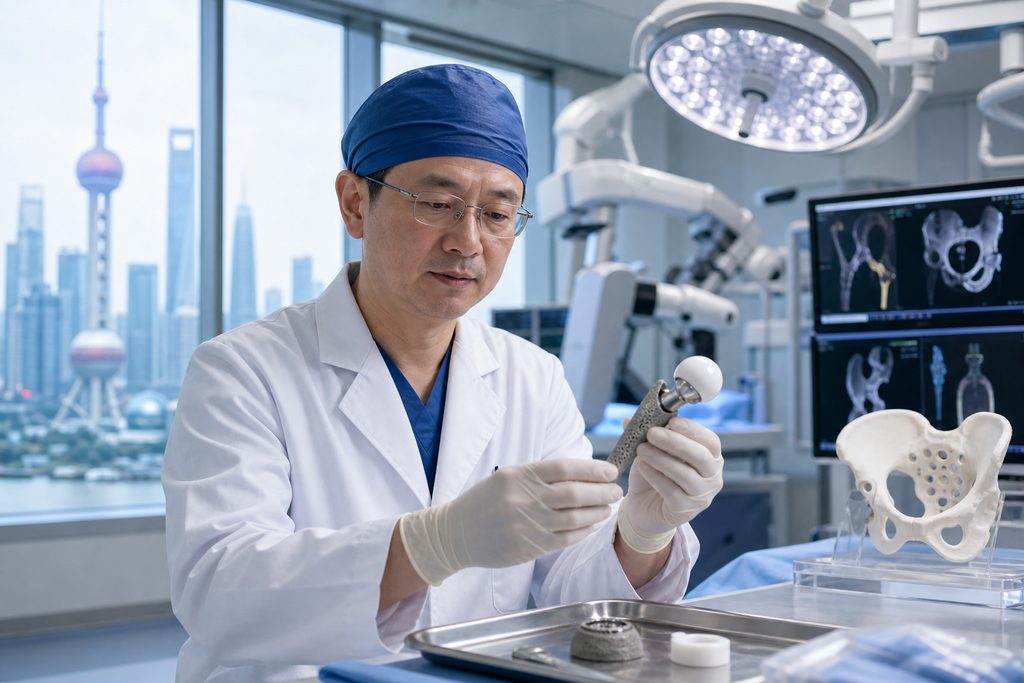
What if your joint pain is so structurally complex that a standard off-the-shelf implant simply will not fit?
That question haunts patients with severe bone defects, failed previous replacements, or unusual anatomy. They get turned away. Told the risk is too high. For them, the name Dr Dai Kerong represents something rare: a surgeon who builds a solution from scratch when no existing one works. Our team at China Medical Services has coordinated care for international patients seeking exactly this — access to custom 3D printed orthopedic technology at Shanghai Ninth People’s Hospital. We are not clinicians. We are the logistical bridge that makes treatment possible.
Key Takeaways
- Dr Dai Kerong leads a team at Shanghai Ninth Hospital that has pioneered 3D printed orthopedic implants for complex joint reconstructions, particularly in cases where standard prosthetics fail or bone loss is severe.
- Custom 3D printed implant costs in Shanghai typically range from $15,000 to $35,000 for the implant and surgery — roughly 60-80% less than comparable procedures in the United States or Western Europe.
- International patients cannot directly book orthopedic surgery at Shanghai Ninth Hospital without first navigating a mandatory in-person consultation, visa requirements, and language barriers that make independent coordination extremely difficult.
- Clinical data from the hospital’s published research indicates implant survival rates above 95% at five years for custom pelvic and complex knee reconstructions, comparable to standard implants in routine cases.
The Problem: When Standard Implants Are Not an Option
Severe bone loss does not announce itself politely. It arrives after failed arthroplasties, tumor resections, trauma, or congenital deformities. Approximately 8% of total hip replacements and 6% of total knee replacements will require revision within ten years. Some of those revisions face a structural nightmare — not enough healthy bone remains to anchor a standard implant.
In the United States, a custom 3D printed orthopedic implant can cost upwards of $80,000 for the device alone. Wait times for design and manufacturing stretch to eight weeks or more. Many orthopedic surgeons in Western countries have limited experience with these custom constructs simply because the case volume is too low.
That is where things get difficult. Patients search for Dr Dai Kerong orthopedic surgeon reviews not out of casual curiosity. They are looking for someone who has done this hundreds of times. They want to know if the technology actually works. They want to understand the real cost. And they need to know if traveling to China for surgery is even feasible.
Who We Are
China Medical Services is not a hospital. We do not provide medical treatment, diagnoses, or clinical recommendations. We are a medical concierge organization that connects international patients with China’s top-tier hospitals. Our database covers 340+ top-ranked hospitals across 37 cities. We handle hospital matching, appointment coordination, bilingual medical companions, visa guidance, and logistical support. We translate your medical records, arrange your consultations, and ensure you understand every step. We never make clinical decisions for you. We make sure you can access the clinical expertise you need without drowning in administrative chaos.
How 3D Printed Orthopedic Implants Actually Work
The term “3D printed implant” sounds futuristic. The reality is grounded in precise engineering and years of clinical data. Here is what the process entails at Shanghai Ninth Hospital.
From CT Scan to Custom Implant: The Design Pipeline
A patient’s CT scan generates a high-resolution 3D model of the affected bone. Engineers and surgeons collaborate to design an implant that matches the patient’s exact anatomy. This is not a generic shape tweaked slightly. It is a bespoke structure with porous surfaces that mimic natural bone trabeculae. The porosity encourages bone ingrowth — the implant literally fuses with the patient’s skeleton over time.
The implant is then printed using electron beam melting or selective laser melting. Titanium alloy powder is fused layer by layer, often at thicknesses of 30 to 50 microns per layer. The result is a device with internal lattice structures that would be impossible to manufacture through traditional casting or machining.
Why This Matters for Complex Revisions
Standard revision implants come in a limited range of sizes and shapes. If a patient’s acetabulum — the hip socket — has been eroded by osteolysis or destroyed by tumor resection, a standard cup simply cannot achieve stable fixation. The surgeon faces a terrible choice: attempt a reconstruction with high failure risk, or decline to operate.
A custom 3D printed implant changes that calculus. The device is designed to contact healthy bone in exactly the right locations. Screw holes are positioned to avoid neurovascular structures. Flanges can extend onto the ilium, ischium, or pubis for additional stability. Patients who had no surgical options suddenly have one.
Dr Dai Kerong and Shanghai Ninth Hospital: A Track Record of Innovation
Shanghai Ninth People’s Hospital, affiliated with Shanghai Jiao Tong University School of Medicine, houses one of China’s most respected orthopedic surgery departments. The hospital is ranked among China’s top institutions for orthopedics in the Fudan University hospital rankings. Its clinical volume is staggering — thousands of joint replacement procedures annually, including complex revisions that most hospitals see only a handful of times per year.
Dr Dai Kerong, an academician of the Chinese Academy of Engineering, has been at the center of this work for decades. His research group has published extensively on custom implant design, biomechanical analysis, and long-term clinical outcomes. When patients search for Dr Dai Kerong orthopedic surgeon reviews, they are tapping into a body of work that includes some of the earliest and largest case series on 3D printed pelvic reconstructions.
The team has reported outcomes on custom hemipelvic replacements, total femoral replacements, and complex knee revisions with massive bone defects. These are procedures that exist at the edge of what is surgically possible. The published data — drawn from the hospital’s own patient cohorts — shows implant survival rates exceeding 95% at five years for custom pelvic constructs. Complication rates, including infection and dislocation, are comparable to those reported for standard revision arthroplasty in high-volume centers globally.
That last point matters. The question is 3D printed knee implant safe comes up in nearly every consultation we facilitate. The answer, based on published evidence, is yes — when performed by an experienced surgical team with proper preoperative planning and infection control protocols. No implant is risk-free. But the safety profile of custom 3D printed devices in experienced hands is well-documented.
What Is the Real Cost of a 3D Printed Orthopedic Implant in Shanghai?
Patients researching 3D printed orthopedic implant cost Shanghai will find numbers that vary significantly. Here is what we have observed across cases we have coordinated.
| Procedure Type | Estimated Cost in Shanghai (USD) | Comparable Cost in US (USD) |
|---|---|---|
| Custom 3D printed hemipelvic reconstruction | $25,000 – $35,000 | $80,000 – $120,000 |
| Custom 3D printed total knee revision | $18,000 – $28,000 | $55,000 – $85,000 |
| Custom 3D printed hip revision with acetabular cage | $20,000 – $30,000 | $65,000 – $95,000 |
| Standard total hip replacement (for comparison) | $8,000 – $15,000 | $35,000 – $50,000 |
These figures include the implant, surgeon fees, hospital stay, and operating room costs. They exclude international travel, accommodation, visa fees, and any post-operative rehabilitation services. Costs vary by hospital and case complexity — the numbers above reflect the range we have seen for international patients treated through the hospital’s international department or VIP channels.
Why is the cost so much lower? Structural economics. Chinese hospital systems operate at enormous scale with lower per-unit labor costs. The 3D printing technology itself is manufactured domestically. The supply chain is shorter. None of this implies lower quality — the clinical outcomes data says otherwise. It simply reflects different cost structures.
How to Determine If You Are a Candidate
Not every patient with joint pain needs a custom implant. Most do not. Standard total hip and knee replacements work extraordinarily well for the vast majority of patients. Custom 3D printed implants are indicated for specific, complex situations.
Patients who should investigate this option include those with severe periprosthetic bone loss after failed arthroplasty, pelvic discontinuity, massive bone defects following tumor resection, congenital skeletal deformities that preclude standard implant fixation, or multiple failed revisions where further bone stock loss makes another standard attempt futile.
The evaluation process begins with imaging. A high-resolution CT scan of the affected joint is essential. The surgical team at Shanghai Ninth Hospital will review the scans, assess bone quality and defect geometry, and determine whether a custom implant is technically feasible. Our role is to facilitate that review — we coordinate the transfer of medical records and imaging, arrange the initial video consultation, and provide translation support throughout.
What You Need to Know Before Going Alone
Attempting to arrange orthopedic surgery at a Chinese public hospital independently is genuinely difficult. These barriers are structural, not arbitrary.
- Visa Requirements: Medical treatment in China requires an S2 visa, specifically annotated for medical purposes. You cannot enter on a tourist visa and receive scheduled surgery. The S2 application requires an invitation letter from the treating hospital — something the hospital will only issue after confirming your consultation and treatment plan. Family members accompanying you also need S2 visas. The process takes weeks, not days.
- Hospital Registration and Payment: Public hospitals in China, including Shanghai Ninth Hospital, operate on a prepayment system. You deposit funds at admission, and charges are deducted daily. International credit cards are not accepted at most public hospital counters. You need a Chinese bank account or a local payment method. The registration system is entirely in Chinese. Queues for specialist consultations begin forming before dawn.
- Language and Clinical Communication: Even senior surgeons who read English-language medical literature may not conduct clinical consultations in English comfortably. Informed consent discussions, surgical planning conversations, and post-operative instructions happen in Mandarin. Misunderstandings about surgical approach, implant choice, or rehabilitation protocols can have serious consequences.
- Post-Operative Follow-Up: Complex reconstructions require weeks of in-country recovery. You will need accommodation near the hospital, regular wound checks, physiotherapy, and imaging follow-ups. Arranging all of this independently in a Chinese-speaking city is exhausting and stressful during recovery.
How We Help You Navigate This
These barriers exist. They are real. And they are exactly what our service is designed to solve.
Before you travel, we coordinate the entire pre-consultation process. We translate your medical records and imaging reports into clinical Chinese. We arrange a video consultation with the orthopedic team so you can discuss your case, understand the proposed surgical plan, and ask questions with a professional interpreter present. We handle the hospital invitation letter for your S2 visa application.
During treatment, a bilingual medical companion accompanies you to every appointment. They handle registration, payment, queue management, and real-time interpretation. You focus on your health. They handle the system. Our companions are trained in medical terminology — they understand what “acetabular component positioning” means and can translate it accurately.
After surgery, we coordinate follow-up appointments, arrange accommodation extensions if needed, and ensure you have translated discharge instructions and imaging reports before you fly home. If you need continued physiotherapy, we connect you with English-speaking rehabilitation providers.
The book orthopedic surgery Shanghai Ninth Hospital process is not a simple online booking. It is a sequence of consultations, evaluations, and administrative steps. We manage that sequence. You get clarity instead of chaos.
The Question of Quality: Comparing Outcomes Across Borders
Can a hospital in Shanghai really match the outcomes of a top Western orthopedic center? The data suggests yes — and in some complex reconstruction categories, exceed them.
Volume drives proficiency. A surgeon who performs 200 pelvic reconstructions annually develops an intuitive grasp of implant positioning, soft tissue balancing, and complication management that a surgeon performing 20 cannot replicate. Shanghai Ninth Hospital’s orthopedic department operates at a scale that creates deep specialization.
The 3D printing technology itself is not inferior to Western equivalents. Chinese manufacturers produce electron beam melting machines and titanium alloy powders that meet international standards. The design software and biomechanical simulation tools are the same platforms used globally. What differs is the cost base and the clinical experience — Chinese surgeons have simply done more of these cases.
When patients ask us best hospital for custom hip implant China, we point to the published evidence. Shanghai Ninth Hospital has one of the largest published case series on custom pelvic and complex joint reconstructions. The implant survival data, complication rates, and functional outcome scores are transparently reported in peer-reviewed literature. We encourage every patient to read those papers. We can help you find them.
Frequently Asked Questions
How do I know if Dr Dai Kerong will personally perform my surgery?
This is the most common question we receive. At a major teaching hospital like Shanghai Ninth Hospital, complex cases are typically managed by an attending-led team. Dr Dai Kerong oversees the department and directs the most challenging reconstructions. Whether he scrubs in personally depends on case complexity and his clinical schedule at the time. During your pre-consultation, this question should be asked directly. We facilitate that conversation with an interpreter present so you get a clear answer, not a polite evasion.
What happens if the custom implant does not fit or fails early?
Preoperative planning includes multiple virtual simulations and fit checks before the implant is manufactured. Intraoperative adjustments are rare but possible. In the unlikely event of early mechanical failure or deep infection, the revision protocol is the same as anywhere else — implant removal, infection control, and staged reconstruction. Shanghai Ninth Hospital has experience managing these complications. Your informed consent discussion before surgery should cover revision risks and the hospital’s complication management protocols. We ensure that conversation happens in a language you fully understand.
How long do I need to stay in Shanghai after surgery?
For a complex custom implant reconstruction, plan for a minimum of four to six weeks in Shanghai. This includes the initial hospitalization (typically one to two weeks), wound checks, suture removal, early mobilization, and the first post-operative imaging follow-up. Some patients stay longer if they want supervised physiotherapy before flying home. Your surgeon will clear you for air travel based on wound healing and thrombosis risk. Long-haul flights too soon after major orthopedic surgery increase deep vein thrombosis risk — do not rush this decision.
Can I get a video consultation before committing to travel?
Yes. We arrange remote consultations with the orthopedic team at Shanghai Ninth Hospital. The consultation includes a review of your imaging, a discussion of surgical options, and an honest assessment of whether a custom implant is appropriate for your case. The cost for a top-specialist video consultation ranges from $500 to $800. If you proceed to in-person treatment, that fee is credited in full toward our coordination service — a one-time credit applied to the coordination fee only, never to hospital treatment charges.
Is the 3D printed implant material safe long-term?
The titanium alloy used — typically Ti-6Al-4V — is the same material used in standard orthopedic implants for decades. It is biocompatible, corrosion-resistant, and well-studied. The porous surface structure promotes bone ingrowth rather than fibrous encapsulation. Published studies with five to ten-year follow-up show no unexpected material-related complications. Allergic reactions to titanium are exceedingly rare compared to nickel or cobalt-chromium alloys.
Your Next Step
A custom 3D printed orthopedic implant is not for everyone. It is for patients who have run out of standard options — those with bone loss so severe that off-the-shelf prosthetics cannot achieve stable fixation. For those patients, the work being done at Shanghai Ninth Hospital under Dr Dai Kerong’s leadership represents a genuine surgical solution where none previously existed.
The path to accessing that solution involves real logistical complexity. Visas, language barriers, hospital registration systems, and post-operative recovery planning are not trivial obstacles. They are solvable with the right support.
If you want to explore whether a custom 3D printed implant is appropriate for your case, start with a conversation. Our team will review your situation, help you understand your options, and connect you with the right clinical expertise in Shanghai. There is no pressure and no commitment. Just honest guidance from people who understand both the possibilities and the practical challenges.
To learn more about how we help international patients access orthopedic care at Shanghai’s top hospitals, or to explore our full network of orthopedic surgery departments across China, reach out for a free initial consultation. We will tell you what is possible — and what is not — with complete transparency.
For more medical information and treatment options in China, visit chinamedservices.com (China Medical Services).
