Can a Damaged Tooth Be Saved? Modern Dentistry Options in China Explained
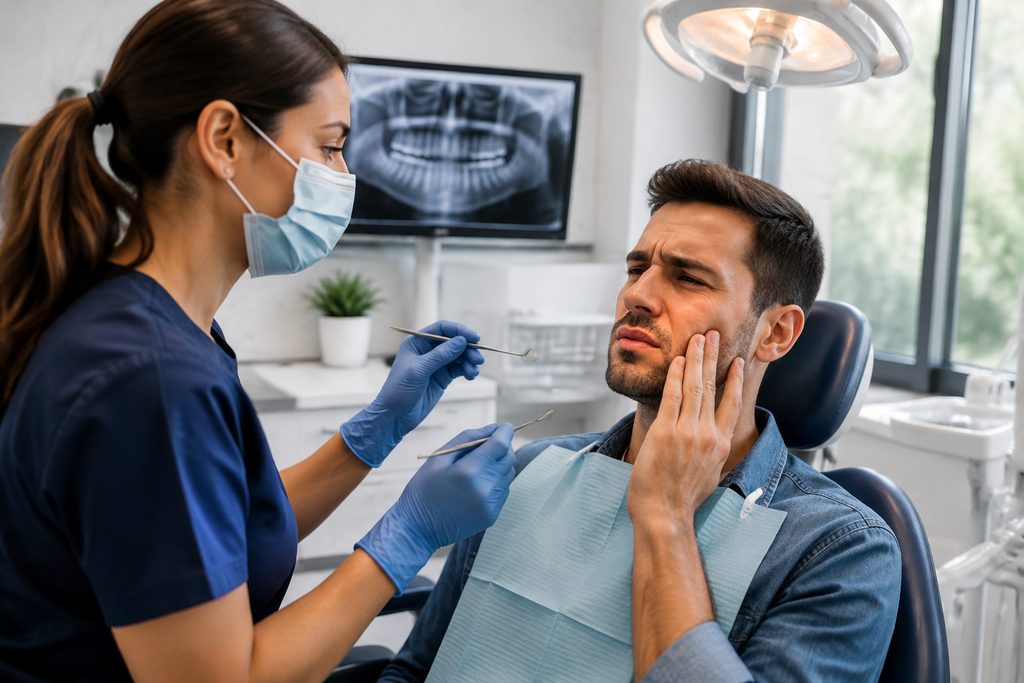
Can a Damaged Tooth Be Saved China: Understanding Your Real Options
A damaged tooth sounds like a one-way ticket to an extraction chair. But here is the reality most patients do not hear until they sit down with a good dentist: the majority of cracked, decayed, or traumatized teeth can be saved. The question is not whether saving is possible. The question is whether the damage has reached the pulp, how much healthy tooth structure remains, and how quickly you act. For international patients weighing costs in the US, UK, or Australia against treatment abroad, the phrase “can a damaged tooth be saved China” reflects a very practical calculation: can I get the same quality of preservation for a fraction of the price?
Dentists assess tooth damage on a spectrum. A small chip in the enamel is cosmetic. A crack that extends into dentin may need a crown. A fracture that exposes the pulp chamber usually requires root canal therapy before any restoration. Only when the root itself splits vertically, or when decay destroys the tooth below the gumline, does extraction become the default. The American Association of Endodontists reports that root canal treatment saves over 15 million teeth each year in the United States alone. The same principles apply in China’s top dental hospitals, where endodontic specialists handle complex cases daily.
What changes in China is the price tag and the access model. A root canal and crown that costs $3,500 to $5,500 in New York or London often runs $400 to $1,200 in Shanghai or Beijing at a top-tier public hospital‘s international department. That gap is not a quality discount. It is a structural difference in how dental care is priced and delivered. Understanding that difference is what this article is about.
Key Takeaways
- Most damaged teeth can be saved with root canal therapy, crowns, or bonding — extraction is a last resort, not the default.
- Root canal treatment at top Chinese dental hospitals costs roughly $200–$600, compared to $1,000–$2,500 in the US for the same procedure.
- China’s leading stomatology hospitals handle extremely high case volumes, which builds clinical experience that directly benefits complex cases.
- Language barriers and different hospital workflows are real challenges — bilingual coordination or a companion service can make the difference between a smooth visit and a stressful one.
The Problem: Dental Costs Are Pushing Patients Toward Unnecessary Extractions
In the United States, the average cost of a root canal on a molar ranges from $1,000 to $1,800, depending on the tooth and the provider. Add a crown — which almost every root-canaled tooth needs — and the total climbs to $2,500 to $5,000. For a patient without dental insurance, or with a plan that caps annual benefits at $1,500, that number is not an inconvenience. It is a decision point. Many patients hear the price and choose extraction instead, reasoning that a $200–$400 pull is cheaper than a $4,000 save. The tooth is gone. The problem is not.
That short-term math ignores what happens after extraction. The gap creates bone loss in the jaw over time. Adjacent teeth drift into the space. Chewing force redistributes unevenly. A single missing molar can cascade into bite problems, TMJ strain, and the eventual need for an implant or bridge — which costs $3,000 to $6,000 per tooth in the US. So the “cheap” extraction becomes the expensive long-term decision. The British Dental Association has documented similar patterns in the UK, where NHS access constraints push patients toward extraction even when endodontic treatment would be clinically preferable.
Now consider the patient who asks, “is it too late to save my tooth?” after months of ignoring a crack or a deep cavity. Sometimes the honest answer is yes. If the fracture extends vertically through the root, or if decay has destroyed the crown below the gumline, no dentist in any country can rebuild it. But far more often, the tooth is savable — and the patient simply never got a clear explanation of what saving it would require. That is where a proper evaluation changes everything.
Why China’s Dental Hospitals Deliver Comparable Results at a Fraction of the Cost
Clinical Volume Builds Pattern Recognition
China’s top stomatology hospitals are not small clinics. They are high-throughput institutions that treat thousands of patients daily. Peking University School and Hospital of Stomatology in Beijing and Shanghai Ninth People’s Hospital — widely regarded as two of China’s leading dental centers — each handle endodontic, restorative, and surgical cases at a scale that dwarfs most Western practices. A senior endodontist at one of these hospitals may complete more root canals in a month than a typical US dentist does in a year. Volume does not guarantee quality on its own. But in dentistry, pattern recognition matters. The dentist who has seen 5,000 cracked teeth knows what a vertical root fracture looks like on a radiograph better than the one who has seen 500.
That experience shows up in outcomes. The success rate for root canal treatment performed by specialists is consistently reported at 90–95% over five years, according to data from the American Association of Endodontists. Chinese endodontic training follows the same international protocols — rotary instrumentation, rubber dam isolation, and microscope-assisted treatment are standard at top institutions. The difference is not technique. It is repetition.
Technology Is Standard, Not Premium
Microscope-assisted endodontics, cone-beam computed tomography (CBCT) imaging, and digital impression systems are routine at China’s top dental hospitals. In many Western practices, these tools are marketed as premium add-ons that justify higher fees. In China’s public hospital stomatology departments, CBCT scans for complex root canal cases cost roughly $30–$80, compared to $200–$500 in the US. The equipment is the same. The pricing model is different.
Why? Chinese public hospitals operate on a high-volume, low-margin model. The hospitals are not profit-maximizing in the way private Western dental chains are. Government subsidies, centralized purchasing, and the sheer scale of patient flow keep per-procedure costs low. A dental crown that requires a lab technician’s time costs less when the lab produces hundreds of crowns per day. Labor costs for skilled technicians and dentists are also structurally lower in China than in the US or Western Europe. None of that means the crown is worse. It means the economics are different.
Cost Advantage Without Quality Compromise
Let us put numbers on the table. A porcelain-fused-to-metal crown in Shanghai at a top public hospital’s international department typically runs $200–$500. An all-ceramic zirconia crown runs $400–$800. In the US, those same crowns cost $800–$1,500 and $1,200–$2,500 respectively. Root canal therapy on a molar in Shanghai runs $200–$600, depending on complexity and whether a microscope is used. In the US, the same procedure costs $1,000–$2,500. These are not promotional figures. They reflect the published price lists of Chinese public hospital international departments, which are available to foreign patients.
The lower cost is not a signal of lower quality. It is a function of labor economics, hospital efficiency, and a healthcare system that prices medical and dental services differently than Western markets. The materials — the gutta-percha, the bonding agents, the ceramic blocks — are the same global brands used in the US and Europe. What differs is what you pay for the dentist’s time and the facility’s overhead.
How Do Dentists Fix a Cracked Tooth: The Decision Tree That Determines If Yours Can Be Saved
When a patient asks “how do dentists fix a cracked tooth,” the answer depends entirely on where the crack stops. Dentists classify cracks into five categories, and each one leads down a different treatment path. Understanding this classification is the single most useful thing you can do before any consultation.
A craze line is a superficial crack in the enamel only. It is cosmetic. No treatment needed beyond possible polishing. A fractured cusp is a crack that breaks off a piece of the chewing surface. The pulp is not involved. A crown or onlay usually fixes it completely. A cracked tooth extends from the chewing surface toward the root. If the crack stops above the gumline and does not reach the pulp, a crown can hold the tooth together. If the crack reaches the pulp, root canal therapy followed by a crown is required. A split tooth is a crack that divides the tooth into two distinct segments. This tooth usually cannot be saved entirely, though sometimes one root can be retained. A vertical root fracture starts in the root and extends upward. This is the one scenario where extraction is almost always necessary.
The diagnostic challenge is that cracks are often invisible on standard X-rays. Dentists use a combination of bite tests, transillumination, dye staining, and CBCT imaging to locate and classify the crack. At top Chinese dental hospitals, CBCT is routinely used for suspected cracks because it provides a 3D view that reveals fractures invisible on 2D radiographs. That diagnostic precision is what separates a tooth that gets saved from one that gets pulled unnecessarily.
Root Canal Cost Shanghai and Crown Prices: What International Patients Actually Pay
If you are considering treatment in China, Shanghai is the most common entry point for international dental patients. The city hosts several top-tier stomatology departments, including Shanghai Ninth People’s Hospital, which is consistently ranked among China’s top dental centers in the Fudan specialty reputation rankings. Here is what you can expect to pay at a public hospital international department or a reputable private international dental clinic in Shanghai.
| Procedure | Shanghai (USD) | United States (USD) | United Kingdom (USD equivalent) |
|---|---|---|---|
| Root canal — incisor | $150–$350 | $600–$1,200 | $400–$900 |
| Root canal — molar | $250–$600 | $1,000–$2,500 | $700–$1,800 |
| Porcelain-fused-to-metal crown | $200–$500 | $800–$1,500 | $600–$1,200 |
| Zirconia all-ceramic crown | $400–$800 | $1,200–$2,500 | $900–$2,000 |
| CBCT scan | $30–$80 | $200–$500 | $150–$400 |
These figures vary by hospital and case complexity. Private international clinics like United Family or Jiahui in Shanghai charge more than public hospital international departments — typically 1.5 to 2 times the public rates — but still less than comparable US private practices. The trade-off is English-speaking staff throughout, direct insurance billing, and a Western-style clinic environment. Public hospital international departments offer lower prices and access to the same senior specialists, but the administrative experience is more Chinese in structure, even when English interpretation is available.
The phrase “dental crown price abroad” captures what many patients are really after: a way to compare the total cost of treatment plus travel against staying home. For a single root canal and crown, the savings in China typically range from $1,500 to $4,000 compared to US prices. For multiple teeth, the savings multiply. That math is what makes dental tourism to China a rational financial decision for uninsured or underinsured patients — even after factoring in flights and accommodation.
Book Emergency Dental Treatment China: What the Process Actually Looks Like
Dental emergencies do not wait for convenient timing. A cracked tooth that exposes the pulp can become infected within days. An abscess can form. Pain escalates. If you are already in China or planning to arrive soon, understanding how emergency dental treatment works is critical. The phrase “book emergency dental treatment China” reflects a real need: patients want to know if they can get seen quickly.
The honest answer is that it depends on where you go. Public hospital stomatology departments in China do not operate on an appointment-only model for emergencies. Most major hospitals maintain an emergency dental clinic that accepts walk-in patients during designated hours. You register, pay a small fee, and wait to be seen. The wait can be hours, especially at peak times. But you will be seen the same day for true emergencies — severe pain, trauma, swelling, or uncontrolled bleeding. That is the standard in China’s public system.
Private international clinics work differently. You can book an appointment by phone or through the clinic’s English-language website or WeChat account, often for the same day or next day. The consultation fee is higher — typically $50–$150 — but the experience is closer to what a Western patient expects: shorter waits, English-speaking staff, and a more familiar clinical environment. For non-emergency restorative work like crowns or root canals, appointments at public hospital international departments can usually be scheduled within days, not weeks.
One structural difference to understand: in China’s public hospitals, you cannot book a specific senior specialist through a general appointment line. You register with the department, and the hospital assigns you to an available doctor. If you want a specific named specialist, you go through the hospital’s international or VIP channel, which costs more — typically 1.5 to 2 times the standard international department rate. This is not a bribe or an access fee. It is the hospital’s official premium service channel, and it is how foreign patients who want a particular endodontist or prosthodontist arrange that.
Practical Considerations: Records, Visas, and Follow-Up for Dental Treatment in China
If you decide to pursue treatment in China, the logistics are manageable but require planning. Bring every dental record you have: previous X-rays, CBCT scans, treatment notes, and a list of medications. Digital copies on a USB drive or cloud storage are easiest. Chinese dentists will want to see the full picture before recommending treatment, and having your records avoids redundant imaging and speeds up the consultation.
For visa purposes, medical treatment in China falls under the S2 visa category, which covers short-term private affairs including medical visits. The S2 visa is typically issued for stays up to 180 days. The Chinese embassy or consulate in your home country will require supporting documents, usually including an invitation letter or treatment confirmation from the hospital or clinic. This is not a guarantee of approval, and requirements vary by country and change over time, so check with the nearest Chinese diplomatic mission before booking flights. If your treatment plan requires multiple visits over more than 180 days, an S1 visa may apply. A companion traveling with you applies for the same S2 category.
Payment at Chinese hospitals is typically required upfront. Public hospital international departments accept cash, Chinese bank cards, and major international credit cards, though card acceptance can be inconsistent. Private international clinics are more reliable for card payments and often handle direct insurance billing with major international insurers. If you have dental insurance, check whether your plan covers treatment abroad before you commit. Most US dental insurance plans do not cover overseas treatment, but some international health plans do.
Follow-up after you return home is another consideration. A crown placed in China should last 10–15 years with proper care, but if it chips or loosens, your home dentist will need to address it. Most Western dentists will work on crowns placed abroad, though they may note that they cannot guarantee another dentist’s work. Keep your treatment records and the lab prescription for the crown. That documentation makes follow-up care smoother.
Language is the final practical hurdle. Public hospital international departments have some English-speaking staff, but the level varies. Registration desks, radiology, and pharmacy counters often operate in Chinese only. A bilingual medical companion — someone who handles registration, translates during consultations, and guides you through the hospital’s physical layout — costs from $300 per day through services like China Medical Services’ patient coordination. For a multi-day treatment sequence, that cost is often worth it in saved time and reduced stress.
Frequently Asked Questions
You cannot know for certain without a clinical exam and imaging. But there are signs. If the pain is sharp when you bite down and disappears when you release, the crack may be shallow and savable with a crown. If you have constant throbbing pain, heat sensitivity that lingers, or swelling, the pulp is likely involved — which means root canal therapy, not extraction, is the first-line treatment. A tooth that is completely painless but visibly broken may have a dead pulp and still be savable with root canal treatment. The only definitive answer comes from a dentist who can test the tooth and see a radiograph.
Is it ever actually too late to save a tooth?
Yes. If the crack extends vertically through the root, if decay has destroyed the tooth structure below the gumline, or if the tooth is so mobile that it moves in all directions, extraction is usually the only option. The key is timing. A cracked tooth caught early — before the crack reaches the pulp or extends below the gumline — has a high probability of being saved. Waiting months turns a savable crack into a split tooth. That is why dentists
For more medical information and treatment options in China, visit chinamedservices.com (China Medical Services).
