Dental Implant Healing Time: What to Expect and How China Cuts Costs
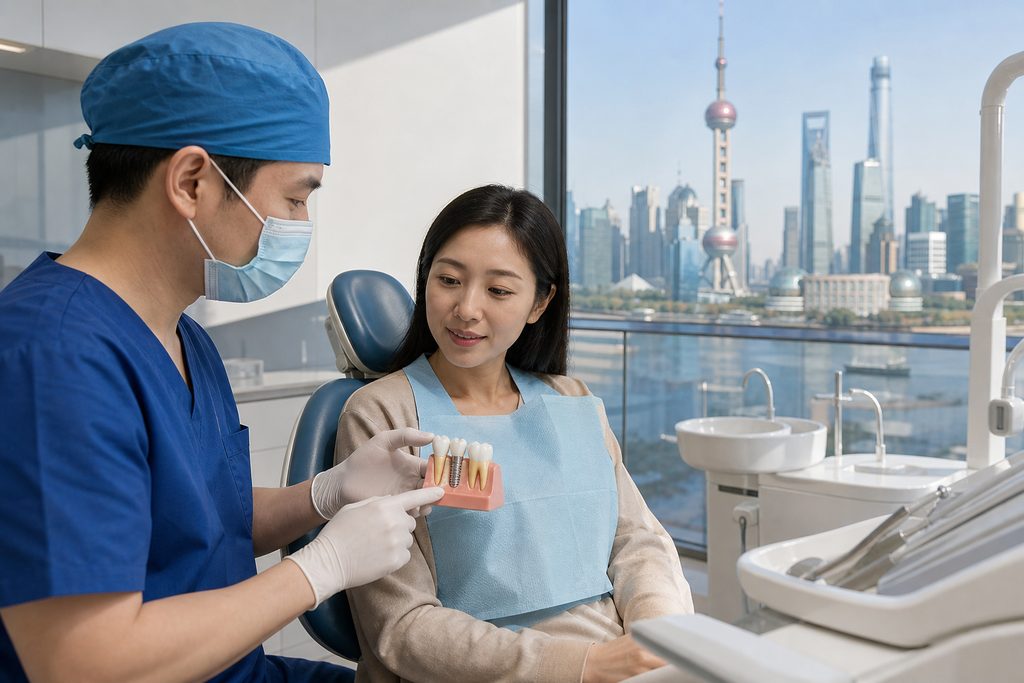
According to the American Academy of Implant Dentistry, more than 3 million Americans currently have dental implants, and that number grows by roughly 500,000 every year. Yet the same data reveals a stubborn gap: a single implant in the United States typically runs between $3,000 and $6,000 — before bone grafting or a sinus lift. That price tag pushes many patients to delay treatment or seek alternatives abroad. The dental implant cost China routinely lands between $800 and $2,500 per implant, depending on the implant system, hospital tier, and whether bone augmentation is needed. But cost is only half the story. Healing time, crown placement timing, and the logistics of flying home all shape the real decision.
Key Takeaways
- Osseointegration — the biological fusion of implant and jawbone — takes 3 to 6 months in most healthy patients before a permanent crown can be placed.
- The dental implant cost China averages 60–80% below US pricing for comparable implant systems, with top-tier hospitals in Shanghai and Beijing leading in volume.
- Healing is not linear: the first 2 weeks after surgery carry the highest risk of complications, while months 2–6 are mostly symptom-free waiting.
- Flying after dental implant surgery is generally safe after 24–48 hours, but cabin pressure changes can aggravate sinus-lift cases — timing matters.
The Problem: High Costs and Confusing Timelines
The average American patient faces a dilemma that mixes biology with finance. A 2023 survey by the Health Policy Institute found that only 12% of US adults with missing teeth received an implant — cost was the most cited barrier. Meanwhile, the clinical reality is fixed: bone cells do not rush. Whether you pay $5,000 in New York or $1,200 in Shanghai, your jawbone needs the same biological clock to lock the titanium post in place.
What frustrates patients most is the mismatch between expectation and reality. You read “same-day teeth” marketing and assume you will fly home with a finished smile. Then the surgeon explains that the immediate crown is temporary, the final one comes months later, and your insurance may not cover any of it. That confusion leads to bad planning — booking return flights too early, skipping follow-up scans, or choosing the cheapest implant system without understanding how it affects healing.
Why Dental Implant Cost China Changes the Equation
The structural reasons behind China’s pricing advantage are not mysterious. They are measurable. Labor costs for dental surgeons and nursing staff are lower than in Western Europe or North America, but the training pathway is equally rigorous at top institutions. Hospital efficiency plays a bigger role: high-volume implant centers in Shanghai and Beijing place thousands of implants annually, which drives down per-unit overhead. And the implant hardware itself — Straumann, Nobel Biocare, Osstem, Dentium — is the same global inventory used in London or Los Angeles.
Clinical Volume Builds Procedural Speed
A senior implantologist at a major Shanghai teaching hospital may place 300 to 500 implants per year. That repetition compresses surgical time — often under 30 minutes for a single straightforward implant — and reduces the trauma that prolongs healing. Less surgical time means less post-operative swelling, which means a smoother osseointegration window. Western benchmarks vary widely, but a typical US general dentist placing implants part-time might do 50 to 100 per year. Volume is not everything, but for a procedure where surgical precision directly affects healing time, it matters.
Same Hardware, Different Price Structure
Patients often assume a lower price means a knockoff implant. That is the wrong mental model. The premium Swiss and Swedish implant systems used in top Chinese hospitals are identical to those in Western clinics. The difference is the service layer: facility fees, anesthesia, and the professional fee for the surgeon. In the US, those three components can triple the hardware cost. In China, they add a fraction. That is why a Straumann implant that costs $4,800 in Chicago might cost $1,600 in Shanghai — same titanium screw, same abutment, same crown material.
What the Package Actually Includes
When comparing dental implant package China price quotes, read the fine print. A transparent package should include the implant fixture, the abutment, the crown, the surgical fee, and at least one post-operative check. Bone grafting, sinus lifts, and CBCT scans are usually separate line items. Some private international clinics in China bundle everything into a single quote, which simplifies budgeting but may cost more than a public hospital’s à la carte pricing. Neither model is inherently better — you are choosing between predictability and flexibility.
Dental Implant Healing Time Before Crown: A Realistic Timeline
The question behind the search — how long does a dental implant take to heal — deserves a precise answer, not a range that hides the truth. Here is what actually happens, week by week, for a standard single-tooth implant without major bone grafting.
Days 1–3: The Surgical Phase
The implant is placed under local anesthesia. You will have swelling, mild bleeding, and discomfort manageable with standard pain relievers. No chewing on that side. Ice packs help. This is the window where you must avoid smoking — nicotine constricts blood vessels and is one of the strongest predictors of early implant failure.
Days 4–14: Soft Tissue Healing
The gum tissue closes over or around the healing abutment. Sutures dissolve or are removed around day 7–10. By the end of week two, most patients feel nearly normal. But here is the catch: feeling fine does not mean the implant is ready. The bone-level work has barely begun.
Weeks 3–12: Osseointegration
This is the silent phase. Osteoblasts — bone-forming cells — migrate to the titanium surface and begin locking the implant in place. No pain, no visible change. A 2019 systematic review in the International Journal of Oral & Maxillofacial Implants found that implants with moderately rough surfaces achieve sufficient osseointegration for loading at 6–8 weeks in dense mandibular bone, but maxillary (upper jaw) sites often need 12–16 weeks due to softer bone.
Months 3–6: Crown Placement
Once a stability check and CBCT confirm integration, the final crown is fabricated and seated. The typical dental implant healing time before crown is 3 months for lower jaw implants and 4–6 months for upper jaw implants. Immediate-loading protocols exist — where a temporary crown is placed the same day — but these carry higher failure risk and are generally reserved for cases with excellent primary stability.
Planning tip: If you travel to China for implant surgery, schedule a minimum 10–14 day stay for the surgical phase and post-op check. The crown can be placed 3–6 months later, either by returning to China or by having your local dentist complete the restoration using the implant specifications provided by the Chinese surgeon.
Can I Fly After Dental Implant Surgery? Timing Your Return
This question comes up constantly, and for good reason. You are planning international travel around a surgical procedure. The short answer: wait at least 24–48 hours before flying after a routine single implant. That allows the initial clot to stabilize and lets you confirm there is no excessive bleeding or unexpected swelling.
But there are two specific flight risks to understand. First, cabin pressure changes at altitude can expand trapped air. If you had a sinus lift — a bone graft in the upper jaw near the sinus cavity — the pressure differential can cause discomfort or, in rare cases, displace graft material. Most oral surgeons recommend waiting 5–7 days after a sinus lift before flying. Second, long-haul flights dehydrate you, which slows soft tissue healing. Drink more water than usual and avoid alcohol on the flight back.
For patients flying from Europe, the Middle East, or North America to Shanghai or Beijing, the return flight is 8–14 hours. That is manageable 48 hours post-surgery for a straightforward case. If your procedure involved multiple implants, a sinus lift, or significant bone grafting, extend your stay to 7–10 days and get a post-op clearance from the surgeon before boarding.
Choosing a Provider: What Separates a Good Implant Center from a Risky One
China’s dental implant market is broad — from world-class teaching hospitals to small private clinics with aggressive marketing. The best dental implant clinic Shanghai search yields dozens of options, but the right choice depends on more than a polished website. Here is how to evaluate any provider.
First, verify the implant system. A reputable clinic will tell you the exact brand and model — Straumann, Nobel Biocare, Osstem, Dentium — not just “a premium implant.” Second, ask about the surgeon’s annual implant volume. A clinician placing 300+ implants per year is operating in a different league than someone doing 30. Third, confirm the diagnostic protocol. A CBCT scan before surgery is non-negotiable; it maps bone density, nerve position, and sinus anatomy. If a clinic quotes you a price without a CBCT, walk away.
Public Hospital vs. Private International Clinic
Public teaching hospitals in Shanghai — such as Shanghai Ninth People’s Hospital, which runs one of the largest oral and maxillofacial departments in Asia — offer top-tier surgical expertise at the lowest prices. But the experience is not built for foreigners: registration is in Chinese, queues are long, and follow-up communication is difficult without local help. Private international clinics like United Family or Jiahui offer English-speaking staff, direct insurance billing, and same-week appointments, at roughly 1.5–2 times the public hospital price. For a procedure that requires multiple visits, the convenience premium may be worth it.
| Cost Component | US Average (USD) | China Public Hospital (USD) | China Private International (USD) |
|---|---|---|---|
| Single implant (fixture + abutment + crown) | $3,000–$6,000 | $800–$1,800 | $1,500–$2,500 |
| CBCT scan | $200–$500 | $50–$120 | $80–$150 |
| Bone graft (per site) | $600–$1,200 | $150–$400 | $250–$500 |
| Sinus lift (per side) | $1,500–$3,000 | $400–$900 | $600–$1,200 |
These figures vary by hospital and case complexity, but the pattern holds across the board: China’s pricing advantage widens as procedures become more involved. A full-arch restoration that costs $25,000–$40,000 in the US can be completed for $8,000–$15,000 in China, even at private international facilities.
Practical Considerations: Records, Payment, and Follow-Up
If you are serious about pursuing dental implants in China, the logistics are manageable but require planning. You will need recent dental X-rays or a CBCT scan, a list of current medications, and ideally a letter from your home dentist summarizing your dental history. Most Chinese hospitals will take their own CBCT on arrival, but having prior imaging helps the surgeon prepare.
For the visa, foreign nationals traveling to China for medical treatment generally apply for an S2 visa, which covers short-term private affairs including medical visits. The hospital or clinic can provide an invitation letter confirming your appointment, which strengthens the application. Requirements change, so check with the nearest Chinese embassy or consulate before booking flights. Family members accompanying you would also apply for S2 visas.
Payment is straightforward: public hospitals require prepayment for the surgical package, and most accept international credit cards at their international patient departments. Private international clinics often accept direct insurance billing — worth confirming with your insurer before you travel. If you have dental insurance, ask about out-of-network reimbursement for treatment abroad; some policies cover a percentage of documented costs.
Follow-up after returning home is the piece most patients under-plan. Your local dentist can handle routine checks, but they will need the surgical records and implant specifications from your Chinese surgeon. Request a complete discharge summary in English before you leave — including implant brand, dimensions, torque values, and recommended crown timing. That single document saves your home dentist hours of guesswork.
For patients exploring options beyond dental care, our database of top-ranked Chinese hospitals covers 340+ institutions across 37 cities, including several with internationally recognized dental and maxillofacial departments. If you are comparing costs across specialties, the specialty rankings by department offer a useful starting point. And for a deeper look at how to plan treatment in China, the China Medical Services guide walks through the full process from first inquiry to follow-up care.
Frequently Asked Questions
Complete healing — meaning the implant is fully integrated and the final crown is functioning normally — typically takes 4 to 6 months for lower jaw implants and 5 to 8 months for upper jaw implants. The surgical site itself feels normal within 2 weeks, but the bone-level integration continues invisibly for months. Rushing the crown placement is the most common cause of early implant failure.
Yes, provided you choose a reputable provider. Top-tier public teaching hospitals and JCI-accredited private clinics in Shanghai, Beijing, and Guangzhou follow international sterilization and surgical protocols. The key is verification: confirm the implant system brand, ask about the surgeon’s annual implant volume, and insist on a CBCT scan before surgery. Language barriers at public hospitals are real, which is why many international patients opt for private clinics with English-speaking staff or use a bilingual medical companion.
Early implant failure — before crown placement — occurs in roughly 2–5% of cases, usually due to infection, insufficient bone, or smoking. If failure happens after you leave China, your home dentist can remove the failed implant, but you will need to negotiate with the Chinese provider about replacement. Most reputable clinics offer a warranty period on the implant fixture itself, typically 5–10 years from the manufacturer. Ask about the clinic’s specific failure policy in writing before surgery. The implant hardware warranty is separate from the surgical fee, which is generally not refundable.
Yes, and this is where the trip economics get interesting. If you are already traveling to China for a medical procedure or comprehensive health checkup, adding a dental implant consultation costs little extra in time or logistics. Many patients schedule the implant surgery during the same trip as other planned care, which spreads the fixed travel costs across multiple services. Coordinate the timing carefully — dental surgery should not be scheduled immediately before a major medical procedure that requires general anesthesia.
Your Next Step
Dental implants are a long-term investment in function and confidence, and the healing timeline is non-negotiable biology. What changes is the price, the surgical volume behind the provider, and the quality of the planning. Our team at China Medical Services helps international patients navigate hospital selection, appointment coordination, and bilingual support throughout the process. We are not a hospital and we do not provide diagnoses — we connect you with the right specialists and handle the logistics. If you are weighing options, start with a conversation about your specific case.
For more medical information and treatment options in China, visit chinamedservices.com (China Medical Services).
