Dental Implant Healing Time in China: What to Expect With Our Support
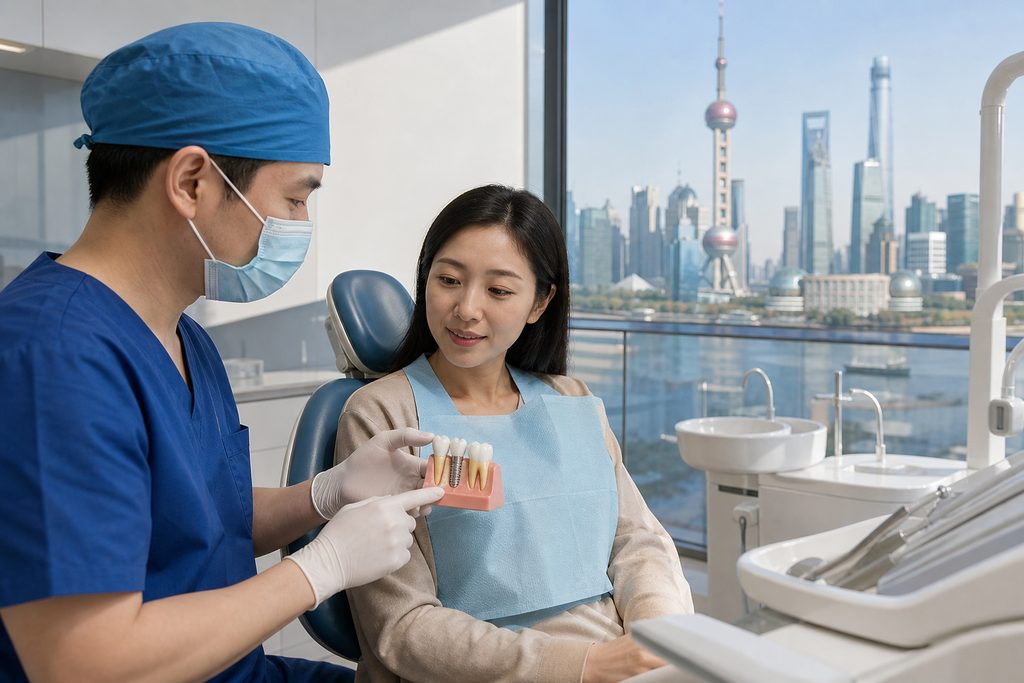
When 54-year-old Sarah from Manchester lost her lower right molar to a failed root canal, her UK dentist quoted £2,400 for a single implant with a six-month wait just for the surgical slot. She started searching for alternatives. That search led her to questions about dental implant cost China, healing timelines, and whether flying home mid-treatment was even safe. She is not alone. Every month, dozens of international patients contact our team with the same set of questions: How long does the healing actually take? Can I do this in one trip or two? What happens if something goes wrong after I fly home?
This article answers those questions directly, with realistic timelines, stage-by-stage healing expectations, and the logistical realities of traveling to China for dental implant treatment. We are not a dental clinic. We are a medical coordination service that connects international patients with accredited hospitals and dental departments across China. Our role is to help you understand the process before you commit.
Key Takeaways
- Complete osseointegration for a dental implant takes 3 to 6 months in the lower jaw and 4 to 6 months in the upper jaw, though temporary restoration can often be placed sooner.
- Dental implant cost China typically ranges from $800 to $2,500 per implant including abutment and crown, compared to $3,000 to $6,000 in the United States or £2,000 to £3,500 in the UK.
- Language barriers in Chinese public hospitals are real. Without bilingual support, navigating registration, imaging, and post-operative instructions is extremely difficult.
- Most international patients require two trips: one for implant placement, one for final crown delivery approximately 3 to 6 months later.
The Problem: Long Waits and High Costs at Home
The global dental implant market has grown steadily, but access remains uneven. In the United Kingdom, the National Health Service provides implants only in narrowly defined clinical circumstances. Most patients pay privately. A single implant in London averages £2,400, with complex cases involving bone grafts exceeding £4,000. Wait times for specialist oral surgeons in regional areas can stretch past three months.
In the United States, the American Academy of Implant Dentistry reports that over 5 million implants are placed annually, yet the average cost per implant hovers between $3,000 and $4,800. Patients without dental insurance face the full burden out of pocket. In Canada and Australia, similar patterns hold: high fees, long surgical queues, and limited insurance coverage for what is classified as an elective procedure.
That financial pressure pushes patients to look abroad. Dental tourism destinations like Thailand, Hungary, and Mexico have built entire industries around this demand. China represents a newer but increasingly credible option, particularly for patients who value access to hospitals with high surgical volumes and modern equipment. But the question is not just about price. It is about healing time, and whether the logistics of traveling to China fit the biological timeline of osseointegration.
Why China Delivers Results for Dental Implant Patients
Surgical Volume and Clinical Experience
Chinese dental hospitals operate at a scale that is difficult to match elsewhere. A single oral surgery department at a major teaching hospital in Shanghai or Beijing may place several hundred implants per month. That repetition builds procedural fluency. The implant systems used — Straumann, Nobel Biocare, Osstem, Dentium — are the same brands found in Western clinics. What differs is the frequency with which Chinese surgeons use them.
This matters for healing. Implant success depends heavily on surgical precision, proper flap management, and sterile technique. High-volume surgeons simply encounter more anatomical variations. They see more thin ridges, more narrow sinuses, more difficult angulations. That experience translates into fewer surgical complications and more predictable healing for patients.
Technology at Competitive Price Points
Many top-tier Chinese dental departments now use cone-beam computed tomography (CBCT) as a standard pre-operative imaging step. CBCT allows three-dimensional planning of implant position, angle, and depth before the first incision. Some hospitals also offer computer-guided surgery, where a surgical stent printed from the CBCT data directs the drill precisely. The same technology in a private US clinic adds $500 to $1,000 to the bill. In China, it is often included in the package price.
Immediate-loading protocols — where a temporary crown is placed on the same day as implant placement — are also increasingly common in Chinese hospitals, provided bone quality supports it. This does not shorten the biological healing time. But it does mean you may leave China with a functional, aesthetic temporary tooth rather than a gap.
Understanding the Cost Structure
The most common question we receive is about dental implant cost China. Here is a realistic breakdown based on current market rates at accredited public hospital international departments and private dental clinics in major cities, as of 2026:
| Component | China (USD) | United States (USD) | United Kingdom (GBP) |
|---|---|---|---|
| Implant fixture (Korean brand, e.g., Osstem) | $400–$800 | $1,200–$2,000 | £900–£1,500 |
| Implant fixture (Swiss brand, e.g., Straumann) | $800–$1,500 | $2,000–$3,500 | £1,500–£2,500 |
| Abutment + porcelain crown | $300–$800 | $1,000–$2,000 | £700–£1,200 |
| Bone graft (if needed, per site) | $200–$600 | $800–$2,500 | £500–£1,500 |
| CBCT imaging + surgical guide | $100–$300 | $500–$1,000 | £300–£600 |
| Total, single implant (no graft) | $800–$2,500 | $3,000–$6,000 | £2,000–£3,500 |
Prices vary by hospital tier, city, implant brand, and case complexity. A full-mouth restoration involving multiple implants and bone grafting will naturally run higher. But the structural cost advantage holds: labor costs, facility overhead, and implant component pricing in China remain lower than in Western markets, while the hardware itself is identical.
Dental Implant Healing Stages Timeline China: What Actually Happens Week by Week
Healing is biological, not geographical. The timeline in China is the same as anywhere else. But understanding the stages helps you plan your travel around the biology, not against it.
Days 1–7: Surgical Healing
The first week is about soft tissue closure. You will have sutures over the implant site. Swelling peaks around day 3, then subsides. Pain is typically manageable with standard analgesics. Most patients can return to normal daily activities within 48 to 72 hours. You should not fly on the same day as surgery. Most oral surgeons recommend waiting at least 48 hours before air travel to reduce the risk of bleeding and discomfort from cabin pressure changes.
Weeks 2–6: Early Osseointegration Begins
The sutures come out at day 7 to 10. The gum tissue heals over the implant. Beneath the surface, bone cells begin migrating toward the titanium surface. This is the critical phase where the implant must remain undisturbed. Chewing forces on the implant site should be avoided. Soft foods are still recommended. You can fly home during this window — many patients do, once the surgeon confirms the site is stable.
Months 2–4: Osseointegration Consolidates
Bone remodeling continues. The implant surface fuses with surrounding bone at a microscopic level. No visible changes occur in your mouth, which can be frustrating. But this quiet phase is what determines long-term success. A stable implant at 4 months has a high probability of long-term survival. Some patients receive a temporary crown during this period if the implant was placed with sufficient primary stability.
Months 4–6: Final Restoration
This is when you return to China for the second trip. The surgeon exposes the implant head if it was buried, takes impressions, and places the final abutment and crown. This visit typically takes 5 to 10 days, depending on whether the crown is fabricated in-house or at an external dental laboratory. If you opted for a same-day temporary crown on your first trip, this second visit replaces it with the permanent restoration.
Practical tip: Ask your surgeon during the first consultation whether a same-day temporary crown is feasible for your case. It depends on bone density and implant stability at placement. If yes, you leave China with a functional tooth and return months later only for the permanent crown.
Can I Fly After Dental Implant Surgery China? Travel Logistics That Matter
The short answer: yes, but not immediately. Most oral surgeons advise waiting 48 to 72 hours after implant placement before flying. The primary risks are post-operative bleeding and swelling, which cabin pressure can exacerbate. If your surgery involved a sinus lift or extensive bone grafting, your surgeon may recommend waiting 5 to 7 days.
Plan your first trip to China for at least 10 to 14 days. This allows time for the initial consultation, CBCT imaging, the surgical procedure, and a follow-up appointment before departure. Rushing this timeline is the most common mistake we see. Patients who book a 5-day trip and expect surgery on day 2 are often disappointed. Hospitals need time to review imaging, confirm the treatment plan, and schedule the procedure.
For the second trip, 5 to 10 days is usually sufficient. The crown fabrication process, whether digital or conventional, takes several days. Some clinics offer expedited same-day crown milling using CEREC-type technology, but this is not universal. Confirm with your specific hospital before booking flights.
Practical Considerations: Documentation, Visa, and Payment for Dental Treatment in China
If you are considering dental implant treatment in China, you need the S2 visa. This is the short-stay visa category used for private affairs, including medical treatment. It is not the M visa, which is reserved for commercial and trade activities. Your application should include an invitation letter or medical appointment confirmation from the hospital or clinic you plan to visit. Our team can help you obtain the correct supporting documents from the hospital’s international department.
Payment is typically required upfront at public hospitals, before the procedure is performed. Most international departments accept major credit cards and bank transfers. Private international dental clinics in cities like Shanghai and Beijing may also accept direct insurance billing if you have a policy that covers overseas dental treatment. Check with your insurer before traveling. Keep all receipts, itemized invoices, and your treatment plan — these are needed for reimbursement claims.
Language is the practical barrier most patients underestimate. Public hospital dental departments in China operate at high volume. Registration desks, imaging departments, and pharmacy counters rarely have English-speaking staff. A bilingual medical companion can handle registration, translate surgical instructions, and ensure you understand post-operative care before you leave the hospital. This is not a luxury. It is the difference between a smooth experience and a confusing, stressful one.
After you return home, follow-up is your responsibility. Your local dentist can monitor the implant site and take periodic X-rays. Any complications — infection, mobility, persistent pain — require prompt attention. Chinese hospitals will provide written post-operative instructions in English if requested, which helps your home dentist understand what was done and what to watch for.
Frequently Asked Questions
The healing timeline in China matches global standards: 3 to 6 months for the lower jaw, 4 to 6 months for the upper jaw. This is the time required for osseointegration — the biological fusion of implant and bone. Temporary restorations may be placed sooner, but the permanent crown should wait until the implant is fully stable.
In Shanghai, a single implant at a reputable private dental clinic or public hospital international department typically ranges from $1,000 to $2,500, depending on implant brand and case complexity. Korean brands like Osstem sit at the lower end. Swiss brands like Straumann sit at the higher end. Always confirm whether the quoted price includes the abutment, crown, imaging, and follow-up visits.
You can arrange the initial consultation and treatment plan remotely through a coordination service like ours. However, surgery cannot be booked sight unseen. The treating surgeon must review your CBCT imaging and conduct a clinical examination before confirming the treatment plan. A remote written second opinion based on your existing X-rays and records is possible, but a definitive surgical date requires an in-person evaluation.
Implant failure is rare — success rates exceed 95% in healthy patients — but it does happen. Early failure usually occurs within the first few months and presents as mobility or persistent discomfort. If this happens, contact the treating hospital immediately. Some hospitals offer revision policies, but these vary. Travel insurance that covers medical complications abroad is strongly recommended. Your home dentist can also assess the site and communicate with the Chinese hospital on your behalf.
At accredited hospitals and established private clinics, yes. The implant systems, sterilization protocols, and surgical techniques are the same as those used in Western countries. The key is choosing a provider with verifiable credentials and high surgical volume. Our database covers 340+ top-ranked hospitals across 37 cities, including dental departments at major teaching hospitals in Shanghai and Beijing. We help you identify options, not guarantee outcomes.
Your Next Step
Dental implant treatment in China is a significant commitment of time, money, and trust. The healing timeline is fixed by biology, not geography. What China offers is access to high-volume surgical experience, modern technology, and dental implant cost China pricing that can be 50% to 70% lower than Western benchmarks. What it demands is careful planning, realistic expectations, and reliable on-the-ground support.
We are China Medical Services, a coordination service connecting international patients with accredited Chinese hospitals. We are not a dental clinic and do not provide diagnoses or treatment. If you are exploring dental implant options in China, start with a free consultation. We will help you understand the process, identify suitable hospitals, and plan a timeline that respects both your schedule and your healing.
For more medical information and treatment options in China, visit chinamedservices.com (China Medical Services).
