Dental Implants in China: Complete Cost, Safety & Hospital Matching Guide
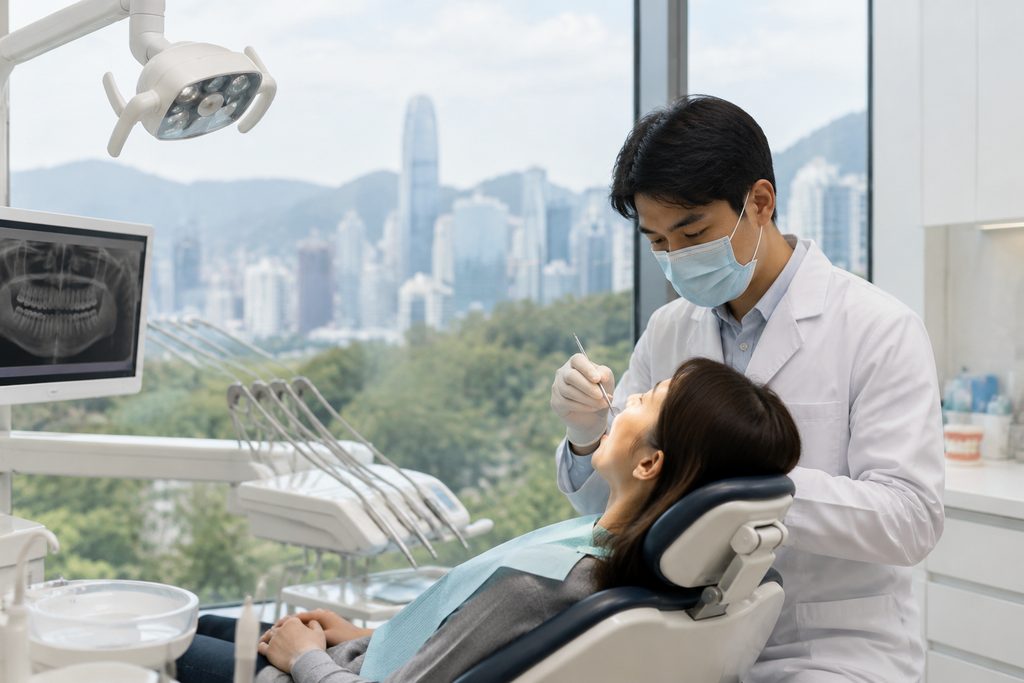
When 42-year-old Michael from Seattle sat in his dentist’s chair, the quote hit him like a punch. $28,000 for a full-mouth restoration. Four implants, bone grafting, and a six-month wait. His insurance would cover exactly $1,500. The rest? Out of pocket. He started Googling. He found forums where patients talked about flying to Bangkok, to Budapest, to Shanghai. The numbers they quoted were a fraction of what he had been told. But the questions piled up faster than the answers: Is it safe? Which clinic? What if something goes wrong? Who handles the language barrier when you are discussing something as permanent as teeth screwed into your jawbone?
Michael’s situation is not unusual. Approximately 178 million Americans are missing at least one tooth, and 40 million are missing all of them, according to the American College of Prosthodontists. The financial barrier to care in Western countries has turned dental tourism into a $5.8 billion global industry. China sits at an interesting intersection in that market. It has the clinical volume, the technology, and the price advantage. But it also has a reputation for opacity — hard to navigate, harder to verify. That gap between opportunity and trust is exactly where our work begins.
Key Takeaways
- A single dental implant in China costs $800–$1,800 all-inclusive, compared to $3,000–$6,000 in the US — the structural reasons for this gap are real and measurable.
- China’s top dental hospitals handle implant volumes that dwarf most Western clinics, and surgical repetition is the single strongest predictor of complication-free outcomes.
- The biggest risk is not clinical quality — it is choosing the wrong clinic. Without local knowledge and language fluency, verifying credentials is nearly impossible.
- A companion service does not treat you. It ensures you are matched with a verified hospital, that your records are translated accurately, and that someone is physically beside you through every appointment.
The Problem: Dental Care Costs Are Breaking People — And Insurance Is Not Catching Up
Dental insurance in the United States operates more like a discount coupon than actual coverage. Most plans cap annual benefits at $1,000–$2,000. A single implant blows through that ceiling before the abutment is even placed. The result is a brutal arithmetic: you need the care, you cannot afford it, and waiting makes the bone loss worse. Bone resorption begins within months of tooth loss. Delay too long, and you will need a sinus lift or ridge augmentation — procedures that add thousands more to the bill.
This is not a niche problem. The global dental implants market was valued at $4.6 billion in 2023 and is projected to grow steadily. But the growth is not evenly distributed. In North America and Western Europe, prices have stayed stubbornly high, driven by labor costs, malpractice insurance premiums, and the fee-for-service structure of private practice. A single Straumann or Nobel Biocare implant — the gold standard brands — runs $4,000–$6,000 in a US metropolitan area. Full-arch restoration with All-on-4? Anywhere from $20,000 to $45,000 per arch.
Patients are not passive victims here. They are rational economic actors. When the same implant system, placed by a surgeon with comparable training, costs 70–80% less in another country, the question stops being “why would you travel?” and becomes “why would you not at least investigate?”
Who We Are
We are not a dental clinic. We do not perform extractions, place implants, or bond veneers. Our team operates as your logistical architects — we connect international patients with verified, top-tier dental hospitals in China and manage every non-clinical barrier that stands between you and treatment. That means hospital matching based on your specific procedure, translated medical records, visa guidance, airport transfers, and a bilingual medical companion who stays with you through every consultation, procedure, and follow-up. We work with 340+ top-ranked hospitals across 37 cities. Our role is to make sure you walk into the right facility, with the right documentation, and with someone at your side who speaks both languages fluently. The clinical decisions remain between you and your doctor. Everything else? That is on us.
Why China Delivers Results for Dental and Cosmetic Procedures
Surgical Volume Creates a Competency Moat
There is an uncomfortable truth in implant dentistry: the surgeon who places 500 implants a year has complication rates that the surgeon placing 50 cannot match. Volume is not everything, but in procedures where tactile skill and intraoperative judgment matter, it is close. A senior implantologist at a top Chinese dental hospital — say, the Peking University School of Stomatology or Shanghai Ninth People’s Hospital — may place 300–800 implants annually. The average US general dentist places fewer than 50. This gap widens for complex cases: zygomatic implants, full-arch immediate load, cases requiring extensive bone grafting. China’s large population and concentrated hospital systems create a training environment where complex cases are routine, not exceptional.
This matters for anyone researching cosmetic dentistry China hospital matching service options. You are not just buying a lower price. You are buying access to clinicians whose hands have done this specific procedure thousands of times.
Technology Parity — and Sometimes a Leap Ahead
The assumption that Western clinics have better equipment is outdated. Top Chinese dental hospitals use the same implant systems you would find in a Beverly Hills practice: Straumann, Nobel Biocare, Zimmer Biomet, and Osstem. Digital workflows — intraoral scanning, CBCT-guided implant planning, CAD/CAM same-day crowns — are standard in university-affiliated hospitals. Some facilities have moved to robotic-assisted implant surgery, a technology still rare in North America outside of research settings. The digital impression systems eliminate the gag-inducing putty molds. The surgical guides, 3D-printed from your CT scan, mean the implant goes exactly where it was planned — within a fraction of a millimeter.
If you are trying to book dental implant package China options, ask specifically about digital workflow. A clinic that still takes physical impressions and uses freehand placement is not offering the standard of care that top Chinese hospitals provide. The technology is there. You just need to be matched with the right facility.
How Much Are Veneers in China? The Cost Structure Explained
Let us put numbers on the table. When patients ask how much are veneers in China, the answer depends on material and quantity — but the range is consistently 60–75% below US prices. E-max veneers, the lithium disilicate ceramic that has become the aesthetic standard, run $250–$400 per tooth in China. In the US, the same veneer costs $800–$2,500. A full smile makeover of 8–10 veneers: $3,000–$4,000 in China versus $15,000–$25,000 in the States.
The dental implants cost China all inclusive question requires a more detailed breakdown. Here is what “all inclusive” actually covers at a top-tier Chinese hospital, and how it compares:
| Procedure | China All-Inclusive (USD) | US Average (USD) |
|---|---|---|
| Single implant (implant + abutment + crown) | $800–$1,800 | $3,000–$6,000 |
| All-on-4 full arch (per arch) | $6,000–$10,000 | $20,000–$45,000 |
| Bone graft (minor) | $200–$600 | $800–$2,500 |
| Sinus lift | $800–$1,500 | $3,000–$6,000 |
| E-max veneer (per tooth) | $250–$400 | $800–$2,500 |
| Orthodontics (full treatment, metal braces) | $2,000–$4,000 | $5,000–$8,000 |
| Orthodontics (Invisalign full treatment) | $3,500–$6,000 |
These prices vary by hospital tier, city, and case complexity. A private international hospital in Shanghai will charge more than a public university hospital in Chengdu. But the structural cost drivers remain consistent: lower labor costs for auxiliary staff, lower facility overhead, and a healthcare system that has not built its economics around insurance billing complexity. The implant itself — the titanium post — costs roughly the same everywhere. What you are saving on is everything else: the surgical suite time, the prosthodontist’s lab fee, the anesthesiology charge, the six layers of administrative markup that American healthcare has normalized.
When evaluating a dental implants cost China all inclusive package, ask exactly what is bundled. A legitimate all-inclusive quote covers: initial consultation and CBCT scan, the implant surgery, the abutment, the final crown, and at least one follow-up visit. Some packages include airport pickup and accommodation. If the quote seems too low, check whether the crown is included — some clinics quote only the surgical placement and then surprise you with a separate prosthodontic fee.
Is Dental Work in China Safe? The Question Everyone Asks
This is the question that keeps people awake at night. Is dental work in China safe? The honest answer: it depends entirely on where you go. China has world-class dental hospitals that meet or exceed JCI accreditation standards. It also has street-level clinics where infection control is inconsistent. The gap between the best and the worst is wide — wider than in heavily regulated Western markets. That is the challenge. It is also the reason a matching service exists.
Safety has three dimensions: clinician competence, sterilization protocols, and material authenticity. On clinician competence: the top dental hospitals in China are attached to major universities. Their senior surgeons train internationally, publish in peer-reviewed journals, and operate under the same evidence-based protocols you would expect anywhere. The Peking University School of Stomatology has been training dentists since 1941. Shanghai Ninth People’s Hospital handles over 10,000 dental implant cases annually. These are not small operations.
On sterilization: JCI-accredited and university-affiliated hospitals follow strict instrument tracking and autoclave protocols. They use disposable items where appropriate. Their operating rooms have laminar airflow systems. The risk of cross-contamination in these facilities is no higher — and in some cases lower — than in a typical Western private practice.
On materials: counterfeit implants exist in the global supply chain. This is not a China-specific problem — it is an industry problem. The safeguard is simple: go to a hospital that sources directly from the manufacturer’s authorized distributor. Straumann and Nobel Biocare have their own reps in China who supply verified clinics. If a deal seems suspiciously cheap, the implants may not be genuine. A companion service that has pre-vetted the hospital eliminates this risk because the facility has already been checked for supply chain integrity.
What You Need to Know Before Going Alone
We want to be blunt about this. Traveling to China for dental work without local support is difficult. Not impossible — people do it. But the friction points are real, and they compound fast.
- Language and Clinical Communication: Even at top hospitals, most administrative staff and many junior clinicians do not speak functional English. You will need to communicate your medical history, allergies, and symptoms accurately. Miscommunication about a cardiac condition or a bisphosphonate medication history before implant surgery is dangerous. A bilingual companion who understands dental terminology is not a luxury — it is a safety measure.
- Hospital Navigation and Registration: Chinese public hospitals operate on a queuing system that is baffling to outsiders. You register at one window, pay at another, get your CT scan on the third floor, and see the specialist back on the first. The signage is mostly in Chinese. The wait times are real — a top specialist may see 80 patients in a morning session. Without someone who knows the system, you will burn days just figuring out where to stand.
- Visa Requirements: Medical treatment in China requires an S2 visa, specifically endorsed for medical purposes. You need an invitation letter from the hospital confirming your treatment plan. Our team handles this documentation — the hospital issues the letter, we ensure it meets consular requirements, and you submit it with your application. M visas are for business. Tourist visas do not cover medical procedures. Getting this wrong means being turned away at the border.
- Payment Systems: Chinese hospitals operate on a prepayment model. You deposit funds at admission, and treatment charges are deducted from your balance. International credit cards are not universally accepted. Alipay and WeChat Pay dominate, and linking a foreign card to these platforms is not always straightforward. You need a clear payment plan and someone who can facilitate the transactions if your card gets declined.
How We Help You Navigate This
These barriers are not random — they are structural. China’s healthcare system was built for domestic patients at massive scale. It was not designed with international dental tourists in mind. That is not a flaw. It is just reality. Our job is to bridge that gap without pretending the gap does not exist.
When you contact us about cosmetic dentistry China hospital matching service support, the first thing we do is listen. What procedure do you need? What is your timeline? Do you have recent X-rays or a treatment plan from your home dentist? We translate your records into Chinese and submit them to 2–3 verified hospitals that specialize in your procedure. You get their treatment proposals and quotes. You choose. We do not push you toward one hospital — we present options and explain the trade-offs.
Once you decide, we coordinate the appointment schedule. This matters because dental implant treatment often requires two trips: one for extractions and implant placement, another 3–6 months later for the final crown. We time everything so your visits align with osseointegration healing windows. We handle the hospital invitation letter for your S2 visa. We arrange airport pickup and can book accommodation near the hospital if you want that support.
On treatment days, a bilingual medical companion meets you at the hospital entrance. They register you, handle payment deposits, translate your consultation with the surgeon, and stay with you through the procedure. If you need a bone graft and the surgeon explains why, you hear it in English, in real time. If the post-op instructions include medication you have never heard of, your companion translates the generic name so you can check it against your allergies. After you return home, we remain available — if a follow-up question arises, we relay it to your surgeon and get you an answer.
This is not concierge fluff. It is the operational layer that makes cross-border dental care safe and predictable. For patients researching how to book dental implant package China solutions, the package itself is only as good as the coordination around it. A cheap implant placed in a poorly matched clinic with no post-op support is not a bargain. It is a liability.
Finding the Best Dental Clinic Shanghai for Foreigners — and Beyond
Shanghai attracts a disproportionate share of international dental patients. The city has the highest concentration of JCI-accredited hospitals in China, a large expatriate community, and direct flights from most major airports. When patients search for the best dental clinic Shanghai for foreigners, they are usually looking for three things: English-speaking staff, international standard sterilization, and clinicians who understand Western aesthetic expectations. Shanghai delivers on all three — if you know where to look.
The city’s top tier includes university-affiliated stomatology hospitals and private international clinics. The former offer the highest clinical volume and the most experienced surgical teams. The latter offer hotel-like environments, zero language barriers, and direct insurance billing. Both have their place. A complex full-arch implant case with significant bone loss may be better served at a university hospital where oral-maxillofacial surgeons and prosthodontists collaborate routinely. A straightforward veneer case may be perfectly handled at a private international clinic with a cosmetic dentistry focus.
We maintain relationships with both types of facilities. Our Shanghai hospital network includes options across the spectrum, and we match based on clinical need, not commission. The same applies to other cities — Beijing, Guangzhou, and Chengdu all have excellent dental hospitals worth considering if Shanghai does not fit your travel plans or budget.
For orthodontic patients, the calculus shifts slightly. Braces and aligners require monthly adjustments over 12–24 months. Traveling to China for every adjustment is impractical unless you live in the region. But some patients combine initial banding in China with remote monitoring and local adjustments back home — a hybrid model that saves on the upfront cost while keeping the ongoing care local. It requires coordination between two clinicians, which is complicated but not impossible. We have facilitated these arrangements, and they work best when both sides agree on the treatment plan upfront.
Frequently Asked Questions
This is the most important question to ask before any dental tourism decision. Implant failure rates are low — approximately 2–5% over ten years for healthy patients — but they are not zero. Top Chinese hospitals typically warrant their implant work for a defined period, often 1–2 years for the restoration. If a failure occurs within the warranty window, the hospital will replace it at no charge — but you will need to return to China for the procedure. Some patients negotiate a partial refund arrangement if they prefer to have the correction done locally. We help mediate these discussions. The key is getting the warranty terms in writing, in English, before you leave. We make sure that happens.
Independent verification is hard from abroad. You can check whether the hospital appears on the Fudan Hospital Ranking dental specialty list — that is a credible signal. You can look for JCI accreditation, which involves rigorous on-site inspections. You can ask to see the surgeon’s training credentials and implant system certifications. But without Chinese language skills and local knowledge, you are operating with incomplete information. That is the value of a matching service: the vetting has already been done. We only work with hospitals that have been independently assessed through our internal credentialing process. If a facility cannot provide verifiable evidence of clinician qualifications, sterilization protocols, and authorized implant supplier relationships, we do not work with them.
Run the numbers for your specific case. A single implant in the US at $4,500 versus $1,500 in China — the $3,000 difference easily covers a round-trip flight, a week in a decent hotel, and our companion service fee, with money left over. For a full-arch restoration, the math is overwhelming: $30,000 in the US versus $8,000 in China. Even with two trips for staged treatment, you are saving $18,000 or more. The economics break down for very minor procedures — a single filling is not worth a transpacific flight. But for implants, veneers, and orthodontics, the savings are structural and persistent.
This depends on the condition. Patients with well-controlled hypertension, diabetes, or stable cardiovascular disease can safely undergo dental implant surgery in China — the same preoperative clearance protocols apply as anywhere else. You will need a medical clearance letter from your primary care physician, which we translate and submit to the dental team. Patients on blood thinners or bisphosphonates require special protocols and should disclose these medications upfront. The critical factor is honest communication. If you withhold a medical history out of fear of being turned away, you create a dangerous situation. Tell us everything. We will tell the hospital. The surgeon will decide whether to proceed, and if they do, they will do so with full awareness of your risk profile.
Your Next Step
Dental tourism is not for everyone. If you have a trusted local dentist, good insurance, and the budget for treatment at home, stay home. The convenience is worth something. But if you are facing a quote that would drain your savings, or if you have been putting off necessary care because the numbers do not work, China’s top dental hospitals deserve your attention. The clinical quality is real. The cost advantage is real. The complexity of navigating it alone is also real — and that is where we come in.
Our team is available for a no-pressure consultation. Tell us what you need. We will tell you honestly whether it makes sense to travel, what it will cost, and which hospitals are the right match for your case. No hard sell. Just information, clearly presented, so you can make a decision you feel good about. Get in touch when you are ready.
For more medical information and treatment options in China, visit chinamedservices.com (China Medical Services).
