Why See a Dentist Before Surgery: The Overlooked Pre-Op Step That Can Save Your Procedure
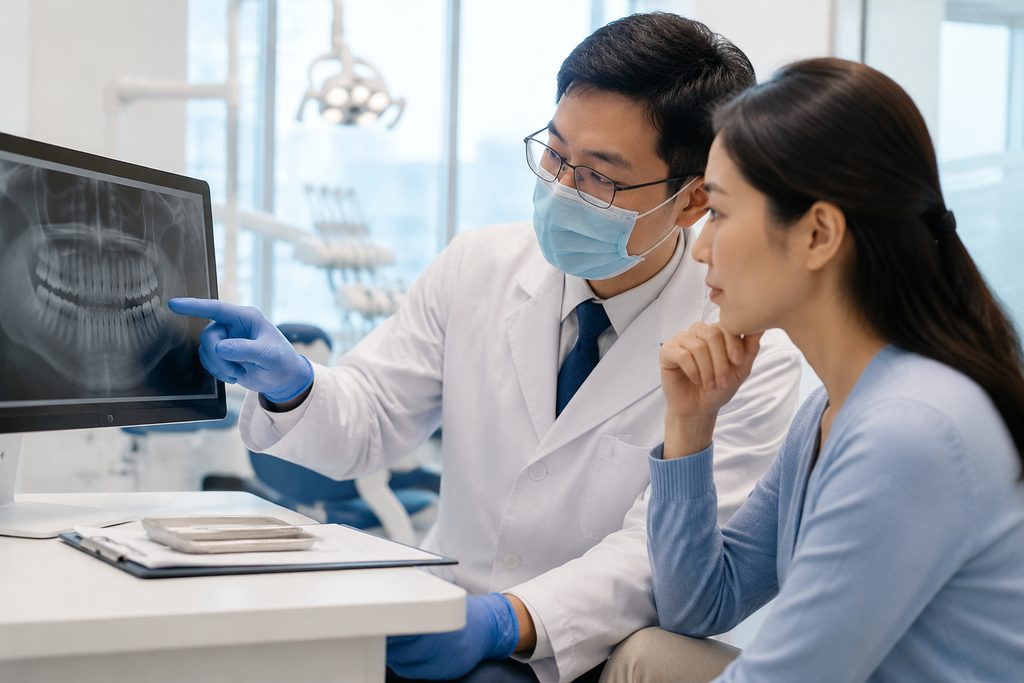
You might assume a dental checkup has nothing to do with your upcoming knee replacement or heart valve repair. That assumption has derailed more than a few surgical plans. A low-grade tooth infection, the kind you barely notice, can force your surgeon to postpone an operation days before you were scheduled to fly. We see this pattern regularly when helping international patients coordinate treatment at top-ranked hospitals across China. The dental clearance before surgery cost China clinics charge is modest — usually between $50 and $300 — yet skipping that step can cost you weeks of delay, a rescheduled visa window, and extra hotel nights you never budgeted for.
Why See a Dentist Before Surgery: The Short Answer
Because oral bacteria can enter your bloodstream during surgery and settle on newly implanted hardware. That includes artificial joints, heart valves, and vascular grafts. A dental exam identifies active infections before they become post-operative emergencies. Most surgeons in China, the United States, and Europe require written dental clearance within 30 to 90 days before major orthopedic or cardiac procedures. The rule exists for a reason. A tooth abscess that flares up two weeks after a hip replacement can force a second surgery to clean the implant — or worse, removal of the hardware entirely.
But the picture gets more complicated when you are traveling internationally for care. Timing matters. Documentation standards differ. And not every dental clinic understands what a surgical team actually needs to see on the clearance letter.
Who Needs Dental Clearance — and Who Does Not
Not every patient needs a pre-surgical dental exam. The requirement depends on the type of surgery and your medical history.
You will almost certainly need dental clearance if you are scheduled for:
- Joint replacement surgery — hip, knee, shoulder
- Heart valve repair or replacement
- Coronary artery bypass grafting
- Spinal fusion with instrumentation
- Any procedure involving implanted hardware or prosthetic material
- Organ transplant evaluation
You typically will not need it for:
- Minor outpatient procedures without implants
- Diagnostic endoscopy or colonoscopy
- Cataract surgery
- Most cosmetic procedures
- Hernia repair without mesh
If you have diabetes, a history of periodontal disease, or you smoke, your surgeon may request clearance even for procedures where it is not standard. These conditions increase the baseline risk of oral infection.
Dental Clearance Before Surgery Cost China: Options Compared
Dental pricing in China follows the same tiered structure as hospital care. A public hospital dental department charges less than a private international clinic. The difference is not just price — it is language support, appointment flexibility, and the format of the clearance letter itself.
| Clinic Type | Typical Exam Cost | Clearance Letter | English-Speaking Staff | Wait Time |
|---|---|---|---|---|
| Public hospital dental dept | $15–$40 | Chinese only, may need translation | Rare | Same-day queue, 1–3 hours |
| Public hospital VIP/international dept | $80–$150 | English available | Yes | 1–3 days booking |
| Private international dental clinic | $100–$300 | English standard | Yes | Same-day or next-day |
| Hotel-call or concierge-arranged dentist | $150–$300 | English, formatted for surgical teams | Yes | Same-day |
The right column depends on your situation. If you arrive in Shanghai two weeks early and speak no Mandarin, a private international clinic saves you a full day of confusion. If you are cost-sensitive and have a bilingual companion with you, the public hospital VIP department gets you a legitimate letter at half the private price. The clearance letter itself is not a standardized government form — each hospital writes its own. What matters is that the letter states clearly: no active dental infection, no untreated caries requiring urgent intervention, and no periodontal abscess.
Can an Infected Tooth Delay Surgery? The Timeline Question
Yes. And the delay is not a suggestion. If your dental exam finds an abscess, a deep cavity near the pulp, or advanced periodontal infection, your surgeon will almost certainly postpone the operation until the dental issue is treated and resolved.
How long that takes depends on what the dentist finds. A simple filling adds one or two days. A root canal requires two to three visits over ten to fourteen days. A tooth extraction needs seven to ten days of healing before a surgeon will clear you. Full-mouth periodontal scaling and root planing? That can push surgery back four to six weeks.
This is why the timing question — how long before surgery should I see a dentist — has a practical answer. Schedule the dental exam six to eight weeks before your operation date. That buffer gives you room to treat whatever the dentist finds without rescheduling flights, visas, or hospital admission. If you wait until the week before surgery, any positive finding becomes a crisis.
For patients traveling to China for surgery, this timeline matters even more. The S2 visa process, hospital admission paperwork, and pre-operative testing all run on a fixed schedule. A dental delay can unravel all of it. That is why we tell every joint replacement and cardiac surgery patient the same thing: see your dentist at home first if you can. If you cannot, we arrange the exam within your first 48 hours in China.
Dentist Exam Before Heart Surgery Abroad: What the Surgeon Actually Wants
A cardiac surgeon in Beijing or Shanghai is looking for the same thing a surgeon in Boston or Berlin wants: evidence that your mouth is not harboring bacteria that could seed a valve or graft. The bacteria most often implicated is Streptococcus viridans, a normal mouth resident that causes infective endocarditis when it reaches damaged or artificial heart valves.
The exam itself is straightforward. Visual inspection of all teeth and gums. Periodontal probing to measure gum pocket depth. X-rays — usually a panoramic film plus bitewings — to catch decay between teeth or abscesses at root tips. The dentist then either writes the clearance letter or lists the issues that must be treated first.
One thing surprises many patients: a dentist exam before heart surgery abroad is not a formality. Chinese cardiac centers with high surgical volumes, including those ranked among China’s top 10 for cardiac surgery, enforce the clearance requirement strictly. They have seen what happens when it is skipped. No clearance letter, no admission. No exceptions for foreign patients.
If you need a reliable dental exam before a procedure at a major Chinese hospital, we can coordinate one through the hospital’s own dental department or a nearby private clinic. The letter will be in English and formatted to match your surgeon’s requirements. You can review our guide to top-ranked hospitals across 37 cities to understand where your surgery will likely take place and what local dental options surround it.
Best Dental Clinic for Pre Surgery Clearance Shanghai: Practical Choices
Shanghai has the densest concentration of English-speaking dental clinics in mainland China. If your surgery is at a Fudan-affiliated hospital or a private international facility in the city, you have several solid options for the pre-op dental exam.
The best dental clinic for pre surgery clearance Shanghai depends on three factors: how fast you need the appointment, what your surgeon’s hospital requires in the letter, and whether your insurance will reimburse a private clinic. Public hospital dental departments in Shanghai — such as those attached to major teaching hospitals — charge the least but rarely provide English documentation without assistance. Private clinics like those in the JCI-accredited network offer same-day appointments, English-speaking dentists, and letters written specifically for surgical clearance. Expect to pay $120 to $250 for the full exam plus panoramic X-ray.
One caution: do not book the cheapest possible exam at a small neighborhood clinic if your surgeon’s team cannot read the letter. A clearance letter in Chinese, no matter how legitimate, creates friction. Your surgical coordinator will need to translate and certify it. That costs time. Pay slightly more for an English letter and the whole admission process moves faster.
Why Do I Need a Dental Checkup Before Operation: The Evidence
The connection between oral health and surgical outcomes is not a myth. It is documented in orthopedic and cardiac literature going back decades.
A 2019 review in the Journal of Arthroplasty examined periprosthetic joint infections and found that oral pathogens were implicated in a meaningful subset of early infections after total joint replacement. The mechanism is straightforward. During surgery, especially procedures lasting more than two hours, bacteria from the mouth can enter the bloodstream through micro-abrasions in the gums — even from routine brushing. In a healthy person, the immune system clears these bacteria quickly. But a fresh implant has no blood supply of its own. Bacteria that reach the implant surface can adhere, form a biofilm, and resist antibiotics.
That is why the dental checkup matters. It is not about your teeth hurting. It is about finding the silent infection — the chronic gum pocket, the old root canal that never fully healed, the cracked filling hiding decay underneath — before it has a chance to complicate a $20,000 joint replacement.
For cardiac surgery patients, the stakes are similar. Infective endocarditis carries a mortality rate that remains stubbornly high even with modern treatment. Prevention is not optional.
If you are planning major surgery in China, our team can help you understand which pre-operative tests your chosen hospital requires. The requirements vary by specialty. Our department-specific hospital rankings include notes on admission protocols for orthopedics, cardiac surgery, and other high-risk specialties.
What Dental Clearance Costs — and What It Does Not Include
The dental clearance before surgery cost China patients pay breaks down into three components: the exam, the imaging, and the letter itself.
A basic exam runs $15 to $40 at a public hospital. Add a panoramic X-ray for $20 to $40. Bitewing films add another $15 to $25. If the dentist finds nothing requiring treatment, the clearance letter is usually included in the exam fee — or costs a nominal $10 to $20 extra. Total at a public hospital: $50 to $100.
At a private international clinic, you pay for convenience. The exam plus X-ray runs $100 to $200. The English clearance letter is typically included. Some clinics charge a separate $30 to $50 “documentation fee” if the letter must be customized for a specific hospital’s format. Total: $130 to $250.
What the clearance fee does not include is treatment. If the dentist finds a cavity, an abscess, or gum disease, those procedures are billed separately. A single filling in Shanghai costs $40 to $120 depending on material. A root canal on a molar runs $300 to $800. An extraction costs $50 to $200. Periodontal treatment for the full mouth can exceed $500.
This is why the six-to-eight-week buffer matters. It gives you time to treat dental issues at home, where your insurance may cover them, rather than paying out-of-pocket in China.
Practical Considerations: Documentation, Timing, and Logistics
If you are traveling to China for surgery, dental clearance is one item on a longer pre-operative checklist. Here is what actually matters on the ground.
Your clearance letter must be in English. If it is in another language, you will need a certified translation. The letter should state the date of the exam, the dentist’s findings, and a clear statement that you are free of active dental infection. Some Chinese hospitals also ask for the dentist’s license number and clinic stamp.
Timing is the second consideration. Most surgeons want the dental exam within 30 to 90 days before surgery. If your exam was five months ago, it is stale. You will need a new one in China. That is not a catastrophe — it just adds a day to your schedule and $50 to $300 to your budget.
Payment is straightforward. Dental clinics in China accept cash, major credit cards, and Chinese mobile payment platforms. Private international clinics often bill international insurance directly. Public hospitals require upfront payment and provide receipts for reimbursement.
Language is the wildcard. Public hospital dental departments operate in Mandarin. If you go alone, expect to navigate registration, payment, and the exam itself without English support. A bilingual medical companion changes that experience entirely — from $300 per day, you get someone who handles registration, translates the dentist’s questions, explains your findings, and ensures the clearance letter meets your surgeon’s format. That service is available through our patient coordination program.
After surgery, follow-up dental care matters too. Most surgeons recommend waiting at least three months after joint replacement before any routine dental cleaning, and six weeks after cardiac surgery. If you need dental work after returning home, tell your dentist about your implant or valve — you may need prophylactic antibiotics first.
Frequently Asked Questions
Yes. Any active dental infection — an abscess, a deep cavity, advanced gum disease — will prompt your surgeon to postpone the operation. The delay lasts until the infection is treated and resolved, which can take anywhere from a few days for a filling to six weeks for full periodontal treatment. This is not a Chinese-specific rule. It is standard surgical practice worldwide.
Six to eight weeks is ideal. That gives you time to treat any dental issues without rescheduling your surgery. The minimum is usually two to four weeks for uncomplicated cases. If your exam is clean, the clearance letter remains valid for 30 to 90 days depending on the hospital’s policy.
You have options. Minor issues like a small cavity can often be treated within days and the clearance letter reissued. More complex issues like a root canal or extraction will delay surgery by one to six weeks. In that case, you may need to adjust your visa stay, hotel booking, and hospital admission date. This is exactly the scenario that makes early dental clearance worth the effort.
Usually, yes. Chinese hospitals generally accept a clearance letter from a licensed dentist in your home country if it is in English, dated within 30 to 90 days of surgery, and clearly states you are free of active dental infection. Bring the original plus a copy. If the hospital rejects it, you can get a new exam in China for $50 to $300.
No. It is standard for joint replacement, cardiac surgery, spinal instrumentation, and other procedures involving implanted hardware. It is generally not required for minor outpatient procedures, cataract surgery, or diagnostic endoscopy. Your surgeon’s office will tell you whether clearance is on your pre-op checklist.
Your Next Step
Dental clearance is one of those unglamorous pre-op steps that patients overlook until it threatens the whole plan. The exam is cheap. The consequences of skipping it are not. If you are planning surgery in China, check with your surgeon now — not two weeks before your flight — whether dental clearance is required. And schedule the exam with enough buffer to treat whatever turns up.
We are China Medical Services, a coordination team that helps international patients navigate treatment at 340+ top-ranked hospitals across 37 Chinese cities. We are not a hospital and we do not provide medical advice or diagnoses. What we do is handle the logistics — hospital matching, appointment coordination, bilingual companions, and the paperwork that keeps your pre-op checklist moving. If you want help planning your surgical trip, start with a free consultation. We will tell you honestly whether dental clearance applies to your case and how to get it done without derailing your timeline.
For more medical information and treatment options in China, visit chinamedservices.com (China Medical Services).
