Endometriosis Surgery in China: Laparoscopic Excision and Real Pain Relief
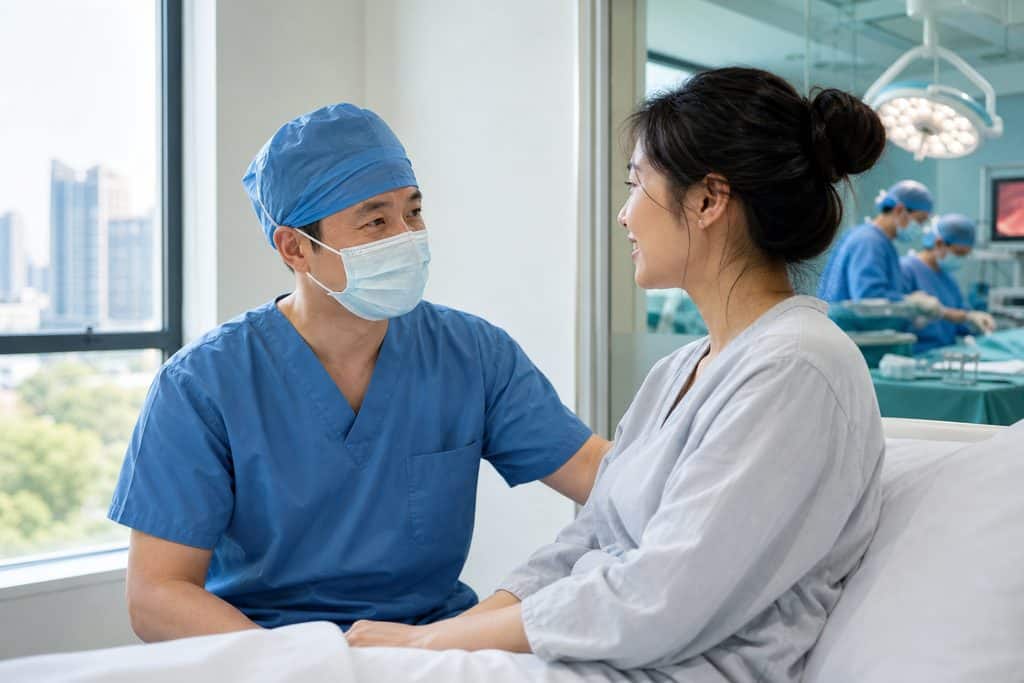
When 34-year-old Sarah from Manchester first saw the quote from her local private hospital—£8,500 for a diagnostic laparoscopy alone—she closed the browser and cried. The NHS waiting list stretched 14 months. Her pain was daily now. Not cyclical. Not manageable. Just constant. She typed a desperate search into Google: is endometriosis surgery safe abroad.
Sarah’s situation is not unusual. Endometriosis affects approximately 1 in 10 women of reproductive age globally. The disease implants tissue similar to the uterine lining outside the uterus. It bleeds, scars, and adheres. The result is chronic pelvic pain, painful intercourse, bowel dysfunction, and often infertility. The gold standard treatment is laparoscopic excision—cutting out the disease at its root. Not burning it. Removing it. But in many Western healthcare systems, the wait for a skilled excision specialist can stretch beyond a year. And the out-of-pocket cost for self-paying patients? It can crush a family’s finances.
Our team at China Medical Services does not perform surgery. We are not a hospital. We are the logistical bridge connecting international patients with China’s top-tier gynecological surgeons. We handle hospital matching, bilingual medical companions, visa guidance, and every practical detail so you can focus on one thing: getting your life back.
What Laparoscopic Excision Actually Costs: The endometriosis surgery cost China Reality
Let’s talk numbers. They tell a story that clinical papers cannot.
In the United States, the all-in cost for laparoscopic deep excision surgery—surgeon fees, anesthesia, hospital facility charges, and pathology—runs between $20,000 and $45,000 for uninsured or underinsured patients. Complex cases involving bowel or bladder resection can push past $60,000. In the UK, private hospital packages start around £8,000 for basic diagnostic laparoscopy and climb sharply when excision enters the picture. Australia and Canada show similar patterns: long public waits or steep private fees.
The endometriosis surgery cost China structure is fundamentally different. At a top-tier public hospital’s international VIP department, the same procedure—laparoscopic deep excision performed by a senior gynecological surgeon—typically ranges from $6,000 to $12,000 USD. That includes surgeon fees, anesthesia, a private recovery room, and 3 to 5 days of inpatient monitoring. Complex multi-organ cases involving a colorectal surgeon may reach $15,000 to $18,000. These figures are not promotional estimates. They reflect the actual billing structures we see across our partner network of 340+ top-ranked hospitals in 37 cities.
Why the gap? Two structural reasons. First, China’s hospital system operates at extraordinary scale. A senior endometriosis surgeon at a major Shanghai or Beijing teaching hospital may perform 300 to 500 laparoscopic excisions annually. That volume drives down per-case costs while sharpening surgical precision. Second, labor and facility overhead in China remain significantly lower than in North America or Western Europe—without any corresponding drop in technology or sterility standards. The hospitals we work with maintain JCI accreditation or rank in the top 5% of China’s 35,000+ hospitals by the Fudan University hospital rankings.
| Procedure | US Self-Pay Range (USD) | China VIP Dept. Range (USD) |
|---|---|---|
| Diagnostic Laparoscopy Only | $8,000 – $15,000 | $2,500 – $4,000 |
| Laparoscopic Excision (Stage I-II) | $18,000 – $30,000 | $6,000 – $9,000 |
| Deep Excision with Bowel/Bladder Work | $35,000 – $60,000+ | $12,000 – $18,000 |
| Excision + Hysterectomy (if indicated) | $40,000 – $70,000 | $10,000 – $16,000 |
All ranges are estimates. Final pricing varies by hospital, surgeon seniority, and case complexity. These figures are for reference only and do not constitute a quote.
The question is not whether the price is lower. The question is whether the care holds up. Let’s address that directly.
Finding a Skilled Surgeon: The Search for the Best Endometriosis Excision Surgeon China Offers
Skill in endometriosis surgery is not evenly distributed anywhere in the world. The disease is notoriously underdiagnosed and undertreated. Many general OB-GYNs perform ablation—burning the surface of lesions—rather than full excision. Ablation has recurrence rates as high as 40-50% within five years. Excision, performed correctly, cuts recurrence to approximately 10-20%.
So how do you identify the best endometriosis excision surgeon China can provide to an international patient?
The answer lies in the Chinese hospital ranking system. The Fudan University Hospital Rankings evaluate hospitals by specialty reputation. For gynecology, the top-ranked institutions cluster in Beijing, Shanghai, and Guangzhou. Peking Union Medical College Hospital (PUMCH) in Beijing consistently ranks among the top three nationally for gynecological care. Renji Hospital in Shanghai holds a similar position, particularly for complex pelvic surgery. West China Hospital in Chengdu and the Obstetrics & Gynecology Hospital of Fudan University in Shanghai round out the list of elite centers.
These are not small community hospitals. PUMCH’s gynecology department handles over 200,000 outpatient visits annually. The surgical volume is staggering by Western standards. A senior excision surgeon there may see more complex Stage IV endometriosis cases in a month than a regional specialist in Europe sees in a year.
But here is the critical nuance: you cannot simply email the hospital and book a surgery date. Chinese public hospitals do not work that way. You must attend an in-person consultation first. The surgeon reviews your imaging, takes a history, and only then schedules the procedure. Our role is to arrange that consultation through the hospital’s official international department channel, coordinate your medical records translation, and place a bilingual medical companion at your side throughout the process. We do not promise a specific surgeon by name. We promise to connect you with a senior specialist in a top-ranked department and to handle every logistical barrier between you and that consultation.
The Laparoscopic Endometriosis Surgery Price Beijing Patients Pay—and What It Includes
Beijing is home to several of China’s most respected gynecology departments. The laparoscopic endometriosis surgery price Beijing hospitals quote to international patients through their VIP wings typically falls between $7,000 and $11,000 for standard excision cases.
What does that package include?
A private room with en-suite bathroom and space for a family member to stay. Pre-operative imaging review—often a pelvic MRI and expert ultrasound mapping of lesions. The surgery itself, performed laparoscopically through small incisions, with real-time pathology to confirm endometriosis tissue removal. Post-operative pain management, usually a combination of IV analgesia and oral medications. And 3 to 5 days of inpatient monitoring before discharge.
It does not include your flight, visa fees, accommodation before admission, or post-discharge hotel stay. Those are separate costs we help you budget.
Beijing’s advantage is depth. If your case requires multi-organ excision—endometriosis involving the bowel, bladder, or ureters—Beijing hospitals routinely assemble surgical teams combining gynecologists, colorectal surgeons, and urologists in a single operating session. This multidisciplinary approach is the standard of care for deep infiltrating endometriosis. It avoids the nightmare scenario of two separate surgeries with two recoveries.
Shanghai offers a comparable experience. Some patients prefer Shanghai for its more international atmosphere and milder winter climate. The clinical quality is equivalent. The choice often comes down to flight connections and personal preference.
Is Endometriosis Surgery Safe Abroad? What the Data and Experience Show
This question deserves a straight answer.
Laparoscopic excision carries inherent risks wherever it is performed: bleeding, infection, damage to surrounding organs, anesthesia complications, and the possibility that pain persists despite complete excision. No surgeon in any country can guarantee a zero-risk outcome.
The question behind the question—”is endometriosis surgery safe abroad“—is really about whether traveling for care introduces additional dangers that outweigh the benefits of lower cost and shorter waits.
The additional risks of medical travel fall into predictable categories: communication errors during handoffs, difficulty accessing post-operative care after returning home, and the physical stress of flying too soon after surgery. These are manageable risks. They are not reasons to avoid travel. They are reasons to plan meticulously.
The hospitals we work with operate at international standards. Their surgical site infection rates, venous thromboembolism prophylaxis protocols, and anesthesia safety records are audited and published. Many hold JCI accreditation. The operating theaters use the same Stryker and Karl Storz laparoscopic towers you would see in a US or UK hospital. The surgeons read the same journals. Many trained abroad or collaborate with European and American endometriosis centers.
The real safety variable is not the operating room. It is the handoff. Who translates your allergy list accurately? Who explains the discharge instructions in your language? Who answers your call at 2 AM when you are in a hotel room three days post-op and something feels wrong?
That is where a bilingual medical companion changes the equation. Our companions are not interpreters hired from a translation agency. They are trained medical coordinators who understand surgical workflows, know the hospital layout, and can escalate concerns to the surgical team in real time. They stay with you from the first consultation through discharge and your first post-op check. This is not a luxury add-on. For endometriosis surgery abroad, it is the single most important safety investment you can make.
How Long Is Recovery After Laparoscopic Endometriosis Excision?
The recovery arc depends on the extent of disease.
For Stage I-II excision with minimal adhesions, most patients are walking the same evening and discharged on day 2 or 3. They can fly home after 5 to 7 days, provided the flight is under 8 hours and they wear compression stockings. Return to desk work: 2 weeks. Return to full physical activity: 4 to 6 weeks.
For Stage IV deep excision involving bowel resection, the hospital stay extends to 5 to 7 days. Flying is not advisable before day 10 to 14. The surgeon will want to see you for a wound check and removal of any non-dissolvable sutures before clearing you to travel. Return to normal activity: 8 to 12 weeks.
These timelines are not unique to China. They reflect the biology of healing. The difference is that our team helps you plan the logistics around them—booking a hotel near the hospital for your pre-flight recovery window, arranging follow-up video consultations with the surgeon after you return home, and ensuring your discharge summary is translated into clear English for your local GP.
How to Book Endometriosis Treatment Through Medical Tourism in China
The phrase “medical tourism” conjures images of beachside recovery villas and spa packages. That is not what this is. You are traveling for serious pelvic surgery. The process requires rigor.
To book endometriosis treatment medical tourism China through a coordinated pathway, here is what actually happens:
First, you send us your medical records: surgical history, recent imaging (MRI preferred), any pathology reports, and a summary of your current symptoms. We translate these into clinical Chinese and submit them to the international department of a matched hospital.
Second, the hospital reviews your case and confirms they can accept it. This is not a rubber stamp. They may request additional imaging or ask clarifying questions. This step alone can take one to two weeks.
Third, we schedule your in-person consultation. You apply for an S2 visa—the correct category for medical treatment in China—with an invitation letter from the hospital. Your accompanying family member also applies for an S2 visa. We guide you through the documentation.
Fourth, you travel. Our companion meets you at the airport, accompanies you to the consultation, translates every word between you and the surgeon, and stays with you through admission, surgery, and discharge.
Fifth, after you return home, we facilitate a follow-up video consultation with your surgeon to review pathology results and plan long-term management. Any fees you paid for remote consultations are credited in full toward our on-the-ground coordination service if you proceed to surgery within 90 days.
This is not a website where you click “buy” and a surgery date pops up. It is a case management process. It takes time. It requires your active participation. But the result is a surgery performed by a high-volume specialist in a top-ranked department at a fraction of the cost you would pay at home.
Who We Are
We are China Medical Services. We do not employ surgeons. We do not own hospitals. We are a team of bilingual medical coordinators who have spent years building relationships with the international departments of China’s leading hospitals. Our database covers 340+ top-ranked institutions across 37 cities. We know which gynecology departments have dedicated endometriosis teams. We know which hospitals accept international patients for complex pelvic surgery. And we know the exact documentation each one requires before they will schedule a consultation.
Our role is to remove every non-medical obstacle between you and expert surgical care. Visa paperwork. Record translation. Hospital registration queues. Language barriers. Discharge instructions. Post-op follow-up coordination. We handle all of it.
We do not make clinical decisions. We do not recommend one surgeon over another. We present you with options from our network of ranked hospitals and let you and the treating physician determine the best course. Our promise is simple: we will get you into the right consultation with the right department, and we will stay by your side until you are safely home.
Frequently Asked Questions
Can I choose a specific surgeon by name?
We cannot guarantee a named surgeon. Chinese public hospitals assign surgeons based on case complexity and availability within the department. What we do guarantee is that your case will be reviewed by a senior specialist within a top-ranked gynecology department—not a junior resident. If you require a specific surgeon due to prior clinical history, we can submit that request, but the hospital makes the final assignment.
What happens if there is a surgical complication?
The hospitals we work with carry full liability for clinical outcomes and maintain standard complication management protocols, including ICU access and specialist consultation. Our companion remains with you throughout any extended stay. We also ensure your discharge documentation is complete and translated so your home-country physician has everything needed for continuity of care. Travel medical insurance that covers complication-related extended stays is strongly recommended.
Will my home-country gynecologist accept the Chinese surgical records?
Yes. The hospitals provide operative reports, pathology results, and discharge summaries in both Chinese and English. These documents follow international medical record standards. We have never encountered a case where a Western gynecologist refused to accept them for follow-up care. If your doctor has specific documentation requirements, tell us in advance and we will ensure the surgical team addresses them.
How soon can I schedule surgery after the initial consultation?
Typically 3 to 10 days after the in-person consultation, depending on the surgeon’s schedule and any additional pre-operative testing required. This is one of the structural advantages of the Chinese system: high-volume departments have operating theater capacity that allows relatively short surgical wait times once the consultation is complete.
Does the lower cost mean lower quality?
No. The cost difference reflects structural economics—lower labor costs, higher surgical volumes, and different hospital billing models—not a sacrifice in clinical standards. The laparoscopic equipment, sterilization protocols, and surgical techniques are equivalent to those in any major Western center. Many of the surgeons have international training or research collaborations. The cost advantage is real, but it is an economic fact, not a quality compromise.
Your Next Step
Endometriosis does not wait. Every month of delayed treatment is another month of pain, another cycle of inflammation and scarring, another toll on your career, relationships, and mental health. The barriers to care—cost, wait times, geography—are real. But they are not immovable.
If you are considering laparoscopic excision abroad, start with information, not commitment. Send us your case summary. We will review it, match you with appropriate hospital options from our network, and give you a clear picture of costs, timelines, and logistics. There is no charge for this initial consultation. No pressure. Just a practical conversation about what is possible.
Request a free case review and let us show you what a coordinated pathway to expert surgical care actually looks like.
For more medical information and treatment options in China, visit chinamedservices.com (China Medical Services).
