Top ENT Surgeons in China: Accessing Cochlear Implant and Specialist Care
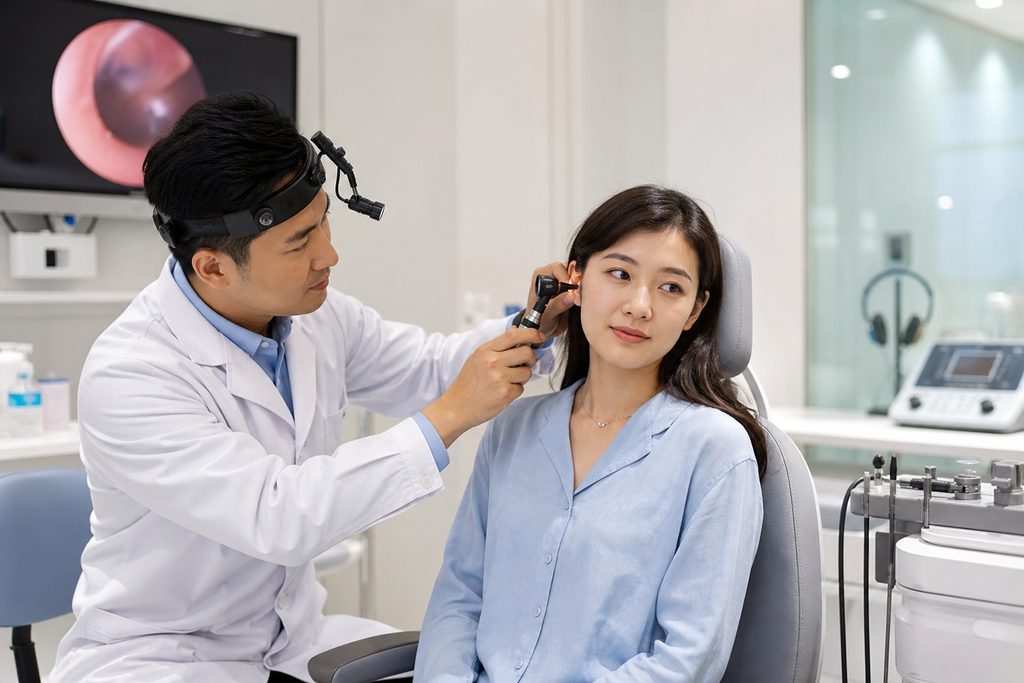
Have you ever stared at a search result page full of hospital names and felt completely lost, unsure which ENT surgeon you can actually trust with your hearing? You are not alone. Sorting through the best ent surgeon China reviews often leaves international patients with more questions than answers. Our team has spent years bridging this gap, connecting patients directly with the verified specialists and departments that match their specific condition, whether that is a complex cochlear implant evaluation or a revision sinus surgery.
How This Actually Works, Step by Step
The process of securing a top ENT surgeon in China is not a black box, but it does follow a specific logic that differs significantly from walk-in care. It starts with your existing medical records. You send us your recent audiograms, CT scans of the temporal bone, and any surgical notes. Our bilingual case managers translate these documents into clinical Chinese and route them to the appropriate department head at a top-tier hospital. This is not about getting a generic opinion. It is about getting a specific surgeon to review your candidacy before you ever book a flight.
Within five to seven business days, you receive a written second opinion. This document outlines whether the surgeon believes they can help, what the proposed surgical approach would be, and a preliminary treatment timeline. Only after you review this and agree does the coordination begin. We then lock in a surgical slot through the hospital’s international VIP channel, secure your visa invitation letter, and arrange your ground logistics. The sequence is always: records first, commitment second, travel third.
Finding a Verified Specialist: Beyond the Search Results
When you type how to find top ear nose throat specialist in Beijing into a search engine, you are usually met with a wall of promotional content. The reality is that China’s most skilled otolaryngologists rarely advertise. They are concentrated in a handful of public teaching hospitals, specifically in the otology and skull-base surgery divisions. Beijing Tongren Hospital, for instance, is widely regarded as the national center for ENT, with a surgical volume that dwarfs most Western institutions. Its otology team performs over 1,200 cochlear implant surgeries annually.
But volume alone is not the metric. The question you need to ask is whether a surgeon routinely handles cases like yours. A specialist who performs 300 stapedectomies a year for otosclerosis is a very different resource from one who focuses on acoustic neuroma resection. Our internal database tracks sub-specialty focus, not just department rankings. We look at a surgeon’s publication history on PubMed, their role in multi-center clinical trials, and the specific procedural codes they log most frequently. When a patient asks us for the best ent surgeon China reviews, we translate that into a data-driven match, not a popularity contest.
Also, private international hospitals like Beijing United Family Hospital have built strong ENT departments with Western-trained surgeons who manage complex pediatric airway cases. They offer a different value proposition: direct insurance billing, native English fluency, and shorter lead times for consultation. The trade-off is that for ultra-specialized procedures requiring a massive multidisciplinary team, the public top-tier hospitals still hold the advantage.
A Realistic Timeline
Medical travel requires a firm grip on the calendar. Optimism is expensive. Here is a realistic breakdown from the moment you decide to explore surgery in China to the day of your procedure.
| Stage | Action | Typical Duration |
|---|---|---|
| Week 1-2 | Document collection, certified translation of medical records, and submission to the target hospital’s international department. | 10-14 days |
| Week 3-4 | Remote written second opinion completed by the specialist. Discussion of the proposed surgical plan. | 7-14 days |
| Week 5-8 | Surgical slot reservation through the VIP/International channel. Hospital issues the official invitation letter for the visa. | 14-21 days |
| Week 9-12 | S2 visa application at the Chinese embassy or consulate in your home country. Flight and accommodation booking. | 14-21 days |
| Day 1 in China | In-person consultation, pre-operative testing (blood work, repeat imaging if required), and surgical consent. | 1-2 days |
| Day 3-5 | Surgery. Inpatient recovery begins. | 3-7 days inpatient |
The total lead time from first contact to surgery is rarely less than eight weeks. The bottleneck is usually the visa process and the surgeon’s own operating schedule. A top ENT surgeon in a Fudan-ranked department may only have two surgical days per week, and those slots fill predictably. Planning for twelve weeks removes the panic.
What Can Go Wrong — and What Happens Then
We have seen the complications that nobody likes to discuss in a brochure. The most common failure mode is a mismatch between the patient’s expectations and the clinical reality. A patient arrives hoping for a fully implantable, invisible hearing device, but their cochlear anatomy, visible on the pre-operative CT we reviewed, only supports a traditional behind-the-ear processor. This is why the written second opinion is so critical. It anchors the discussion in your specific anatomy, not a generic sales pitch.
Another failure point is intra-operative discovery. A surgeon plans a tympanoplasty but finds ossicular chain erosion that requires a titanium prosthesis. In a top Chinese hospital, the surgeon has the autonomy and the in-house inventory to pivot immediately. The consent form you sign will explicitly cover these common contingencies. The surgical fee may adjust, but the clinical decision is made in your best interest, on the table.
What if the surgeon falls ill or a national holiday disrupts the schedule? This has happened. The hospital’s international department is contractually obligated to offer either the next available slot with the same surgeon or a transfer to a peer of equivalent seniority within the same department. You are never left without a plan. The coordination fee we charge includes navigating exactly this kind of disruption so you are not stranded in a foreign hospital corridor trying to explain your situation through a translation app.
Evaluating Cochlear Implant Programs: Cost, Safety, and the Full Package
The search query cochlear implant cost China package usually signals a patient who has already been quoted a price in their home country and is looking for a viable alternative. Let’s talk numbers. In the United States, a unilateral cochlear implant, including the device, surgeon’s fee, and hospital stay, can exceed $100,000 for an uninsured patient. In China’s top public hospitals, the all-in cost for the same generation of implant from a manufacturer like Cochlear or MED-EL typically ranges from $35,000 to $55,000. This is not a budget version of the surgery. It is the same FDA or CE-marked device, implanted by a surgeon who does hundreds of these cases a year.
When you ask what is the price of cochlear implant abroad China, the answer depends on the device generation and the hospital tier. A latest-generation Nucleus Profile Plus with a slim modiolar electrode will cost more than an earlier-generation implant being phased out. The package we help negotiate with the hospital international department typically bundles the device, the surgeon’s fee, the anesthesiologist, three to five days of inpatient stay, and the initial activation and mapping session. It does not usually include your pre-operative CT scan if you need a new one, nor does it cover extended inpatient rehabilitation. You should budget an additional $2,000 to $3,000 for these incidentals.
Is cochlear implant surgery safe in China? The safety profile at a Fudan-ranked otology center is comparable to any major Western cochlear implant program. The infection rate for cochlear implant surgery at a hospital like Beijing Tongren or Shanghai Eye and ENT Hospital is well under 1%. The primary safety concern for an international patient is not the surgery itself but the post-operative follow-up. You need a clear mapping and rehabilitation plan back home. Before we finalize any surgical booking, we require a letter from your local audiologist confirming they will take over your device programming. Without that, the best surgery in the world will yield a suboptimal outcome.
Patients who look to book ent surgery Shanghai medical tourism often gravitate toward the Shanghai Eye and ENT Hospital, affiliated with Fudan University. Its otology and skull-base surgery department is ranked among the top in China. The hospital’s international wing is accustomed to managing the specific needs of foreign patients, from intra-operative facial nerve monitoring to post-operative vestibular rehabilitation. The process of booking is not a simple online form. It requires a medical records review, a deposit to secure the surgical slot, and a pre-arrival consultation with the anesthesiology team to clear you for surgery.
Practical Considerations: Records, Visas, and the Follow-Up Gap
Your medical records are the single most important factor in whether a Chinese ENT surgeon will accept your case. A one-line referral note is not enough. You need a recent audiogram conducted within the last six months, a high-resolution CT scan of the temporal bones on a CD in DICOM format, and ideally an MRI if the concern is retrocochlear pathology. We handle the certified translation. You need to provide the original files.
The visa category for medical treatment in China is the S2 visa, which covers short-term private affairs including medical treatment. The hospital’s international department will issue a formal invitation letter that you submit with your application. Processing times vary by country, but four weeks is a safe planning window. Your accompanying family member applies for the same S2 category. Do not let anyone tell you that an M visa, which is strictly for commercial trade activities, is appropriate for surgery. It is not.
Payment is made directly to the hospital’s international department via wire transfer before admission. Public hospitals in China do not bill Western insurance companies directly. You pay the hospital, and then you seek reimbursement from your insurer. Private international hospitals like Jiahui Health can direct-bill many major insurers. The language barrier in a public hospital is real. Even in the international VIP ward, the nursing staff may have limited English. The surgeon will likely speak functional medical English, but the nuanced discussion of tinnitus pitch or vertigo quality often benefits from a bilingual medical companion who knows the terminology in both languages.
The Achilles’ heel of traveling abroad for cochlear implant surgery is the follow-up. You will need at least three to four mapping sessions in the first year. If your local audiologist refuses to touch a device implanted in China, you have a problem. We advise all our cochlear implant patients to have this conversation with their home audiologist before making any deposit. Get the commitment in writing.
Frequently Asked Questions
Independent verification is difficult from abroad because China’s physician licensing database is not publicly searchable in English. The most reliable proxy is the Fudan Hospital Ranking, which ranks departments by peer review from Chinese specialists. A surgeon practicing in a department ranked in the top 10 nationally for otology has been vetted by their peers. For patient reviews, you are largely limited to what you can find on expat forums and through direct testimonials from previous international patients that a medical concierge service can provide.
This is a real risk. Some audiologists are reluctant to program a device they did not implant, citing liability concerns. The solution is to secure a written agreement with your local provider before surgery. If that fails, you would need to return to China for mapping sessions, which is logistically and financially burdensome. We do not proceed with cochlear implant coordination until this local follow-up plan is confirmed in writing.
Yes, the implantable hardware is identical. The top Chinese hospitals use the same Cochlear, MED-EL, and Advanced Bionics devices approved by the NMPA (China’s FDA equivalent). These are the same model numbers, manufactured to the same specifications. The external speech processor is also the same, though you must confirm the warranty is valid in your home country. Usually, it is a global warranty, but we verify this with the device representative before the surgery.
No. The regulatory landscape for cochlear implants is global. A device that is not yet approved by the FDA or CE is also not approved by the NMPA. China is not a market for experimental or unapproved implantable hearing devices. You will receive the same approved technology, implanted with a high level of surgical volume behind it.
Your Next Step
Finding the right ENT surgeon in China is a process of matching your specific clinical needs to a sub-specialist with a documented track record in that exact procedure. It is not about finding a famous name. It is about finding the surgeon whose weekly operating list looks like your case.
Our team at China Medical Services does not practice medicine. We do not offer medical advice. What we do is remove the information asymmetry that makes this search so difficult. We translate your records, route them to the right department head, and give you a clear, written opinion you can take to your local doctor. From there, if you choose to move forward, we handle the scheduling, the visa invitation, and the on-the-ground support so you can focus entirely on your recovery. Request a free case evaluation and we will tell you honestly whether a trip to China makes clinical and financial sense for your situation.
For more medical information and treatment options in China, visit chinamedservices.com (China Medical Services).
