First Hospital Hohhot International Service: Blending Mongolian and Western Medicine
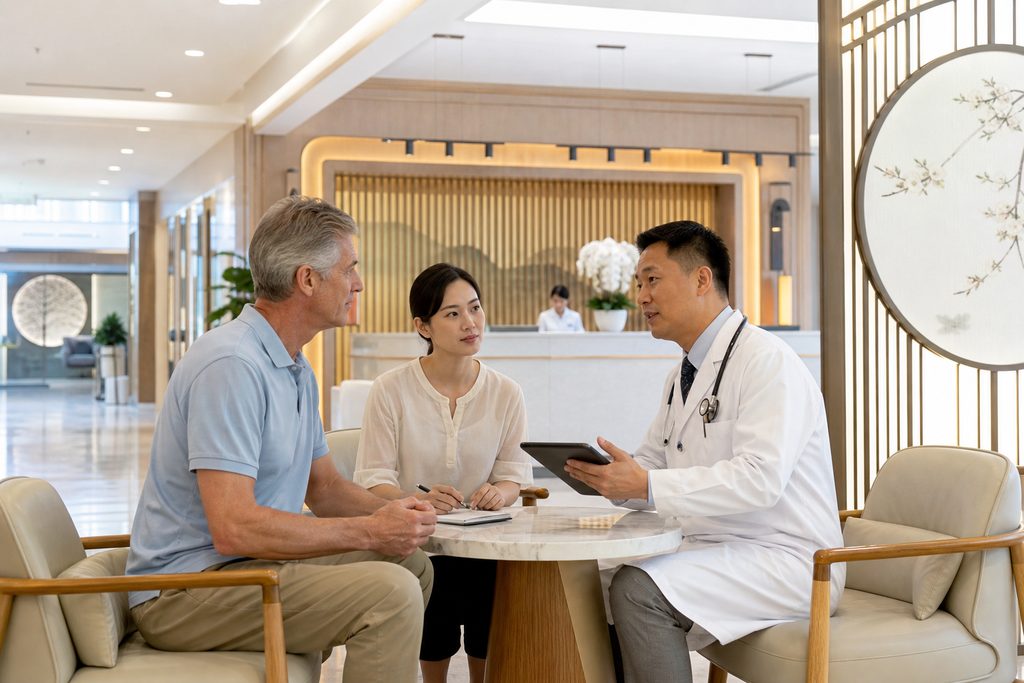
You have probably heard that seeking specialized medical care in China means choosing either a massive, crowded public hospital or an expensive private clinic in Beijing or Shanghai. The idea that a top-tier institution in Inner Mongolia could offer something neither of those can — a genuine, evidence-backed fusion of modern Western medicine and centuries-old traditional Mongolian practices — sounds almost too specific to be true. But it is true. And for certain chronic, inflammatory, and neurological conditions, this combination is exactly why patients travel here.
The First Hospital of Hohhot does not fit the typical international patient mold. It is not a glossy private tower with a coffee shop in the lobby. It is a serious, large-scale public teaching hospital that has quietly built one of China’s most distinctive integrative medicine programs. Our team has coordinated care here for patients from Europe, the Middle East, and Central Asia who exhausted conventional options elsewhere. They came looking for something different. They found it.
Key Takeaways
- The First Hospital of Hohhot integrates modern Western diagnostics and surgery with traditional Mongolian medicine — a formal discipline distinct from TCM, using unique manual therapies, herbal compounds, and dietary protocols recognized by China’s National Medical Products Administration.
- Treatment costs for international patients typically run 70–80% lower than equivalent US private hospital care, with inpatient integrative programs starting well under $1,000 per day, though final figures vary by case complexity.
- The hospital’s international patient office exists but operates primarily in Mandarin and Mongolian — independent navigation without bilingual support creates real logistical friction, from registration kiosks to inpatient meal ordering.
- You cannot simply email for a “first hospital hohhot price list for foreigners” as a static document. Pricing is built around your specific diagnosis, treatment protocol, and ward class after a formal assessment, which we help facilitate before you travel.
The Problem: When Standard Medicine Hits a Wall on Chronic Conditions
Roughly 1 in 5 adults in the United States lives with chronic pain, according to the CDC. For many, the treatment path narrows over time. Pharmaceuticals manage symptoms but bring side effects. Surgery addresses structural damage but not the underlying inflammatory or systemic dysfunction. Patients find themselves cycling between specialists, accumulating prescriptions, and still waking up stiff, exhausted, or in pain. The frustration is not that medicine lacks sophistication. It is that the model itself — organ-by-organ, symptom-by-symptom — sometimes misses the full picture.
This is where integrative approaches gain traction. But “integrative” in the West often means acupuncture offered alongside chemotherapy at a cancer center, or a yoga referral from a primary care doctor. What the First Hospital of Hohhot practices is structurally different. Here, Mongolian medicine is not an add-on. It is a parallel clinical department with its own diagnostic framework, inpatient wards, and pharmacy, working in the same building as cardiology, neurology, and orthopedics. Patients are co-managed. A rheumatologist and a Mongolian medicine specialist might round on the same patient together. That is rare. That is the point.
Who We Are
We are China Medical Services — not a hospital, not a clinic, and not a medical provider. We do not diagnose conditions or prescribe treatments. What we do is dismantle the logistical barriers that stop international patients from accessing China’s most capable medical institutions. Our team handles hospital matching, appointment coordination with international patient offices, bilingual medical companion services, visa guidance for S2 medical visas, and every practical detail from airport pickup to discharge paperwork. We have facilitated care at over 340 top-ranked hospitals across 37 cities. Hohhot is one of the more specialized destinations in our network, and we know exactly how to make it work.
Why First Hospital Hohhot’s Integrative Model Delivers Results
Traditional Mongolian Medicine Is a Formal Medical System, Not Folk Remedy
Let us be precise about what we mean by “Mongolian medicine.” This is not a spa treatment. It is a codified medical tradition with its own universities, residency programs, pharmacology, and clinical practice guidelines. Inner Mongolia Medical University runs a dedicated Mongolian medicine campus. The First Hospital of Hohhot’s Mongolian medicine department is staffed by physicians who complete five-year undergraduate degrees followed by standardized residency training in Mongolian medical theory, pulse diagnosis, manual therapy, and compound herbal formulation.
Their pharmacopoeia includes over 1,300 medicinal substances — predominantly plant-based but also mineral-derived preparations — processed using methods that differ from both TCM and Western pharmaceutics. Certain processed mineral compounds used in Mongolian orthopedics, for example, have demonstrated bone-healing acceleration in controlled animal studies published in Chinese peer-reviewed journals. This is not mysticism. It is an understudied pharmacopeia that Western science is only beginning to investigate seriously.
Clinical Volume and Cross-Departmental Co-Management
The First Hospital of Hohhot handles well over 1.5 million outpatient visits annually. Its inpatient capacity exceeds 1,800 beds. For context, that places it among the larger academic medical centers in northern China. High volume matters because it drives pattern recognition. A rheumatologist here sees more rheumatoid arthritis variants in a month than a typical community rheumatologist in the UK might see in a year.
But volume alone is not the differentiator. The structural innovation is co-management. A patient with ankylosing spondylitis, for instance, might be admitted under rheumatology for biologic therapy while simultaneously receiving daily Mongolian manual therapy — a technique called “bumba” that involves rhythmic compression and joint mobilization along meridian pathways — from a Mongolian medicine specialist. The two teams share a chart. They adjust protocols together. This is genuinely integrative medicine, not parallel medicine where the left hand does not know what the right hand is doing.
Cost Advantage Without Quality Compromise
Many international patients ask us for a “first hospital hohhot price list for foreigners” before committing. Here is the reality: a static price list does not exist. Costs are built per patient based on diagnosis, treatment protocol, ward class, and length of stay. But we can share representative ranges from cases we have coordinated.
| Service Category | Estimated Cost for International Patients (USD) | Comparable US Private Hospital Cost (USD) |
|---|---|---|
| Specialist consultation (first visit) | $50–120 | $350–600 |
| Inpatient stay (standard international ward, per day) | $200–500 | $2,500–5,000 |
| Mongolian medicine therapy session (manual therapy) | $40–80 | Not directly comparable; similar integrative therapies in US: $150–300 |
| MRI (3T, single region) | $200–400 | $1,200–3,000 |
| Knee arthroscopy (all-inclusive hospital charge) | $3,000–6,000 | $15,000–35,000 |
| 14-day integrative inpatient program (rheumatology + Mongolian medicine) | $4,000–8,000 | Not available as comparable program in US |
These numbers reflect the international patient channel pricing at a public hospital — roughly 1.5 to 2 times the domestic rate, which covers English-language coordination, priority scheduling, and upgraded ward amenities. Even at that premium, the cost differential versus US care is stark. A 14-day integrative inpatient program that combines biologic therapy, daily Mongolian manual treatment, and herbal protocols would simply not exist in the American system. If you attempted to piece it together across separate providers, the cost would easily exceed $30,000. Here, it starts under $5,000.
Why are costs lower? Structural reasons. Physician salaries are lower in China’s public system. Hospital construction and operational costs are lower. Malpractice insurance burdens are dramatically lower. And the hospital operates at a scale where fixed costs are spread across enormous patient volumes. None of this implies lower quality. The First Hospital of Hohhot is accredited by China’s National Health Commission as a Grade A tertiary hospital — the highest classification. Its lab standards, imaging equipment, and surgical protocols meet the same benchmarks as top hospitals in Beijing.
What You Need to Know Before Going Alone
We are direct about this because patients deserve to know what they are walking into. The First Hospital of Hohhot is an excellent institution. It is also a Chinese public hospital in Inner Mongolia. That means certain realities are unavoidable if you try to navigate independently.
- Language barrier is absolute: The international patient office has staff with some English capability, but clinical consultations, nursing communication, and therapy instructions are conducted in Mandarin or Mongolian. Consent forms, treatment plans, and pharmacy labels will be in Chinese. You cannot rely on a translation app for discussions about drug interactions or surgical risks.
- Payment is upfront and out-of-pocket: As a public hospital, the First Hospital of Hohhot does not direct-bill international insurance. You pay a deposit upon admission, and costs are deducted from that deposit as services are rendered. You settle the balance upon discharge and then submit claims to your insurer for reimbursement. We help with the documentation package, but the cash flow requirement is real — expect to place $3,000–10,000 on deposit depending on your treatment plan.
- Traditional Mongolian medicine treatment cost China varies by formulation: Herbal compounds are prepared in the hospital’s Mongolian pharmacy and priced per formula. Some preparations use rare mineral ingredients that can add $200–500 to a two-week prescription. These costs are disclosed during the treatment planning phase, but they are not standardized across all patients. Your protocol dictates your price.
How We Help You Navigate This
These barriers exist for structural reasons, not because anyone is being unhelpful. The system was built to serve a domestic Mandarin- and Mongolian-speaking population. We bridge the gap.
Before you travel, we collect your medical records, have them professionally translated into Mandarin, and submit them to the relevant department heads at the First Hospital of Hohhot for a pre-assessment. This step alone saves days of uncertainty. The hospital reviews your case and confirms whether they can accept you, which department will lead, and whether Mongolian medicine co-management is indicated. They provide a preliminary treatment plan and a detailed cost estimate — the closest thing to a personalized “first hospital hohhot price list for foreigners” that actually reflects your situation.
We also handle the S2 medical visa guidance. The invitation letter from the hospital is the critical document, and we ensure it is formatted correctly for the Chinese consulate in your country. We have seen applications rejected because the letter omitted the required diagnostic code or treatment duration. We catch those details.
Once you arrive in Hohhot, a bilingual medical companion meets you at the airport. This person stays with you through every step: registration kiosk navigation, deposit payment at the cashier, vitals intake with the nursing station, specialist consultation translation, therapy session coordination between the Western and Mongolian medicine departments, and discharge paperwork. They also handle the mundane but essential — ordering meals that match your dietary restrictions, finding the right pharmacy window, scheduling follow-up imaging. You focus on treatment. We handle everything else.
For patients asking “how does First Hospital Hohhot treat international patients,” the honest answer is: with excellent clinical care and an administrative process that assumes local fluency. The international patient office is competent but understaffed. Our presence fills the gap. We have coordinated cases where a patient received daily rheumatology rounds in the morning and Mongolian manual therapy in the afternoon, with both teams reviewing labs together. That level of coordination does not happen by accident. It happens because someone is physically present, bilingual, and medically literate enough to ensure nothing gets lost.
Can You Really Combine Western and Chinese Medicine in Inner Mongolia?
This is one of the most common questions we receive, and it deserves a precise answer. The short answer: yes, but “Chinese medicine” here is a misnomer. What the First Hospital of Hohhot practices alongside Western medicine is traditional Mongolian medicine — a related but distinct system. The two share some philosophical roots, particularly around energetic balance and holistic diagnosis. But Mongolian medicine evolved on the steppe, shaped by a nomadic lifestyle, extreme climate exposure, and a dietary tradition heavy in meat and dairy. Its herbal formulations, manual therapies, and diagnostic methods reflect that history.
Clinically, the integration works like this: a patient admitted for osteoarthritis of the knee might receive intra-articular hyaluronic acid injections from the orthopedics department (Western) while undergoing a course of Mongolian “naman chagan” therapy — a heated herbal compress treatment combined with joint manipulation (Mongolian). The orthopedist and the Mongolian medicine physician consult each other’s notes. The patient receives one unified care plan. This is not two separate treatments happening in parallel. It is one treatment with two clinical perspectives informing it.
Does every condition benefit from this approach? No. Acute trauma, aggressive cancers requiring urgent chemotherapy, and emergency cardiac events are treated with pure Western protocols. The integrative model shines for chronic inflammatory conditions, degenerative joint disease, certain neurological disorders, gastrointestinal dysregulation, and post-surgical rehabilitation. Patients who book medical treatment Inner Mongolia with translator support through our service often arrive with conditions they have managed for years — lupus, Crohn’s, psoriatic arthritis — and leave with a protocol that combines a biologic or DMARD with Mongolian herbal and manual therapy. The goal is not to replace Western medicine. It is to add a dimension that Western medicine, for all its power, does not address.
What International Patients Say About Their Experience
This is exactly what our bilingual medical companion service covers. We handle the hospital’s international patient office communication, appointment scheduling, and deposit arrangements before you arrive. On the ground, a companion stays with you for all clinical interactions. This is not a general interpreter — it is someone trained in medical terminology who understands both hospital workflows and the specific dynamics of the Mongolian medicine department. Our companion service starts from $200 per day, and we recommend at least a half-day companion for the initial consultation and admission day, with full-day support if you are admitted for inpatient integrative treatment.
Traditional Mongolian medicine treatment cost in China is broadly comparable to TCM at the same hospital tier, though certain Mongolian-specific preparations using rare mineral ingredients can run higher. A single Mongolian manual therapy session at the First Hospital of Hohhot typically costs $40–80 for international patients. A two-week course of customized Mongolian herbal compounds ranges from $200–800, depending on the ingredients. By comparison, acupuncture at a Beijing TCM hospital international department might run $60–100 per session. The more significant cost factor is not the per-session price but whether you are admitted for an integrative inpatient program, where Mongolian medicine is bundled into the daily ward and treatment charges.
You can absolutely combine them, and that is the standard practice at the First Hospital of Hohhot for appropriate conditions. The hospital’s structure — with Western and Mongolian medicine departments under one roof sharing patient records — makes this integration seamless in a way that is difficult to replicate elsewhere. Note that “Chinese medicine” here specifically means traditional Mongolian medicine, which is the indigenous tradition of the Inner Mongolia region. If you specifically want TCM (the Han Chinese tradition), that is available at other hospitals in Hohhot, but the distinctive value of this institution is its Mongolian-Western integration.
Clinically, the treatment is identical — you receive the same protocols, the same specialists, and the same therapies as domestic patients. The difference is in the administrative channel. International patients are routed through the hospital’s international patient office, which provides priority scheduling (shorter wait times for specialist consultations and imaging), access to upgraded inpatient wards with private rooms, and some English-language coordination. The trade-off is cost: international patient channel pricing is approximately 1.5 to 2 times the domestic rate. In our experience, the priority access and ward upgrades justify the premium for patients traveling from abroad who cannot afford extended waits.
Your Next Step
The First Hospital of Hohhot represents something genuinely unusual in global medicine: a high-volume, academically rigorous institution where a centuries-old steppe medical tradition is practiced alongside modern rheumatology, neurology, and orthopedics — not as a cultural exhibit, but as a reimbursed, evidence-supported clinical service. For patients with chronic inflammatory or degenerative conditions who have plateaued on conventional treatment, this integrative model offers a path that does not require abandoning Western medicine, but rather augmenting it with tools that Western pharmacology has not developed.
If you want to explore whether your specific condition is a fit for this approach, start with a free consultation. We review your records, submit them to the hospital for pre-assessment, and give you a clear, honest read on whether making the trip to Hohhot makes clinical and financial sense. No pressure. No sales pitch. Just the information you need to make your own decision. Reach out for a free consultation and we will walk you through the process step by step.
Disclaimer: This article is for informational purposes only and does not constitute medical advice. Treatment costs cited are estimates based on cases coordinated through our service and vary by hospital, case complexity, and exchange rates. Always consult a qualified physician regarding your specific medical condition. We do not guarantee treatment outcomes or access to any specific specialist.
Frequently Asked Questions
Yes. The hospitals we partner with, like BenQ Medical Center, are JCI-accredited and follow the same international safety standards as top hospitals in the US and Europe. Surgical teams perform high volumes of procedures — often more than their Western counterparts — which studies show leads to better outcomes.
Costs vary by procedure and hospital, but international patients typically save 40-80% compared to US prices — even when factoring in travel and accommodation. A consultation with our team will give you an exact, all-inclusive quote with no hidden fees.
Contact Fenglin International. We handle everything from hospital selection and appointment scheduling to visa assistance and post-operative recovery planning. Your medical records are reviewed by the specialist before you even book a flight.
For more medical information and treatment options in China, visit chinamedservices.com (China Medical Services).
