First Online Consult Chinese Surgeon: What Happens Explained
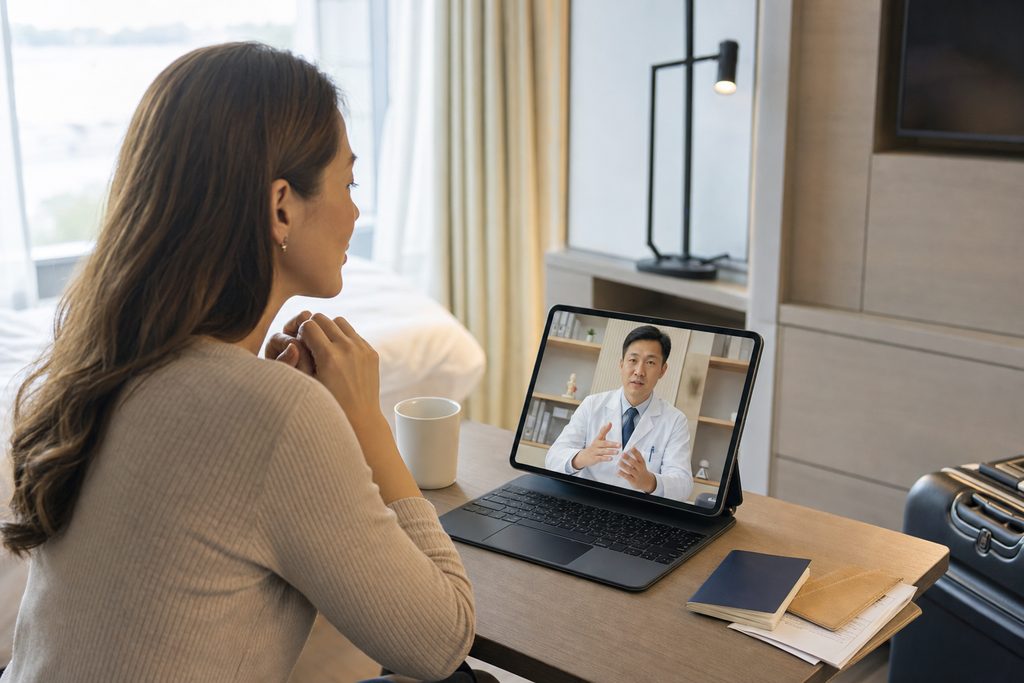
You’ve probably heard that getting a surgical opinion from a top Chinese hospital means booking a flight, navigating a foreign city, and hoping for the best. The reality has shifted. The process now begins with a video call from your living room. We coordinate these connections daily. The most common question we hear is not about complex surgical techniques. It’s about what actually happens during that first screen-to-screen meeting. And what it costs.
An online consultation chinese surgeon cost varies based on the specialist’s seniority and the hospital tier. It typically ranges from $100 for a general surgeon at an international department to $800 for a video session with a department chair at a Fudan-ranked top-10 program. But the price tag doesn’t tell you what you’re buying. You’re not just paying for time. You’re paying for a review of your case by a surgeon who may perform more of your specific procedure in a month than a Western surgeon does in a year. Let’s walk through the sequence that turns a digital inquiry into a concrete treatment plan.
How This Actually Works, Step by Step
The sequence is linear but not instant. Here is the path most patients follow.
Step 1: You send your existing medical records. We need imaging reports, operative notes if you’ve had prior surgery, pathology slides if cancer is involved, and your current medication list. DICOM files from CT or MRI scans are essential. A surgeon cannot give a meaningful opinion without seeing the raw imaging, not just the radiologist’s written report. Our team translates these documents into clinical Chinese. This is not Google Translate. A bilingual medical professional renders your history into terminology a Chinese surgeon recognizes instantly.
Step 2: We match your case to a specific surgeon. The “best” hospital on a ranking list means nothing if the surgeon specializing in your exact condition practices elsewhere. We search across our database of 340+ top-ranked hospitals in 37 cities. We look for the surgeon whose published work and surgical volume align with your diagnosis. A general thoracic surgeon is not the same as one who focuses exclusively on minimally invasive esophageal resections. The match takes one to three business days.
Step 3: The surgeon reviews your file before the call. This is the step that separates a useful consultation from a wasted one. We ensure the surgeon receives your translated file at least 48 hours before the scheduled video call. When the surgeon has already studied your imaging and history, the conversation moves straight to surgical strategy, candidacy, and timing. Without this pre-review, you spend half the call describing symptoms while the surgeon reads your file for the first time.
Step 4: The video consultation happens. A bilingual coordinator joins the call. The surgeon will have specific questions about your symptom progression and functional status. You’ll hear an assessment of whether surgery is indicated, what approach the surgeon would recommend, and what outcomes the team typically sees. You can ask about complication rates, recovery timelines, and the surgeon’s personal experience volume. The call usually lasts 30 to 45 minutes.
Step 5: A written summary arrives within 48 hours. You receive the surgeon’s assessment in English, including the recommended surgical plan, pre-operative steps if you decide to proceed, and a candidacy evaluation. This document is for your reference. It is not a prescription and not a binding surgical commitment. It is the foundation for your next decision.
What Happens During Virtual Doctor Visit China: The Call Itself
You need the DICOM files. A printed report describes what one radiologist saw. The surgeon needs to see the images directly to make an independent assessment. Contact the imaging center where your scans were performed and request the DICOM files on a CD or via secure electronic transfer. If the scans are older than three months, the surgeon may ask for repeat imaging. This is standard practice, not an obstacle unique to Chinese hospitals.
Ask for the surgeon’s name and department before the consultation. You can independently verify their hospital affiliation, publication record, and departmental role. Surgeons at Fudan-ranked top-10 programs in their specialty are publicly listed on hospital websites. You can also ask during the consultation how many of your specific procedures they perform annually. A high-volume surgeon will answer with a concrete number without hesitation.
Some will. Some won’t. The written summary you receive after the consultation is a clinical document, not a binding directive. Share it with your local physician. A surgeon who is secure in their own judgment will review an international colleague’s opinion with professional interest. If your local doctor dismisses it without reading the imaging analysis, that tells you something about their openness to collaborative care. You can also request a multidisciplinary review that includes both the Chinese surgeon and your local team if the hospital’s international center supports it.
What happens
Frequently Asked Questions
Is it safe to have surgery in China?
Yes. The hospitals used for international patients are JCI-accredited and follow the same international safety standards as top hospitals in the US and Europe. Surgical teams perform high volumes of procedures — often more than their Western counterparts — which studies show leads to better outcomes.
How much does medical treatment cost in China?
Costs vary by procedure and hospital, but international patients typically save 40-80% compared to US prices — even when factoring in travel and accommodation. A consultation with our team will give you an exact, all-inclusive quote with no hidden fees.
How do I start the process?
Send us your existing medical reports to get started. We handle everything from hospital selection and appointment scheduling to visa assistance and post-operative recovery planning. Your medical records are reviewed by the specialist before you even book a flight.
Frequently Asked Questions
Yes. The hospitals used for international patients are JCI-accredited and follow the same international safety standards as top hospitals in the US and Europe. Surgical teams perform high volumes of procedures — often more than their Western counterparts — which studies show leads to better outcomes.
Costs vary by procedure and hospital, but international patients typically save 40-80% compared to US prices — even when factoring in travel and accommodation. A consultation with our team will give you an exact, all-inclusive quote with no hidden fees.
Send us your existing medical reports to get started. We handle everything from hospital selection and appointment scheduling to visa assistance and post-operative recovery planning. Your medical records are reviewed by the specialist before you even book a flight.
For more medical information and treatment options in China, visit chinamedservices.com (China Medical Services).
