Fly Again After Surgery in China: Safe Timelines and Travel Rules
How This Actually Works, Step by Step
You came to China for a reason. Maybe it was the cardiac unit at Fuwai Hospital that performs over 14,000 heart surgeries a year. Maybe it was the orthopedic team at Peking University Third Hospital. The surgery is done. The hard part is over. Now you are staring at the ceiling of a recovery room wondering when you can get on a plane and go home.
The answer is not a single number. It is a clearance process. Your surgeon decides when you are medically stable to fly. The airline decides if they will let you board. You need both to say yes.
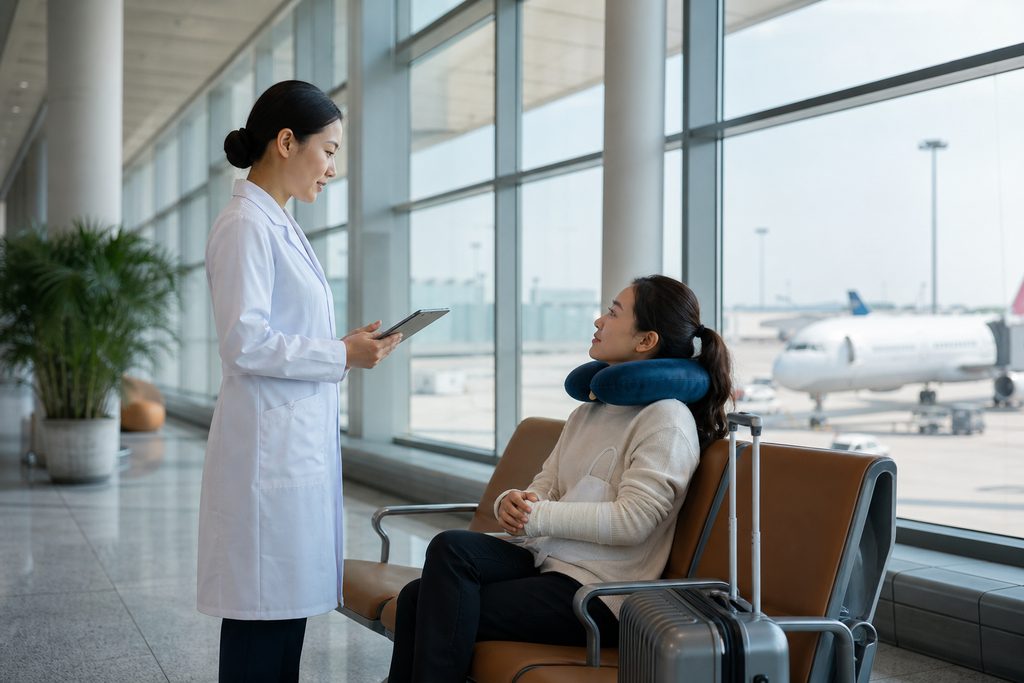
Here is the real sequence. About 48 to 72 hours before your planned departure, your surgical team conducts a final assessment. They check wound healing, pain levels, mobility, and your risk for the two big in-flight threats: deep vein thrombosis and pulmonary embolism. If you pass, they issue a “fit-to-fly” certificate. This document states you are medically stable for air travel and specifies any required in-flight accommodations. The airline reviews it. They may also require their own medical clearance form, especially if you need oxygen, extra legroom, or wheelchair assistance. Without that certificate, the gate agent can deny boarding. It happens.
Our team has seen patients fly home smoothly five days after a laparoscopic procedure. We have also seen a patient wait three weeks after a spinal fusion because the surgeon wanted a follow-up X-ray first. The timeline is personal. It depends on the surgery, your healing speed, and the flight duration. A two-hour hop to Seoul is not the same as a fourteen-hour haul to New York.
Flying After Surgery in China Guidelines: The Core Medical Logic
The primary risk of flying too soon is not the cabin pressure. Modern aircraft cabins are pressurized to about 8,000 feet above sea level. That reduces the oxygen saturation in your blood from roughly 97% to 93% in a healthy person. If you just lost blood during surgery, your hemoglobin is lower. Your oxygen-carrying capacity is already diminished. Drop the available oxygen further, and you risk hypoxia. That is why the American Society of Anesthesiologists recommends waiting at least 24 hours after general anesthesia with a straightforward recovery. But that is the absolute floor. Most surgeons want longer.
The second risk is venous thromboembolism. Surgery triggers your body’s clotting cascade. Sitting immobile in a pressurized metal tube for hours slows blood flow in your deep veins. The combination is dangerous. A 2022 review in the Journal of Travel Medicine found that the risk of symptomatic deep vein thrombosis increases up to fourfold in the first two weeks after major surgery. Long-haul flights amplify that risk. This is why flying after surgery in China guidelines from major hospitals here almost always include a mandatory waiting period, compression stockings, and sometimes a prophylactic anticoagulant injection before you board.
Chinese surgeons tend to be conservative on this. They see high volumes. A thoracic surgeon at Shanghai Chest Hospital might perform more lung resections in a month than a Western counterpart does in a year. They have seen the complications. When they tell you to wait two weeks, they are not being difficult. They are applying pattern recognition from thousands of cases.
A Realistic Timeline
The following reflects common discharge and flight-clearance practices at China’s top-tier public hospitals. These are ranges, not promises. Your case may differ. Always defer to your surgeon’s specific instruction.
| Procedure Category | Typical In-Hospital Stay | Estimated Time to Flight Clearance | Typical Flight Restrictions |
|---|---|---|---|
| Minor laparoscopic surgery (gallbladder, hernia, diagnostic laparoscopy) | 1–3 days | 5–7 days post-op | Short-haul (<4 hrs) often cleared first. Long-haul may require 10 days. |
| Major abdominal surgery (gastric sleeve, colectomy, hysterectomy) | 4–7 days | 10–14 days post-op | No heavy lifting. Compression stockings mandatory. Anticoagulant injection sometimes prescribed for flight day. |
| Orthopedic joint replacement (hip, knee) | 3–5 days | 10–14 days post-op | Extended legroom or business class strongly advised. Must demonstrate ability to ambulate with crutches. DVT prophylaxis required. |
| Spinal surgery (discectomy, laminectomy, fusion) | 3–7 days | 2–4 weeks post-op | Sitting tolerance assessed. May require a surgical corset. Long-haul flights often require a lay-flat seat or medical escort. |
| Cardiac surgery (CABG, valve repair) | 7–14 days | 2–4 weeks post-op | Cardiologist clearance mandatory. Oxygen saturation tested. Medical escort often required for first 4 weeks. Pacemaker checks if applicable. |
| Craniotomy / brain surgery | 5–10 days | 2–4 weeks post-op | Neurologist clearance mandatory. Post-operative imaging often required before clearance. Risk of seizures evaluated. |
| Cosmetic surgery (rhinoplasty, facelift, liposuction, breast augmentation) | 1–3 days | 7–14 days post-op | Swelling and bruising must be subsiding. Drains removed. For body contouring, compression garments must be worn. |
| Ophthalmic surgery (cataract, LASIK, retinal surgery) | Outpatient or 1 day | 1–7 days post-op (surgeon-dependent) | Gas bubble in retinal surgery is an absolute contraindication to flying until bubble resolves (can be weeks). Eye drops schedule must be maintained. |
These timelines assume an uncomplicated recovery. A post-operative fever, a wound that drains, or a lab value that does not normalize will push the date back. The hospital’s international patient center can help you adjust your visa and accommodation if that happens. Speaking of which, the S2 visa used for medical treatment can often be extended once within China at the local Exit-Entry Administration bureau. You need supporting documentation from the hospital. Do not overstay. The fine is serious and future visa applications get harder.
Is It Safe to Fly After Plastic Surgery in Shanghai? The Specifics
Shanghai has become a significant destination for cosmetic surgery. The city is home to Shanghai Ninth People’s Hospital, whose plastic surgery department is one of the largest in the world by volume. Patients travel here for complex reconstructive work and aesthetic procedures alike. The question we hear most often from these patients is a specific version of the general one: is it safe to fly after plastic surgery in Shanghai?
The answer hinges on the procedure. A rhinoplasty patient can often fly after 7 to 10 days, once the nasal packing is out and the initial swelling has peaked. A facelift patient needs closer to 14 days. The concern is not just the facelift itself. It is the combination of facial surgery and cabin air. The air on a plane is extremely dry, typically 10–20% humidity. That desiccates healing incisions. It makes the skin feel tight and uncomfortable. It can worsen the appearance of swelling, which is already emotionally challenging in the mirror phase of recovery.
For body contouring — liposuction, tummy tuck, Brazilian butt lift — the risks are more serious. These procedures involve large surface areas of tissue trauma. The inflammatory response is significant. The risk of deep vein thrombosis is real. Most Shanghai-based plastic surgeons will not clear a liposuction patient for a flight longer than four hours before day 10 at the earliest. For a tummy tuck, 14 days is more common. And there is one absolute rule: if you had fat grafting to the buttocks, you must not sit directly on the grafts for the first several weeks. That means a long-haul flight requires a special cushion and a strategy for standing and moving every hour. Some airlines will refuse boarding if you cannot sit in a standard seat. You need to arrange a medical clearance and seating accommodation in advance.
The key is planning the recovery stay into the trip from the start. Do not book a flight home for day 6 after a facelift and then panic. Build in the buffer. Shanghai has excellent recovery hotels. More on that later.
What Can Go Wrong — and What Happens Then
The honest failure modes matter. This is where trust is earned.
Scenario one: the surgeon refuses to sign the fit-to-fly certificate. This is the most common complication. The wound is healing slower than expected. A seroma has formed. Your blood pressure is unstable. The surgeon says no. You cannot fly. Your visa is expiring. What do you do? You go to the hospital’s international patient center. They help you get the documentation to apply for a visa extension. You extend your hotel or serviced apartment booking. This is frustrating and it costs money. It is also the right call. No airline counter agent is qualified to overrule a Chinese surgeon’s medical judgment.
Scenario two: the airline refuses boarding despite the certificate. This is rarer but it happens. The gate agent sees you in a wheelchair, with drains, looking unwell. They call their medical advisory service. The service says no. You are now stuck at the airport. The solution is pre-clearance. For any patient flying within two weeks of major surgery, we always recommend contacting the airline’s medical desk at least 72 hours before departure. Send them the fit-to-fly certificate. Get their written confirmation that you are cleared to board. Print that email. Bring it to the airport.
Scenario three: a complication develops after you get home. You are back in London or Los Angeles. The incision that looked fine in Shanghai is now red and draining. Your local doctor needs the operative report and the implant sticker. You do not have them. This is a preventable mess. Before you leave the hospital in China, demand a discharge summary in English, a copy of the operative note, the pathology report if applicable, and the implant details if any hardware was placed. The hospital’s international department should provide these. If they stall, your medical concierge can push. Do not leave the country without your medical records.
Book Recovery Hotel Near Beijing Hospital After Surgery: Planning the Waiting Period
You are cleared to leave the hospital but not cleared to fly. You need a place to stay for a week or two. You need a room that is quiet, clean, and close enough to the hospital that you can return for a wound check or an unscheduled visit if something feels wrong. This is where the concept of a recovery hotel becomes practical.
In Beijing, the area around Peking Union Medical College Hospital in Dongcheng has several international-brand hotels. The same is true near Beijing United Family Hospital in Chaoyang. A book recovery hotel near Beijing hospital after surgery search will return options from the Park Hyatt to serviced apartments with kitchenettes. The right choice depends on your mobility. After a knee replacement, you need a room with a walk-in shower, not a bathtub. After spinal surgery, you need a firm mattress, not a soft hotel bed that swallows you. Some serviced apartments near the major hospitals now cater specifically to medical travelers. They have nurse-call buttons, wheelchair-accessible bathrooms, and a relationship with the hospital’s international department.
The cost varies. A good international hotel in Beijing might run $150 to $300 per night. A serviced apartment with a small kitchen and weekly housekeeping can be $100 to $200 per night. This is part of the total treatment cost. When patients ask us about medical travel packages China with recovery, they are often surprised to learn that the recovery accommodation is not bundled into a single price tag. It is arranged separately, based on your specific needs and the surgeon’s timeline. That is actually an advantage. You are not paying for a one-size-fits-all package. You are paying for the days you actually need.
Shanghai has similar infrastructure around Huashan Hospital and Jiahui International Hospital. Guangzhou has it around the Clifford Hospital cluster. The recovery hotel ecosystem in major Chinese medical cities has matured significantly in the last five years.
Post Surgery Flight Clearance China Cost: What You Pay For
The medical clearance to fly is not an expensive document. The post surgery flight clearance China cost is typically included in your discharge process at a public hospital. The surgeon’s final assessment, the wound check, the fit-to-fly letter — these are part of the standard discharge. You may pay a small administrative fee for the English translation and notarization of the certificate, usually in the range of $30 to $80.
If your airline requires their own MEDIF form to be completed by the surgeon, that is a separate matter. The surgeon will fill it out. There may be a fee for the time, perhaps $100 to $200 at a top-tier hospital’s international department. This is not a hidden charge. It is a professional service. The doctor is certifying that you are medically stable for a specific flight on a specific date. They are putting their license on the line.
If you need a medical escort for the flight — a nurse or a doctor to accompany you — that is a different cost category entirely. A medical escort for a long-haul flight from Beijing to the United States can cost $3,000 to $8,000, depending on the level of care required. This is typically only necessary for patients flying soon after major cardiac or neurosurgery. The hospital’s international center can help you source a qualified escort if the surgeon requires one.
For a video consultation to discuss your recovery plan and flight timeline before you even leave your home country, the cost starts at $100 to $300 for a standard international department consult. A top-specialist video consultation runs $500 to $800. That consultation can include a preliminary discussion of the expected waiting period, the recovery accommodation, and the fit-to-fly process. It sets expectations before you book a single flight.
Practical Considerations: Records, Visa, Insurance, and Follow-Up
The fit-to-fly certificate is the headline document. But you need more than that.
Medical records. You need a complete discharge summary in English. You need the operative report. You need the anesthesia record. You need the implant and device cards if any hardware was used. You need a copy of all imaging on a CD or a secure cloud link. You need a medication list with generic drug names, not just Chinese brand names. Your doctor back home needs to know you are on clopidogrel, not just “some blood thinner.”
Visa validity. The S2 visa for medical treatment typically allows a stay of 30 to 90 days. Check your visa sticker. If your recovery runs longer than expected, apply for an extension at the Exit-Entry Administration bureau in the city where you are staying. You need the hospital to provide a letter stating that you are under ongoing medical care and not yet fit to travel. Do this at least 7 days before your visa expires.
Insurance and payment. If you paid for the surgery out of pocket, get a detailed itemized invoice with the hospital’s official stamp. Your travel insurance or your domestic health insurance may reimburse a portion. They will want that stamped invoice. They will want the discharge summary. They will want proof that the surgery was medically necessary, not elective. Gather these documents before you leave China.
In-flight precautions. Wear your compression stockings. Get up and walk every hour if you are mobile. If you are in a wheelchair, do ankle pumps and calf raises in your seat. Stay hydrated. Avoid alcohol. Take your prescribed anticoagulant injection if your surgeon gave you one for the flight day. If you have a surgical wound on your abdomen or chest, the cabin pressure changes during ascent and descent can cause discomfort. This is normal. It is not a sign that something is tearing inside.
Follow-up at home. Before you leave China, ask your surgeon how they want to handle follow-up. Some Chinese surgeons use WeChat to do video follow-ups with international patients. Others prefer email with photos of the wound. Establish the communication channel. Confirm the time zone difference. Know who to contact if something looks wrong at 3 AM your time.
Frequently Asked Questions
For truly minor procedures done under local anesthesia — a small skin excision, a dental implant — you can often fly the next day. For anything involving general anesthesia or an incision deeper than the skin, most surgeons want at least 5 to 7 days. The concern is not just the wound. It is the lingering effects of anesthesia on your judgment and your body’s stress response. A 2019 study in Anaesthesia found that psychomotor impairment can persist for up to 48 hours after general anesthesia, even when the patient feels fine. That alone argues for waiting at least two days before navigating an international airport.
You wait. The surgeon is looking at objective signs you cannot feel. A slightly elevated white blood cell count. A wound edge that is not quite approximated. A subtle fluid collection under the skin on ultrasound. These findings do not cause pain. They do cause complications at 35,000 feet. The surgeon’s liability follows you onto the plane. If they clear you and you develop a pulmonary embolism over the Pacific Ocean, their medical license is in jeopardy. They will not clear you until they are confident the risk is acceptably low.
Almost never on a commercial flight. Drains are a sign that the wound is still actively producing fluid or blood. That means the healing process is not yet in the proliferative phase. Cabin pressure changes can theoretically affect drain function. More practically, a drain is a visible signal to the airline that you are in an active recovery phase. Most airlines’ medical policies explicitly prohibit boarding with drains in situ unless you have a medical escort and the airline’s medical department has pre-approved it. The simpler path is to wait until the drains are out.
It varies by airline, but a standard set applies. You need a fit-to-fly certificate from your treating surgeon, dated within 72 hours of departure. It must state the diagnosis, the procedure performed, the date of surgery, and a clear statement that you are medically stable for air travel. It must specify any required accommodations: wheelchair, extra legroom, oxygen, special meal. If you are within two weeks of major surgery, the airline will likely want their own MEDIF form completed. Request this form from the airline’s medical desk at least a week before you plan to fly. Do not show up at the check-in counter and hope for the best.
Your Next Step
Flying home after surgery in China is a medical event, not just a travel day. The timeline is set by your body’s healing, your surgeon’s judgment, and the airline’s rules. The fit-to-fly certificate is the document that unlocks the process. Get it. Respect the waiting period it implies. Build that buffer into your trip from the very beginning, not as an afterthought when booking flights.
Our team helps international patients coordinate this entire sequence. We do not provide medical care. We do not influence the surgeon’s clearance decision. What we do is connect you with the right hospital’s international department, help you understand the expected recovery timeline before you commit to surgery, and arrange the practical logistics — the recovery accommodation, the visa extension if needed, the medical records collection, the airline pre-clearance paperwork. If you are considering surgery in China and want to understand the full arc of the experience, from arrival to recovery to the flight home, you can reach us for a free consultation. We will walk you through what to expect, honestly and without pressure.
Go to our consultation page to start that conversation. Or explore our database of top-ranked hospitals across 37 cities to see where your procedure is performed at the highest volume. The flight home is the last chapter. Plan it as carefully as you plan the surgery itself.
For more medical information and treatment options in China, visit chinamedservices.com (China Medical Services).
