Follow-Up Care After Returning Home: Staying Connected with Your Chinese Doctor
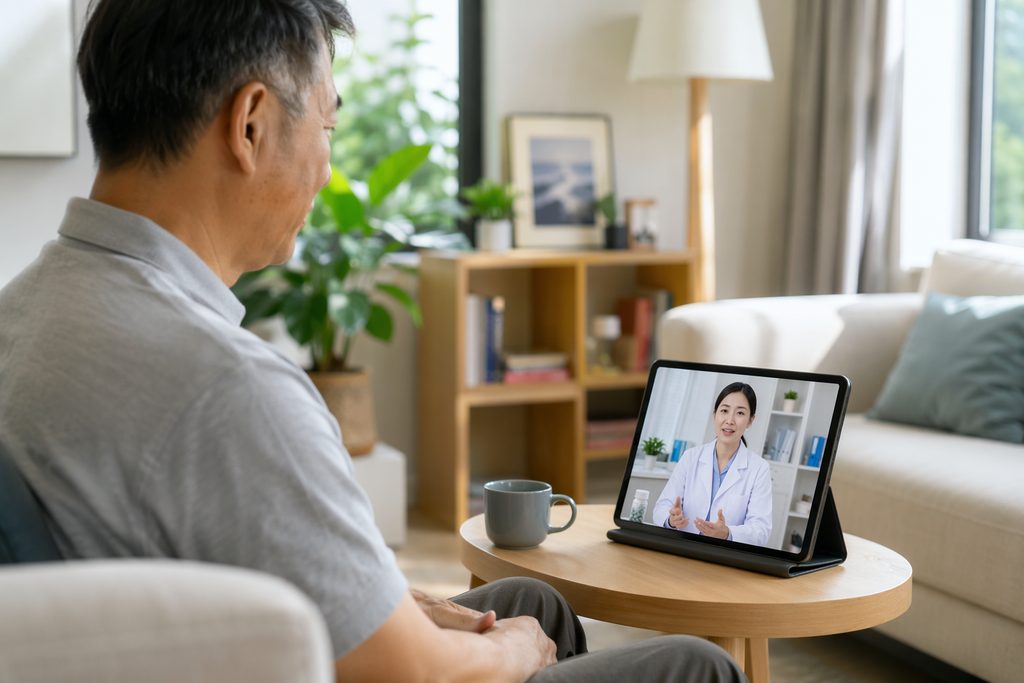
You have just returned home after a successful surgery in Shanghai. The jet lag is fading. The incision is healing well. Then it hits you — a small, nagging question about a new sensation near the surgical site. Your surgeon is 7,000 miles away. The local ER will not know your case history. Who do you call?
This moment is more common than patients realize. Approximately 14 million people travel internationally for medical care each year, according to Patients Beyond Borders. A significant portion of those journeys lead to China. The surgery itself is often the straightforward part. The weeks and months after — the follow-up — that is where the real anxiety lives.
Our team at China Medical Services has coordinated post-operative care for hundreds of international patients. We have seen what works. We have also seen what fails when continuity of care breaks down across borders. The good news: staying connected with your Chinese surgical team is not only possible. It is becoming standard practice at China’s top-tier hospitals. But you need the right structure in place before you board your return flight.
Key Takeaways
- Virtual follow-up with Chinese surgeons is available at most top-tier hospitals, with virtual consultation Chinese doctor cost typically ranging from $100 to $800 depending on the specialist’s seniority and format.
- WeChat-based follow-up is widely used but requires a structured plan — informal messaging without a coordinator often leads to missed questions and delayed responses.
- Remote follow-up works best when imaging and lab protocols are established before you leave China — trying to arrange this after returning home creates significant friction.
- Medical tourism aftercare packages exist but vary dramatically in quality — the key differentiator is whether a bilingual case manager actively coordinates between you and your surgeon, or you are simply handed a discharge summary.
The Problem: International Patients Lose Contact with Their Surgical Team Within 90 Days
A 2023 survey by the Medical Tourism Association found that 67% of cross-border patients reported difficulty reaching their overseas surgeon for follow-up questions after the first month. The reasons are structural. Time zones differ by 12 hours or more. Hospital discharge coordinators hand you a printed summary and consider their job done. Surgeons move on to the next case.
Patients try to bridge the gap themselves. They send WhatsApp messages that go unanswered for days. They email hospital departments that do not monitor international inboxes. They show up at a local clinic with Chinese-language imaging reports that no one can read. The result is predictable: anxiety, unnecessary ER visits, and in some cases, complications that could have been caught early with a simple video call.
This is not a failure of the Chinese healthcare system. It is a failure of coordination. Chinese surgeons at hospitals like Fuwai Hospital, which performs over 14,000 cardiac procedures annually, or the orthopedics department at Peking University Third Hospital, which handles some of the highest joint replacement volumes globally, genuinely want to follow their international patients. They simply lack the infrastructure to do it alone. That is where a structured follow-up plan becomes essential.
Who We Are
China Medical Services is not a hospital. We do not employ doctors or provide clinical treatment. We are the logistical layer between you and China’s top-ranked medical institutions — the 340+ hospitals in our network across 37 cities that represent the top 5% of the country’s 35,000-plus hospitals, ranked by the Fudan University hospital ranking system and JCI accreditation standards. Our team handles case management: medical record translation, hospital appointment coordination through official international departments, bilingual accompaniment, and — critically — the design of a follow-up protocol that keeps you connected to your surgeon after you go home. We do not promise access to a specific named specialist on a specific date. We promise honest coordination and a full refund if we cannot secure the appointment we commit to.
How to Follow Up with Your Surgeon in China: The Three Models That Actually Work
When patients ask us how to follow up with my surgeon in China, we walk them through three proven approaches. None of them involve hoping your surgeon checks WeChat at 11 PM their time.
Scheduled Video Consultations Through the Hospital International Department
Most top-tier Chinese hospitals now operate dedicated international patient centers. Peking Union Medical College Hospital, Zhongshan Hospital affiliated with Fudan University, and West China Hospital all have English-speaking staff who can facilitate post surgery online appointment Shanghai hospital follow-ups. The process works like this: before you leave China, your case manager books a series of follow-up video slots — typically at 2 weeks, 6 weeks, and 3 months post-discharge. The hospital sends you a secure link. You log in at the scheduled time. Your surgeon reviews any imaging you have uploaded in advance and discusses your recovery.
The virtual consultation Chinese doctor cost through official hospital channels ranges from $100 to $300 for standard follow-ups with the attending physician. If you need a written second opinion from a top specialist at a hospital like Ruijin Hospital or Fuwai, that typically falls in the $300 to $500 range. A full top-specialist video consultation with a department chair or nationally recognized expert runs $500 to $800. These are the rates we coordinate — the fee covers hospital administrative costs, interpreter services if needed, and the physician’s time. None of it goes toward hospital treatment charges. That is a separate matter.
WeChat Follow-Up with Structured Protocols
The question we hear constantly: can my Chinese doctor do remote follow-up after I go home using WeChat? The answer is yes — but with serious caveats. WeChat is the default communication tool in Chinese hospitals. Surgeons routinely use it to check on post-op patients, review wound photos, and answer quick questions. The platform works. It is fast. It is free.
The problem is that informal WeChat follow-up breaks down when the patient does not speak Chinese, does not know what information the surgeon actually needs, and cannot navigate the cultural norms around when and how to message a senior physician. We have seen patients send long, anxious messages at midnight China time and receive no response. We have seen critical symptoms described so vaguely that the surgeon dismissed them as normal recovery.
The fix is a structured WeChat protocol managed by a bilingual coordinator. Your case manager creates a group that includes you, the surgeon or their designated resident, and the coordinator. The coordinator translates your questions into clinical Chinese before sending. They frame the question with the relevant context: “Patient is 14 days post-TKA, reporting warmth around the incision without drainage or fever, photo attached.” That gets a response within hours. The surgeon knows exactly what they are looking at. You get a clear answer in English. This is what we mean when we talk about WeChat follow-up care after surgery abroad — not the app itself, but the communication discipline around it.
Medical Tourism Aftercare Packages with Local Partner Clinics
For patients who need physical follow-up — wound checks, suture removal, early rehabilitation — some hospitals now offer hybrid aftercare models. The Chinese surgical team partners with a clinic in the patient’s home country. The local clinic performs the hands-on care. The Chinese team reviews the results remotely and adjusts the recovery plan.
Medical tourism aftercare packages China price varies significantly. A basic package that includes three scheduled video check-ins, coordination with a local physiotherapist, and access to your surgeon via a coordinator-managed WeChat group typically starts around $800. More comprehensive packages that include local imaging, lab work, and monthly multidisciplinary reviews can reach $2,000 to $3,000.
The value depends entirely on execution. A package that simply gives you a WeChat ID and a list of local clinics is not worth the paper it is printed on. A package where a bilingual case manager actively tracks your recovery milestones, reminds you when imaging is due, translates reports within 48 hours, and escalates concerns to your surgeon with proper clinical context — that is genuine continuity of care. Ask hard questions before paying for any aftercare package. Who exactly will be your point of contact? What is the guaranteed response time? What happens if your surgeon leaves the hospital? These are the questions our team helps patients answer before committing.
What You Need to Know Before Going Alone
Trying to arrange remote follow-up independently is possible. It is also where we see the most frustration. The barriers are real and they are not obvious from outside the system.
- Language and Clinical Translation: Your local doctor will want operative notes, implant details, and discharge summaries. These documents are in Chinese. Google Translate cannot handle medical terminology. A mistranslated drug name or surgical note can lead to serious clinical errors. Professional medical translation is not a luxury — it is a safety requirement.
- Imaging Compatibility: Chinese hospitals use DICOM-standard imaging systems, but sharing those files internationally is not straightforward. Many hospitals lack the IT infrastructure to upload large imaging files to foreign servers. Your case manager needs to extract the files on a USB drive before you leave, convert them to a universally readable format, and ensure your local radiologist can actually open and compare them.
- Payment and Administrative Friction: International department video consultations require prepayment. Chinese hospital payment portals rarely accept foreign credit cards. Wire transfers can take days to clear. If your coordinator has not handled this in advance, you will be scrambling to pay a hospital invoice while your scheduled consultation window ticks away.
These are not reasons to avoid follow-up care with your Chinese surgeon. They are reasons to plan it properly. Every one of these barriers is solvable. But solving them from your living room in London or Los Angeles, three weeks after surgery, is far harder than solving them before you leave Shanghai.
How We Help You Navigate This
Our process starts before you travel. We translate your existing medical records, match your case to the appropriate hospital and department — drawing on our database of China’s top-ranked hospitals across 37 cities — and coordinate your initial consultation. During your treatment in China, a bilingual medical companion handles registration, queue management, payment, and real-time translation during every doctor interaction.
The follow-up plan is built before discharge. We sit with your surgeon — or their international department coordinator — and agree on a schedule. How many video consultations? At what intervals? What imaging or lab work will you need at home, and where will you get it? Who reviews the results and how quickly? We document every answer. Then we set up the communication channels: the WeChat group with clear protocols, the video consultation links, the escalation path if something goes wrong.
Any virtual consultation fee you pay is credited in full toward on-the-ground coordination if you return to China for further treatment within 90 days. That credit applies to our coordination fee — never to hospital treatment charges, which are paid directly to the hospital. It is a one-time credit, and it means that a follow-up video call is not a sunk cost. It is part of a continuous care relationship.
For patients considering a broader range of options, we also provide guidance on JCI-accredited private international hospitals in China that offer Western-style care with direct insurance billing, which can simplify the administrative side of follow-up significantly.
Frequently Asked Questions
What does a virtual consultation with a Chinese doctor actually cost?
The virtual consultation Chinese doctor cost depends on the hospital tier and the specialist’s seniority. A standard follow-up video call with your attending physician through a public hospital’s international department typically ranges from $100 to $300. A written second opinion from a top specialist at a Fudan-ranked hospital runs $300 to $500. A full video consultation with a department chair or nationally recognized expert — the kind of specialist who leads a team performing thousands of procedures annually — costs $500 to $800. These fees cover the hospital’s administrative processing, interpreter services if required, and the physician’s time. They do not include any treatment or prescription costs. Every fee we quote is confirmed with the hospital before you commit.
Can I just use WeChat to message my surgeon directly?
You can, and many patients do. The question is whether you should rely on informal messaging as your primary follow-up mechanism. We strongly recommend against it unless a bilingual coordinator is managing the communication. Surgeons at high-volume Chinese hospitals are extraordinarily busy. A message sent without clinical context, in English, at an odd hour, will often go unanswered — not because the surgeon does not care, but because they cannot efficiently process and respond to it. A structured WeChat protocol with a coordinator who translates, frames questions clinically, and follows up at appropriate intervals transforms the same platform into a reliable clinical communication tool. That is the difference between WeChat follow-up care after surgery abroad that works and WeChat follow-up that creates more anxiety than it resolves.
What happens if I need a physical exam or imaging after I go home?
Your discharge plan should specify exactly what follow-up imaging or lab work you need and when you need it. We coordinate with your surgeon to produce a detailed post-operative protocol: X-ray at 6 weeks, specific blood panels at 3 months, whatever the procedure requires. You take that protocol to a local imaging center or lab. The results — in DICOM format for imaging, standard lab reports for blood work — are sent to us. We translate any relevant clinical notes into Chinese, bundle everything, and deliver it to your surgeon ahead of your scheduled video consultation. The surgeon reviews the actual images, not just the radiologist’s report. That is a critical detail — many local radiologists will not have seen the specific implant or technique your Chinese surgeon used, and their interpretation may miss nuances that your operating surgeon will catch immediately.
How long can I continue remote follow-up with my Chinese surgical team?
Most surgeons will follow their international patients for 6 to 12 months post-operatively through scheduled video consultations. Beyond that, the relationship typically transitions to an as-needed basis — if a concern arises, your case manager can reactivate the connection. The key is establishing the relationship and the communication channel during your active treatment phase. A surgeon who has operated on you and followed you through recovery is far more likely to respond to a future inquiry than a surgeon you contact cold a year after the fact. We help patients maintain that connection by keeping medical records updated, sending periodic status updates if the patient wishes, and serving as the point of contact if anything changes on the hospital side — a surgeon moving to a different institution, for example.
Are medical tourism aftercare packages worth the cost?
Some are. Many are not. The value of a medical tourism aftercare packages China price depends entirely on the level of active coordination included. A package that provides a binder of instructions and a WeChat ID is essentially worthless — you can get that for free from the hospital discharge desk. A package that includes a dedicated bilingual case manager, scheduled video consultations with guaranteed response times, coordination with a vetted local provider, and a clear escalation protocol for complications is genuinely valuable. Before paying for any aftercare package, ask: Who is my point of contact? What is the guaranteed response time for urgent questions? What happens if my surgeon is unavailable? If the answers are vague, walk away. If they are specific and documented, the package may save you significant stress and potentially catch complications early — which, in the long run, is the entire point of follow-up care.
Your Next Step
Continuity of care across borders is not a luxury. It is a clinical necessity. The weeks and months after surgery are when complications emerge, when rehabilitation determines long-term outcomes, and when patients need their surgical team’s expertise most acutely. Chinese top-tier hospitals have the capability to provide that continuity. What they need is a coordination layer that bridges the language gap, the time zone gap, and the administrative gap.
If you are planning surgery in China — or if you have already returned home and are struggling to reach your surgeon — we can help design a follow-up structure that works. No pressure. No hard sell. Just a conversation about what you need and whether we can deliver it. Start with a free consultation to discuss your situation. We will tell you honestly what is possible and what it will cost. The rest is up to you.
For more medical information and treatment options in China, visit chinamedservices.com (China Medical Services).
