Top Colorectal Cancer Hospital: Fudan Cancer Center for International Patients
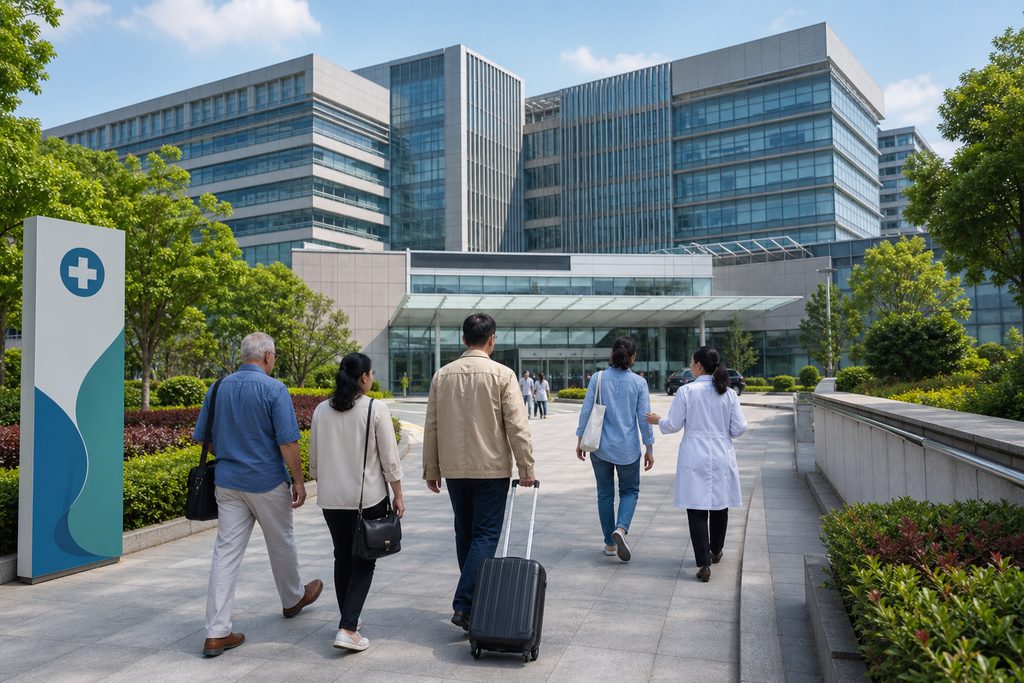
When 52-year-old Daniel from Manchester received his stage III colon cancer diagnosis, his oncologist laid out a treatment plan that would cost upwards of $180,000 privately. Daniel started searching. He typed phrases into Google late at night: “best hospital for colon cancer Shanghai,” “colorectal cancer treatment cost China,” “Fudan Cancer Center international patients.” He found fragments of information, forum posts that went nowhere, and hospital websites with no clear path for a foreigner. That confusion is what this article resolves. We work with international patients navigating exactly this decision, and we know what the data shows, what the process actually requires, and what questions you should be asking before you book a flight.
Fudan Cancer Center: What the Rankings Actually Say
Fudan University Shanghai Cancer Center (FUSCC) consistently appears among China’s top-tier oncology institutions. The Fudan rankings—which evaluate Chinese hospitals across 45 specialties—place FUSCC’s oncology department among the top 10 in China. That is not a general reputation claim. It is a peer-reviewed assessment based on clinical reputation and research output.
The center treats over 15,000 newly diagnosed cancer patients annually. Colorectal surgery is one of its core strengths. The hospital operates dedicated colorectal cancer multidisciplinary teams, meaning a patient’s case gets reviewed by surgeons, medical oncologists, radiation oncologists, and pathologists together—not sequentially. For international patients, this matters because treatment plans emerge from consensus rather than a single physician’s preference.
But let us be direct about what “top-ranked” does and does not mean for you. It means the surgical volume is high, the pathology standards are rigorous, and the protocols align with international guidelines. It does not mean the process will be easy without Chinese language skills. It does not mean you can email the hospital and get an appointment next week. And it does not mean the price will be identical to what a local patient pays. We will get into all of that.
Colorectal Cancer Treatment Cost China: Real Numbers
The most common question we hear: what is the actual colorectal cancer treatment cost China? Here is a realistic breakdown for international patients at top-tier Shanghai hospitals, based on current market data we see across coordination cases.
| Treatment Component | China (International/VIP Channel) | United States (Private Pay) |
|---|---|---|
| Colorectal surgery (open or laparoscopic) | $15,000–$30,000 | $80,000–$150,000 |
| Chemotherapy (6 cycles, standard regimen) | $8,000–$20,000 | $60,000–$120,000 |
| Radiation therapy (5–6 weeks) | $10,000–$25,000 | $50,000–$100,000 |
| Total typical package (surgery + adjuvant therapy) | $35,000–$75,000 | $190,000–$370,000 |
These ranges vary by hospital and case complexity. A stage I tumor removed endoscopically costs far less. A stage IV case requiring liver metastasectomy plus systemic therapy costs more. The international department pricing at FUSCC typically runs 1.5 to 2 times the standard public rate, which is still a fraction of Western private-pay costs.
What about the “Fudan University cancer hospital price for foreigners” question specifically? The hospital does not publish a fixed foreigner price list. Your final quote depends on the treatment protocol, length of stay, and whether you go through the international medical department or the standard public channel. We advise patients to expect the ranges above and to request a written estimate before committing.
How Successful Is Colorectal Cancer Surgery in China?
This question deserves an honest answer. China’s top cancer centers report 5-year survival rates for colorectal cancer that are comparable to major Western institutions. For stage II colon cancer, 5-year survival at leading Chinese centers typically exceeds 80%. For stage III, it ranges between 55% and 70% depending on lymph node involvement and treatment adherence. These figures come from published institutional data and national cancer registry reports.
What drives these outcomes? Surgical volume. Chinese top-tier hospitals perform colorectal resections at a scale that most Western centers cannot match. A surgeon at FUSCC may perform several hundred colorectal procedures per year. Volume correlates with lower complication rates—anastomotic leaks, wound infections, and reoperation rates all decline as surgeon experience rises.
Laparoscopic and robotic approaches are standard. FUSCC and other Shanghai centers use da Vinci systems routinely for rectal cancer cases where sphincter preservation is the goal. That matters for quality of life. The technical capability is not the question. The question is whether you can access it efficiently as a foreign patient. That is where process beats rankings.
How This Actually Works, Step by Step
You have a diagnosis. You have imaging and pathology reports. Now what?
First, you send us your existing medical records—colonoscopy report, biopsy pathology, CT or MRI scans, and any treatment history. We translate these into Chinese and submit them to the colorectal surgery department at your target hospital, typically FUSCC or another top-ranked Shanghai center.
Second, the department reviews your case. This takes 3 to 7 business days. They assess whether your case is appropriate for treatment in China and what the recommended approach would be. You receive a written second opinion or a video consultation with the specialty team. The written second opinion costs $300–$500. A video consultation with a top specialist runs $500–$800.
Third, if you decide to proceed, we coordinate your hospital appointment. Here is the critical reality: public hospital outpatient clinics in China do not allow overseas patients to pre-book appointments remotely. You cannot email the hospital and reserve a surgery slot. What you can do is go through the hospital’s international medical department or VIP channel, which does allow advance scheduling. This is where the 1.5–2x price premium comes from—it buys you advance booking, English-speaking coordination, and a more streamlined process.
Fourth, you travel to Shanghai on an S2 visa, which is the correct category for short-term medical treatment and private affairs. Your accompanying family member applies for the same S2 visa. We provide the hospital invitation letter and supporting documents to include with your visa application.
Fifth, you attend your in-person consultation, complete any additional testing, and schedule your surgery or treatment. Admission follows the hospital’s own rules—we cannot promise a specific surgery date, but we can confirm the appointment and coordinate the logistics.
A Realistic Timeline
| Stage | Duration | What Happens |
|---|---|---|
| Document submission and translation | 2–3 days | We translate your records into Chinese and prepare the submission package |
| Hospital department review | 3–7 business days | The colorectal team evaluates your case and issues a written opinion or schedules a video consultation |
| Appointment coordination | 1–3 weeks | We book your international department appointment and confirm the date |
| Visa processing | 1–4 weeks | You apply for the S2 visa with the hospital invitation letter; processing time varies by embassy |
| Travel and in-person consultation | 3–5 days | You arrive in Shanghai, meet the specialist, and complete any additional tests |
| Surgery scheduling | 1–3 weeks after consultation | The hospital schedules your procedure based on bed availability and clinical urgency |
| Post-operative recovery in China | 2–6 weeks | Hospital stay plus outpatient follow-up before you are cleared to fly home |
The total timeline from first contact to surgery typically spans 2 to 3 months. The waiting steps people forget: document translation, embassy appointment availability, and the gap between your initial consultation and the actual surgery date. None of these are optional, and none can be skipped by paying more.
What Can Go Wrong — and What Happens Then
Let us be honest about failure modes, because they exist.
Your records are incomplete. Chinese specialists will not make a treatment recommendation without full pathology and imaging. If your biopsy report lacks immunohistochemistry markers or your CT scan is low resolution, the hospital will ask you to repeat tests in Shanghai. That adds 3 to 5 days and costs $500 to $1,500. The fix: send everything you have upfront, and expect to repeat some imaging.
The visa takes longer than expected. S2 visa processing times vary by country and season. Some embassies take 4 weeks. If your surgery window is urgent, this delay matters. The fix: start the visa process as soon as you have the hospital invitation letter, and do not book flights until the visa is approved.
The hospital changes your assigned specialist. You requested a specific surgeon, but that surgeon’s schedule is full or they are traveling. The hospital assigns another senior specialist in the same department. This is normal in Chinese public hospitals. The fix: accept the substitute if they have equivalent seniority, or request a rescheduled appointment—but that may delay your treatment.
Your insurance does not cover treatment in China. Most Western insurers reimburse after the fact, and many exclude out-of-network international care entirely. You will need to pay upfront. The fix: confirm coverage before you travel, and request an itemized invoice from the hospital for reimbursement purposes.
None of these are rare. We see them regularly. The patients who handle them well are the ones who planned for them.
Choosing Where to Go: Fudan Cancer Center vs. Other Shanghai Options
FUSCC is not your only option in Shanghai. The city has multiple hospitals with strong colorectal oncology programs, and the right choice depends on your specific case.
If your case is straightforward—stage I or II colon cancer without complex comorbidity—FUSCC is an excellent choice for its surgical volume and multidisciplinary approach. If your case involves recurrent disease or liver metastases, you may also want to consider Zhongshan Hospital, which has a renowned liver surgery program and works closely with FUSCC on complex colorectal cases. If you prefer a private international hospital with Western-style service and direct insurance billing, Jiahui International Hospital and United Family Shanghai offer colorectal surgery with English-speaking staff throughout—but at a higher price point and with lower surgical volume than FUSCC.
What should you evaluate? Three things. First, surgical volume in your specific procedure—ask how many colorectal resections the department performs annually. Second, the multidisciplinary structure—does your case get reviewed by a tumor board, or does one surgeon decide everything? Third, the international patient pathway—does the hospital have a dedicated international department, or are you navigating the standard public system alone?
Practical Considerations: Records, Visa, Payment, Language, Follow-Up
Your medical records need professional translation. Google Translate will not work for pathology reports. Chinese hospitals require accurate, medically precise translations of your diagnosis, staging, and treatment history. We handle this as part of our coordination service.
The visa category is S2. Not M. M visas are for commercial and trade activities and have nothing to do with medical treatment. Your S2 application should include the hospital’s invitation letter, your passport, and proof of sufficient funds. The S2 allows short-term stays for private affairs, including medical treatment. If your treatment will exceed 180 days, you need an S1 visa instead.
Payment works on a prepaid basis at public hospitals. You deposit funds at admission, and the hospital deducts from your account as services are provided. International departments often accept international credit cards; standard public departments may require Chinese payment methods. Private international hospitals typically accept major international insurance directly.
Language is the biggest practical barrier. Even at FUSCC’s international department, not every nurse or technician speaks English. You will need a bilingual companion for registration, payment, pharmacy pickup, and navigating between departments. Our bilingual medical companion service costs from $300 per day and covers exactly this: queueing, translation, paperwork, and logistics.
Follow-up at home is possible. Chinese oncologists routinely provide written treatment summaries and communicate with your home oncologist via email or video call. You are not cut off after you fly home. But you do need to arrange this before you leave—request the summary documents and establish the communication channel while you are still in Shanghai.
Frequently Asked Questions
Can I book colorectal cancer treatment in Shanghai without traveling there first?
You cannot book surgery remotely through the standard public channel. What you can do is arrange a video consultation or written second opinion first, then travel for an in-person consultation, and then schedule surgery. The international department pathway allows advance appointment booking, but the hospital still requires an in-person evaluation before any surgical procedure.
What does Fudan Cancer Center charge international patients compared to local patients?
International patients going through the hospital’s international medical department or VIP channel typically pay 1.5 to 2 times the standard public rate. This premium covers advance booking, English coordination, and a more streamlined process. The standard public rate is the cheapest option but requires navigating the system in Chinese and waiting in the same queues as local patients.
Is colorectal cancer surgery in China as safe as in the United States or Europe?
At top-ranked centers like FUSCC, surgical outcomes are comparable to major Western institutions. High surgical volume, standardized protocols, and modern laparoscopic and robotic equipment are standard. The key variable is not the surgery itself but the coordination around it—language, records, and follow-up. That is where international patients need support.
How do I apply for the right visa for medical treatment in China?
You apply for an S2 visa, which covers short-term private affairs including medical treatment. Your accompanying family members also apply for S2 visas. The hospital provides an invitation letter that you include with your application. Processing time varies by embassy, so start early. For stays over 180 days, the S1 visa applies.
What if my home oncologist disagrees with the Chinese hospital’s recommendation?
That happens, and it is healthy. Share the Chinese hospital’s written opinion with your home oncologist. Many Western oncologists are open to reviewing treatment plans from top Chinese centers, especially when the protocols align with NCCN or ESMO guidelines. If there is a genuine disagreement, you can request a follow-up video consultation to discuss the differences before making a decision.
Your Next Step
Choosing to pursue colorectal cancer treatment in China is a significant decision, and the information gap is real. That is why our team exists. China Medical Services helps international patients navigate Chinese healthcare—we are not doctors, and we do not make medical decisions for you. What we do is handle the logistics: records translation, hospital communication, appointment coordination, visa documentation, and bilingual companionship on the ground. If you are considering Fudan Cancer Center or another top-ranked Chinese hospital, start with a conversation. Tell us your diagnosis and what you are looking for. We will tell you honestly whether this path makes sense for your case, and what it would take to move forward. No pressure. Just clarity.
The core message is this: top-tier colorectal cancer care in China is real, measurable, and accessible to international patients—but only if you understand the process, the costs, and the honest limitations. That understanding starts with asking the right questions. We are here to help you ask them.
For more medical information and treatment options in China, visit chinamedservices.com (China Medical Services).
