Suzhou University First Affiliated Hospital Guide for International Patients: Fudan Rank 43
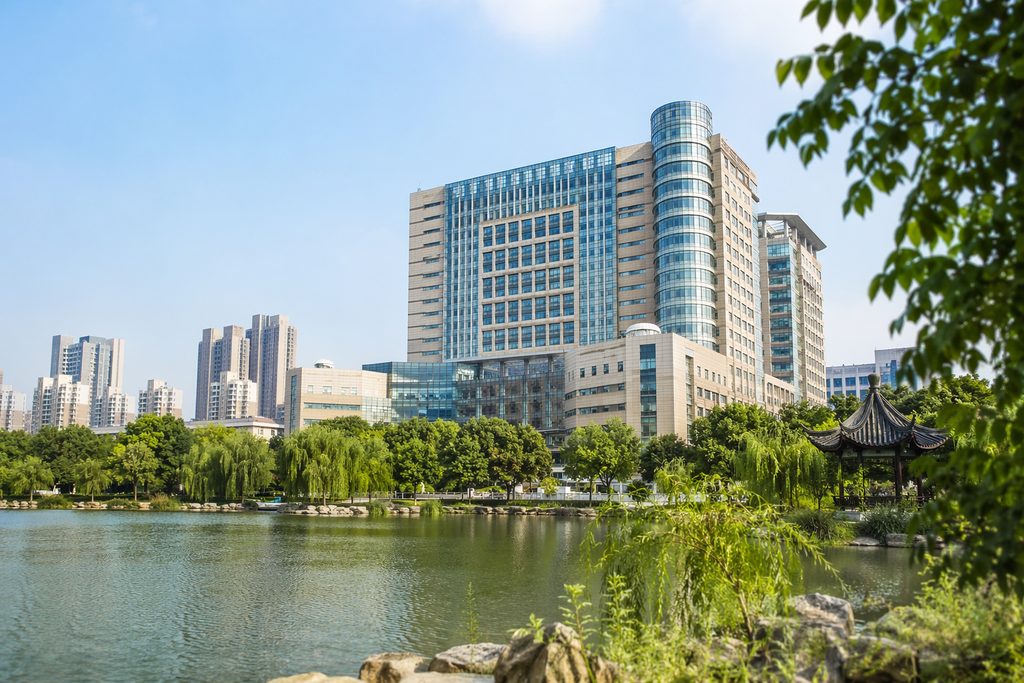
Navigating a foreign hospital system starts with a single, practical question: what will this actually cost? The search for a Suzhou University First Affiliated Hospital international patient price list is rarely about idle curiosity. It is about planning. About comparing a potential bill against what you would pay at home. The First Affiliated Hospital of Soochow University, as it is also known, sits in a specific niche. It does not top the national Fudan rankings, but it holds a solid position in the A tier, a designation that places it among the top 5% of China’s 35,000-plus hospitals. For international patients, that means access to high-volume clinical expertise without the extreme price premiums of Beijing or Shanghai’s very top names.
We help patients connect with this system every day. Not as doctors, but as coordinators who translate the real logistics. Let’s walk through what that rank means, what you will pay, and how the process actually unfolds.
How This Actually Works, Step by Step
Most people assume they can email the hospital, book a surgery date, and fly over. It does not work that way here. Public hospitals in China, even renowned university-affiliated centers, do not offer remote booking for ordinary outpatient clinics. The pathway for an international patient looks different.
First, you send us your existing medical records. Imaging, pathology reports, blood work, and a summary of your current treatment plan. Our team translates these documents into clinical Chinese. This is not a machine translation. Nuance matters when a specialist reviews your case.
Second, we submit these records through the hospital’s official international liaison channel. A relevant department head or senior specialist reviews the file. They provide a written second opinion. This document outlines whether your case is suitable for treatment at their center, what approach they recommend, and a rough treatment timeline. This written analysis typically costs between $300 and $500.
Third, if the opinion is favorable and you decide to proceed, we coordinate a video consultation. You speak directly with the specialist. You ask your questions. You hear the plan in their own words. This step costs $100 to $300 for a standard international department consultation.
Only after these steps do we schedule an in-person visit. We handle the hospital registration, create your medical card, and arrange a bilingual companion to meet you on the ground. You are not walking into a chaotic lobby alone with a translation app.
What the Fudan Rank 43 Actually Means for Your Care
The query “best hospital in Suzhou for foreigners Fudan rank 43” contains a misunderstanding worth clearing up. The Fudan Hospital Ranking does not assign sequential numbers like 43rd place in the comprehensive list. The top 100 hospitals are grouped into tiers: A++++, A+++, A++, A+, and A. The First Affiliated Hospital of Soochow University consistently appears in the A tier.
That A tier designation is a signal of broad, reliable competence across multiple specialties. It means the hospital handles high patient volumes, maintains accredited residency programs, and publishes research. But it does not mean every department is equally strong. For specific conditions, you look at the specialty reputation rankings. The hospital’s hematology and oncology departments carry particular weight in the region. Its orthopedics and general surgery programs also see significant international interest.
For a foreigner deciding whether to travel here, the tier matters less than the specific department’s experience with your exact condition. A hospital can be A tier overall but have a single standout department that draws patients from across Southeast Asia. We help you identify whether your case matches the hospital’s genuine strengths, not just its general reputation.
That is the difference between choosing a hospital by name and choosing one by documented capability.
A Realistic Timeline
People underestimate the waiting steps. Here is what a typical timeline looks like, assuming no unexpected findings derail the process.
| Stage | What Happens | Duration |
|---|---|---|
| Document Preparation | You gather and send all records. We translate. | 3–7 days |
| Written Second Opinion | Records reviewed by a Suzhou specialist. Written report returned. | 5–10 business days |
| Video Consultation Scheduling | Coordinating a time slot with the specialist. | 3–7 days after opinion |
| Visa Processing | S2 visa application with hospital invitation letter. | 1–4 weeks, varies by embassy |
| Travel and In-Person Consultation | Arrival, hospital registration, face-to-face evaluation. | 1–2 days on site |
| Pre-Treatment Testing | Any required scans or labs repeated locally. | 1–3 days |
| Treatment or Surgery | Scheduled based on specialist availability and urgency. | 1–4 weeks from clearance |
This is not a fast process. The total time from first contact to treatment can stretch to two or three months. Rushing it is not possible and not safe. The written second opinion phase is the most underestimated delay. Specialists review cases between surgeries and clinic hours, not on a fixed desk schedule.
What Can Go Wrong — and What Happens Then
The specialist reviews your file and says no. This happens. Sometimes the condition is too advanced for the treatment approach available. Sometimes the hospital’s current caseload cannot accommodate a complex international case within a reasonable timeframe. When this occurs, we do not leave you stranded. We take the same records and submit them to another center in our network. Different hospitals have different surgical volumes and risk tolerances.
Another failure mode: you arrive and the on-the-ground evaluation reveals something the remote review missed. A scan shows a complication that changes the treatment plan. The quoted timeline extends. The cost estimate shifts. We have seen this happen. The recourse is honest communication about the new reality and a revised plan. You always retain the right to decline treatment and return home. The coordination fees for the remote steps are not refundable—the work was done. But any coordination fees paid toward future on-the-ground service are credited in full if you proceed within 90 days.
The visa gets delayed. This is common. Embassy processing times fluctuate. We provide the invitation documentation, but we do not control consular decisions. Build buffer time into your plan. Do not book non-refundable flights until the visa is in hand.
Is This Hospital the Right Choice for Cancer Treatment?
The question “is Suzhou University First Affiliated Hospital good for cancer treatment” comes up often. The answer depends on the cancer. For hematologic malignancies—leukemias, lymphomas, multiple myeloma—the hospital’s hematology department is a regional referral center with significant bone marrow transplant experience. For solid tumors, the oncology and surgical oncology teams manage high volumes of gastric, liver, and lung cancers, reflecting regional disease patterns.
But a patient with a rare sarcoma or a brain tumor requiring highly subspecialized neurosurgical oncology might be better served at a center with a dedicated subspecialty program. Fudan University’s Huashan Hospital for neurosurgery, or Peking University Cancer Hospital for certain solid tumors, could be a stronger match.
What the Suzhou hospital offers is integrated care at a lower cost base than Shanghai, which is just a 25-minute high-speed train ride away. The pathology and imaging infrastructure is modern. The surgical volumes are high, and volume correlates with outcomes in complex cancer surgery. For many patients, it represents a pragmatic middle ground between the ultra-elite national centers and smaller provincial hospitals.
Making this judgment requires a specialist-level review of your specific pathology report. No website, including this one, can tell you whether this hospital is right for your cancer. That is what the written second opinion process is for.
Practical Considerations: Registration, Visas, and Payment
Understanding how to register at Suzhou University First Affiliated Hospital as a foreigner means accepting that you cannot simply log onto a portal and pick a time slot. The public registration system operates in Chinese, requires a local ID-linked medical card, and releases appointment slots on a rolling basis that disappear within minutes for sought-after specialists.
The international patient pathway bypasses this scramble. We create your medical record in the hospital system using your passport. We coordinate directly with the specialist’s department to secure a consultation slot. This is not queue-jumping. It is using the channel designated for patients who cannot navigate the standard system. The coordination fee for this appointment booking starts from $300.
Visas demand precision. You will apply for an S2 visa, a short-stay category used for private affairs including medical treatment. The hospital provides a stamped invitation letter and treatment confirmation that you submit with your application. Do not let anyone tell you to apply for an M visa. M is for commercial trade fairs and business meetings. Using the wrong category can get you turned away at the border.
Payment at public hospitals in China is prepaid. You deposit funds at admission, and the hospital draws down against that balance for tests, medications, and procedures. International insurance is rarely accepted directly at public hospital counters. You pay out of pocket, obtain detailed receipts and medical records in English translation, and file for reimbursement with your insurer. Private international hospitals like United Family handle direct billing. Public university hospitals generally do not.
Language is the invisible cost. Without a bilingual companion, you will miss critical pre-operative instructions, misunderstand medication schedules, and struggle to communicate symptoms. The $300 daily rate for a companion who translates clinical conversations, handles registration desks, and guides you through the sprawling campus is not a luxury. It is operational necessity.
Frequently Asked Questions
You cannot book a standard public outpatient appointment remotely without a Chinese ID and local phone number. The functional route is through the hospital’s international department, which requires a referral and medical records review. We handle this coordination. Attempting to show up and register at the public counter as a foreigner with no Chinese language support will be extremely difficult.
The cost for major procedures at this hospital typically runs 70% to 85% less than US prices. A cardiac bypass that costs $120,000 in the United States might run $18,000 to $25,000 here. But you must factor in travel, accommodation, visa fees, and our coordination services. The total all-in cost still lands well below the procedure cost alone in most Western systems. Exact numbers require a case review.
This is a top-tier Chinese university hospital with standard safety protocols, infection control, and emergency response capabilities. Medical errors and complications occur in every health system on earth. The hospital carries liability insurance and follows national clinical guidelines. As a foreign patient, you have the same rights to explanation and redress as any patient. Having a bilingual companion ensures you understand what is happening if a complication arises and can communicate your concerns clearly to the care team.
Before you leave the hospital, we ensure you receive a complete discharge summary, operative notes, pathology reports, imaging on a CD or secure link, and a medication list—all translated into English. You hand these to your doctor at home. For ongoing monitoring, we can arrange follow-up video consultations with the Suzhou specialist as needed. The continuity gap is real, but thorough documentation bridges it.
Your Next Step
The information here gives you a framework. What it cannot give you is a specific, individualized assessment of whether the First Affiliated Hospital of Soochow University is the right destination for your medical needs. That requires a specialist looking at your actual scans and reports.
Our team exists to make that connection happen. We do not practice medicine. We do not promise outcomes. We translate records, open doors to the right departments, and put a competent bilingual professional at your side from the moment you land. If you want to know whether this path makes sense for you, send us your records for a preliminary review. The conversation starts with your case, not a sales pitch.
Request a free initial consultation to discuss your situation and learn whether Suzhou fits your medical and practical requirements.
For more medical information and treatment options in China, visit chinamedservices.com (China Medical Services).
