Gastric Cancer Second Opinion in China: Fudan Cancer Center Review
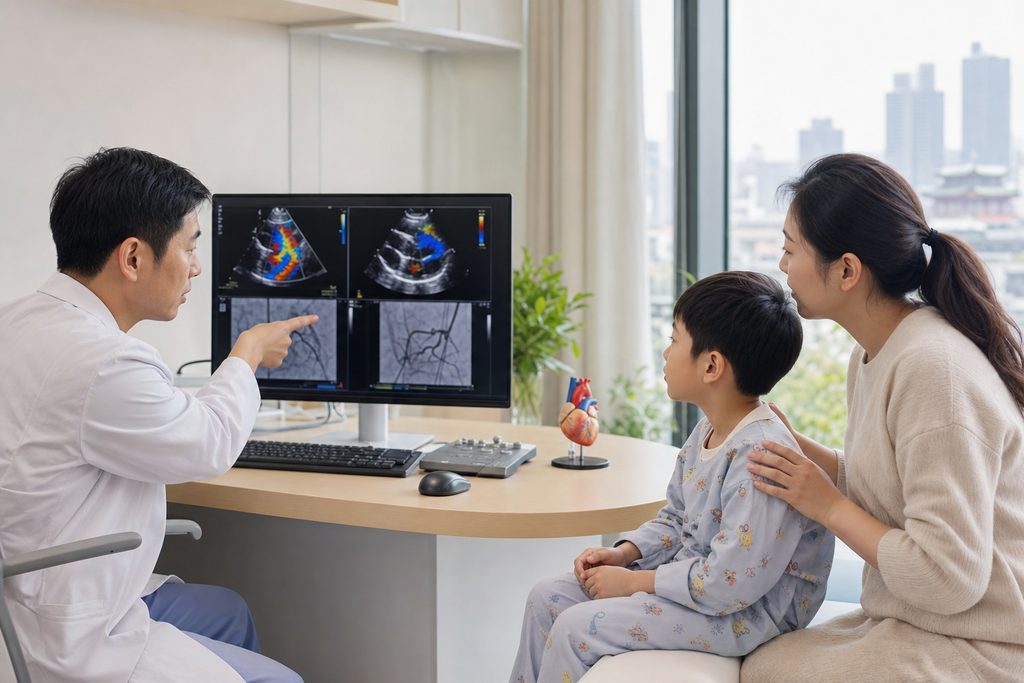
While patients in the United States face an average out-of-pocket cost exceeding $4,000 for a single oncology consultation at certain private centers, a written second opinion from a top-tier Chinese cancer hospital typically ranges from $300 to $500. Gastric cancer is the fifth most common malignancy worldwide, yet survival rates vary dramatically depending on where you are treated. The five-year survival rate for gastric cancer in Japan and South Korea exceeds 60%, but in the United States it hovers around 32%. That gap is not about technology. It is about volume, early detection, and surgical precision. Fudan University Shanghai Cancer Center sits inside that conversation.
Key Takeaways
- Fudan University Shanghai Cancer Center handles over 2,000 gastric cancer surgeries annually — a volume that dwarfs most Western cancer centers and directly correlates with better outcomes.
- A written second opinion from Fudan Cancer Center via a coordination service typically costs $300–$500, while a video consultation with a senior specialist runs $500–$800.
- The biggest barrier is not money — it is paperwork, language, and knowing how to navigate a hospital that sees 10,000+ outpatient visits daily.
- You do not need to fly to Shanghai to get a second opinion. Remote options exist, and they can clarify whether traveling for treatment makes sense.
The Problem: A Late Diagnosis, A Confusing Treatment Plan
Gastric cancer rarely announces itself. By the time most Western patients receive a diagnosis, the disease has already advanced beyond the earliest stage. In the United States, only about 28% of gastric cancers are caught at a localized stage, according to the National Cancer Institute’s SEER database. In Japan and South Korea, national screening programs catch the same disease at a localized stage in over 50% of cases. That difference alone explains much of the survival gap. But there is another factor at play: treatment quality varies enormously.
A patient diagnosed in a mid-sized American city may see a general surgical oncologist who performs perhaps 10 to 15 gastrectomies per year. A patient at Fudan Cancer Center in Shanghai may be evaluated by a team that performs several hundred gastric resections annually. The difference in lymph node dissection quality, margin status, and perioperative complication rates is not subtle. So when a patient gets a treatment plan that feels rushed, generic, or unclear, a second opinion is not a luxury. It is a rational step.
But here is the problem most patients hit immediately: getting a second opinion from a world-class center usually means long wait times, high fees, and a confusing process. In the US, a second opinion from a top cancer center like MD Anderson or Memorial Sloan Kettering can take 4 to 8 weeks to schedule. In the UK, NHS referrals for a second opinion can stretch for months. And the cost? A self-pay oncology consultation at a leading US center can run $2,000 to $6,000 before any testing. That is before you factor in travel.
So the question becomes: is there a faster, more affordable route that still gets you genuinely expert eyes on your case? That is where the China Medical Services model enters the picture. And Fudan Cancer Center is one of the most compelling destinations for that second opinion.
Why Fudan Cancer Center Delivers Results for Gastric Cancer
Fudan University Shanghai Cancer Center (FUSCC) is not just another large hospital. It is consistently ranked among the top oncology institutions in China, and its gastric cancer program specifically is recognized as one of the strongest in Asia. The hospital’s Department of Gastric Surgery performs more than 2,000 gastric cancer operations per year. For context, the average American hospital performs fewer than 20 gastrectomies annually. Even major US academic centers rarely exceed 100 to 150 per year.
That volume matters. Multiple studies, including a landmark 2015 analysis in the Annals of Surgery, have shown that hospitals performing more than 20 gastrectomies per year have significantly lower postoperative mortality than low-volume centers. The effect is even more pronounced above 100 cases. Fudan operates at a scale that simply does not exist in most Western healthcare systems.
D2 Lymph Node Dissection: The Asian Standard
One of the most important differences between gastric cancer surgery in East Asia and the West is the extent of lymph node dissection. In Japan, South Korea, and China, the standard of care is D2 lymphadenectomy — a more extensive removal of lymph nodes around the stomach. In the United States and Europe, D2 dissection was historically avoided because early trials suggested higher complication rates. But those trials were conducted in low-volume Western centers where surgeons lacked the technical familiarity to perform D2 safely.
At Fudan Cancer Center, D2 dissection is routine. Surgeons perform it hundreds of times per year, with complication rates that are comparable to or lower than Western D1 dissection benchmarks. The clinical implication is real: more thorough lymph node removal means more accurate staging and a lower risk of leaving residual disease behind. For a patient with locally advanced gastric cancer, this can be the difference between recurrence and cure.
Laparoscopic and Robotic Expertise at Scale
Fudan was one of the first centers in China to adopt laparoscopic gastrectomy for gastric cancer, and it has published extensively on long-term outcomes. The CLASS-01 trial, a multicenter Chinese study published in JAMA in 2019, demonstrated that laparoscopic distal gastrectomy produced oncologic outcomes equivalent to open surgery for locally advanced gastric cancer. Fudan was a key participating center. The hospital now performs a substantial portion of its gastric resections using minimally invasive techniques, including robotic-assisted surgery with the Da Vinci system.
For international patients, this matters because minimally invasive surgery typically means less blood loss, shorter hospital stays, and faster recovery. A patient who might spend 10 to 14 days in a US hospital after open gastrectomy may be discharged in 7 to 9 days after a laparoscopic procedure at Fudan.
Cost Advantage Without Quality Compromise
The most common question we hear is: “Why is it so much cheaper in China? Is the quality lower?” The answer is structural, not qualitative. Chinese hospital costs are lower because labor costs are lower, hospital construction and overhead are less expensive, and the sheer patient volume spreads fixed costs across a much larger base. A gastric cancer surgery at a top Chinese public hospital typically costs $12,000 to $20,000, compared to $80,000 to $150,000 or more in the United States. That is a 70% to 85% reduction.
But cost is not the only factor. The oncology department rankings we maintain on this site show that Chinese centers like Fudan, Peking University Cancer Hospital, and Sun Yat-sen University Cancer Center consistently match or exceed Western benchmarks on surgical quality indicators. The volume-outcome relationship is real, and it works in the patient’s favor here.
How to Get a Second Opinion from Fudan Cancer Center
Let us be direct: you cannot simply email Fudan Cancer Center and ask for a second opinion. The hospital does not operate a Western-style international patient call center that handles remote consultations on demand. What exists instead is a structured pathway through the hospital’s International Medical Center, which coordinates care for foreign patients. That pathway works, but it requires preparation.
The most practical route for most international patients is a staged approach. You start with a remote review of your existing records. This is the written second opinion model. You send your pathology reports, imaging studies (CT, PET-CT, endoscopy reports), surgical notes if you have had prior surgery, and a summary of your current treatment plan. A gastric cancer specialist at Fudan reviews the materials and provides a written assessment: Is the staging correct? Is the proposed surgical approach appropriate? Are there alternative treatment options the local team may not have considered?
This written opinion costs $300 to $500 through a coordination service like ours. It is for reference only — not a prescription and not a substitute for in-person evaluation. But it gives you something invaluable: an independent, high-volume expert’s view of your case without buying a plane ticket.
The next step up is a video consultation. You speak directly with a Fudan gastric cancer specialist through a secure online platform. You can ask questions about your diagnosis, your treatment options, and what the specialist would recommend if you were sitting in their clinic in Shanghai. Video consultations with a senior specialist at Fudan typically cost $500 to $800. For patients who need a more comprehensive review involving multiple disciplines — surgical oncology, medical oncology, radiation oncology, pathology — a multidisciplinary team (MDT) video consultation runs $1,500 to $2,000.
One important note: any consultation fee you pay can be credited in full toward on-the-ground coordination services if you decide to travel to China for treatment within 90 days. That credit applies to our coordination fee, not to hospital charges. It is a way to make the remote evaluation stage financially neutral if you eventually move forward with treatment in China.
Is Fudan Cancer Center Good for Stomach Cancer Treatment?
You will need the following documents, ideally in digital format with English translations:
- Pathology report (the full report, not just the summary — including HER2 status, PD-L1 expression if available, and Lauren classification)
- All imaging studies (CT, PET-CT, MRI) — the actual DICOM files are most useful, not just the written reports
- Endoscopy reports and images
- Surgical notes if you have had any prior surgery
- Current treatment plan, including chemotherapy regimens and dates
- A concise summary of your medical history, in your own words
Translation matters. Chinese specialists can read English, but the quality of the review improves when records are clearly organized and translated. Our team handles medical translation as part of the coordination process, but if you are doing this independently, invest in professional translation for your pathology and surgical reports.
Visa Requirements
If you decide to travel to Shanghai for an in-person evaluation or treatment, you will need an S2 visa. This is the short-stay visa category used for private affairs, including medical treatment. It is not the M visa — that is for commercial and trade activities and has nothing to do with medical travel. Your accompanying family members also apply for S2 visas. For stays longer than 180 days, an S1 visa applies. The hospital’s International Medical Center can provide supporting documentation, including an invitation letter and treatment plan confirmation, which strengthens your visa application. Approval is never guaranteed, and requirements vary by country, so check with the nearest Chinese embassy or consulate before making travel arrangements.
Payment and Insurance
Chinese public hospitals require prepayment. You will be asked to deposit funds before admission, and additional deposits may be requested as treatment progresses. Most international patients pay out of pocket and then seek reimbursement from their home insurance provider. Some private international hospitals in China — like United Family or Jiahui — offer direct insurance billing, but Fudan Cancer Center’s International Medical Center is a public hospital service and generally does not bill international insurers directly. Check with your insurer before committing to treatment.
Language and Navigation
Fudan Cancer Center’s main campus sees more than 10,000 outpatient visits per day. The signage is primarily in Chinese. Registration, payment, laboratory testing, and imaging all happen in different buildings. Without Chinese language ability, navigating this system is genuinely difficult. The International Medical Center provides English-speaking staff, but even so, having a bilingual companion makes a measurable difference in how smoothly your visit goes. This is not a sales pitch — it is a practical reality of receiving care in a high-volume Chinese public hospital.
Practical tip: If you are considering traveling to Shanghai for in-person evaluation, request a video consultation first. It costs a few hundred dollars and can prevent an expensive trip if the specialist concludes that your current treatment plan is already appropriate.
Frequently Asked Questions
How much does a gastric cancer second opinion cost in China?
A written second opinion from a top-tier Chinese cancer hospital like Fudan Cancer Center typically costs $300 to $500 through a coordination service. A video consultation with a senior specialist runs $500 to $800. These are remote services — you do not need to travel to Shanghai to get them. The fees cover the specialist’s time, record review, and the coordination work involved in getting your case in front of the right expert.
How do I get a second opinion from Fudan Cancer Center?
You cannot book directly with the hospital as an international patient without going through their International Medical Center or a coordination service. The process starts with submitting your medical records — pathology, imaging, surgical notes, treatment history. A gastric cancer specialist reviews them and provides a written opinion or participates in a video consultation. From there, you can decide whether an in-person visit makes sense. The key is having complete, well-organized records before you start.
Is a second opinion from a Chinese hospital reliable?
Yes, provided you are working with a genuinely top-tier center. Fudan Cancer Center is ranked among China’s top oncology institutions and publishes extensively in international peer-reviewed journals. Its gastric cancer surgeons perform more than 2,000 operations annually, which is 10 to 100 times the volume of most Western hospitals. The standard of care for gastric cancer in East Asia — including D2 lymph node dissection — is more aggressive than what many Western centers offer. That does not mean the opinion is always right, but it is grounded in deep clinical experience.
What if the second opinion contradicts my local oncologist?
This happens more often than patients expect, and it is precisely why second opinions matter. If the Fudan specialist disagrees with your local treatment plan, you are not obligated to act on the new recommendation. But you now have more information. You can take that written opinion back to your local oncologist and have a more informed conversation. In some cases, the recommendation will be to continue your current plan. In others, it may suggest a different surgical approach, a different chemotherapy regimen, or participation in a clinical trial. The value is in the clarity, not in automatic agreement.
Can I get treated at Fudan Cancer Center as a foreigner?
Yes. Fudan Cancer Center treats international patients through its International Medical Center. The process requires an in-person evaluation before any surgery can be scheduled — this is standard for Chinese public hospitals. You cannot lock in a surgery date remotely. The typical sequence is: remote second opinion, in-person consultation, treatment planning, then surgery or other therapy. The International Medical Center provides English-language support and expedited scheduling, but it operates at a higher price point than the standard public pathway. Budget accordingly.
Your Next Step
A gastric cancer diagnosis is heavy enough without the added weight of uncertainty about your treatment plan. A second opinion from a high-volume center like Fudan Cancer Center can either confirm you are on the right track or reveal options your local team has not considered. We help international patients navigate that process — from record preparation and translation to scheduling remote consultations and coordinating in-person visits. We are not a hospital, and we do not provide diagnoses or treatment recommendations ourselves. What we do is make it practical for you to access the expertise you need. If you are ready to explore a second opinion from Fudan Cancer Center, start with a conversation. It costs nothing to ask.
For more medical information and treatment options in China, visit chinamedservices.com (China Medical Services).
