Germany to China Proton Therapy: Shorter Wait Times at Shanghai Proton Center
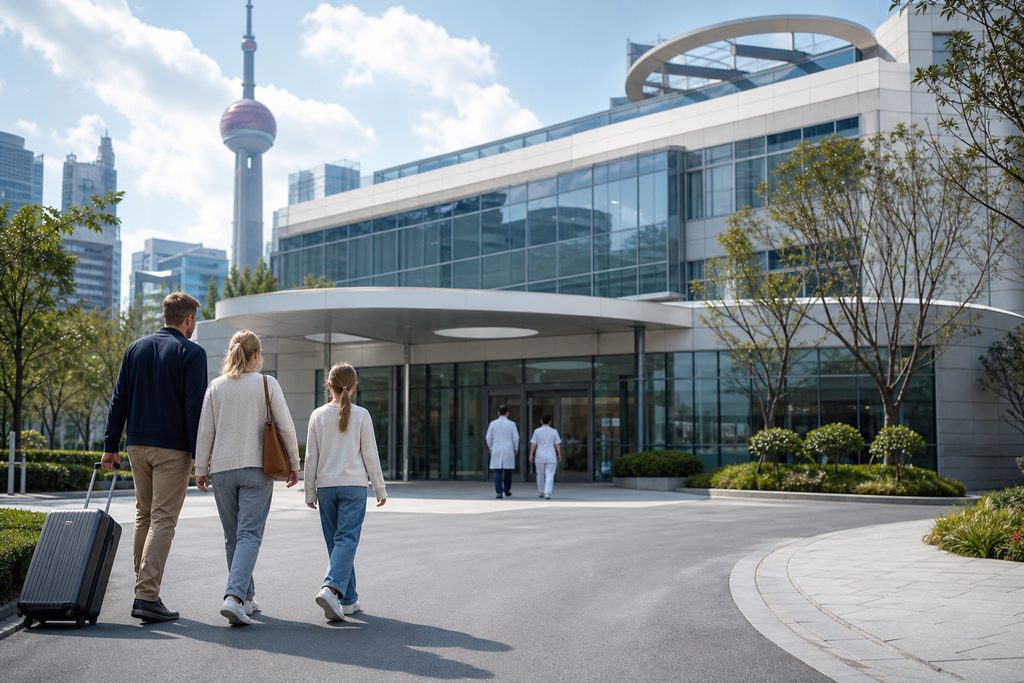
When 47-year-old Klaus from Munich received his prostate cancer diagnosis, his oncologist recommended proton therapy. The precision of the treatment appealed to him. Sparing healthy tissue while targeting the tumor made sense. Then came the reality check. The nearest German proton center told him the wait would be seven to nine months. His tumor was not going to wait.
Klaus started searching. He typed phrases into Google that thousands of European patients type every year. Phrases like “proton therapy cost Shanghai vs Germany” and “can I get proton therapy faster in Shanghai than Europe.” What he found surprised him. The Shanghai Proton and Heavy Ion Center, one of the most advanced facilities in Asia, was treating international patients with wait times measured in weeks, not months. The cost? Significantly lower than what German centers charge self-paying international patients.
This article explains exactly how that works. No marketing fluff. No exaggerated promises. Just the facts you need if you or someone you love is considering crossing continents for cancer treatment.
Key Takeaways
- The Shanghai Proton and Heavy Ion Center treats international patients with typical wait times of 2-4 weeks, compared to 6-9 months at many German proton centers.
- Proton therapy cost Shanghai vs Germany runs 40-60% lower for self-paying international patients, with full treatment packages ranging from approximately $40,000 to $70,000 USD.
- Language barriers, visa requirements, and hospital registration systems make independent navigation extremely difficult — this is not a trip you arrange on Booking.com.
- You cannot simply email the hospital and book a slot. The Shanghai Proton Center works through official international patient channels, and understanding how those channels operate is essential before you spend a single euro.
The Problem: European Proton Therapy Wait Times Are Delaying Cancer Treatment
Germany operates some of the finest medical facilities in the world. That is not in dispute. The country has six proton therapy centers, including the renowned West German Proton Therapy Centre in Essen and the Rinecker Proton Therapy Center in Munich. For German citizens with statutory health insurance who receive approval for proton therapy, the system generally works.
But here is the uncomfortable truth. Even within Germany, not every patient gets approved. Indications for proton therapy are tightly controlled. Insurance committees review cases individually. Some patients wait months just for the approval decision, then wait additional months for a treatment slot.
For international patients paying out of pocket at German centers, the situation is different but not necessarily better. You face two simultaneous problems. First, the per-session cost is high, often exceeding €1,500 to €2,000 per fraction. A full course of 20 to 30 fractions quickly reaches €40,000 to €60,000 or more. Second, capacity is finite. German centers prioritize domestic patients with approved insurance coverage. A self-paying international patient competes for the remaining slots.
The result? Wait times of six to nine months are common. Some patients report waiting over a year.
That is a long time to wait with a growing tumor.
Who We Are
We are China Medical Services. We are not a hospital. We do not provide medical treatment, clinical diagnoses, or any form of healthcare delivery. What we do is logistics. We are the bridge between international patients and China’s top-tier medical infrastructure. Our team handles hospital matching, appointment coordination, bilingual medical companion services, visa guidance, and the hundreds of small operational details that make the difference between a successful treatment journey and a frustrating dead end. We work with over 340 top-ranked hospitals across 37 cities in China. We know how the system functions because we navigate it every day.
Why Shanghai’s Proton Center Delivers Results Faster
The Shanghai Proton and Heavy Ion Center opened in 2015 as China’s first facility offering both proton and heavy ion therapy under one roof. It is not a small operation. The center treats over 1,000 patients annually and has accumulated clinical experience with more than 5,000 patients since opening. That volume matters.
Capacity Built for Scale
European proton centers were largely designed around projected domestic demand. When that demand exceeded projections — which it did in Germany, the UK, and elsewhere — wait times stretched. Adding capacity in Europe means navigating years of regulatory approvals, construction delays, and multi-million-euro budget negotiations.
Shanghai took a different approach. The facility was built with significant capacity headroom, anticipating both domestic and international demand. The center operates multiple treatment rooms with rotating schedules that maximize machine utilization. This is not about cutting corners on care. It is about operational efficiency at a scale that European centers, constrained by older infrastructure and different funding models, struggle to match.
The practical result for an international patient? You can often book a treatment slot within two to four weeks of completing your initial consultation and treatment planning. Some patients start sooner.
Clinical Volume Drives Technical Proficiency
Proton therapy is technically demanding. Treatment planning requires precise calculations of proton beam depth, intensity, and targeting. The physics team and radiation oncologists must work in tight coordination. Centers that treat more patients simply get better at this.
The Shanghai Proton and Heavy Ion Center treats a high volume of complex cases. Head and neck tumors. Base-of-skull chordomas. Pediatric cancers where proton therapy’s tissue-sparing advantage is most critical. Prostate cancer. Liver tumors. The team sees a wider variety of presentations than most European centers, which translates into deeper clinical experience with edge cases and challenging anatomies.
This is not a knock against German medicine. German proton centers produce excellent clinical outcomes. The difference is one of access and throughput. Shanghai can get you into the treatment room faster, and faster treatment initiation matters for cancer outcomes.
Proton Therapy Cost Shanghai vs Germany: The Numbers
Let us talk about money directly. Cost is the second reason patients look beyond Europe.
A full course of proton therapy at a German center for a self-paying international patient typically ranges from €40,000 to €70,000, depending on the indication, number of fractions, and treatment complexity. Some centers quote higher figures for particularly complex cases.
At the Shanghai Proton and Heavy Ion Center, international patient packages generally range from approximately $40,000 to $70,000 USD for a complete treatment course. The exact figure depends on your diagnosis, treatment plan, and number of fractions. But here is the key comparison. At current exchange rates, the lower end of Shanghai pricing sits well below the lower end of German pricing. Even at comparable price points, the Shanghai package often includes services — interpreter support, international patient coordination, treatment planning — that European centers bill separately.
| Cost Factor | German Proton Center (Self-Pay) | Shanghai Proton Center (International Patient) |
|---|---|---|
| Full treatment course | €40,000 – €70,000+ | $40,000 – $70,000 USD |
| Wait time (typical) | 6 – 9 months | 2 – 4 weeks |
| International patient coordination | Often billed separately | Typically included in package |
| Language support | Limited; interpreter costs extra | English-speaking staff available |
| Treatment planning | Included | Included |
Is cost the only reason to choose Shanghai? No. But combined with shorter wait times, the financial equation becomes compelling for patients who are paying out of pocket and cannot afford to wait.
What You Need to Know Before Going Alone
We need to be honest about something. Accessing proton therapy in Shanghai is not as simple as booking a flight and showing up at the hospital door. The barriers are real, and they trip up patients who try to navigate the system independently.
- Visa Requirements: Medical treatment in China requires an S2 visa with a notation specifying the treatment purpose. This is not a tourist visa. You need an official invitation letter from the hospital confirming your treatment arrangement. Without that letter, the Chinese consulate will not issue the correct visa. Applying for the wrong category — such as an M business visa — will result in denial or, worse, entry on incorrect documentation that causes problems later.
- Hospital Registration and Payment: Chinese public hospitals, including the Shanghai Proton Center, operate on a prepayment system. You cannot simply provide insurance details and receive treatment. The hospital expects payment upfront, typically via bank transfer or UnionPay card. International credit cards are not universally accepted. The registration system itself is in Chinese. You need a local phone number to create a patient file. These are not insurmountable obstacles, but they are real friction points that exhaust patients who are already dealing with a cancer diagnosis.
- Language Barrier in Clinical Settings: The Shanghai Proton Center does have English-speaking staff in its international patient department. But the depth of English proficiency varies. Your radiation oncologist may speak functional English for clinical discussions but rely on Mandarin for detailed treatment planning conversations with the physics team. Informed consent documents are in Chinese. Understanding exactly what you are signing requires either fluent Mandarin or a qualified medical interpreter — not a translation app on your phone.
These barriers exist for structural reasons, not because anyone is trying to make things difficult. Chinese hospitals were built to serve a domestic patient population of 1.4 billion people. International patients represent a tiny fraction of their volume. The systems are optimized for local workflows. Bridging that gap requires local expertise.
How We Help You Navigate This
Our job is to handle the logistics so you can focus on treatment and recovery. The process starts with a conversation. You tell us your diagnosis, your treatment history, and what you are looking for. We review your medical records with our team. Then we match you with the right facility — in this case, the Shanghai Proton and Heavy Ion Center — and initiate the coordination process.
Before you travel, we handle the hospital invitation letter required for your S2 visa application. We coordinate with the international patient department to schedule your initial consultation and treatment planning sessions. We translate your medical records into Chinese for the clinical team. We confirm the treatment package pricing so there are no surprises when you arrive.
During your treatment, a bilingual medical companion accompanies you to appointments. This person handles registration, payment queues, pharmacy runs, and real-time interpretation during clinical consultations. They ensure you understand what the doctor is saying and that the doctor understands your questions. This is not a luxury service. For a cancer patient navigating a foreign hospital system in a language they do not speak, it is essential infrastructure.
After treatment concludes, we coordinate your follow-up plan. The Shanghai Proton Center will want follow-up imaging at intervals — three months, six months, one year. We help arrange how those images get reviewed and ensure the communication loop between Shanghai and your home oncologist stays intact.
The cost for our coordination services starts from $300 for hospital appointment coordination, and our bilingual medical companion service starts from $200 per day. Full VIP end-to-end coordination packages range from $5,000 to $8,000 depending on complexity and duration. These are coordination fees only. They are separate from your hospital treatment costs.
Frequently Asked Questions
How long is the wait for proton therapy in China compared to Germany?
At the Shanghai Proton and Heavy Ion Center, international patients typically wait two to four weeks from treatment planning completion to first fraction. German centers commonly quote six to nine months for self-paying international patients. The difference comes down to capacity and patient volume management. Shanghai built for higher throughput from day one.
Can I get proton therapy faster in Shanghai than Europe?
Yes. For most indications, the answer is unequivocally yes. The Shanghai Proton Center has available treatment slots that European centers simply do not. The caveat is that you must complete the treatment planning process first — the center will not treat you without a confirmed plan reviewed by their multidisciplinary team. That planning process itself takes one to two weeks. Factor that into your timeline.
What is the Shanghai Proton Center international patient price?
International patient packages at the Shanghai Proton and Heavy Ion Center typically range from $40,000 to $70,000 USD for a full treatment course. The exact price depends on your diagnosis, the number of fractions prescribed, and the complexity of your treatment plan. This pricing is generally all-inclusive for the treatment itself. You should budget separately for travel, accommodation in Shanghai, and any coordination or companion services you choose to use.
How do I book proton therapy at the Shanghai Proton Center?
You cannot book directly by emailing the hospital. The Shanghai Proton Center accepts international patients through official coordination channels. The process works like this. You submit your medical records — diagnosis, imaging, pathology reports, treatment history — for review. The center’s multidisciplinary team evaluates whether proton therapy is indicated for your case. If accepted, you receive a treatment proposal with pricing and timeline. Then you arrange your S2 visa using the hospital’s invitation letter, travel to Shanghai, complete treatment planning, and begin therapy. Our team handles every step of this process on your behalf.
Is proton therapy in China as safe and effective as in Germany?
The Shanghai Proton and Heavy Ion Center uses the same proton therapy technology deployed at leading centers worldwide. Their clinical protocols follow international standards. Their physicists and radiation oncologists train extensively, and many have completed fellowships or observerships at proton centers in Europe, Japan, and the United States. The center has published clinical outcome data in peer-reviewed journals. Safety and efficacy are comparable. The difference is not in treatment quality. The difference is in access, wait times, and cost.
Your Next Step
Klaus from Munich eventually got treated in Shanghai. His wait from first inquiry to first fraction was just under five weeks. His prostate cancer is now in remission.
The decision to travel across the world for cancer treatment is not a small one. It involves real trade-offs. Being away from your support network. Navigating an unfamiliar culture. Trusting a medical system you did not grow up with. But for patients facing nine-month wait times at home, the trade-off starts to look different. A shorter wait means less time for the tumor to grow. Lower cost means less financial strain on your family. Neither benefit is trivial.
If you want to understand whether the Shanghai Proton and Heavy Ion Center is a viable option for your specific case, start with a conversation. Our team will review your situation honestly and tell you whether this path makes sense. No pressure. No sales pitch. Just straight answers from people who navigate this system every day. Learn more about how we help international patients at China Medical Services.
For more medical information and treatment options in China, visit chinamedservices.com (China Medical Services).
