Grief Counseling in China: Finding Bereavement Support for Foreign Families
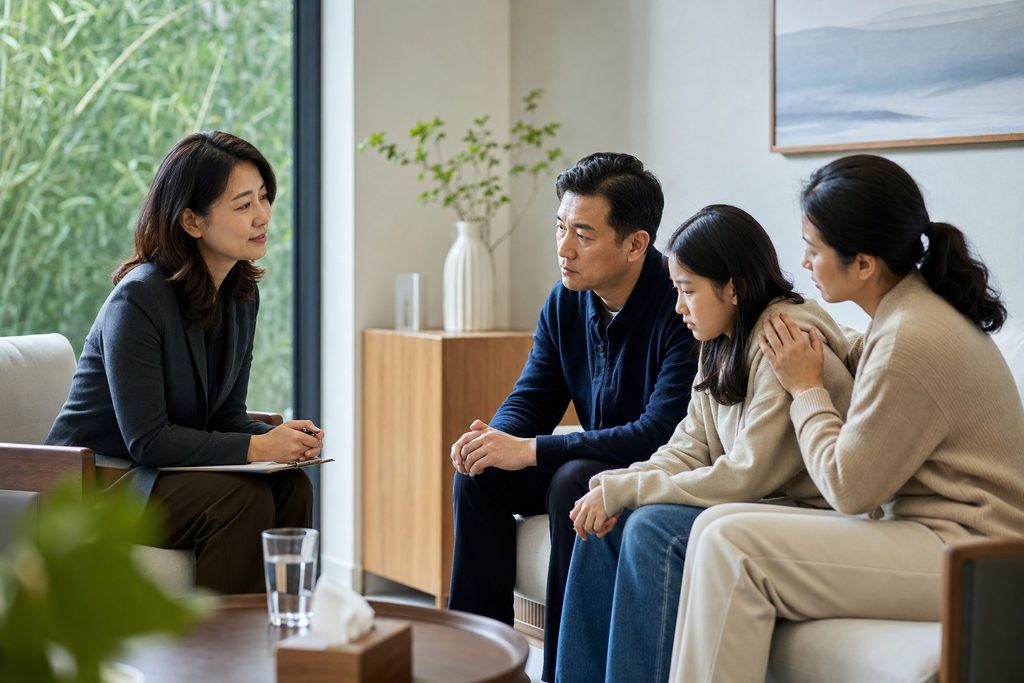
When 34-year-old Sarah lost her husband to a sudden cardiac event during their assignment in Suzhou, she found herself stranded in a fog of paperwork, a foreign language, and a grief so heavy she could barely breathe. The embassy helped with the formalities. But nobody could tell her where to find an English-speaking therapist who understood the particular loneliness of mourning far from home. She spent three weeks searching before she found a single name.
Her situation is not rare. Approximately 1 in 10 bereaved adults develop prolonged grief disorder, a condition now recognized in the DSM-5-TR. For expatriates, the risk compounds. You are untethered from your usual support systems. The rituals that anchor grief—the wake, the funeral, the casserole from a neighbor—often collapse under the weight of distance and cultural dislocation. Finding professional bereavement support becomes urgent. And in China, it is entirely possible. But you need to know where to look, what to expect, and what it will cost.
Key Takeaways
- English-language grief counseling is available in China’s major cities, primarily through private international clinics and hospital mental health departments, with session fees ranging from $100 to $250.
- Public hospitals offer more affordable mental health services, often below $50 per session, but finding an English-speaking bereavement specialist in this system requires significant navigation and patience.
- The biggest barrier for foreign families is not cost, but discoverability—most qualified counselors do not appear on Western search platforms, and direct booking without local assistance often fails.
- Before committing to any provider, verify the counselor’s specific training in complicated grief therapy, not just general psychotherapy, and confirm they are licensed to practice in China.
The Quiet Crisis: Why Grief Gets Complicated Abroad
Grief is universal. But access to bereavement support services Beijing or Shanghai is not. The clinical reality is stark. Without intervention, complicated grief can mimic major depression, suppress immune function, and increase cardiovascular risk. A 2022 meta-analysis in World Psychiatry found that prolonged grief disorder carries a distinct symptom profile—persistent yearning, preoccupation with the deceased, identity disruption—that does not respond well to standard depression treatments. You need grief-specific therapy. And you need it in a language your nervous system understands.
For foreigners in China, the question “is grief counseling available in China for foreigners” gets asked in hushed tones on WeChat groups and expat forums. The answer is yes. But the landscape is fragmented. Some of the best practitioners work inside hospital systems you have never heard of. Others operate private practices that do not advertise in English. The infrastructure exists. It is just not built for you to find easily.
Who We Are
We are not therapists. We do not provide grief counseling or any clinical mental health services. Our team at China Medical Services acts as your logistical bridge—we identify licensed, English-speaking bereavement counselors in our network of 340+ top-ranked hospitals and private clinics across 37 cities, coordinate appointment scheduling, arrange bilingual accompaniment if needed, and handle the practical barriers that stand between you and the support you need. We do the legwork so you can focus on healing.
What Grief Counseling in China Actually Costs
Let us address the primary concern head-on. Grief counseling China cost varies dramatically depending on the setting, the clinician’s qualifications, and the city. The range is wider than most people expect. And the lowest price is rarely the best value when you are vulnerable and need someone who truly understands your loss.
| Service Type | Setting | Typical Cost (USD) | English Availability |
|---|---|---|---|
| Psychiatrist Consultation | Public Hospital Mental Health Dept | $20–50 / session | Rare; bring interpreter |
| Psychologist/Counselor | Public Hospital Psychology Dept | $15–40 / session | Limited; major cities only |
| Licensed Counselor (Expat-Focused) | Private International Clinic | $120–250 / session | Standard |
| Grief-Specific Therapist (PhD/PsyD) | Private Practice or Clinic | $150–300 / session | Typically available |
| Online Grief Counseling (China-Based Provider) | Telehealth | $80–150 / session | Common |
| Intensive Grief Retreat/Program | Private Facility | $2,000–5,000 / program | Select providers |
These figures are reference points. Final costs fluctuate with the provider’s seniority, session length, and whether you need ongoing support or a focused short-term intervention. Public hospital pricing is regulated. Private clinic pricing is market-driven. Shanghai and Beijing command the highest rates. Cities like Chengdu, Hangzhou, or Nanjing often run 20–30% lower for comparable private care.
One structural factor that surprises many families: China’s public hospital mental health departments operate on a high-volume, low-cost model. A psychiatrist may see 40 patients in a morning. The consultation fee is low. But the time per patient is brief. This model works for medication management. It is poorly suited for the slow, careful work of grief therapy. If you want a 50-minute session with a clinician who remembers your husband’s name from week to week, you are almost certainly looking at the private sector.
How to Find a Bereavement Counselor in Shanghai and Beijing
The search query how to find a bereavement counselor in Shanghai reflects a real frustration. Western platforms like Psychology Today list very few China-based providers. Local platforms like JianDan XinLi exist but operate entirely in Chinese. The counselors who serve the international community tend to be found through word-of-mouth, embassy referrals, or international clinic networks.
Here is what the practical pathway looks like. Shanghai has the densest concentration of English-speaking mental health professionals in mainland China. Clinics like ParkwayHealth, Jiahui International, and Shanghai United Family Hospital all maintain mental health departments with practitioners trained in grief work. Many of these clinicians completed their training in the US, UK, or Australia. They understand the cultural context of loss in Western families. They also understand the added layer of expatriate grief—the guilt of being far from aging parents, the strain on a marriage when one partner wants to return home after a loss, the child who is mourning a grandparent they only knew through a screen.
Beijing’s landscape is similar but slightly more concentrated in the diplomatic and business districts. The best grief therapy clinics China for expats tend to cluster around Chaoyang and Shunyi. Raffles Medical, Beijing United Family, and OASIS International Hospital all offer mental health services. The challenge is not the existence of care. It is matching with the right clinician. Not every therapist at these clinics specializes in bereavement. Some focus on anxiety, others on couples work. You need to ask specifically: “Does this clinician have supervised training in complicated grief therapy or prolonged grief disorder treatment?” If the answer is vague, keep looking.
What to Expect When You Book a Session
Let us walk through the practical reality of trying to book bereavement counseling session China as a foreigner. The process is not difficult once you know the pathway. But it is different from what you might expect at home.
First, most private international clinics allow direct booking by phone or email. English-speaking reception staff are standard. You can typically secure an initial appointment within a week, sometimes within 48 hours. This is a genuine advantage of the private system in China—wait times are far shorter than in many Western countries, where six-week waits for a first therapy appointment are common.
Second, the first session is usually an intake assessment. The counselor will take a detailed history, understand the nature of the loss, screen for complicated grief symptoms, and discuss what you hope to achieve. Do not expect deep therapeutic work in the first meeting. That comes later. What you should expect is a clear treatment plan and an honest conversation about whether this particular clinician is the right fit. Good therapists will tell you if they are not the best person for your specific needs.
Third, payment is typically out-of-pocket at the time of service. Some international clinics offer direct billing to major insurers like Cigna, Aetna, or Allianz. Check before you go. If your policy includes mental health coverage, your sessions may be reimbursable. But do not assume. Many expat policies have carve-outs or session limits for counseling. Verify the details. Our team can help you navigate insurance pre-authorization if needed—it is one of the logistical burdens we routinely handle for clients.
Online Options: Grief Support Without Geographic Limits
Not everyone lives in Shanghai or Beijing. If you are based in a smaller city, or if mobility is an issue, online grief counseling with a China-based provider is a legitimate option. Several clinicians who work out of the international clinics also offer telehealth sessions. The therapeutic relationship builds differently over video. But the evidence base for online grief therapy is solid. A 2020 randomized controlled trial in JAMA Psychiatry found that internet-based cognitive behavioral therapy for complicated grief produced significant symptom reduction, with effects maintained at 12-month follow-up.
The practical benefit is access to a specialist who truly understands your context—the specific strain of grief in a country where you may not speak the language, where the rituals of mourning differ, and where your employer may expect you back at your desk faster than feels humanly possible. A counselor who works regularly with expatriates in China understands these pressures. A generic online therapist licensed in your home country may not.
What You Need to Know Before Going Alone
The search for a bereavement counselor in China can be done independently. Many people do it. But there are friction points that cost time and emotional energy you may not have to spare. Honesty about these barriers matters.
- Language and Licensing Verification: China’s mental health licensing system is complex. The title “psychologist” is not as tightly regulated as in Western countries. Some practitioners calling themselves counselors hold a brief training certificate, not a graduate degree. Verifying credentials in a language you do not read is difficult. You need to confirm whether the clinician holds a legitimate license from China’s Ministry of Health or an equivalent body, and whether their graduate training is from an accredited institution.
- Public Hospital Navigation: If you choose the public hospital route for cost reasons, you will encounter a system designed for Chinese citizens. Registration kiosks operate in Mandarin. Queues form early. The doctor may see you for ten minutes. Bringing a bilingual companion transforms this experience—someone who can register you, explain your situation to the triage nurse, and sit with you through the chaos. Without that support, the process can feel dehumanizing, which is the last thing a grieving person needs.
- Payment and Insurance Complexity: Public hospitals require upfront payment, often via a pre-loaded hospital card that you must purchase and top up with cash or WeChat Pay. Foreign credit cards are not accepted. Private clinics are more straightforward but still may not integrate with your specific insurance. Untangling reimbursement later requires itemized receipts in both Chinese and English, which not all providers automatically supply.
How We Help You Navigate This
These barriers exist for structural reasons. They are not anyone’s fault. But they are real. Our role is to clear the path. When a family contacts us after a loss, we start by understanding the specifics: where you are located, what kind of loss you have experienced, whether there are children involved, what language you need, and what your budget looks like. Then we go to work.
We identify licensed, English-speaking bereavement counselors within our network who have availability. We verify their credentials—not just their license, but their specific training in grief therapy. We coordinate the appointment, handle the registration logistics, and if you need someone physically with you, our bilingual medical companions can accompany you to the clinic, translate what needs translating, and make sure you are in the right place at the right time. We also assist with insurance documentation so you can focus on the session itself, not the paperwork afterward. For families considering a longer stay in China specifically for intensive grief support, we can also provide guidance on visa logistics and accommodation.
We do not provide the counseling. We make it possible for you to receive it without exhausting yourself on logistics. That distinction matters. We are the bridge, not the destination.
Frequently Asked Questions
Yes, but your options narrow. English-speaking grief counselors practice in Beijing, Shanghai, Guangzhou, Shenzhen, and a handful of other major cities. Outside these hubs, finding a monolingual English-speaking therapist becomes significantly harder. In that case, online counseling with a China-based English-speaking provider is often the most practical path. Some international clinics in the major cities also offer therapy in French, German, and Japanese, though availability is thinner.
Private grief counseling in China typically costs $120–250 per session. This is roughly 30–50% less than comparable private therapy in major US cities, where rates of $200–400 are standard. The UK private market runs £60–120 per session, making China’s private rates competitive but not dramatically cheaper. The real cost advantage appears in the public hospital system, where a session can cost as little as $20. But that low price comes with the trade-offs described above: brief sessions, limited English, and a system not designed for foreigners.
Grief is not a disorder that requires medication in most cases. But sometimes bereavement triggers or unmasks a major depressive episode that does warrant pharmacological support. If your counselor believes medication may help, they can refer you to a psychiatrist within the same clinic network or hospital system. In China, only psychiatrists (medical doctors) can prescribe psychotropic medication. Psychologists and counselors cannot. The referral process within international clinics is typically smooth, with the psychiatrist and therapist coordinating care directly.
Yes. Several international clinics in Shanghai and Beijing have child psychologists who specialize in pediatric bereavement. Play therapy and art therapy approaches are common for younger children. Adolescents typically engage in talk therapy adapted for their developmental stage. The key is finding a clinician trained specifically in child grief, not just general child psychology. The two skill sets overlap but are not identical. We can help identify practitioners with this specialization.
There is no fixed number. Some people find significant relief after 6–8 sessions of focused grief work. Others benefit from longer-term support, particularly if the loss was traumatic or if pre-existing mental health conditions complicate the grief. A competent therapist will discuss treatment duration openly and check in regularly about whether the work is helping. Be wary of anyone who promises a specific timeline for “getting over” a loss. Grief does not follow a schedule.
Your Next Step
Grief is hard enough without the added weight of navigating a foreign healthcare system alone. The support you need exists in China. English-speaking bereavement counselors are practicing right now in Beijing, Shanghai, and beyond. The question is not whether help is available. It is whether you have the energy to find it, vet it, and coordinate it while you are also trying to remember to eat and sleep and answer the condolence messages piling up in your inbox.
You do not have to do this part alone. If you want someone to handle the search, the credentialing, and the scheduling—so that all you have to do is show up—reach out to our team for a free consultation. We will listen to your situation and tell you honestly what we can do. No pressure. No sales pitch. Just a clear path forward when everything feels unclear.
For more medical information and treatment options in China, visit chinamedservices.com (China Medical Services).
