Gua Sha in China: A Practical Guide for International Patients
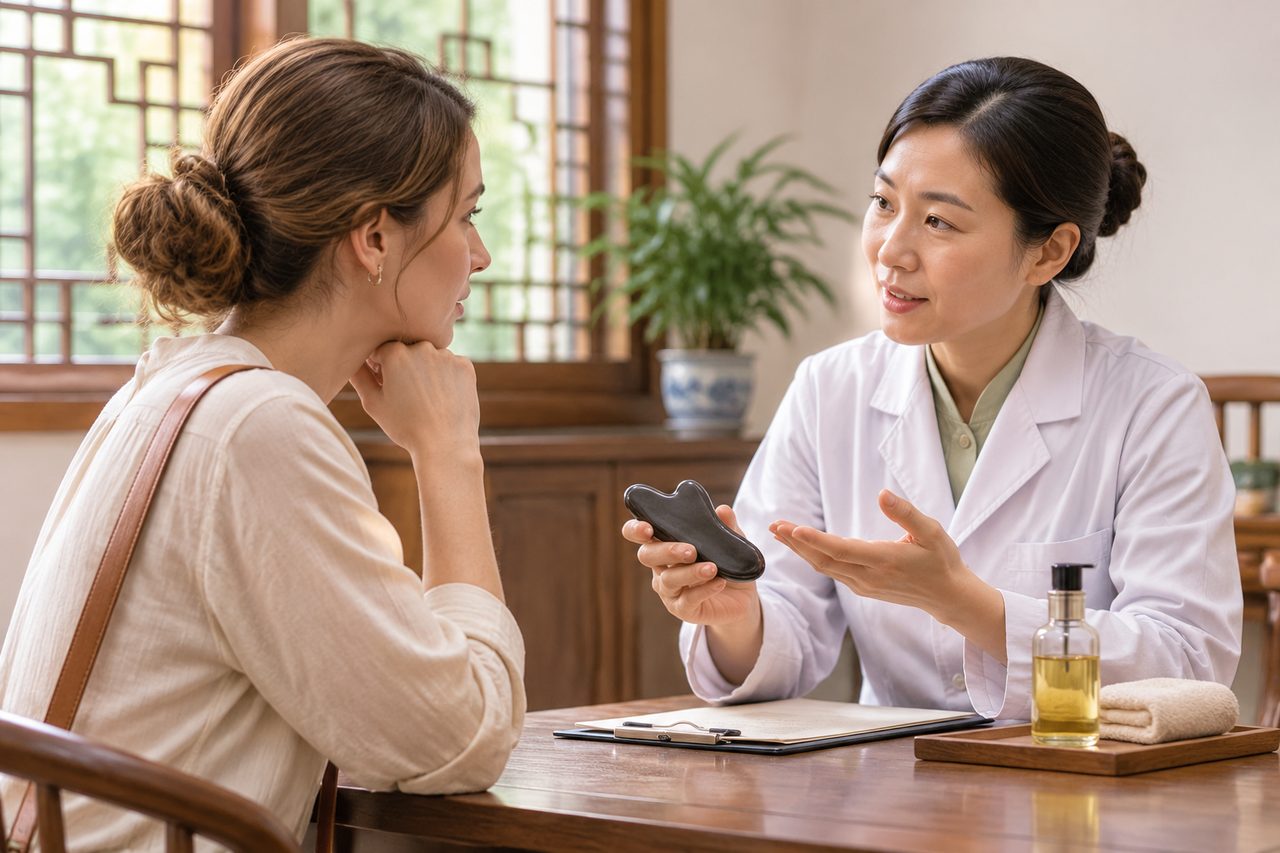
Gua sha treatment cost China — what does it actually involve, and what will you pay? For most international visitors, a single session at a reputable Chinese medicine hospital runs the equivalent of roughly $15 to $60, while a full course of ten sessions typically lands between $150 and $500, depending on the city, the hospital tier, and whether you see a senior TCM physician. That is the short answer. The longer answer is that gua sha is rarely a standalone purchase in China — it is usually folded into a broader TCM consultation, and understanding that structure is what protects you from overpaying or from receiving a treatment that is not appropriate for your condition.
Gua Sha in China: The Short Answer
Gua sha is a traditional Chinese medicine technique in which a smooth-edged tool is pressed and stroked across oiled skin to produce light petechiae — the familiar red or purple marks. In China it is delivered inside licensed TCM hospitals and clinics, usually after a diagnostic consultation involving pulse and tongue assessment. A first visit generally includes that consultation, so budget for both the diagnostic fee and the treatment fee rather than assuming a flat per-session price. The caveat that complicates every quote: public TCM hospitals price by department and physician seniority, and foreign-patient or international-department pricing is often higher than the standard domestic rate.
Who This Is Right For — and Who It Isn’t
Gua sha is most often sought by people managing musculoskeletal tension, neck and shoulder tightness, recovery from fatigue, and general wellness. It is a comfort-oriented therapy, not a treatment for structural disease, and no responsible practitioner in China will present it as a substitute for diagnosis of a serious symptom.
Typically reasonable candidates:
- Adults with uncomplicated muscle tension or stiffness who want a non-pharmacological option alongside conventional care.
- Patients already receiving TCM care who have been assessed by a licensed physician.
- Travelers seeking a supervised wellness session within a hospital setting rather than a spa.
People who should not pursue it, or should ask a doctor first:
- Anyone with a bleeding disorder or taking anticoagulants — the technique intentionally causes controlled bruising.
- People with active skin infection, open wounds, or fragile skin from long-term steroid use.
- Pregnant patients, particularly over the abdomen and lower back, without explicit medical clearance.
- Anyone with an undiagnosed pain, lump, or systemic symptom — get a diagnosis before any manual therapy.
The Options, Compared
Where you receive gua sha changes both the price and the safety net around it. The table below compares the realistic settings an international visitor will encounter.
| Setting | Typical price per session (USD equivalent) | Who performs it | English support | Best for |
|---|---|---|---|---|
| Public TCM hospital, standard outpatient | ~$15–40 | Licensed TCM physician or therapist | Limited; usually needs an interpreter | Cost-conscious patients comfortable navigating a large hospital |
| Public TCM hospital, international/VIP department | ~$40–90 | Senior TCM physician | Usually available | First-time visitors who want a clear consultation and English explanation |
| Private international clinic | ~$60–150 | Licensed practitioner, often dual-trained | Yes | Patients prioritizing convenience, appointment certainty, and insurance billing |
| Hotel or spa “gua sha” service | ~$30–120 | Varies widely; not always a licensed clinician | Varies | Relaxation only — not appropriate if you have a medical concern |
Readers who want a documented medical assessment should look at the hospital rows. Those who simply want a supervised relaxation session can reasonably choose a private clinic. The spa row is the one to treat cautiously: it is the setting where “gua sha near me China” searches most often lead to a provider with no clinical oversight.
How Gua Sha Fits Into a Real TCM Visit in China
The detail most guides miss is sequencing. In a Chinese TCM hospital, gua sha is rarely the first thing that happens. A physician takes a history, examines the tongue and pulse, and may recommend acupuncture, cupping, or herbal formulas alongside it. That matters for two reasons. First, the consultation fee is a real line item you should expect. Second, the physician may conclude that gua sha is not the right technique for your presentation — and a clinic that skips the assessment entirely is a warning sign, not a convenience.
If you are choosing a hospital, the specialty directories at our department guides list leading institutions by specialty, and the traditional Chinese medicine hospital page explains how TCM facilities differ from Western-style hospitals in scheduling and payment.
What Gua Sha Treatment Costs in China — and What Drives the Variance
Published hospital price lists exist, but they are written in Chinese, priced in renminbi, and rarely include the consultation. Expect the following components:
- Registration fee: nominal at public hospitals, higher in international departments.
- TCM consultation: the diagnostic visit, charged separately from the technique.
- Treatment fee: priced per session or per body region.
- Interpretation or companion support: not included in hospital pricing.
A realistic planning range for a course of ten sessions, all-in, is $200 to $600 at public hospital rates, and higher at private international clinics. Prices vary by hospital and case complexity, and no quote should be treated as final until the hospital confirms it. For context on how Chinese hospital pricing is structured generally, see China Medical Services, which maintains current information on hospital tiers and patient logistics.
Practical Considerations: Safety, Language, and Follow-Up
Is gua sha safe for beginners? Generally yes, when performed by a trained practitioner on healthy skin, but beginners should expect marked redness that fades over two to five days and should avoid vigorous self-treatment before knowing their own skin response. People on blood thinners should not assume it is harmless.
Language. Large Chinese hospitals are busy, and English is not reliably spoken in standard outpatient TCM departments. If you do not speak Mandarin, plan for interpretation rather than hoping to manage at the registration desk.
Payment. Public hospitals typically require payment upfront, with insurance reimbursement handled afterward in your home country. Private international clinics more often bill insurers directly. Confirm which model applies before booking.
Visa. Medical treatment in China is covered under the S2 short-stay visa category for medical treatment and private affairs, subject to current embassy requirements and supporting hospital documentation. Longer stays use S1. The M visa is for commercial and trade activity and is not a medical visa.
Follow-up. Gua sha has no meaningful “aftercare protocol” beyond hydration and avoiding intense heat or cold on treated areas for a day. Ask the physician what they recommend for your specific case rather than relying on general advice.
Frequently Asked Questions
Standard outpatient TCM departments in Chinese public hospitals generally cannot be booked from abroad in advance; registration typically happens on the day, in person. International or VIP departments are the usual route for pre-arranged appointments, at roughly 1.5 to 2 times the standard fee.
Rarely as a standalone wellness treatment. Some policies cover it when prescribed by a licensed physician for a diagnosed condition. Check your policy wording before assuming reimbursement, and request an itemized receipt.
Petechiae are expected and fade. Seek medical attention promptly for spreading pain, blistering, fever, or dizziness. Reputable hospital-based practitioners will give you a contact route; spa settings often will not.
Your Next Step
Gua sha in China is affordable and widely available, but the quality difference between a hospital TCM department and a hotel spa is substantial — and the assessment is what separates them. China Medical Services is a coordination service, not a hospital and not a diagnostic provider; we help international patients understand hospital options, prepare records, and arrange bilingual support during visits. If you would like to talk through which TCM hospitals fit your plans, you can request a free consultation with no obligation. The goal is simply to help you arrive prepared and make an informed choice.
This article is for general information only and does not constitute medical advice. Always consult a qualified physician about your individual situation before starting any treatment.
For more medical information and treatment options in China, visit chinamedservices.com (China Medical Services).
