Guang’anmen Hospital Beijing: TCM Oncology and Chronic Disease Care for International Patients
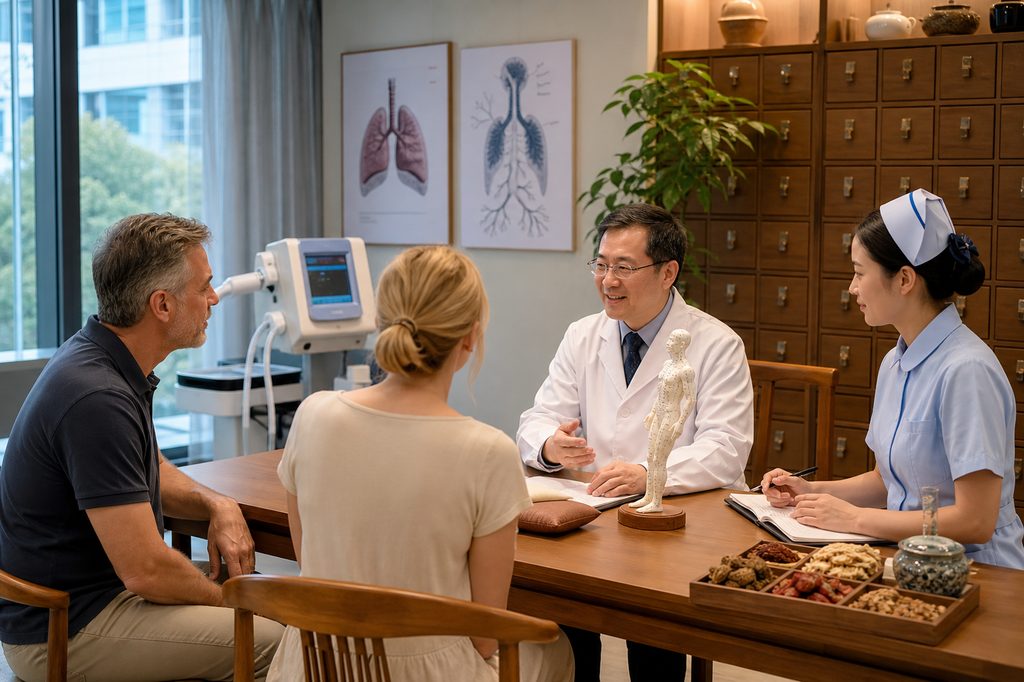
What does it cost to get Traditional Chinese Medicine cancer treatment at one of Beijing’s most respected hospitals? And is it even possible to book as a foreigner without speaking the language?
Those are the two questions that stop most international patients in their tracks. The idea of combining herbal medicine with conventional oncology in China carries enormous appeal. The reality of navigating it alone? That is a different story entirely.
Guang’anmen Hospital, a sprawling TCM institution in central Beijing, treats thousands of oncology patients every year. Its integrated approach pulls together acupuncture, herbal formulas, and modern diagnostics under one roof. For patients with chronic conditions or those seeking supportive cancer care, this hospital sits at the top of many shortlists.
Our team coordinates access for international patients at Guang’anmen and other TCM hospitals across China. We handle the logistics. We do not provide medical treatment. What follows is a straight look at what you can expect — the costs, the clinical reality, and the barriers you need to know about.
Key Takeaways
- Guang’anmen Hospital’s oncology department treats over 200,000 outpatients annually, making it one of the highest-volume TCM cancer centers in the world.
- An initial specialist consultation through the international service typically costs between $150 and $300 USD, with herbal prescriptions and treatment plans priced separately.
- The hospital does not offer direct online booking for overseas patients — all international appointments must go through the official medical coordination office or a verified third-party service.
- TCM oncology here functions as adjunctive care, not a replacement for surgery or chemotherapy; understanding this distinction before you travel is essential.
The Problem: When Conventional Oncology Leaves Gaps, Patients Look East
Approximately 1 in 6 deaths worldwide is caused by cancer, according to the World Health Organization. Surgery, radiation, and chemotherapy remain the frontline weapons. But the side effects can be brutal. Fatigue that does not lift. Neuropathy that makes hands and feet unusable. A digestive system that never seems to recover.
These are the gaps that push patients toward integrative approaches. A 2023 survey published in the Journal of the National Cancer Institute found that roughly 40% of cancer patients in the United States use some form of complementary therapy. Acupuncture. Herbal medicine. Mind-body practices. The demand is real and it is growing.
But quality varies wildly. Walk into a random TCM clinic in a Western city and you might find a practitioner with six months of training. That is the uncomfortable truth. China’s top TCM hospitals operate differently. They combine ancient formulas with modern clinical research. They treat volumes that generate pattern recognition no textbook can teach. The challenge for international patients is simply getting in the door.
Who We Are
We are not a hospital. We do not diagnose conditions or prescribe treatments. Our team functions as your logistical bridge to China’s top-tier medical institutions — including Guang’anmen Hospital and other Fudan-ranked hospitals across 37 cities. We translate medical records, coordinate appointments through official hospital channels, arrange bilingual medical companions, and handle visa guidance. Think of us as the operational layer between you and a complex healthcare system that was not designed with foreign patients in mind.
Why Guang’anmen Hospital’s TCM Oncology Approach Delivers Results
Clinical Volume That Creates Deep Pattern Recognition
Guang’anmen’s oncology department is not a small, boutique operation. It handles over 200,000 outpatient visits per year. The inpatient wards run at near-full capacity across more than 200 beds dedicated to cancer care. When a physician sees that many cases — lung cancer, gastric cancer, liver cancer, breast cancer, colorectal cancer — they develop an instinct for how herbal protocols interact with different chemotherapy regimens.
This matters because TCM is not one-size-fits-all. The formula that helps a post-surgical colon cancer patient manage fatigue might be wrong for someone undergoing radiation for nasopharyngeal carcinoma. Volume teaches nuance. A physician seeing 50 patients a day learns things a practitioner seeing 10 a week simply cannot.
The hospital is a key research base under the China Academy of Chinese Medical Sciences. Its oncology protocols are not folk remedies. They are studied, published, and refined through clinical trials. For international patients asking is Guanganmen hospital good for cancer, the evidence points to a clear answer: this is one of the few institutions globally where TCM oncology operates at genuine scale with research rigor behind it.
Integration That Actually Works — Herbs, Acupuncture, and Modern Diagnostics Together
Walk through the oncology outpatient hall and you will see something that surprises many Western visitors. Patients do not just receive a bag of herbs and leave. The workflow typically includes a pulse diagnosis, tongue examination, review of recent lab results, and a detailed discussion of current chemotherapy or radiation side effects. Then comes the herbal prescription — often customized and adjusted at each visit.
Acupuncture is frequently administered on-site for pain management, nausea, and insomnia. The hospital’s acupuncturists work in the same department, not in a separate silo. That means the herbalist and the acupuncturist actually talk to each other about your case.
This is where the best tcm hospital in china for chronic disease question gets complicated. Guang’anmen excels at cancer care. For chronic conditions like rheumatoid arthritis, diabetes, or COPD, other TCM institutions — Dongzhimen Hospital, Xiyuan Hospital — may have deeper specialization. The right choice depends entirely on your diagnosis. We help patients match to the correct hospital and department, rather than defaulting to the most famous name.
Cost Structure: What TCM Oncology Actually Costs in Beijing
Let us address the question that drives most search queries: what is the cost of tcm oncology at guanganmen hospital. The answer is not a single number. It is a range that depends on whether you access care through the standard public channel or the international service.
| Service | Standard Public Channel | International/VIP Channel |
|---|---|---|
| Initial specialist consultation | $30–60 USD | $150–300 USD |
| Follow-up consultation | $15–30 USD | $80–150 USD |
| Herbal prescription (2-week supply) | $40–120 USD | $60–180 USD |
| Acupuncture session | $20–40 USD | $60–100 USD |
| Inpatient stay (per day, ward bed) | $80–150 USD | $200–400 USD |
| Comprehensive 4-week TCM oncology protocol | $800–2,000 USD | $2,500–5,000 USD |
These numbers for tcm oncology treatment cost beijing reflect what we see across multiple patient cases. The standard public channel is cheaper. It also requires fluent Mandarin, local payment methods, and the ability to navigate a hospital that sees over 8,000 outpatient visits daily. Most international patients choose the international channel for the English coordination and reduced waiting times.
Compared to integrative oncology programs in the United States — which can run $10,000 to $30,000 for a multi-week protocol — Beijing’s costs remain substantially lower even through the VIP route. That said, these are adjunctive therapies. They supplement conventional treatment. They do not replace it. Anyone promising otherwise is selling something dishonest.
The guanganmen hospital beijing international patient price question comes up frequently. The hospital’s official international medical coordination office sets baseline fees. Third-party coordination services add their own service charges on top. Our coordination fee for hospital appointments starts from $300, with bilingual companion services from $200 per day. Any consultation fees paid are fully credited toward on-the-ground coordination if you upgrade within 90 days.
What You Need to Know Before Going Alone
Honesty matters more than marketing. Here are the real barriers that trip up international patients who try to book tcm cancer treatment china independently.
- Visa Requirements Are Specific and Unforgiving: Medical treatment in China requires an S2 visa with the purpose explicitly noted as medical treatment. Not an M visa. Not an L tourist visa. The hospital must provide an official invitation letter with a stamp from the international medical coordination office. Without that document, the visa application will be rejected. Family members accompanying you also need S2 visas. Processing typically takes 2-4 weeks and cannot be rushed without documented medical urgency.
- Payment Systems Do Not Accept International Cards: Guang’anmen’s standard registration counters accept WeChat Pay, Alipay, Chinese UnionPay cards, and cash in RMB. Visa and Mastercard are not accepted at the public counters. The international service channel can process wire transfers and some international cards, but this must be arranged in advance. Showing up with a credit card and no local payment method means you cannot pay for your consultation.
- Medical Records Must Be Translated Before You Arrive: The oncology department requires Chinese-language summaries of your diagnosis, pathology reports, imaging findings, and current treatment protocol. Google Translate is not sufficient. Inaccurate translation of a pathology report can lead to an inappropriate herbal prescription. Professional medical translation is a prerequisite, not an optional extra.
- Standard Public Appointments Cannot Be Booked from Overseas: The hospital’s public registration system requires in-person queueing or use of a Chinese mobile app tied to a local phone number and ID. There is no international online booking portal for the standard channel. The only way to secure a confirmed appointment before travel is through the international medical coordination office or a verified service provider.
How We Help You Navigate This
These barriers exist for structural reasons, not because anyone is trying to exclude foreign patients. China’s public hospital system was built to serve a domestic population of 1.4 billion people. International patients are an afterthought in the standard workflow. The international service channel exists precisely to bridge this gap.
Our process starts with a free consultation. You tell us your diagnosis, your current treatment status, and what you hope TCM oncology can add to your care plan. We are honest about what is realistic. If your case is not appropriate for TCM adjunctive treatment — if, for example, you are in active acute chemotherapy and cannot travel — we tell you that directly.
When a case fits, we handle the full chain. Medical records get professionally translated by bilingual physicians, not machine translation. The hospital’s international coordination office receives your file and confirms the appropriate specialist. We secure the official invitation letter for your S2 visa application. Appointment dates are locked in before you book a flight.
On the ground in Beijing, a bilingual medical companion meets you at the hospital entrance. They handle registration, payment, queue navigation, and real-time interpretation during your consultation. They ensure the physician understands your full medical history and that you understand the treatment plan, herbal instructions, and follow-up schedule. If acupuncture is prescribed, they stay with you through the session.
After you return home, we coordinate follow-up video consultations through the hospital’s official telemedicine platform. Herbal prescriptions can be shipped internationally where regulations permit. The relationship does not end when you leave Beijing.
For patients considering TCM care more broadly, our TCM hospital database covers institutions across multiple cities. Some patients find that a TCM hospital in Shanghai or Guangzhou better suits their travel plans and clinical needs. We help you compare options rather than pushing a single institution.
Frequently Asked Questions
No responsible practitioner would claim that. TCM oncology at Guang’anmen functions as adjunctive and supportive care. It aims to reduce chemotherapy side effects, improve quality of life, strengthen immune function, and support recovery after surgery. It is used alongside conventional treatment, not instead of it. Patients who abandon conventional oncology for herbal medicine alone face serious risks. The hospital’s own protocols emphasize integration, not replacement.
For an initial TCM oncology consultation and treatment plan, plan for a minimum of 5-7 days in Beijing. This allows for the initial consultation, any diagnostic tests the physician orders, acupuncture sessions, and time to fill and understand your herbal prescription. For inpatient TCM oncology protocols — which involve daily herbal IV drips, acupuncture, and monitoring — stays typically range from 2 to 4 weeks. Your physician will recommend a duration based on your specific condition and treatment goals.
This is a legitimate concern and one the hospital takes seriously. Guang’anmen’s oncology physicians are trained to review your full medication list and chemotherapy regimen before prescribing. They avoid herbs known to interact with specific chemotherapy agents. That said, you must provide complete and accurate information about all medications, supplements, and treatments you are currently receiving. We also strongly recommend keeping your primary oncologist at home informed of any TCM treatment you pursue. The coordination should be transparent, not secretive.
The hospital’s own fees are fixed. Third-party coordination service fees vary by provider and case complexity. Our pricing follows a transparent structure: hospital appointment coordination starts from $300, bilingual companion services from $200 per day, and VIP end-to-end coordination ranges from $5,000 to $8,000 for complex multi-week cases. Every quote is case-specific and confirmed before any commitment. No hidden charges. No surprise fees after you arrive.
Your Next Step
TCM oncology at Guang’anmen Hospital represents a legitimate, research-backed option for patients seeking integrative cancer care. The costs are a fraction of comparable Western programs. The clinical volume is unmatched. But access requires navigating a system that was not built for international patients.
That is the work we do. Not selling miracle cures. Not making promises about outcomes. Just handling the logistics so you can focus on your health. If you want to understand whether Guang’anmen or another TCM hospital fits your situation, request a free consultation with our team. We will give you an honest assessment and a clear picture of what is possible. No pressure. No hard sell. Just the information you need to make your own decision.
For more medical information and treatment options in China, visit chinamedservices.com (China Medical Services).
