Hair Restoration Clinics in Chengdu: Options, Costs, and Safety
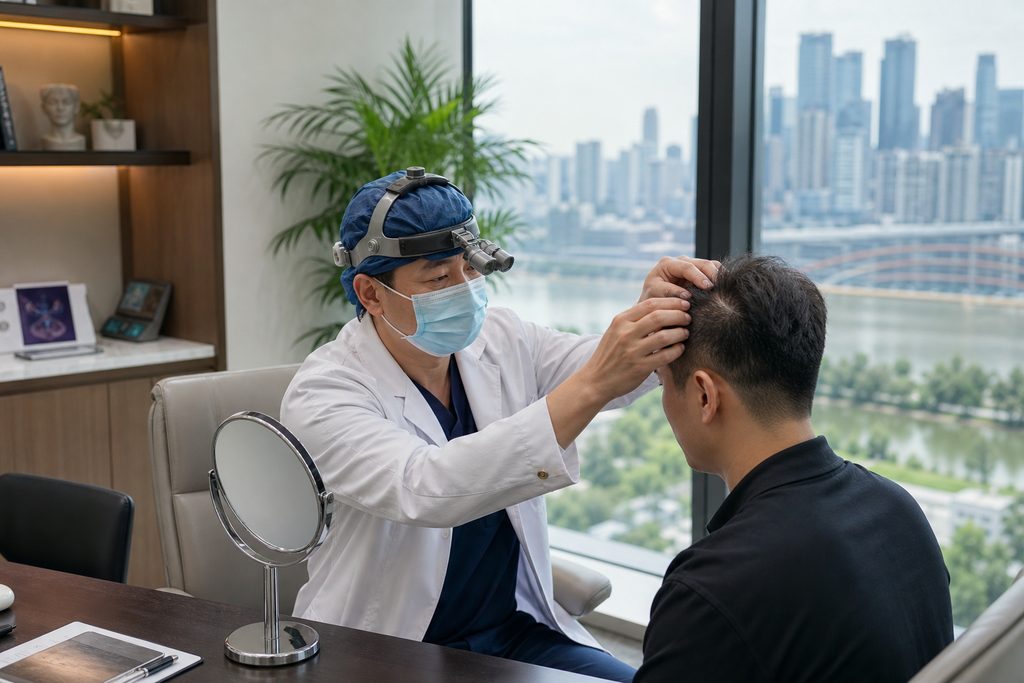
In Turkey, a single clinic in Istanbul can process 60 hair transplant patients in one day. At Chengdu’s leading public hospital dermatology departments, the same procedure is performed by surgeons who also handle complex scalp reconstruction for burn victims and cancer patients. That difference in scope matters more than most patients realize when they start comparing hair transplant cost Chengdu quotes against overseas packages.
Chengdu has quietly become one of China’s more serious destinations for hair restoration. It is not a medical-tourism conveyor belt. It is a city of 21 million people with three top-tier teaching hospitals, a growing private aesthetic sector, and pricing that sits well below Western rates without the assembly-line feel of some competitor markets.
Hair Restoration Clinics in Chengdu: The Short Answer
Expect to pay between $1,800 and $4,500 for an FUE (follicular unit extraction) procedure in Chengdu at a reputable clinic, depending on graft count, surgeon seniority, and whether you choose a public hospital international department or a private facility. That is roughly one-quarter to one-third of typical US pricing for comparable graft volumes.
But the number alone tells you very little. What determines your outcome is who performs the surgery, how many grafts they actually place versus what was quoted, and whether the clinic has a realistic plan for the 12-month growth cycle that follows. Chengdu offers good options on all three fronts — if you know where to look.
Who This Is Right For — and Who It Isn’t
Hair restoration is not a universal solution, and any clinic that treats it as one should raise your suspicion immediately.
Typically good candidates:
- Men with stable androgenetic alopecia (Norwood stages III to V) who have been losing hair gradually for several years
- Patients with sufficient donor density at the back and sides of the scalp — usually assessed at 60+ follicular units per square centimeter
- Women with pattern hair loss where a clear donor zone exists and the cause has been medically evaluated
- People seeking to restore a receding hairline, crown thinning, or scarring from previous trauma or surgery
- Patients willing to commit to a 12-month follow-up window and, if needed, return for a second session
Who should probably not pursue this:
- Anyone whose hair loss is still actively progressing and has not been stabilized — you will chase a moving target
- Patients with active scalp infections, uncontrolled diabetes, or bleeding disorders
- Those with diffuse unpatterned alopecia, where the donor zone itself is thinning
- People expecting a full head of hair restored in a single session from advanced baldness — that is not how grafting math works
- Anyone unwilling to try medical management (such as minoxidil or finasteride, where appropriate) alongside surgery
The Options, Compared
Chengdu’s hair restoration landscape breaks into three tiers, each with distinct trade-offs. The table below reflects general market ranges, not fixed prices.
| Option | Typical Cost (USD) | Graft Range | Surgeon Profile | Best For |
|---|---|---|---|---|
| Public hospital international department | $2,200 – $4,500 | 1,500 – 3,500 | Senior dermatologic or plastic surgeon, teaching hospital faculty | Patients prioritizing medical rigor and complex cases |
| Private aesthetic clinic (mid-tier) | $1,800 – $3,200 | 1,200 – 3,000 | Dedicated transplant surgeon, high procedure volume | Straightforward cases, faster scheduling |
| Premium private / international facility | $3,500 – $6,000+ | 2,000 – 4,000 | Named lead surgeon, English-speaking team, JCI-affiliated | Patients wanting concierge coordination and language support |
| US or Western Europe (for reference) | $8,000 – $18,000 | 1,500 – 3,500 | Board-certified dermatologic surgeon | Patients unwilling to travel |
Which column fits you? If your case is uncomplicated and you are comfortable navigating a Chinese hospital with translation support, the mid-tier private clinic offers the best value. If you have scarring alopecia, previous failed transplants, or a medical history that complicates anesthesia, the public hospital international department is the safer choice. The premium tier exists mainly for patients who want English-language continuity from first email to final follow-up.
How Much Does FUE Hair Transplant Cost in China — and What Drives the Price
The question of how much does FUE hair transplant cost in China has no single answer, but the variables are consistent across cities.
Graft count is the biggest lever. A 1,500-graft hairline restoration in Chengdu might run $1,800 to $2,500. A 3,000-graft crown-and-mid-scalp case pushes toward $3,500 to $4,500. Pricing per graft typically falls between $1.20 and $1.80 in Chengdu, compared with $4 to $7 in the United States.
Technique matters less than marketing suggests. FUE and FUT (strip harvesting) are both established methods. FUE leaves no linear scar and has largely become the default in China’s private sector. FUT still has a place for patients needing very high graft counts in one session, since it can yield more grafts per procedure.
Surgeon involvement is where costs diverge sharply. In some high-volume clinics, technicians perform the extraction and implantation while the surgeon only designs the hairline. In teaching hospitals, the surgeon is typically more hands-on throughout. Ask directly who will be doing each stage. A clinic that hesitates to answer is telling you something.
What is usually included: pre-operative blood work, local anesthesia, the procedure itself, initial post-op medication, and one or two follow-up visits.
What is often not included: PRP (platelet-rich plasma) add-ons, which can run $300 to $800 per session; post-operative growth factor treatments; revision procedures; and accommodation or translation services if you are traveling from abroad.
Is Hair Transplant Safe in China?
The honest answer: it depends entirely on the clinic, not the country.
China’s top-tier public hospitals operate under the same sterilization protocols, anesthesia standards, and surgical safety frameworks you would find in any developed health system. A dermatology department at a major Chengdu teaching hospital handles thousands of procedures annually and has institutional review processes that a standalone cosmetic shop does not.
Where risk concentrates is in the unregulated middle. China has a large number of small aesthetic clinics, some of which employ technicians with minimal surgical training. Complications from poorly performed transplants include infection, cobblestoning (bumpy skin at the recipient site), unnatural hairline placement, and permanent donor-site scarring.
Three practical safeguards:
- Verify that the operating surgeon holds a valid Chinese medical license and specializes in dermatology or plastic surgery — not general practice
- Ask how many hair transplant procedures the clinic performs per month. Under 20 is a yellow flag
- Request to see the facility’s disinfection and emergency protocols. A serious clinic will answer without defensiveness
For patients who want a structured way to evaluate hospitals before committing, our database of 340+ top-ranked Chinese hospitals includes dermatology and plastic surgery departments grouped by city and specialty ranking.
How to Book Hair Transplant Chengdu Appointments as an International Patient
This is where most overseas patients hit a wall. Public hospital outpatient departments in China generally do not accept advance bookings from abroad. You show up, queue for a registration number, and see whichever doctor is available that day. Surgery can only be scheduled after an in-person consultation.
There are two workable paths:
Path one: the international department. Most major Chengdu hospitals maintain a separate international or VIP clinic with English-speaking staff, shorter queues, and the ability to pre-schedule appointments. Costs run roughly 1.5 to 2 times the standard channel, but the coordination burden drops dramatically.
Path two: coordinated arrival. You arrange a standard appointment through a service that handles registration, hospital card creation, and bilingual accompaniment on the day. This is the more economical route and works well for patients who are comfortable with a less polished experience.
Either way, the sequence is the same: consultation first, surgical plan second, procedure third. No legitimate clinic will book a transplant date before examining your scalp in person.
Hair Transplant Packages China: What to Watch For
Packages that bundle surgery, hotel, airport pickup, and translation can simplify planning. They can also obscure what you are actually paying for.
Before committing to any hair transplant packages China providers offer, ask for an itemized breakdown. A $2,800 package might include 1,200 grafts at a clinic that normally charges $1.50 per graft — meaning the “discount” comes from a lower graft count than you need. That is not savings. That is an incomplete result.
Legitimate packages should specify: graft count range, surgeon name and credentials, number of sessions included, follow-up schedule, and whether revision surgery is covered if graft survival falls below acceptable thresholds. Graft survival rates at reputable clinics typically range from 85% to 95%. Anything promised above 98% deserves scrutiny.
Practical Considerations for Medical Travel to Chengdu
Visa. Medical treatment in China falls under the S2 visa category for stays under 180 days, with S1 for longer stays. Accompanying family members apply under the same category. Requirements are set by the nearest Chinese embassy or consulate and typically include an invitation or appointment letter from the treating hospital. Always confirm current requirements directly with the embassy before applying — rules change.
Records. Bring any previous scalp evaluations, blood work, photos documenting your hair loss progression over time, and a list of current medications. Chinese surgeons rely heavily on photographic staging to plan graft distribution.
Payment. Public hospitals require upfront payment and provide receipts for later insurance reimbursement. Most international insurance plans do not cover elective hair restoration regardless of where it is performed. Private international hospitals may offer direct billing for some services, but cosmetic procedures are almost always self-pay.
Language. Chengdu’s public hospitals are large and busy. Signage is primarily in Chinese. Even basic registration, payment, and pharmacy steps become difficult without language support. This is not a reason to avoid China — it is a reason to plan for it.
Follow-up. Your first three months post-surgery involve shedding, then early growth. Months four through twelve show the real result. Arrange a way to send progress photos to your surgeon and get feedback remotely. If your clinic cannot offer this, factor it into your decision.
Frequently Asked Questions
A typical FUE procedure in Chengdu runs $1,800 to $4,500 depending on graft count and clinic tier. The same procedure in the United States costs $8,000 to $18,000. The gap reflects lower operating costs and market pricing, not a difference in technique or equipment at reputable facilities.
At accredited public hospitals and established private clinics, yes — safety standards are comparable to Western facilities. The risk lies in unregulated small clinics. Verify surgeon credentials, procedure volume, and facility protocols before committing. A low price from an unverifiable provider is not a bargain.
Not directly through standard public hospital channels. You can arrange a consultation appointment in advance through an international department or a coordination service. The surgery itself is scheduled only after an in-person examination. Plan for at least one consultation day before any procedure date.
Graft survival rates of 85% to 95% are considered normal. If growth falls significantly below expectations, revision surgery may be appropriate, usually at a reduced cost or no charge depending on the clinic’s policy. Get any revision terms in writing before your first procedure. Note that full results cannot be judged until 12 months post-surgery.
Medical treatment falls under the S2 visa category for short stays. The M visa is for commercial and trade activities and does not apply to medical treatment. Confirm current documentation requirements with your nearest Chinese embassy, as these are subject to change.
Your Next Step
Chengdu offers genuine value for hair restoration — solid surgical expertise, pricing at a fraction of Western rates, and a medical infrastructure that rewards careful research. The patients who do well are the ones who treat this as a medical decision rather than a shopping comparison.
We are China Medical Services, a coordination service that connects international patients with Chinese hospitals. We are not a hospital and we do not provide medical advice or diagnoses. What we do is help you understand your options, arrange written second opinions or video consultations with relevant specialists, and coordinate the logistics of getting here if you decide to proceed. If you would like to discuss your situation, you can start with a free consultation — no pressure, no obligation, just a clearer picture of what is possible.
This article is for informational purposes only and does not constitute medical advice. Always consult a qualified healthcare provider before pursuing any surgical procedure.
For more medical information and treatment options in China, visit chinamedservices.com (China Medical Services).
