Hair Restoration in China: Costs, Top Clinics, and What to Expect
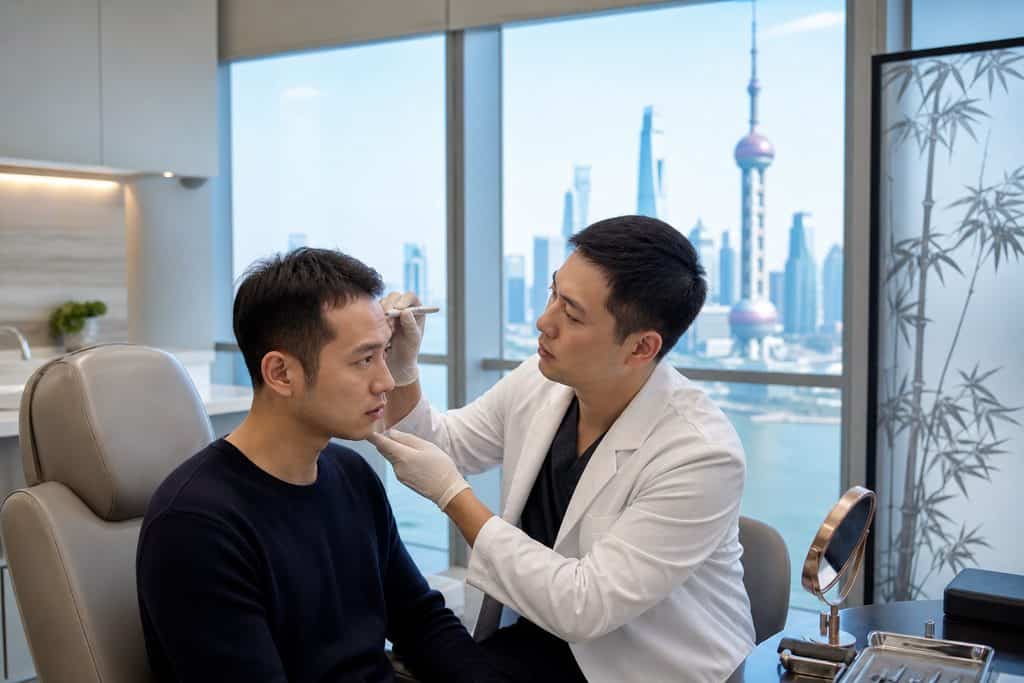
According to the International Society of Hair Restoration Surgery’s 2022 practice census, more than 700,000 hair restoration procedures were performed worldwide that year, with Asia accounting for a rapidly growing share. The question is no longer whether the procedure works. It is where to get it done well, at a price that does not require a second mortgage. That is why so many patients now ask us about hair transplant cost China.
The short answer: yes, you can absolutely get high-quality hair restoration in China. The country has invested heavily in cosmetic and reconstructive surgery infrastructure over the past decade. Top-tier public hospitals and private international clinics in Beijing, Shanghai, and Guangzhou now perform FUE (Follicular Unit Extraction) procedures at a standard that rivals clinics in Istanbul or Seoul. And the price — typically $2,500 to $8,000 depending on graft count and clinic tier — is a fraction of what you would pay in the United States or Western Europe.
But the real picture is more nuanced than a price tag. Hospital selection matters enormously. Language barriers are real. And the logistics of traveling for surgery require planning that goes beyond booking a flight. Let’s walk through what you actually need to know.
Hair Restoration in China: The Short Answer
Yes, you can get hair restoration in China. The country has more than 35,000 hospitals, and a small subset — the top 5% ranked by the Fudan University hospital rankings and JCI accreditation — includes dedicated dermatology and plastic surgery departments that perform FUE hair transplants at international standards. The average cost runs $2,500 to $8,000, which is roughly 60–75% less than comparable procedures in the U.S., where the same graft count often exceeds $15,000.
The complication is this: not every clinic in China is equal. The gap between a top-ranked public hospital’s international department and an unaccredited private clinic can be enormous. You cannot simply search “hair transplant near me” in Shanghai and pick the first result. You need to know which hospitals have the right equipment, which surgeons have the right case volume, and how to navigate the system as a foreigner.
Who This Is Right For — and Who It Isn’t
Hair restoration in China makes sense for a specific profile of patient. Here is who typically benefits most.
Good candidates include:
- Men and women with androgenetic alopecia (male or female pattern baldness) who have stable hair loss and adequate donor hair on the back or sides of the scalp.
- Patients who have tried minoxidil or finasteride and seen limited results, or who cannot tolerate the side effects.
- International patients who want to combine a medical trip with travel, and who are comfortable with a 7–10 day stay for the procedure and initial recovery.
- Budget-conscious patients who have been quoted $12,000+ in the U.S. or Europe and are willing to travel for equivalent quality at lower cost.
Who should not pursue this:
- Patients with active scalp infections, uncontrolled diabetes, or bleeding disorders. Any reputable clinic will reject you until these are managed.
- People with diffuse unpatterned hair loss (DUPA), where donor hair is also thinning. A transplant would likely fail.
- Patients under 25 with rapidly progressing hair loss. Transplanting too early can create an unnatural pattern as more native hair falls out.
- Anyone expecting a “full head of hair” from a single procedure. Realistic expectations are essential. A transplant restores density, not a teenage hairline.
Being honest about who should stay home is what makes the rest of this guide credible. Hair restoration is surgery. It is not a spa treatment.
The Options, Compared
China offers three main tiers for hair restoration. They differ in price, language support, and the level of hand-holding you get. Here is how they stack up.
| Option | Typical FUE Price (USD) | Language Support | Best For |
|---|---|---|---|
| Top public hospital (international department) | $3,500–$8,000 | English-speaking coordinators, translated records | Patients who want maximum clinical oversight and are comfortable with a hospital environment |
| Private international hospital (JCI-accredited) | $4,000–$8,000 | Full English service, direct insurance billing | Patients who want Western-style care, minimal friction, and are less price-sensitive |
| Private cosmetic clinic (local market) | $2,500–$5,000 | Limited or no English | Budget-first patients who speak Chinese or travel with a bilingual companion |
The public hospital international department is often the sweet spot. You get the clinical depth of a major institution — the same surgeons who handle reconstructive cases — with an English-speaking liaison who manages your registration and follow-up. The private international hospitals are smoother but pricier. The local clinics are cheapest but carry the highest risk if you cannot communicate effectively.
If you are flying in from abroad, the middle or top tier is almost always the right call. The savings from a local clinic evaporate quickly if you need a revision procedure because of poor graft survival or an unnatural hairline.
FUE Hair Transplant Price Beijing vs. Shanghai: Where Should You Go?
This is the question every serious patient asks. Beijing and Shanghai both have excellent options, but they are not interchangeable.
Beijing is home to Peking Union Medical College Hospital (PUMCH), one of the most respected names in Chinese medicine. Its dermatology and plastic surgery departments are ranked among China’s top 10 in the Fudan specialty rankings. You can see the full specialty breakdown on our department rankings page. FUE pricing in Beijing typically starts around $3,500 for 2,000 grafts at a public hospital international department and rises with graft count and surgeon seniority.
Shanghai has a denser private international hospital market. Clinics like Jiahui and United Family Shanghai offer English-first care, JCI accreditation, and direct billing with international insurers. Prices run slightly higher — often $4,000 to $8,000 for the same graft count — but the experience is closer to what Western patients expect. If you are looking for the best hair restoration clinic Shanghai has to offer, the private international tier is where you will find the smoothest experience for a foreign patient.
Which city should you choose? If clinical reputation is your top priority and you are comfortable with a hospital setting, Beijing is hard to beat. If you want minimal friction, English everywhere, and a more boutique feel, Shanghai’s private international clinics are the better fit. Both cities are covered in our top-ranked hospital database.
One more thing: the FUE hair transplant price Beijing clinics quote often excludes pre-operative blood work and post-operative medications. Always ask for an itemized quote before you commit.
Is Hair Transplant Safe in China? What the Data Shows
The honest answer: yes, at accredited hospitals, hair transplant is safe in China. The complication rate for FUE at top-tier institutions is comparable to international benchmarks — infection rates below 1%, graft survival rates typically 85–95% when performed by experienced surgeons.
The risk is not the procedure itself. It is the variance between clinics. China does not have a single unified accreditation standard for cosmetic surgery clinics. Some private clinics operate with minimal oversight. Others are world-class. The difference comes down to surgeon volume, equipment quality, and whether the clinic follows sterile protocol rigorously.
So is hair transplant safe in China? At a Fudan-ranked public hospital or JCI-accredited private hospital, yes. At an unvetted local clinic, the risk rises. This is not a China-specific problem — the same is true in Turkey, Mexico, or any medical tourism destination. The safety question is really a hospital selection question.
We recommend you verify three things before booking: the surgeon’s case volume (ask for numbers, not just years of experience), the clinic’s infection control protocols, and whether the hospital has a dedicated international patient department. If any of those three is missing, keep looking.
How Long to Recover from Hair Restoration Surgery
Recovery from FUE hair restoration is measured in days, weeks, and months. Here is the timeline most patients experience.
Days 1–3: The donor area (back of the scalp) is tender. Tiny scabs form around each graft. You will wear a loose cap or bandage. Sleep with your head elevated. Most patients can return to light desk work after 2–3 days.
Days 4–10: Scabs begin to fall off. Do not pick at them. The transplanted hairs may shed — this is normal and expected. By day 10, the donor area is usually healed enough for a normal haircut.
Weeks 2–8: This is the “ugly duckling” phase. Transplanted hairs fall out, and the recipient area looks thin. This does not mean the transplant failed. The follicles are dormant, not dead.
Months 3–6: New hair begins to grow. It starts fine and wispy, then thickens. By month 6, most patients see visible improvement.
Months 9–12: Final results. Full density, natural hairline, and the texture matches your native hair.
So how long to recover from hair restoration surgery? For practical purposes, you need about 7–10 days in China for the procedure and initial healing. The full cosmetic result takes up to a year. Plan your travel accordingly.
Practical Considerations: Visas, Payment, and Follow-Up
If you decide to pursue hair restoration in China, here is what the logistics actually look like.
Visa: Foreign nationals traveling to China for medical treatment apply for an S2 visa, with the purpose noted as medical treatment or private affairs. Your accompanying family member also uses an S2 visa. The hospital’s international department will provide an invitation letter and treatment confirmation document to support your application. Requirements vary by embassy and consulate, so check with the Chinese diplomatic mission in your country before booking flights. We cover this in more detail in our patient coordination guide.
Payment: Public hospitals in China require pre-payment for scheduled procedures. You will typically pay a deposit when the surgery is booked, then settle the balance on admission. Private international hospitals often accept international credit cards and may bill your insurer directly if they have an agreement. Public hospital international departments usually require payment in Chinese yuan via bank transfer, UnionPay, or a Chinese payment app. Confirm the payment method before you arrive.
Language: Even at top hospitals, the nursing staff on the ward may not speak English. The international department coordinator will handle the big conversations, but day-to-day communication — “I need water,” “the bandage feels tight” — often requires translation. This is where a bilingual medical companion earns their fee. It is not about hand-holding. It is about making sure nothing gets lost between you and the people responsible for your recovery.
Follow-up after returning home: Hair restoration does not require intensive follow-up. Most surgeons will do a video check-in at 1 month, 3 months, and 6 months. You send photos, they assess progress. If a complication arises — infection, poor graft survival — you would need to see a local dermatologist. Reputable Chinese clinics will provide your complete medical records in English so your home physician can take over if needed.
Frequently Asked Questions
Expect to pay $2,500 to $8,000 for a standard FUE procedure of 2,000 to 4,000 grafts. The price varies by hospital tier, surgeon seniority, and graft count. Public hospital international departments and JCI-accredited private hospitals run higher, typically $4,000 to $8,000. Local private clinics can go as low as $2,500 but offer limited English support. Always get an itemized quote that lists graft count, surgeon fee, anesthesia, facility fee, and post-op medications separately.
Yes, but be careful what you are buying. Some agencies market all-inclusive packages that bundle flights, hotel, surgery, and a translator. The surgery itself is only as good as the hospital behind it. Before you book hair transplant China medical tourism package deals, verify the hospital’s accreditation, ask for the surgeon’s name and case volume, and read the fine print on what happens if you need a revision. A package that hides the hospital name until after you pay is a red flag.
This is the hard question. FUE graft survival rates at top clinics are high — 85% to 95% — but not 100%. Some grafts will not survive. The bigger risk is an unnatural hairline or poor density from an inexperienced surgeon. Revision surgery is possible but costs more and takes another year to see results. Choose your surgeon based on case volume and before/after photos of patients with your hair type, not on price. The cheapest option is rarely the cheapest in the long run.
No. Most patients fly home 7–10 days after surgery, once the donor area has healed and the scabs have fallen off. The remaining recovery — the shedding phase, the regrowth phase — happens at home and is managed through video follow-ups with your surgeon.
Your Next Step
Hair restoration in China is a legitimate, cost-effective option for the right patient. The key is hospital selection. A Fudan-ranked public hospital or JCI-accredited private clinic will give you results comparable to the best clinics in the world, at a price that is 60–75% lower than the U.S. market. The wrong clinic will give you a bad result and a harder revision.
We are China Medical Services. We are not a hospital, and we do not provide diagnoses or medical advice. What we do is help international patients identify the right hospital for their procedure, coordinate the appointment, and provide bilingual support on the ground. If you are considering hair restoration in China, start with a free consultation. Tell us your graft estimate, your budget, and your preferred city. We will help you sort the real options from the noise.
For more medical information and treatment options in China, visit chinamedservices.com (China Medical Services).
